Nanzan Library of Asian Religion and Culture – serie
Visar alla böcker i serien Nanzan Library of Asian Religion and Culture. Handla med fri frakt och snabb leverans.
19 produkter
19 produkter
381 kr
Skickas inom 10-15 vardagar
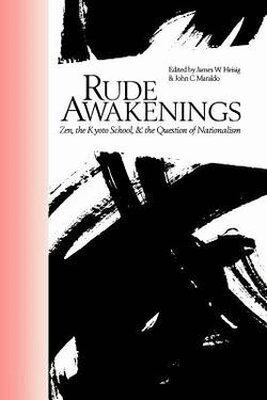
Can Zen tell us whether particular wars are right or wrong? What role did D. T. Suzuki and other Zen figures play in the Japanese nationalism that fueled World War II? What are we to make of nationalistic elements in the thought of Nishida Kitaro, Tanabe Hajime, Nishitani Keiji, and other philosophers of the Kyoto School? What connection was there between the Japanese project of overcoming the modernity of the West and the militarism of its 15-year war in Asia?In a collection of carefully documented essays, 15 Japanese and Western scholars take up these and other questions about the political responsibility of Japanese Buddhist intellectuals. This well-indexed and meticulously edited volume offers a variety of critical perspectives and a wealth of information for those interested in prewar and wartime history, Zen, Japanese philosophy, and the problem of nationalism today.
181 kr
Skickas inom 10-15 vardagar
In 1865 a French priest was visited by a small group of Japanese at his newly built church in Nagasaki. They were descendants of Japan's first Christians, the survivors of brutal religious persecution under the Tokugawa government. The Kakure Kirishitan, or “hidden Christians,” had practiced their religion in secret for several hundred years. Sometime after their visit the priest received a copy of the Kakure bible, the Tenchi Hajimari no Koto, “Beginning of Heaven and Earth,” an intriguing amalgam of Bible stories, Japanese fables, and Roman Catholic doctrine. Whelan offers a complete translation of this unique work accompanied by an illuminating commentary that provides the first theory of origin and evolution of the Tenchi.Today, the few Kakure Kirishitan communities still in existence view the Tenchi as strange and flawed, expressing a distorted form of Christianity. It is, however, the only text produced by the Kakure Kirishitan that depicts their highly syncretistic tradition and provides a colorful window through which to examine the dynamics of religious acculturation.
1 291 kr
Skickas inom 10-15 vardagar
288 kr
Skickas inom 10-15 vardagar
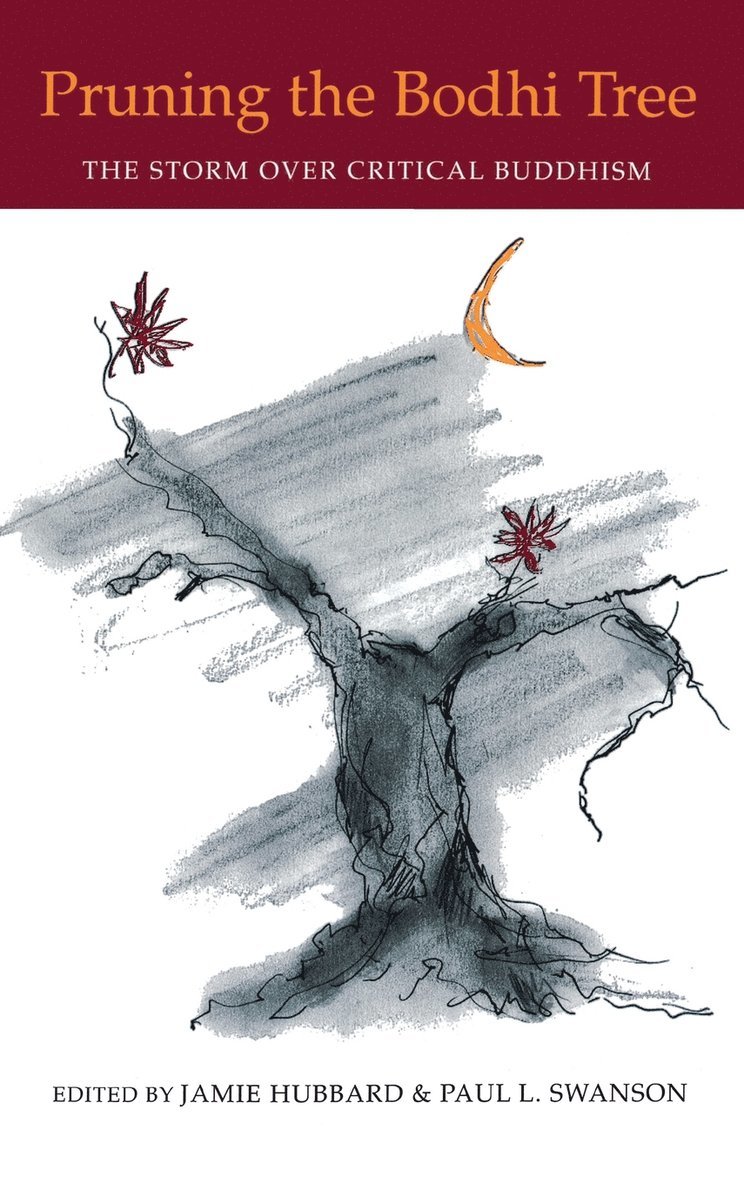
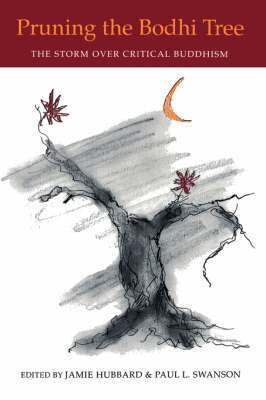
What is Buddhism? According to Hakamaya Noriaki and Matsumoto Shiro, the answer lies in neither Ch’an nor Zen; in neither the Kyoto school of philosophy nor the non-duality taught in the Vimalakirti Sutra. Hakamaya contends that “criticism alone is Buddhism.”This volume introduces and analyzes the ideas of “critical Buddhism” in relation to the targets of its critique and situates those ideas in the context of current discussions of postmodern academic scholarship, the separation of the disinterested scholar and committed religious practitioner, and the place of social activism within the academy.Essays critical of the received traditions of Buddhist thought—many never before translated—are presented and then countered by the work of respected scholars, both Japanese and Western, who take contrary positions.
970 kr
Skickas inom 10-15 vardagar
The past twenty years have seen the publication of numerous translations and commentaries on the principal philosophers of the Kyoto School, but so far no general overview and evaluation of their thought has been available, either in Japanese or in Western languages. James Heisig, a longstanding participant in these efforts, has filled that gap with Philosophers of Nothingness. In this extensive study, the ideas of Nishida Kitaro, Tanabe Hajime, and Nishitani Keiji are presented both as a consistent school of thought in its own right and as a challenge to the Western philosophical tradition to open itself to the original contribution of Japan.
595 kr
Skickas inom 10-15 vardagar
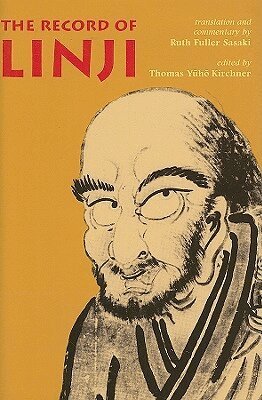
The Linji lu (Record of Linji) has been an essential text of Chinese and Japanese Zen Buddhism for nearly a thousand years. A compilation of sermons, statements, and acts attributed to the great Chinese Zen master Linji Yixuan (d. 866), it serves as both an authoritative statement of Zen's basic stand-point and a central source of material for Zen koan practice.One of the earliest attempts to translate this important work into English was by Sasaki Shigetsu (1882-1945), a pioneer Zen master in the U.S. and the founder of the First Zen Institute of America. At the time of his death, he entrusted the project to his wife, Ruth Fuller Sasaki. Determined to produce a definitive translation, Mrs. Sasaki assembled a team of talented young scholars, both Japanese and Western, who in the following years retranslated the text in accordance with modern research on Tang-dynasty colloquial Chinese.The materials assembled by Mrs. Sasaki and her team are finally available in the present edition of the ""Record of Linji"". The notes, nearly six hundred in all, are almost entirely based on primary sources and thus retain their value despite the nearly forty years since their preparation.
809 kr
Skickas inom 10-15 vardagar
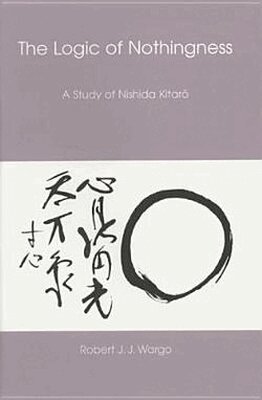
The writings of Nishida Kitaro, whose name has become almost synonymous with Japanese philosophy, continue to attract attention around the world. Yet studies of his thought in Western languages have tended to overlook two key areas: first, the influence of the generation of Japanese philosophers that preceded Nishida; and second, the logic of basho (place), the cornerstone of Nishida's mature philosophical system. ""The Logic of Nothingness"" addresses both of these topics. Robert Wargo argues that the overriding concern of Nishida's mature philosophy, the attempt to give a reasonable account of reality that includes the reasonableness of that account itself - or what Wargo calls ""the problem of completeness"" - has its origins in Inoue Enryo's (1858-1919) and Inoue Tetsujiro's (1855-1944) preoccupation with ""the problem of stand-points."" A translation of one of Nishida's most demanding texts, included here as an appendix, demonstrates the value of Wargo's insightful analysis of the logic of basho as an aid to deciphering the philosopher's early work.
288 kr
Skickas inom 10-15 vardagar
The writings of Nishida Kitaro, whose name has become almost synonymous with Japanese philosophy, continue to attract attention around the world. Yet studies of his thought in Western languages have tended to overlook two key areas: first, the influence of the generation of Japanese philosophers that preceded Nishida; and second, the logic of basho (place), the cornerstone of Nishida's mature philosophical system. ""The Logic of Nothingness"" addresses both of these topics. Robert Wargo argues that the overriding concern of Nishida's mature philosophy, the attempt to give a reasonable account of reality that includes the reasonableness of that account itself - or what Wargo calls ""the problem of completeness"" - has its origins in Inoue Enryo's (1858-1919) and Inoue Tetsujiro's (1855-1944) preoccupation with ""the problem of stand-points."" A translation of one of Nishida's most demanding texts, included here as an appendix, demonstrates the value of Wargo's insightful analysis of the logic of basho as an aid to deciphering the philosopher's early work.
508 kr
Skickas inom 7-10 vardagar
The ""Nanzan Guide to Japanese Religions"" combines, for the first time in any language, state-of-the-field theoretical and critical discussions. With concrete resources, students and scholars need to conduct research on Japanese religions. Even seasoned scholars typically approach their research in an unsystematic manner, becoming familiar with a particular area of inquiry while remaining largely unaware of what exists in the rest of the field. This inefficient method hinders particularly less-experienced researchers and circumscribes their lines of inquiry. The ""Nazan Guide"" provides both beginners and specialists with a reference that will serve as a basic introduction to Japanese religions and allow them to conduct research more proficiently and in greater depth. Overlapping and thought-provoking chapters, written by leading specialists, offer a variety of perspectives on the complicated and multifaceted field of Japanese religions. The essays are divided into four sections: religious traditions (Japanese religions in general, Shinto, Buddhism, folk religion, new religions, Christianity); the history of Japanese religions (ancient, classical, medieval, early modern, modern, contemporary); major themes (symbolism, ritual and the arts, literature and scripture, state and religion, geography and environment, intellectual history, gender); and ""practical"" essays (finding references and using libraries, working with archive collections, conducting fieldwork). A chronology of religion in Japanese history is also provided.
363 kr
Skickas inom 7-10 vardagar
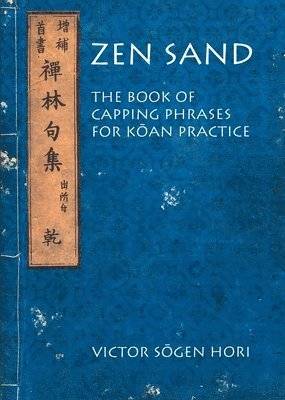
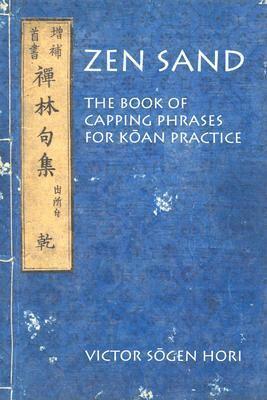
‘Zen Sand’ is a classic collection of verses aimed at aiding practitioners of koan meditation to negotiate the difficult relationship between insight and language. As such it represents a major contribution to both Western Zen practice and English-language Zen scholarship. In Japan the traditional Rinzai Zen koan curriculum includes the use of jakugo, or “capping phrases.” Once a monk has successfully replied to a koan, the Zen master orders the search for a classical verse to express the monk’s insight into the koan. Special collections of these jakugo were compiled as handbooks to aid in that search. Until now, Zen students in the West, lacking this important resource, have been severely limited in carrying out this practice. ‘Zen Sand’ combines and translates two standard jakugo handbooks and opens the way for incorporating this important tradition fully into Western Zen practice. For the scholar, ‘Zen Sand’ provides a detailed description of the jakugo practice and its place in the overall koan curriculum, as well as a brief history of the Zen phrase book. This volume also contributes to the understanding of East Asian culture in a broader sense. “The best scholarly book on actual Zen practice in Japan to appear in recent decades.” —Journal of Chinese Religions “This beautiful volume is recommended unreservedly. It is a major contribution to Western zen for academics and practitioners alike.” —Zen Book Reviews
542 kr
Skickas inom 10-15 vardagar
The six lectures that make up this book were delivered in March 2011 at London University's School of Oriental and Asian Studies as the Jordan Lectures on Comparative Religion. They revolve around the intersection of two ideas, nothingness and desire, as they apply to a re-examination of the questions of self, God, morality, property, and the East-West philosophical divide.
246 kr
Skickas inom 7-10 vardagar
811 kr
Skickas inom 7-10 vardagar
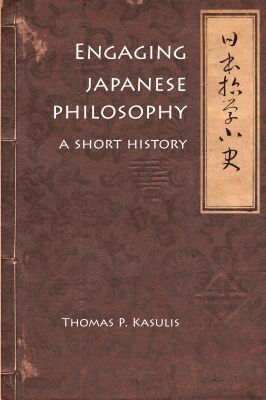
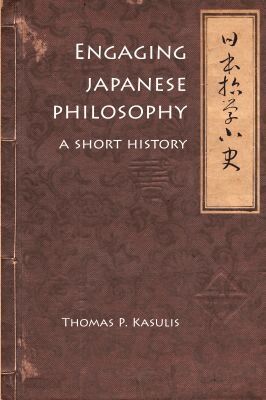
Philosophy challenges our assumptions—especially when it comes to us from another culture. In exploring Japanese philosophy, a dependable guide is essential. The present volume, written by a renowned authority on the subject, offers readers a historical survey of Japanese thought that is both comprehensive and comprehensible.Adhering to the Japanese philosophical tradition of highlighting engagement over detachment, Thomas Kasulis invites us to think with, as well as about, the Japanese masters by offering ample examples, innovative analogies, thought experiments, and jargon-free explanations. He assumes little previous knowledge and addresses themes—aesthetics, ethics, the samurai code, politics, among others—not in a vacuum but within the conditions of Japan’s cultural and intellectual history. For readers new to Japanese studies, he provides a simplified guide to pronouncing Japanese and a separate discussion of the language and how its syntax, orthography, and linguistic layers can serve the philosophical purposes of a skilled writer and subtle thinker. For those familiar with the Japanese cultural tradition but less so with philosophy, Kasulis clarifies philosophical expressions and problems, Western as well as Japanese, as they arise.Half of the book’s chapters are devoted to seven major thinkers who collectively represent the full range of Japan’s historical epochs and philosophical traditions: Kukai, Shinran, Dogen, Ogyu Sorai, Motoori Norinaga, Nishida Kitaro, and Watsuji Tetsuro. Nuanced details and analyses enable an engaged understanding of Japanese Buddhism, Confucianism, Shinto, and modern academic philosophy. Other chapters supply social and cultural background, including brief discussions of nearly a hundred other philosophical writers. (For additional information, cross references to material in the companion volume Japanese Philosophy: A Sourcebook are included.) In his closing chapter Kasulis reflects on lessons from Japanese philosophy that enhance our understanding of philosophy itself. He reminds us that philosophy in its original sense means loving wisdom, not studying ideas. In that regard, a renewed appreciation of engaged knowing can play a critical role in the revitalization of philosophy in the West as well as the East.
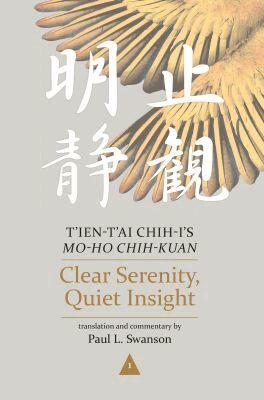
Clear Serenity, Quiet Insight
T'ien-t'ai Chih-i's Mo-ho Chih-kuan, 3 Volume Set
Häftad, Engelska, 2017
1 009 kr
Skickas inom 7-10 vardagar
The Mo-ho chih-kuan (Great cessation-and-contemplation) by T’ien-t’ai Chih-i (538–597) is among the most influential treatises in the long history of Buddhist scholarship. It is known for its brilliant insights and its systematic and comprehensive treatment of the Buddhist tradition. Clear Serenity, Quiet Insight is the first complete, fully annotated translation of this prodigious work by one of today’s foremost scholars on T’ien-t’ai (Tendai) Buddhism.The extensive annotation accompanying the translation (Volumes 1 and 2) will help readers understand the original text and implications of crucial passages and ideas, as well as the place the Mo-ho chih-kuan occupies in the development of Chinese, Korean, Vietnamese, and Japanese Buddhism and its critical importance for figures such as Nichiren, who considered Chih-i the “great master” and quoted profusely from the text in his own writings. Volume 3 contains ample supplementary materials, including translations of related texts, a comprehensive glossary, and lists of Chinese terms and explanations of various sources.
347 kr
Skickas inom 11-20 vardagar
Philosophy challenges our assumptions—especially when it comes to us from another culture. In exploring Japanese philosophy, a dependable guide is essential. The present volume, written by a renowned authority on the subject, offers readers a historical survey of Japanese thought that is both comprehensive and comprehensible.Adhering to the Japanese philosophical tradition of highlighting engagement over detachment, Thomas Kasulis invites us to think with, as well as about, the Japanese masters by offering ample examples, innovative analogies, thought experiments, and jargon-free explanations. He assumes little previous knowledge and addresses themes—aesthetics, ethics, the samurai code, politics, among others—not in a vacuum but within the conditions of Japan’s cultural and intellectual history. For readers new to Japanese studies, he provides a simplified guide to pronouncing Japanese and a separate discussion of the language and how its syntax, orthography, and linguistic layers can serve the philosophical purposes of a skilled writer and subtle thinker. For those familiar with the Japanese cultural tradition but less so with philosophy, Kasulis clarifies philosophical expressions and problems, Western as well as Japanese, as they arise.Half of the book’s chapters are devoted to seven major thinkers who collectively represent the full range of Japan’s historical epochs and philosophical traditions: Kukai, Shinran, Dogen, Ogyu Sorai, Motoori Norinaga, Nishida Kitaro, and Watsuji Tetsuro. Nuanced details and analyses enable an engaged understanding of Japanese Buddhism, Confucianism, Shinto, and modern academic philosophy. Other chapters supply social and cultural background, including brief discussions of nearly a hundred other philosophical writers. (For additional information, cross references to material in the companion volume Japanese Philosophy: A Sourcebook are included.) In his closing chapter Kasulis reflects on lessons from Japanese philosophy that enhance our understanding of philosophy itself. He reminds us that philosophy in its original sense means loving wisdom, not studying ideas. In that regard, a renewed appreciation of engaged knowing can play a critical role in the revitalization of philosophy in the West as well as the East.
679 kr
Skickas inom 7-10 vardagar
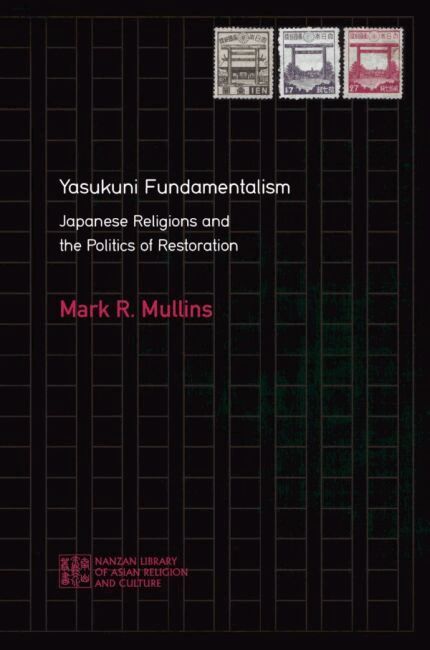
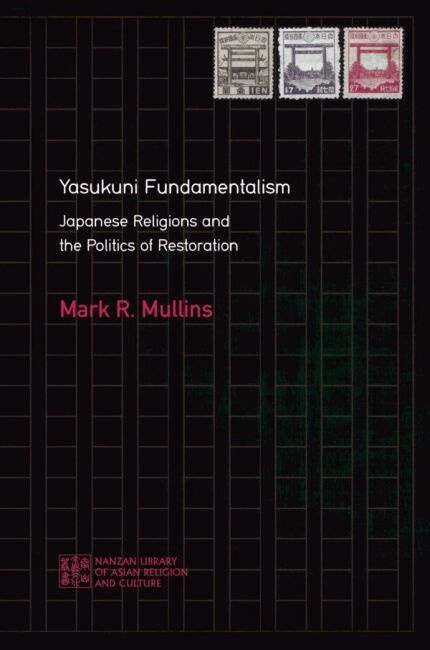
Although religious fundamentalism is often thought to be confined to monotheistic "religions of the book," this study examines the emergence of a fundamentalism rooted in the Shinto tradition and considers its role in shaping postwar Japanese nationalism and politics. Over the past half-century, the Liberal Democratic Party (LDP) and the National Association of Shrines (NAS) have been engaged in collaborative efforts to "recover" or "restore" what was destroyed by the process of imperialist secularization during the Allied Occupation of Japan.Since the disaster years of 1995 and 2011, LDP Diet members and prime ministers have increased their support for a political agenda that aims to revive patriotic education, renationalize Yasukuni Shrine, and revise the constitution. The contested nature of this agenda is evident in the critical responses of religious leaders and public intellectuals, and in their efforts to preserve the postwar gains in democratic institutions and prevent the erosion of individual rights. This timely treatment critically engages the contemporary debates surrounding secularization in light of postwar developments in Japanese religions and sheds new light on the role religion continues to play in the public sphere.
284 kr
Skickas inom 7-10 vardagar
Although religious fundamentalism is often thought to be confined to monotheistic "religions of the book," this study examines the emergence of a fundamentalism rooted in the Shinto tradition and considers its role in shaping postwar Japanese nationalism and politics. Over the past half-century, the Liberal Democratic Party (LDP) and the National Association of Shrines (NAS) have been engaged in collaborative efforts to "recover" or "restore" what was destroyed by the process of imperialist secularization during the Allied Occupation of Japan.Since the disaster years of 1995 and 2011, LDP Diet members and prime ministers have increased their support for a political agenda that aims to revive patriotic education, renationalize Yasukuni Shrine, and revise the constitution. The contested nature of this agenda is evident in the critical responses of religious leaders and public intellectuals, and in their efforts to preserve the postwar gains in democratic institutions and prevent the erosion of individual rights. This timely treatment critically engages the contemporary debates surrounding secularization in light of postwar developments in Japanese religions and sheds new light on the role religion continues to play in the public sphere.
309 kr
Skickas inom 11-20 vardagar
For updates online, visit the Nanzan Guide site at Nanzan Library of Asian Religion and Culture.The Nanzan Guide to Japanese Religions combines, for the first time in any language, state-of-the-field theoretical and critical discussions with concrete resources students and scholars need to conduct research on Japanese religions. Even seasoned scholars typically approach their research in an unsystematic manner, becoming familiar with a particular area of inquiry while remaining largely unaware of what exists in the rest of the field. This inefficient method hinders particularly less-experienced researchers and circumscribes their lines of inquiry. The Nanzan Guide provides both beginners and specialists with a reference that will serve as a basic introduction to Japanese religions and allow them to conduct research more proficiently and in greater depth.Overlapping and thought-provoking chapters, written by leading specialists, offer a variety of perspectives on the complicated and multifaceted field of Japanese religions. The essays are divided into four sections: religious traditions (Japanese religions in general, Shinto, Buddhism, folk religion, new religions, Christianity); the history of Japanese religions (ancient, classical, medieval, early modern, modern, contemporary); major themes (symbolism, ritual and the arts, literature and scripture, state and religion, geography and environment, intellectual history, gender); and "practical" essays (finding references and using libraries, working with archive collections, conducting fieldwork). A chronology of religion in Japanese history is also provided.
561 kr
Skickas inom 7-10 vardagar
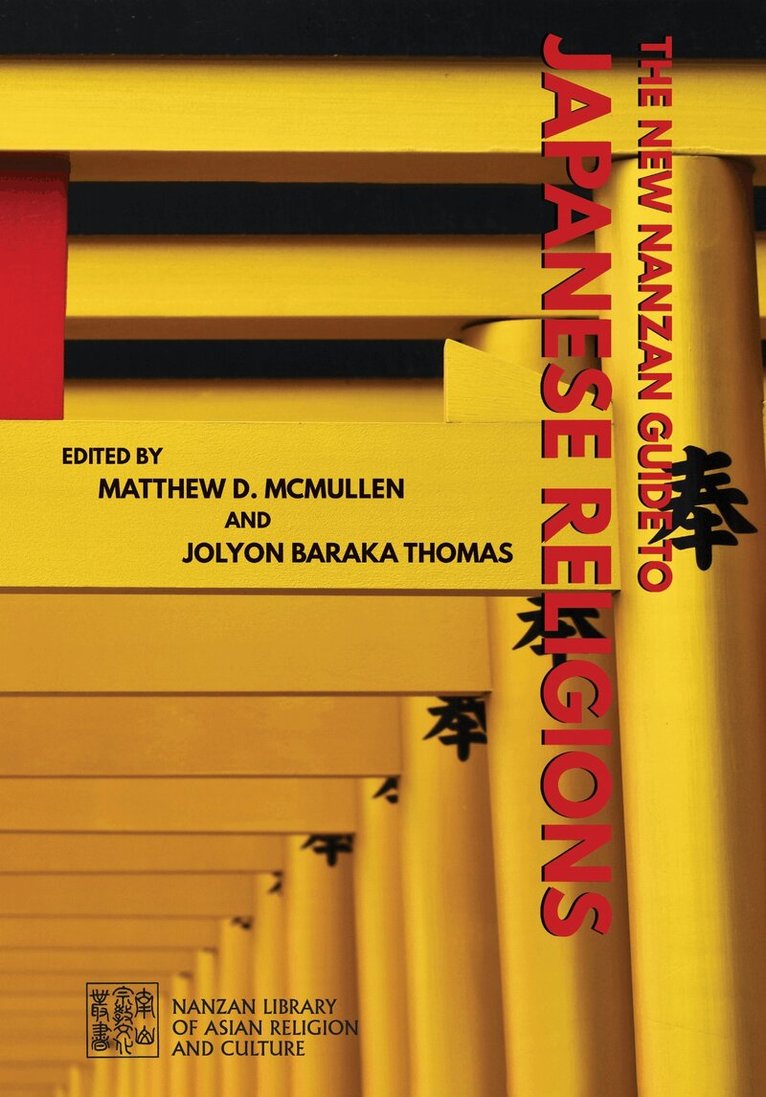
For nearly two decades, the Nanzan Guide to Japanese Religions has served as a valuable resource for students and scholars of religion in Japan. This exciting update expands the audience to include non-specialists of Japan while also complicating the notions of "Japan" and "religion." Asking the provocative question "why study Japanese religions?" the editors argue that studying Japan is vital for the academic study of religion writ large and make a case for the continued importance of religious topics in Japan studies, broadly conceived.The volume addresses the question of why—and how—to study Japanese religions in seven sections, each overseen by a leading expert in that subfield. The section on "Knowledge Production" investigates medicine, sacred objects, and the politico-economic structures undergirding academia. "Cosmology and Time" reveals how religion shaped worldviews in both premodern and modern Japan by taking up topics such as the afterlife, divination, and relationships between science and religion. "Space and Environment" considers geography, relationships between the human and nonhuman denizens of the Japanese archipelago, and religion in Japan’s overseas colonies and among diasporic outmigrants. "Feelings and Belonging" focuses on affective relationships generated through confraternities, homiletics, and caring professions. "Politics and Governance" describes longstanding relationships between religion and the state, covering everything from sacred kingship to contemporary electoral politics. The final two sections include practical advice for conducting fieldwork and helpful introductions to several relevant archives. Overall, the volume reflects the impact of recent scholarly trends in the study of Japanese religions, including material religion studies, affect theory, environmental humanities, and critical secularism studies. The breadth of topics as well as the accessibility of the individual chapters makes The New Nanzan Guide to Japanese Religions an indispensable resource for the classroom. It will be useful not only for scholars of Japan, but also for anyone interested in the academic study of religion.