Thomas P. Kasulis - Böcker
Visar alla böcker från författaren Thomas P. Kasulis. Handla med fri frakt och snabb leverans.
10 produkter
10 produkter
194 kr
Skickas inom 10-15 vardagar
Nine out of ten Japanese claim some affiliation with Shinto, but in the West the religion remains the least studied of the major Asian spiritual traditions. It is so interlaced with Japanese cultural values and practices that scholarly studies usually focus on only one of its dimensions: Shinto as a ""nature religion,"" an ""imperial state religion,"" a ""primal religion,"" or a ""folk amalgam of practices and beliefs."" Thomas Kasulis' fresh approach to Shinto explains with clarity and economy how these different aspects interrelate. As a philosopher of religion, he first analyzes the experiential aspect of Shinto spirituality underlying its various ideas and practices. Second, as a historian of Japanese thought, he sketches several major developments in Shinto doctrines and institutions from prehistory to the present, showing how its interactions with Buddhism, Confucianism, and nationalism influenced its expression in different times and contexts. In Shinto's idiosyncratic history, Kasulis finds the explicit interplay between two forms of spirituality: the ""existential"" and the ""essentialist."" Although the dynamic between the two is particularly striking and accessible in the study of Shinto, he concludes that a similar dynamic may be found in the history of other religions as well. Two decades ago, Kasulis' Zen Action/Zen Person brought an innovative understanding to the ideas and practices of Zen Buddhism, an understanding influential in the ensuing decades of philosophical Zen studies. Shinto: The Way Home promises to do the same for future Shinto studies.
194 kr
Skickas inom 10-15 vardagar
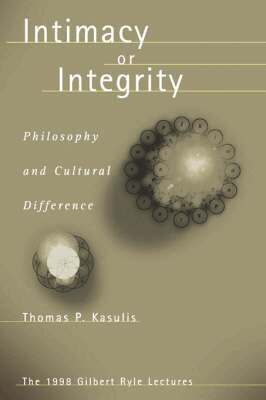
How can I know something? How can I convince someone of the rightness of my position? How does reality function? What is artistic creativity? What is the role of the state? It is well known that people from various cultures give dissimilar answers to such philosophical questions. After three decades in the cross-cultural study of ideas and values, Thomas Kasulis found that culture influences not only the answers to these questions, but often how one arrives at the answers. In generalizing cultural difference, Kasulis identifies two kinds of orientation: intimacy and integrity. Both determine how we think about relations among people and among things, and each is reasonable, effective, and consistent. Yet the two are so incompatible in their basic assumptions that they cannot successfully engage each other. Cultural difference extends beyond nations. Cultural identities crystallize in relation to religion, occupation, race, gender, class. Rather than attempt to transcend cultural difference, Kasulis urges a deeper awareness of its roots by moving beyond mere cultural relativism toward a cultural bi-orientationality that will allow us to adapt ourselves to different cultural contexts as the situation demands. Wonderfully clear and unburdened by jargon, Intimacy or Integrity is accessible to readers from a variety of perspectives and backgrounds. By analyzing the synergy between thought and culture, it increases our understanding of cultural difference and guides us in developing strategies for dealing with orientations different from our own.
594 kr
Skickas inom 3-6 vardagar
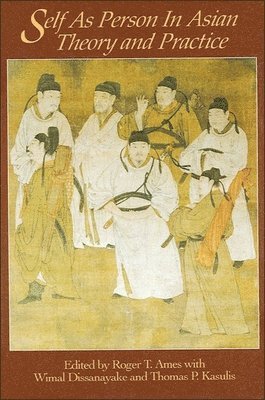
This book is a sequel to Self as Body in Asian Theory and Practice (SUNY, 1992) and anticipates a third book, Self as Image in Asian Theory and Practice. In order to address issues as diverse as the promotion of human rights or the resolution of sexism in ways that avoid inadvertent lapses into cultural chauvinism, alternative cultural perspectives that begin from differing conceptions of self and self-realization must be articulated and respected. This book explores the articulation of personal character within the disparate cultural experiences of Japan, China, and South Asia.
402 kr
Tillfälligt slut
This collection of essays by leading American philosophers honors John E. Smith, a major figure in the struggle for the American profession of philosophy to redefine itself and return to its grander traditions.Philosophy in America enjoyed a golden age at the end of the nineteenth and beginning of the twentieth centuries with the flourishing of distinctive and original schools of pragmatism, idealism, and naturalism. These American philosophies shared a family of conceptions of human experience far richer than their contemporary European schools of empiricism and phenomenology. The American conceptions of experience embrace critical and speculative conceptions of reason, presenting decisive alternatives to the Kantian foundationalist project that expressed itself in positivism, analytic philosophy, and phenomenology. During the middle part of the twentieth century these American philosophies were eclipsed by the European schools, however, and philosophy was reduced from the public intellectual roles given it by the likes of William James and John Dewey to a narrow academic practice interesting to few other than academic philosophers.John Edwin Smith, through a long publishing and teaching career at Yale, has championed the rich American conceptions of experience and speculative reason, and it seems that at the end of this century they are returning in triumph. This book celebrates the recovery and new growth of American philosophy in a stunning variety of connected and vital intellectual projects represented by its contributors: George Allan, Douglas R. Anderson, Lewis S. Ford, Errol Harris, Richard Hocking, Thomas P. Kasulis, George R. Lucas, Jr., Robert Cummings Neville, Donald W. Sherburne, Merold Westphal, Kuang-ming Wu, and Carl G. Vaught. Displaying philosophy's recovery in America, this book also honors John Edwin Smith, who has kept the history and trajectory of philosophy in America in sight, and who contributes a prophetic commentary on the other essays.
154 kr
Skickas inom 10-15 vardagar
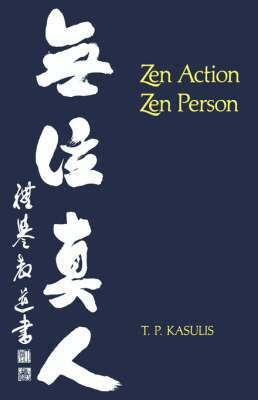
Provides a clear and perceptive accounts of Zen. Kasulis locates the Zen understanding of the person in secular Japanese assumptions.
807 kr
Skickas inom 10-15 vardagar
How can I know something? How can I convince someone of the rightness of my position? How does reality function? What is artistic creativity? What is the role of the state? It is well known that people from various cultures give dissimilar answers to such philosophical questions. After three decades in the cross-cultural study of ideas and values, Thomas Kasulis found that culture influences not only the answers to these questions, but often how one arrives at the answers. In generalizing cultural difference, Kasulis identifies two kinds of orientation: intimacy and integrity. Both determine how we think about relations among people and among things, and each is reasonable, effective, and consistent. Yet the two are so incompatible in their basic assumptions that they cannot successfully engage each other. Cultural difference extends beyond nations. Cultural identities crystallize in relation to religion, occupation, race, gender, class. Rather than attempt to transcend cultural difference, Kasulis urges a deeper awareness of its roots by moving beyond mere cultural relativism toward a cultural bi-orientationality that will allow us to adapt ourselves to different cultural contexts as the situation demands. Wonderfully clear and unburdened by jargon, Intimacy or Integrity is accessible to readers from a variety of perspectives and backgrounds. By analyzing the synergy between thought and culture, it increases our understanding of cultural difference and guides us in developing strategies for dealing with orientations different from our own.
607 kr
Skickas inom 3-6 vardagar
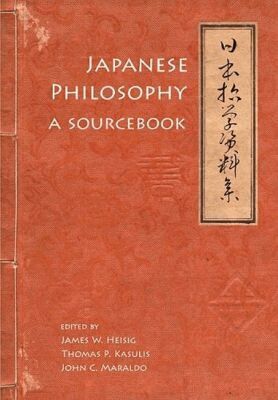
With Japanese Philosophy: A Sourcebook, readers of English can now access in a single volume the richness and diversity of Japanese philosophy as it has developed throughout history. Leading scholars in the field have translated selections from the writings of more than a hundred philosophical thinkers from all eras and schools of thought, many of them available in English for the first time. The Sourcebook editors have set out to represent the entire Japanese philosophical tradition—not only the broad spectrum of academic philosophy dating from the introduction of Western philosophy in the latter part of the nineteenth century, but also the philosophical ideas of major Japanese traditions of Buddhism, Confucianism, and Shinto. The philosophical significance of each tradition is laid out in an extensive overview, and each selection is accompanied by a brief biographical sketch of its author and helpful information on placing the work in its proper context. The bulk of the supporting material, which comprises nearly a quarter of the volume, is given to original interpretive essays on topics not explicitly covered in other chapters: cultural identity, samurai thought, women philosophers, aesthetics, bioethics. An introductory chapter provides a historical overview of Japanese philosophy and a discussion of the Japanese debate over defining the idea of philosophy, both of which help explain the rationale behind the design of the Sourcebook. An exhaustive glossary of technical terminology, a chronology of authors, and a thematic index are appended. Specialists will find information related to original sources and sinographs for Japanese names and terms in a comprehensive bibliography and general index. Handsomely presented and clearly organized for ease of use, Japanese Philosophy: A Sourcebook will be a cornerstone in Japanese studies for decades to come. It will be an essential reference for anyone interested in traditional or contemporary Japanese culture and the way it has shaped and been shaped by its great thinkers over the centuries.
809 kr
Skickas inom 7-10 vardagar
Philosophy challenges our assumptions—especially when it comes to us from another culture. In exploring Japanese philosophy, a dependable guide is essential. The present volume, written by a renowned authority on the subject, offers readers a historical survey of Japanese thought that is both comprehensive and comprehensible.Adhering to the Japanese philosophical tradition of highlighting engagement over detachment, Thomas Kasulis invites us to think with, as well as about, the Japanese masters by offering ample examples, innovative analogies, thought experiments, and jargon-free explanations. He assumes little previous knowledge and addresses themes—aesthetics, ethics, the samurai code, politics, among others—not in a vacuum but within the conditions of Japan’s cultural and intellectual history. For readers new to Japanese studies, he provides a simplified guide to pronouncing Japanese and a separate discussion of the language and how its syntax, orthography, and linguistic layers can serve the philosophical purposes of a skilled writer and subtle thinker. For those familiar with the Japanese cultural tradition but less so with philosophy, Kasulis clarifies philosophical expressions and problems, Western as well as Japanese, as they arise.Half of the book’s chapters are devoted to seven major thinkers who collectively represent the full range of Japan’s historical epochs and philosophical traditions: Kukai, Shinran, Dogen, Ogyu Sorai, Motoori Norinaga, Nishida Kitaro, and Watsuji Tetsuro. Nuanced details and analyses enable an engaged understanding of Japanese Buddhism, Confucianism, Shinto, and modern academic philosophy. Other chapters supply social and cultural background, including brief discussions of nearly a hundred other philosophical writers. (For additional information, cross references to material in the companion volume Japanese Philosophy: A Sourcebook are included.) In his closing chapter Kasulis reflects on lessons from Japanese philosophy that enhance our understanding of philosophy itself. He reminds us that philosophy in its original sense means loving wisdom, not studying ideas. In that regard, a renewed appreciation of engaged knowing can play a critical role in the revitalization of philosophy in the West as well as the East.
347 kr
Skickas inom 11-20 vardagar
Philosophy challenges our assumptions—especially when it comes to us from another culture. In exploring Japanese philosophy, a dependable guide is essential. The present volume, written by a renowned authority on the subject, offers readers a historical survey of Japanese thought that is both comprehensive and comprehensible.Adhering to the Japanese philosophical tradition of highlighting engagement over detachment, Thomas Kasulis invites us to think with, as well as about, the Japanese masters by offering ample examples, innovative analogies, thought experiments, and jargon-free explanations. He assumes little previous knowledge and addresses themes—aesthetics, ethics, the samurai code, politics, among others—not in a vacuum but within the conditions of Japan’s cultural and intellectual history. For readers new to Japanese studies, he provides a simplified guide to pronouncing Japanese and a separate discussion of the language and how its syntax, orthography, and linguistic layers can serve the philosophical purposes of a skilled writer and subtle thinker. For those familiar with the Japanese cultural tradition but less so with philosophy, Kasulis clarifies philosophical expressions and problems, Western as well as Japanese, as they arise.Half of the book’s chapters are devoted to seven major thinkers who collectively represent the full range of Japan’s historical epochs and philosophical traditions: Kukai, Shinran, Dogen, Ogyu Sorai, Motoori Norinaga, Nishida Kitaro, and Watsuji Tetsuro. Nuanced details and analyses enable an engaged understanding of Japanese Buddhism, Confucianism, Shinto, and modern academic philosophy. Other chapters supply social and cultural background, including brief discussions of nearly a hundred other philosophical writers. (For additional information, cross references to material in the companion volume Japanese Philosophy: A Sourcebook are included.) In his closing chapter Kasulis reflects on lessons from Japanese philosophy that enhance our understanding of philosophy itself. He reminds us that philosophy in its original sense means loving wisdom, not studying ideas. In that regard, a renewed appreciation of engaged knowing can play a critical role in the revitalization of philosophy in the West as well as the East.
477 kr
Skickas inom 3-6 vardagar