Nature Classics Library - Böcker
Visar alla böcker i serien Nature Classics Library. Handla med fri frakt och snabb leverans.
17 produkter
17 produkter
168 kr
Skickas
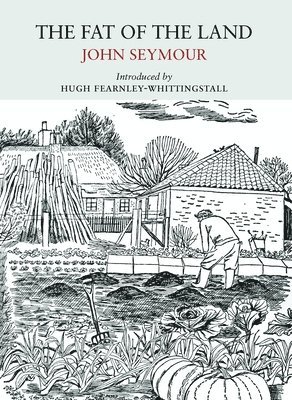
In the 1970s, John Seymour's book, The Complete Book of Self Sufficiency was a huge, international best-seller, inspiring a new generation to "down-shift" to a new way of life. The book has remained in print ever since. But years earlier, Seymour had written and published The Fat of the Land, telling of how he and his family settled in Suffolk and began a life entirely separate from the modern world. This was a seminal book, published the year before Silent Spring, and offers a personal, practical and optimistic vision of a less-mechanized and less polluting world, one that works in harmony with nature, rather than against it. He goes on to document their life and struggles on the land in chapters on cows, pigs, vegetables and wild food in charming prose. More than fifty years on, The Fat of the Land remains an important and inspiring book, one which retains its power to make us think carefully about our own lives. This new edition comes complete with Sally Seymour's original illustrations, a foreword by Anne Seymour and a new introduction by Hugh Fearnley-Whittingstall.
186 kr
Skickas
In 1957, after travelling in southern Iraq, Gavin Maxwell returned to the West Highlands of Scotland with an otter cub called Mijbil. Written within thew sound of the sea, in a remote cottage where they set up home together, this enduring story evokes the unspoilt seascape and wildlife of a place Maxwell called Camusfearna. Ring of Bright Water was hailed as a masterpiece when it was first published, sold over two million copies worldwide, and was later adapted into a successful film. Fifty years on it remains one of the most lyrical, moving descriptions of a man's relationship with the natural world. Our new edition is unabridged and includes all the illustrations from the first edition.
168 kr
Skickas
Edward Thomas's death in the Second World War robbed the world of a great poet, a fine writer, and a pioneering environmentalist. Published in 1909, The South Country is the happiest of all his books. Lyrical, passionate, acutely sensitive to life in the countryside and the rhythms of the seasons, it brilliantly merges landscape, folk culture and natural history into a record of what Edward Thomas saw and felt as he wandered the old ways of southern England.
148 kr
Tillfälligt slut
Adrian Bell's travels through East Anglia and lowland Britain reflect a world on the brink of change. Published in 1939, on the eve of the Second World War, his down-to-earth descriptions of the countryside were shaped by his own life working the land. Whether it be hedgerow flowers, a livestock auction, traditional farmyard, village forge, wheelwright's shop, the arrival of the tractor in the harvest field, the work of the ploughman, shepherd or woodman, Men and the Fields captures the character of rural life before modern agriculture altered the landscape and changed forever the way we eat and live.This new edition restores the original colour lithographs and black and white line drawings by John Nash that appeared in the first edition.
157 kr
Skickas
Clare Leighton was one of the finest engravers of the twentieth century. In the 1930s, when she settled in the countryside with her long-term partner, the political journalist Henry Noel Brailsford, she turned her creativity to the land. Gardening became her passion. Her obsession. This is the story of the garden she carved from meadowland deep in the Chiltern Hills. "Phrases and images fill you with delight...This is the most honest writing I've ever read". (Carol Klein).
148 kr
Skickas
During the early 1970s Richard Mabey set about mapping his unofficial countryside. He walked crumbling city docks and overgrown bomb sites, navigating inner city canals and car parks, exploring sewage works, gravel pits, rubbish tips. What he discovered runs deeper than a natural history of our suburbs and cities. The Unofficial Countryside prescribes another way of seeing, another way of experiencing nature in our daily lives. Wild flowers glimpsed from a commuter train. A kestrel hawking above a public park. Enchanter's nightshade growing through pavement cracks. Fox cubs playing on a motorway's scrubby fringe. There is a scarcely a nook in our urban landscape incapable of supporting life. It is an inspiration to find this abundance, to discover how plants, birds, mammals and insects flourish against the odds in the most obscure and surprising places.
148 kr
Skickas
Through the story of one man, Caleb Bawcombe, a shepherd whose flocks graze the Wiltshire, Hampshire and Dorset borders, we meet men and women of humble birth - poachers, gypsies, farmers and laborers - striving to survive on the land. As we read, the cumulative affect of their stories becomes much more than a record of rural life. It reads like a lost hymn, sung by people whose lives were disregarded and whose histories are now forgotten. W H Hudson's masterful book, merging fiction, reminiscence, memoir and oral history, was recognized as a classic when it was first published in 1910. It remains so today. First published by Methuen & Co.
157 kr
Skickas
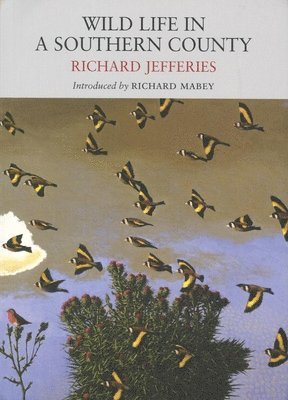
Wild Life in a Southern County traces the course of a spring which rises on an Iron Age hillfort and gradually broadens into a brook, flows through a nearby village and hamlet, skirts a solitary farmhouse and its orchard, before draining into water meadows and a lake where the wildfowl nest. Immersed in the detail of this ancient landscape, its people and the habitats of its wildlife, what emerges from Jefferies' dazzling prose is his sense of perpetual wonder and the deep affection he felt for his homeland, from the clatter of a milkmaid's boots to a pike lying in ambush.
178 kr
Skickas
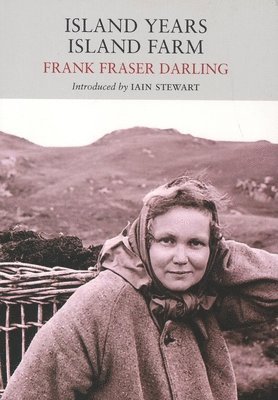
Unhappily land-locked in his early adult life, Frank Fraser Darling's fortunes changed when he began visiting Scotland's west coast in the 1930s. Surviving treacherous boat journeys, a broken leg, and hell-bent storms, he made temporary homes with his family on some of the remotest Hebridean islands so he could study the habits of grey seals and seabirds. The family finally settled on an abandoned croft in the Summer Isles, on Tanera Mor, and started farming the barren land. They repaired a ruined herring fishery and its stone quay. They fertilised the ground with seaweed, cut peat for the fires, planted a garden behind sheltered walls. Slowly, they brought life back to the island. Little Toller republishes classic books about nature and rural life.
157 kr
Skickas
John Wyatt first encountered the Lake District during a boyhood camping trip to Windermere. He was overwhelmed by the freedom of the landscape and the closeness to nature he felt. It was as if he belonged here, amongst the fells, the crags and the endless horizon. This call to the wild stayed with him, becoming so powerful that one day he did what many only dream of: he left a steady job and his town life to become a forestry worker in a Lakeland wood at Cartmel Fell. This is one of the finest books ever written on the Lake District. Like Thoreau, John Wyatt embraced the simplicity of living alone in a woodland hut, immersing himself in a life made rich by birdsong, foraging for food the smell of woodsmoke, and the extraordinary companionship of Buck, a young roe deer discovered in the woods.
159 kr
Skickas
At the end of the 1960s, Kenneth Allsop, a famous television presenter and literary man-about-town, left London and settled amid the sunken lanes, ancient forests and chalk streams of west Dorset. He was at his very happiest here. He thought it the loveliest place on earth, and for three years he devoted a weekly newspaper column to his day-to-day life at the mill, brimming with humor and delight for the wildlife which shared his home. In the Country is not rustic or romantic. It is never unrealistic about agricultural modernisation and social change in the countryside. Yet, steeped with a deep sense of the past, Kenneth Allsop's writing speaks in defense of the natural world and stands firmly against the unchecked exploitation of the land. First published 1972 by Hamish Hamilton.
124 kr
Skickas
Jocelyn Brooke's love affair with wild flowers and home-made fireworks began when he was growing up in Kent and exploring the countryside of the the Elham Valley. But there was one particular flower, especially rare and beautiful which became an obsession. Over three decades and through two world wars, in the deserts of Libya and the woodlands of Italy, in the chalk downs of Kent, Sussex and Hampshire, he searched continually for his most beloved and elusive Orchis militaris, the military orchid.Against the backdrop of his quintessentially English upbringing and his army career, with ts wonderful cast of snobbish neighbours, eccentric public school teachers and bullish staff sergeants, Jocelyn Brooke blends memoir, botany and satire to recall his lifelong quest. The Military Orchid is a comic masterpiece and became widely revered: Kingsley Amis decribed Brooke as "brilliant and exciting", John Betjeman called him "as subtle as the devil", and to Anthony Powell he was "one of the most interesting and talented" writers to emerge after the Second World War.
163 kr
Tillfälligt slut
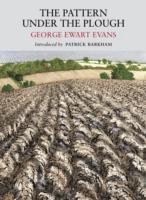
In 1948, shortly after settling with his family in the village of Blaxhall, Suffolk, George Ewart Evans started recording the conversations he had with neighbours, many of whom were born in the nineteenth century and had worked on farms before the arrival of mechanisation. He soon realised that below the surface of their stories were the remnants of an ancient, rural culture previously ignored by historians. In the detail of village architecture, the of superstitions of tree-planting and rituals house-building, in the esoteric practices of horse cults or the pagan habit of 'telling the bees', The Pattern Under the Plough unearths the rich seam of customs and beliefs that this old culture has brought to our communities. Even in modern societies, governed by science and technology, there are still traces of a civilisation whose beliefs were bound to the soil and whose reliance on the seasons was a matter of life or death.
167 kr
Skickas
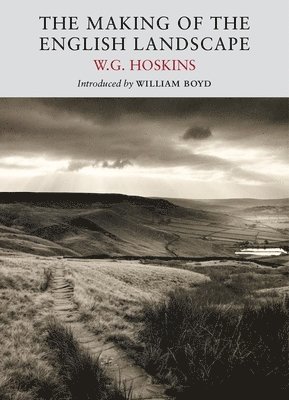
W.G. Hoskins was one of the most original and influential British historians of the twentieth century. He realised that landscapes are the richest record we have of the past, and with his masterpiece, The Making of the English Landscape, he changed forever how we experience the places we live and work in.Where we see a picturesque scene of rolling hills, distant spires and wooded valleys, Hoskins shows us the line of a Bronze Age trackway, the ghostly impression of an open-field system, the gridiron pattern of an industrial town, or the footprint of a Roman villa. By revealing these traces of the past, Hoskins enables us to appreciate different landscapes as if they were pieces of music, a series of compositions which enrich our understanding of the symphonic whole.While planning and building our future villages and towns, in both green and urban places, this pioneering account reminds us why we must be sensitive to the land and its past as we leave our own marks in England's historical landscape.
152 kr
Tillfälligt slut
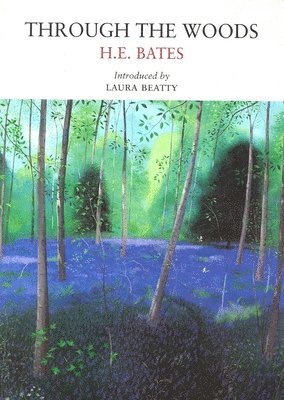
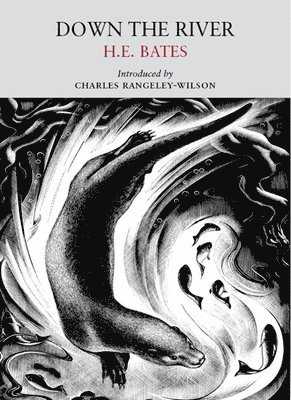
Rivers are great workings of nature, time and geology. They have long been at the very centre of human culture, sustaining us with water, food, power and stories. Our thoughts flow like a river. A river's journey, from source to sea, is a metaphor for life. H.E. Bates's own journey began on the banks and in the waters of two contrasting Midland rivers. The River Nene's jumbled course and character, with its towpaths and locks and bridges, speaks of human industry on its journey to The Wash. The River Ouse, in contrast, with its wide meanders brimmed with reeds and smoky willows, rich in wildlife and wild flowers, is an uplifting, ephemeral water, a river of summer memories and flag irises, the blue pulse of kingfishers and pike lurking in weed-shadows. Peopled by his relatives and neighbours, both the Nene and the Ouse, however different, filled H.E. Bates's imagination with the wonderful stories and characters that make his writing so enjoyable.
178 kr
Skickas
A century before Charles Darwin, decades before the French Revolution, Gilbert White began his lifelong habit of measuring and observing the world around his Hampshire home. Daily rainfall levels and temperature shifts were recorded with home-made instruments. Bird song and seasonal migrations were noted. The feeding habits of frogs, bats and mice were jotted into his diaries and nature journals, as were the simple delights he felt hearing a cricket in the meadow or a blackbird in the hedgerows. The extraordinary detail of the natural history he described has given us, two hundred years later, a glimpse into ecosystems untouched by industry and an account of how changes in global climate can affect local weather patterns. Gilbert White is now considered England's first ecologist. The Natural History of Selborne is one the most published books in the English language. Yet the most enduring quality of his writing is the spirit of curiosity that bounds across every page, inspiring us to explore the abundance of life at our doorsteps and around our parishes.
157 kr
Skickas
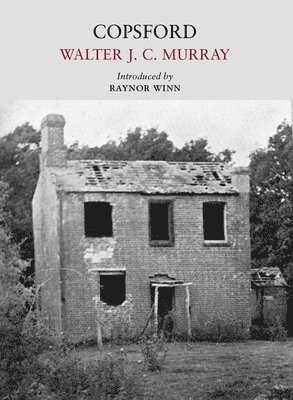
Walter Murray was a young man tired of living in the city. Early in the 1920s, he persuaded a Sussex farmer to rent him a derelict cottage, which stood alone on a hill, with no running water or electricity. Most of the windows were broken, it was dirty, dark and ran with rats. He bought a brush and pail in the village, forced the rats to retreat, brought in rudimentary furniture. The local postman found him a dog, and with his new companion he began to explore his surroundings. In that year at Copsford he made a living from collecting, drying and selling the herbs he found locally: agrimony, meadow-sweet and yarrow. He became alert to the wildlife and plants around him. His life was hard - he supplemented his income with occasional journalism, but it was here he met his future wife, who he calls The Music Mistress, and with whom he would later found a school. Copsford is an extraordinary book. Bearing comparison to Thoreau's Walden, Murray's intense feeling for his place is evident on every page. It is, though, no simple story of a rural idyll - life at Copsford was hard, and Murray does not shy away from the occasional terrors of a house that had its hauntings. A publishing success when first published in the late 1940s, this new edition has an introduction by Raynor Winn, author of The Salt Path.