New Human Frontiers - Böcker
Visar alla böcker i serien New Human Frontiers. Handla med fri frakt och snabb leverans.
18 produkter
18 produkter
532 kr
Skickas inom 7-10 vardagar
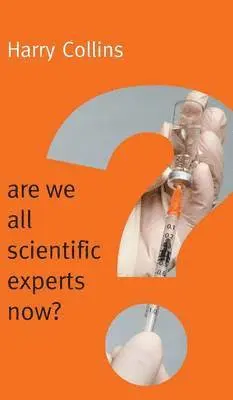
To ordinary people, science used to seem infallible. Scientists were heroes, selflessly pursuing knowledge for the common good. More recently, a series of scientific scandals, frauds and failures have led us to question science’s pre-eminence. Revelations such as Climategate, or debates about the safety of the MMR vaccine, have dented our confidence in science.In this provocative new book Harry Collins seeks to redeem scientific expertise, and reasserts science’s special status. Despite the messy realities of day-to-day scientific endeavor, he emphasizes the superior moral qualities of science, dismissing the dubious “default” expertise displayed by many of those outside the scientific community. Science, he argues, should serve as an example to ordinary citizens of how to think and act, and not the other way round.
138 kr
Skickas inom 7-10 vardagar
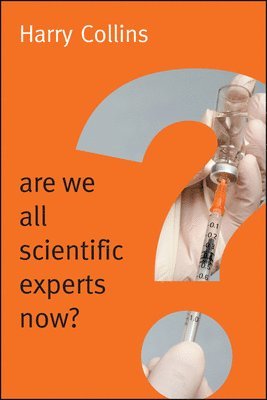
To ordinary people, science used to seem infallible. Scientists were heroes, selflessly pursuing knowledge for the common good. More recently, a series of scientific scandals, frauds and failures have led us to question science’s pre-eminence. Revelations such as Climategate, or debates about the safety of the MMR vaccine, have dented our confidence in science.In this provocative new book Harry Collins seeks to redeem scientific expertise, and reasserts science’s special status. Despite the messy realities of day-to-day scientific endeavor, he emphasizes the superior moral qualities of science, dismissing the dubious “default” expertise displayed by many of those outside the scientific community. Science, he argues, should serve as an example to ordinary citizens of how to think and act, and not the other way round.
532 kr
Skickas inom 7-10 vardagar
Climate change seems to be an insurmountable problem. Political solutions have so far had little impact. Some scientists are now advocating the so-called 'Plan B', a more direct way of reducing the rate of future warming by reflecting more sunlight back to space, creating a thermostat in the sky.In this book, Mike Hulme argues against this kind of hubristic techno-fix. Drawing upon a distinguished career studying the science, politics and ethics of climate change, he shows why using science to fix the global climate is undesirable, ungovernable and unattainable. Science and technology should instead serve the more pragmatic goals of increasing societal resilience to weather risks, improving regional air quality and driving forward an energy technology transition. Seeking to reset the planet’s thermostat is not the answer.
263 kr
Skickas inom 5-8 vardagar
Climate change seems to be an insurmountable problem. Political solutions have so far had little impact. Some scientists are now advocating the so-called 'Plan B', a more direct way of reducing the rate of future warming by reflecting more sunlight back to space, creating a thermostat in the sky.In this book, Mike Hulme argues against this kind of hubristic techno-fix. Drawing upon a distinguished career studying the science, politics and ethics of climate change, he shows why using science to fix the global climate is undesirable, ungovernable and unattainable. Science and technology should instead serve the more pragmatic goals of increasing societal resilience to weather risks, improving regional air quality and driving forward an energy technology transition. Seeking to reset the planet’s thermostat is not the answer.
445 kr
Skickas inom 7-10 vardagar
Free-roaming killer drones stalk the battlespace looking for organic targets. Human combatants are programmed to feel no pain. Highpower microwave beams detonate munitions, jam communications, and cook internal organs.Is this vision of future war possible, or even inevitable? In this timely new book, Everett Carl Dolman examines the relationship between science and war. Historically, science has played an important role in ending wars – think of the part played by tanks in breaching trench warfare in the First World War, or atom bombs in hastening the Japanese surrender in the Second World War – but to date this has only increased the danger and destructiveness of future conflicts. Could science ever create the con-ditions of a permanent peace, either by making wars impossible to win, or so horrific that no one would ever fight? Ultimately, Dolman argues that science cannot, on its own, end war without also ending what it means to be human.
138 kr
Skickas inom 7-10 vardagar
Free-roaming killer drones stalk the battlespace looking for organic targets. Human combatants are programmed to feel no pain. Highpower microwave beams detonate munitions, jam communications, and cook internal organs.Is this vision of future war possible, or even inevitable? In this timely new book, Everett Carl Dolman examines the relationship between science and war. Historically, science has played an important role in ending wars – think of the part played by tanks in breaching trench warfare in the First World War, or atom bombs in hastening the Japanese surrender in the Second World War – but to date this has only increased the danger and destructiveness of future conflicts. Could science ever create the con-ditions of a permanent peace, either by making wars impossible to win, or so horrific that no one would ever fight? Ultimately, Dolman argues that science cannot, on its own, end war without also ending what it means to be human.
733 kr
Skickas inom 5-8 vardagar
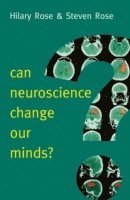
Neuroscience, with its astounding new technologies, is uncovering the workings of the brain and with this perhaps the mind. The 'neuro' prefix spills out into every area of life, from neuroaesthetics to neuroeconomics, neurogastronomy and neuroeducation. With its promise to cure physical and social ills, government sees neuroscience as a tool to increase the 'mental capital' of the children of the deprived and workless. It sets aside intensifying poverty and inequality, instead claiming that basing children's rearing and education on brain science will transform both the child's and the nation's health and wealth. Leading critic of such neuropretensions, neuroscientist Steven Rose and sociologist of science Hilary Rose take a sceptical look at these claims and the science underlying them, sifting out the sensible from the snake oil. Examining the ways in which science is shaped by and shapes the political economy of neoliberalism, they argue that neuroscience on its own is not able to bear the weight of these hopes.
223 kr
Skickas inom 7-10 vardagar
Neuroscience, with its astounding new technologies, is uncovering the workings of the brain and with this perhaps the mind. The 'neuro' prefix spills out into every area of life, from neuroaesthetics to neuroeconomics, neurogastronomy and neuroeducation. With its promise to cure physical and social ills, government sees neuroscience as a tool to increase the 'mental capital' of the children of the deprived and workless. It sets aside intensifying poverty and inequality, instead claiming that basing children's rearing and education on brain science will transform both the child's and the nation's health and wealth. Leading critic of such neuropretensions, neuroscientist Steven Rose and sociologist of science Hilary Rose take a sceptical look at these claims and the science underlying them, sifting out the sensible from the snake oil. Examining the ways in which science is shaped by and shapes the political economy of neoliberalism, they argue that neuroscience on its own is not able to bear the weight of these hopes.
597 kr
Skickas inom 7-10 vardagar
Following centuries of debate about "nature and nurture" the discovery of DNA established the idea that nature (genes) determines who we are, relegating nurture (environment) to icing on the cake.Since the 1950s, the new science of epigenetics has demonstrated how cellular environments and certain experiences and behaviors influence gene expression at the molecular level, with significant implications for health and wellbeing. To the amazement of scientists, mapping the human genome indirectly supported these insights. Anthropologists Margaret Lock and Gisli Palsson outline vituperative arguments from Classical times about the relationship between nature and nurture, furthered today by epigenetic findings and the demonstration of a "reactive genome." The nature/nurture debate, they show, can never be put to rest, because these concepts are in constant flux in response to the new insights science continually offers.
138 kr
Skickas inom 7-10 vardagar
Following centuries of debate about "nature and nurture" the discovery of DNA established the idea that nature (genes) determines who we are, relegating nurture (environment) to icing on the cake.Since the 1950s, the new science of epigenetics has demonstrated how cellular environments and certain experiences and behaviors influence gene expression at the molecular level, with significant implications for health and wellbeing. To the amazement of scientists, mapping the human genome indirectly supported these insights. Anthropologists Margaret Lock and Gisli Palsson outline vituperative arguments from Classical times about the relationship between nature and nurture, furthered today by epigenetic findings and the demonstration of a "reactive genome." The nature/nurture debate, they show, can never be put to rest, because these concepts are in constant flux in response to the new insights science continually offers.
548 kr
Skickas inom 7-10 vardagar
Today, we are far less likely to die from infection than at any other time in history, but still we worry about epidemics, the menace of antibiotic resistance and modern 'plagues' like Ebola.In this timely new book, eminent bacteriologist Hugh Pennington explores why these fears remain and why they are unfounded. He reports on outright victories (such as smallpox), battles where the enemy is on its last stand (polio), surprise attacks from vegetarian bats (Ebola, SARS) and demented cows (BSE). Qualified optimism, he argues, is the message for the future but the battles will go on forever.
142 kr
Skickas inom 7-10 vardagar
Today, we are far less likely to die from infection than at any other time in history, but still we worry about epidemics, the menace of antibiotic resistance and modern 'plagues' like Ebola.In this timely new book, eminent bacteriologist Hugh Pennington explores why these fears remain and why they are unfounded. He reports on outright victories (such as smallpox), battles where the enemy is on its last stand (polio), surprise attacks from vegetarian bats (Ebola, SARS) and demented cows (BSE). Qualified optimism, he argues, is the message for the future but the battles will go on forever.
532 kr
Skickas inom 7-10 vardagar
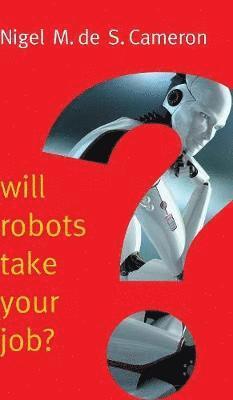
The trend that began with ATMs and do-it-yourself checkouts is moving at lightning speed. Everything from driving to teaching to the care of the elderly and, indeed, code-writing can now be done by smart machines. Conventional wisdom says there will be new jobs to replace those we lose – but is it so simple? And are we ready?Technology writer and think-tank director Nigel Cameron argues it's naive to believe we face a smooth transition. Whether or not there are "new" jobs, we face massive disruption as the jobs millions of us are doing get outsourced to machines. A twenty-first-century "rust belt" will rapidly corrode the labor market and affect literally hundreds of different kinds of jobs simultaneously.Robots won't design our future – we will. Yet shockingly, political leaders and policy makers don't seem to have this in their line of sight. So how should we assess and prepare for the risks of this unknown future?
138 kr
Skickas inom 7-10 vardagar
The trend that began with ATMs and do-it-yourself checkouts is moving at lightning speed. Everything from driving to teaching to the care of the elderly and, indeed, code-writing can now be done by smart machines. Conventional wisdom says there will be new jobs to replace those we lose – but is it so simple? And are we ready?Technology writer and think-tank director Nigel Cameron argues it's naive to believe we face a smooth transition. Whether or not there are "new" jobs, we face massive disruption as the jobs millions of us are doing get outsourced to machines. A twenty-first-century "rust belt" will rapidly corrode the labor market and affect literally hundreds of different kinds of jobs simultaneously.Robots won't design our future – we will. Yet shockingly, political leaders and policy makers don't seem to have this in their line of sight. So how should we assess and prepare for the risks of this unknown future?
663 kr
Skickas inom 7-10 vardagar
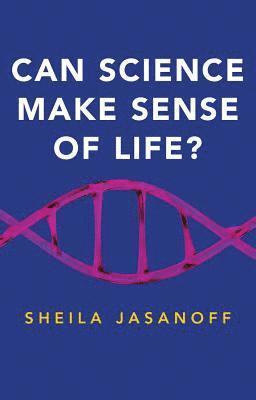
Since the discovery of the structure of DNA and the birth of the genetic age, a powerful vocabulary has emerged to express science’s growing command over the matter of life. Armed with knowledge of the code that governs all living things, biology and biotechnology are poised to edit, even rewrite, the texts of life to correct nature’s mistakes.Yet, how far should the capacity to manipulate what life is at the molecular level authorize science to define what life is for? This book looks at flash points in law, politics, ethics, and culture to argue that science’s promises of perfectibility have gone too far. Science may have editorial control over the material elements of life, but it does not supersede the languages of sense-making that have helped define human values across millennia: the meanings of autonomy, integrity, and privacy; the bonds of kinship, family, and society; and the place of humans in nature.
138 kr
Skickas inom 7-10 vardagar
Since the discovery of the structure of DNA and the birth of the genetic age, a powerful vocabulary has emerged to express science’s growing command over the matter of life. Armed with knowledge of the code that governs all living things, biology and biotechnology are poised to edit, even rewrite, the texts of life to correct nature’s mistakes.Yet, how far should the capacity to manipulate what life is at the molecular level authorize science to define what life is for? This book looks at flash points in law, politics, ethics, and culture to argue that science’s promises of perfectibility have gone too far. Science may have editorial control over the material elements of life, but it does not supersede the languages of sense-making that have helped define human values across millennia: the meanings of autonomy, integrity, and privacy; the bonds of kinship, family, and society; and the place of humans in nature.
445 kr
Skickas inom 7-10 vardagar
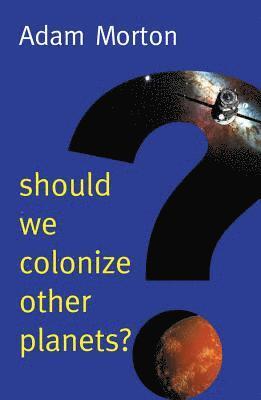
As humans continue to degrade and destroy our planet’s resources, leading to predictions of total ecological collapse, some (such as the entrepreneur Elon Musk) now suggest that a human colony elsewhere may be our species’ best hope for survival.Adam Morton examines extra-terrestrial colonization plans with a critical eye. He makes a strong case for colonization – just not by human beings. Humans live relatively short lives and, to survive, require large amounts of food and water, very specific climatic conditions and an oxygen-rich atmosphere. We can create colonists that have none of these shortcomings.Reflecting compassionately on the nature of existence, Morton argues that we should treat the end of the human race in the same way that we treat our own deaths: as something sad but ultimately inevitable. The earth will perish one day, and, in the end, we should be concerned more with securing the future of intelligent beings than with the preservation of our species, which represents but a nanosecond in the history of our solar system.
138 kr
Skickas inom 7-10 vardagar
As humans continue to degrade and destroy our planet’s resources, leading to predictions of total ecological collapse, some (such as the entrepreneur Elon Musk) now suggest that a human colony elsewhere may be our species’ best hope for survival.Adam Morton examines extra-terrestrial colonization plans with a critical eye. He makes a strong case for colonization – just not by human beings. Humans live relatively short lives and, to survive, require large amounts of food and water, very specific climatic conditions and an oxygen-rich atmosphere. We can create colonists that have none of these shortcomings.Reflecting compassionately on the nature of existence, Morton argues that we should treat the end of the human race in the same way that we treat our own deaths: as something sad but ultimately inevitable. The earth will perish one day, and, in the end, we should be concerned more with securing the future of intelligent beings than with the preservation of our species, which represents but a nanosecond in the history of our solar system.