New International Relations of Europe – serie
Visar alla böcker i serien New International Relations of Europe. Handla med fri frakt och snabb leverans.
7 produkter
7 produkter
1 572 kr
Skickas inom 10-15 vardagar
Business, Government, and EU Accession is a detailed study of how EU accession impacts the relationship between business and government in the acceding country. Iankova identifies three major mechanisms by which the EU has affected business-government interactions: first, the legal conditionalities and harmonization efforts for EU entry; second, the pre-accession and anticipated postaccession financial assistance with its specific priorities and requirements; and third, the capacity building and learning that arises from efforts to adapt to the EU conditionalities of membership. Through addressing the question of EU influence on in-country institutional relationships, Iankova is able to highlight patterns of Europeanization that develop in those relationships a result of the adaptational pressures of EU accession, and to trace the effectiveness of these adaptive relationship in facilitating the preparedness of an EU-acceding country for EU entry Using Bulgaria as a case study, she examines the mechanisms of these interactions and interrogates the effectiveness of existing models in facilitating national goals of EU accession, revealing difficulties with and resistances to applying an EU-designed model of institutional change in postcommunist regions.
675 kr
Skickas inom 10-15 vardagar
As the world looks to Europe to take on more responsibility in international politics and security in the devastating aftermath of Bosnia and Kosovo, this pathbreaking book provides the first systematic evaluation of the political impact of the European Union (EU) on a global scale. Little is known of the EU's international political influence, yet if the EU is to develop a viable Common Foreign and Security Policy, other actors will have to perceive the Union as an important player. Roy Ginsberg fills this vital gap by first linking the contexts and sources of EU foreign policy actions with the processes and outputs of decisionmaking and then examining how outsiders view the EU. Combining a masterly synthesis of the literature with invaluable primary interviews and case studies that document the reach of and limits to the EU's political influence, Ginsberg takes the study of EU foreign policy to a new level of analysis. By defining, describing, and explaining the different levels and degrees of external political impact, the book serves as a model for the advancement of conceptual knowledge, rigorous political science research, and state-of-the-art survey techniques and methodology. Scholars, students, and practitioners alike will find this rounded and nuanced work indispensable for understanding EU involvement in international politics seen from the perspective of non-EU players, particularly after the war in Kosovo; the enactment of the Treaty of Amsterdam; the Irish 'no' vote for the Treaty of Nice; and the efforts forged by the Europeans to operationalize the new political, security, and military committees associated with the European Security and Defense Policy.
Pathways after Empire
National Identity and Foreign Economic Policy in the Post-Soviet World
Häftad, Engelska, 2001
675 kr
Skickas inom 10-15 vardagar
This book explores how culture shapes foreign economic policy in post-Soviet states. After the Soviet empire fragmented, some of the newly emerged nations directed their economic activities primarily toward Russia and other former republics, while others turned sharply away from the Soviet bloc. Taking a constructivist approach, Andrei P. Tsygankov explains the striking variation by making the original argument that a new state's strength of national identity shapes its foreign economic policy. The stronger the identity, the more likely the new state was to shift away from the empire. Drawing on detailed case studies of Latvia, Ukraine, and Belarus, the author demonstrates how the Baltic nations, with a strong sense of identity, chose to deal with Russia and other ex-Soviet nations on a strictly bilateral basis and entered preferential arrangements with European countries. Ukraine, with moderate identity strength, pursued active economic relations with both Russia and Europe. Finally, Belarus, with a relatively weak identity, pursued an effort to reintegrate with Russia at the expense of developing ties with Europe. Employing a range of both qualitative and quantitative analysis, this study brings a national identity perspective into the forefront of international political economy theory.
789 kr
Skickas inom 5-8 vardagar
NATO's quickly evolving relationship with Central and Eastern Europe is forming a new basis for security in the region. Enlargement into the former-Soviet bloc, the conflict over Kosovo, and developing foreign and domestic events are drastically changing the technical aspects of security management, the perceptions of security held by the region's countries, and the actual security situation on the ground. Almost NATO broadly examines the region's current security situation and specifically explores NATO's relationship with Slovakia, Slovenia, Romania, Bulgaria, Ukraine, and the Baltic states—all non-members, but each with its own expectations for membership and relationship to the organization. Russia's interaction with NATO since the end of the Cold War and that country's crucial role in the region's future rounds out the regional coverage.The book's connective tissue is a broader concept of security that encompasses the European Union, environmental concerns, minority issues, and economic and political performance as Europe moves into the 21st century. The interrelationship and significance of varied concepts of security are summarized and further developed in the concluding chapter, along with an effort to place developments in the region within a more theoretical perspective. The result is a book of significant breadth and substantial utility, one invaluable to readers trying to understand the region and NATO's role in its security.
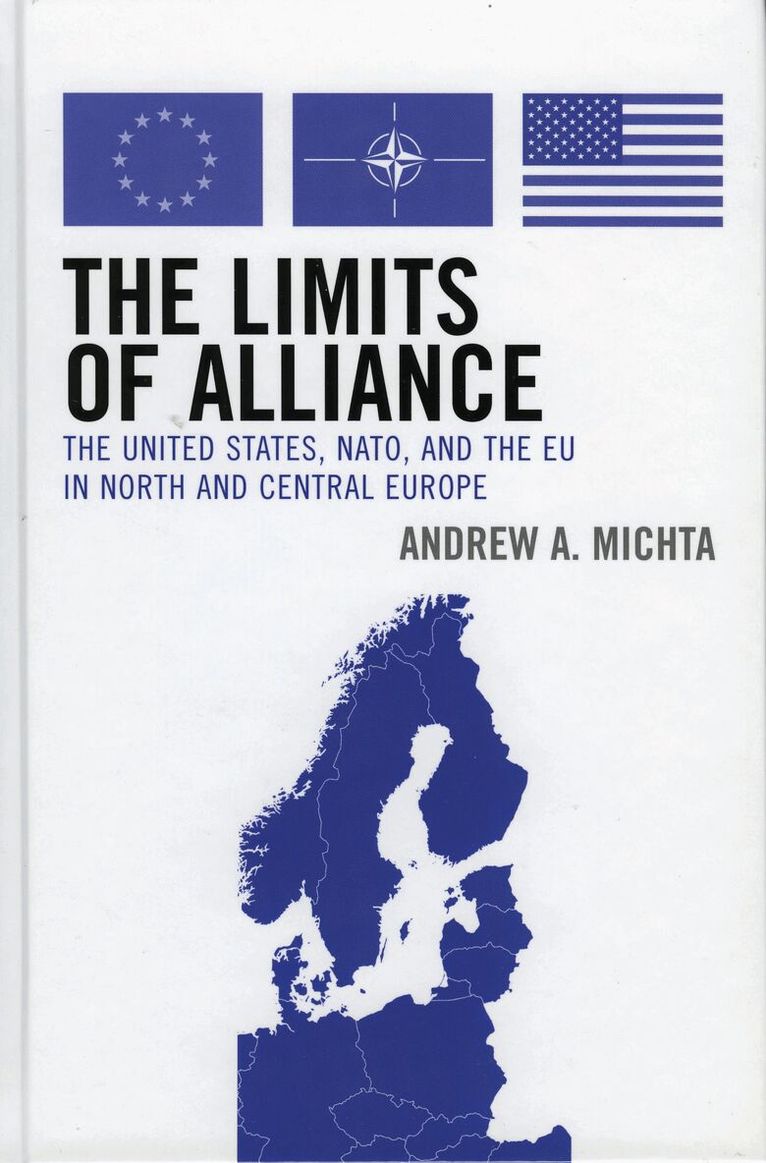
Limits of Alliance
The United States, NATO, and the EU in North and Central Europe
Inbunden, Engelska, 2006
1 564 kr
Skickas inom 5-8 vardagar
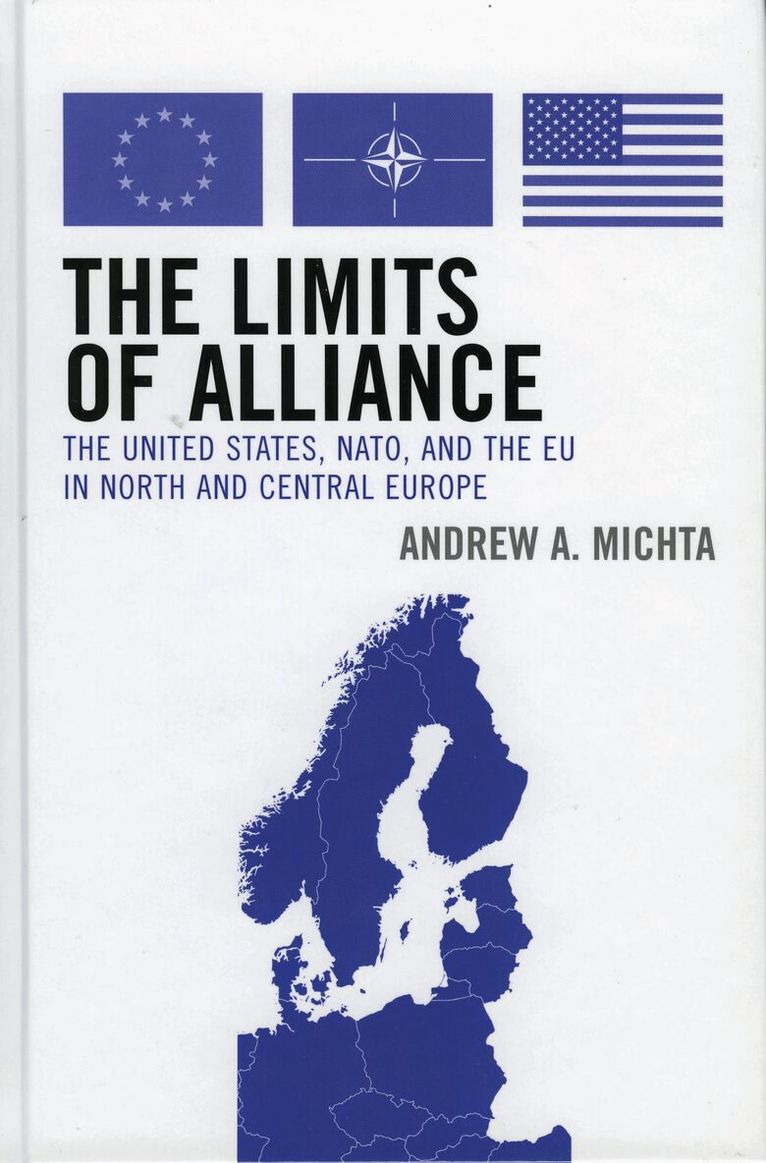
Are the relationships that the United States forged with North and Central Europe during the Cold War still viable today? As the North Atlantic Treaty Organization (NATO) declines and the European Security and Defense Policy (ESDP) emerges, can the United States and Europe bridge the transatlantic fissures that opened when the United States prepared to go to war with Iraq? In a post-9/11 world, North and Central Europe have had to adapt their national security policies and rethink their relationship with the United States. In an in-depth look at the security policies of the states in North and Central Europe, Andrew Michta highlights how historical legacies, regional geostrategic constraints, and individual capabilities have shaped their response to the new environment. Michta raises the broad question of whether traditional alliances and NATO are still viable ways to deal with new security concerns. The two key questions that arise from this discussion are to what extent NATO still matters to the United States, beyond its political utility, and whether the European Union as a whole can become a partner for the United States in a new security environment. The Limits of Alliance argues that, although NATO will continue to exist in the coming decade, the hollowing-out of the alliance will be accompanied by a shift in transatlantic security relations toward bilateralism determined by regional security considerations.
Limits of Alliance
The United States, NATO, and the EU in North and Central Europe
Häftad, Engelska, 2006
605 kr
Skickas inom 5-8 vardagar
Are the relationships that the United States forged with North and Central Europe during the Cold War still viable today? As the North Atlantic Treaty Organization (NATO) declines and the European Security and Defense Policy (ESDP) emerges, can the United States and Europe bridge the transatlantic fissures that opened when the United States prepared to go to war with Iraq? In a post-9/11 world, North and Central Europe have had to adapt their national security policies and rethink their relationship with the United States. In an in-depth look at the security policies of the states in North and Central Europe, Andrew Michta highlights how historical legacies, regional geostrategic constraints, and individual capabilities have shaped their response to the new environment. Michta raises the broad question of whether traditional alliances and NATO are still viable ways to deal with new security concerns. The two key questions that arise from this discussion are to what extent NATO still matters to the United States, beyond its political utility, and whether the European Union as a whole can become a partner for the United States in a new security environment. The Limits of Alliance argues that, although NATO will continue to exist in the coming decade, the hollowing-out of the alliance will be accompanied by a shift in transatlantic security relations toward bilateralism determined by regional security considerations.
675 kr
Skickas inom 10-15 vardagar
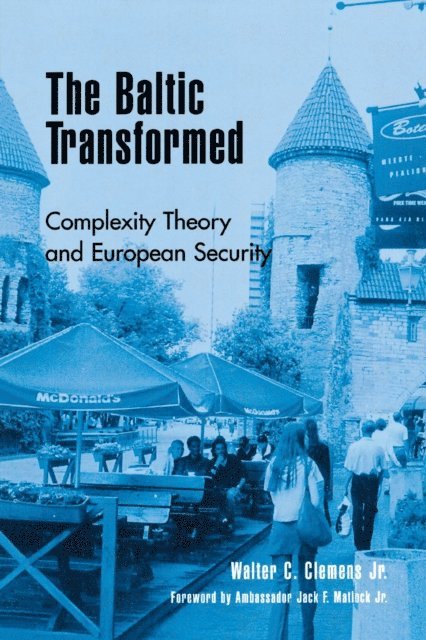
Why isn't the Baltic region like the Balkans? Why have the Baltic republics not experienced ethnic cleansing, border wars, authoritarian rule, and social chaos? Instead, peace, democracy, and market economies have taken root since the fall of communism. Walter C. Clemens, Jr. here uses complexity theory, which analyzes the role of self-organization in complex adaptive systems, to explain the 'Baltic miracle.' He argues that the theory is a vital tool for understanding the remarkable strides made by Estonia, Latvia, and Lithuania since 1991 in coping with the transition to partnership with the new Europe. The Baltic peoples have adapted well to the demands of democracy, a market economy, and a constructive role in world affairs. The achievements of Estonia, Latvia, and Lithuania in the past decade are the more amazing when considered against the hundreds of years they were dominated by Teutonic knights, Hanseatic merchants, Sweden, Russia, and the USSR. Clemens uses this history as a springboard to analyze how Balts self-organize today to meet the challenges of transition. One of the first books to apply complexity theory to a major sphere of world politics, The Baltic Transformed will provoke constructive debate with its ambitious and well-grounded analysis of not only Baltic developments but European security more generally. Despite its theoretical foundation, the book is written in a clear and accessible style that will make it invaluable for courses on comparative politics, political development, international relations, security, or transition studies.