New Medieval Literatures - Böcker
Visar alla böcker i serien New Medieval Literatures. Handla med fri frakt och snabb leverans.
18 produkter
18 produkter
2 413 kr
Skickas inom 7-10 vardagar
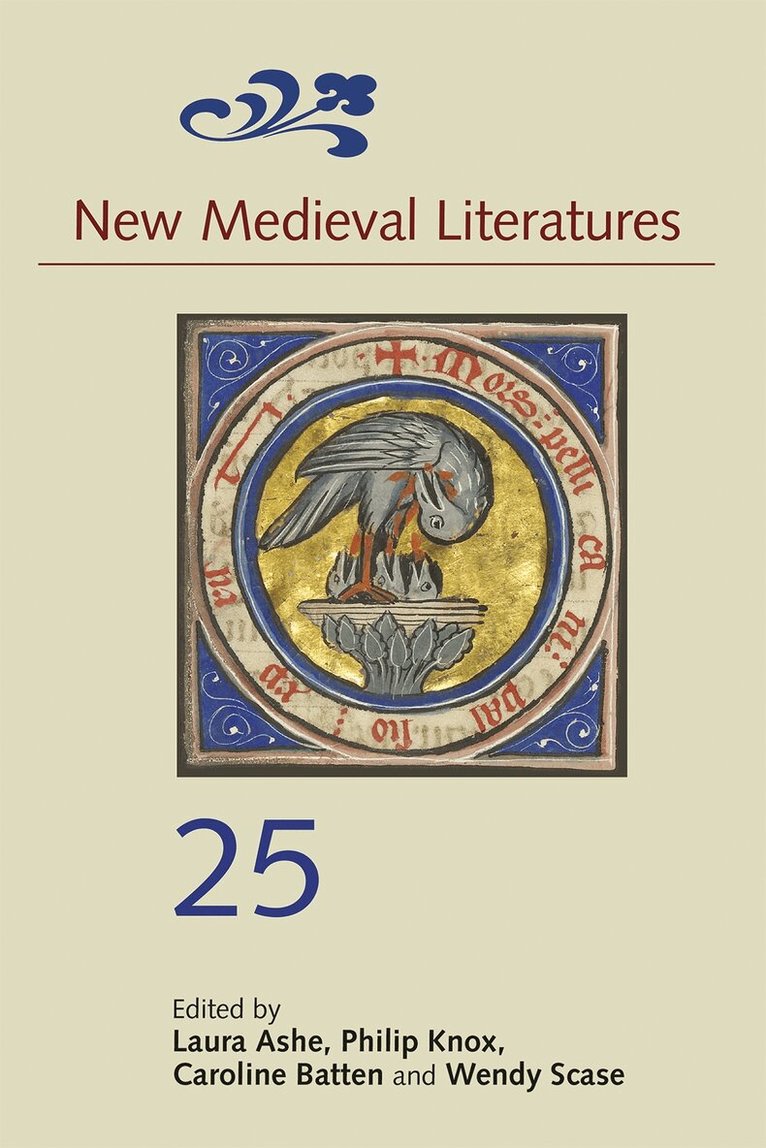
New Medieval Literatures is a new annual of work on medieval textural cultures. It will provide a regular venue for innovative essays that deploy diverse methodologies - theoretical, archival, philological, and historicist - with an awareness of postmodernism. As well as featuring challenging new articles, each issue will include an analytical survey by a leading international medievalist of recent work in an emerging or dominant critical discourse. The editors, active in three continents and supported by a distinguished multidisciplinary Advisory Board, aim to engage with intellectual and cultural pluralism in the Middle Ages and now. The first volume, New Medieval Literatures 1, presents essays that destabilize the medieval text as a critical category. Interrogating period and literary boundaries, the contributors invoke bordercountry narratives, performance texts, self-consuming writing, and post-medievalist readers as they explore some of the most crucial topics in contemporary literary studies. Subjects discussed include vernacularity and political agency, pedagogic discourses, the textualization of authority, and the literary construction of cultural and social space. The volume as a whole demonstrates the central contribution of medievalists to 'the production of the present'. Future issues will include essays by Susan Crane, Simon Gaunt, Kantik Ghosh, Steven Kruger, Anne Middleton, Larry Scanlon, Helen Solterer,Robert Stein Jane Taylor and survey articles by Louise Fradenburg and Sarah Kay. Submissions for Volume 3 and subsequent issues may be sent to any of the editors.
4 175 kr
Skickas inom 5-8 vardagar
New Medieval Literatures is a new annual of work on medieval textual cultures. Its scope is inclusive of work across the theoretical, archival, philological, and historicist methodologies associated with medieval literary studies. The title announces an interest both in new writing about medieval culture and in new academic writing. As well as featuring challenging new articles, each issue will include an analytical survey by a leading international medievalist of recent work in an emerging or dominant critical discourse, in this volume Louise O. Fradenburg's study of psychoanalytical medievalism. The editors aim to engage with intellectual and cultural pluralism in the Middle Ages and now. Volume 2 features in particular work representing European continental traditions as well as Anglo-Norman and Anglo-Latin writings. The essays in this volume move from the streets of Paris, London, and English market towns to English monasteries, idealized pastoral spaces, Christian-Jewish-Muslim Spain, Rome, and fourteenth-century Oxford. Subjects discussed include the spectral Jew in the making of Christian history; Peter Damian's Liber Gomorrhianus and the sexual politics of papal reform; sexuality and the improper allegory of the Romance of the Rose; violence, gender, and states of siege in Christine de Pizan's Paris; metonymy, montage, and death in Villon's Testament; maytime in late medieval courts; the ideological context of the Vita Haroldi; John Wyclif and scriptural truth, and bill-casting and political discourse in late medieval England.The volume as a whole coheres around three important issues of cultural analysis: gender, space, and reading history. Volume 3 will feature the winning essay from the essay prize competition, a major new historiographical essay by David Wallace on Dante in England and medieval-renaissance periodization, and an analytical survey by Sarah Kay on romance literatures and the 'New Philology'. Other contributions will represent new approaches to canonical authors, including Aelfric, Caxton, and Christine de Pizan.
3 287 kr
Skickas inom 3-6 vardagar
New Medieval Literatures is an annual of work on medieval textual cultures. It provides a venue for innovative essays that deploy diverse methodologies–theoretical, archival, philological and historicist. The editors, active in three continents and supported by a distinguished multidisciplinary Advisory Board, aim to engage with intellectual and cultural pluralism in the Middle Ages and now.
3 123 kr
Skickas inom 5-8 vardagar
New Medieval Literatures is an annual containing the best new interdisciplinary work in medieval textual cultures.
2 409 kr
Skickas inom 3-6 vardagar
New Medieval Literatures is an annual of work on medieval textual cultures. It provides a venue for innovative research representing the diverse methodologies of medieval studies - theoretical, archival, philological, and historicist.Volume 5 is marked by a preoccupation with origins or beginnings: the return to some of the foundational texts of the 'modern', here Marx, Freud, and classical Marxist literary criticism; or how the Middle Ages thematized its own antecedents, in the founding myth of imperial Rome, the originary force of martyrdom, and the reformist foundations of monasticism.This volume features important new work from distinguished scholars. Christopher Baswell and D. Vance Smith both write about resurrecting the pagan past in the modern urban spaces of fourteenth-century England: Baswell's magisterial archival essay considers the political role of Virgil's Aeneid in the Uprising of 1381, and Smith uses the urban narrative of St Erkenwald as a departure for a profound meditation on death and melancholy. Jody Enders dramatically contrasts the intentionality implicit in two fatal accidents that were also theatrical spectacles, one in medieval Paris and one in modern Los Angeles. And Jocelyn Wogan-Browne's magnificant analytical survey of recent research on female reading communities takes a critical new look at the way in which we deploy the foundational concept of 'community' in histories of medieval reading and literacy. Essays by four leading younger scholars complete this volume with complementary yet highly distinctive perspectives on martyrdom, sainthood, and virginity. Robert Mills considers how the visualization of martyrs' suffering in words and image can be a signifier of erotic pleasure; Sarah Salih evaluates the particular eroticism of the sponsalia Christi; Catherine Sanok reads Pearl through the lens of hagiography and Marxist genre theory; and Nancy Warren's new research on Colette of Corbie looks at the reformist power of female monasticism in the Hundred Years War.
2 424 kr
Skickas inom 7-10 vardagar
New Medieval Literatures is an annual containing the best new interdisciplinary work in medieval textual studies. Volume VI deals in depth with one of the most important of medieval vernacular writers, Geoffrey Chaucer, his closest successor, Thomas Hoccleve, and his most important precursor in England, Marie de France. It proposes new models for thinking of medieval writing in terms of politics and geography. NML is famous for its analytical surveys, in which major, often younger, scholars review recent work across their entire fields. In keeping with the theme of the volume, Performing Dissent, NML 6 has three surveys: on heresy in Europe (by Mark Pegg) and Britain (by Fiona Somerset), and on medieval liturgy and performance (by Bruce Holsinger).
3 474 kr
Skickas inom 5-8 vardagar
New Medieval Literatures Volume 7 spotlights methodologies and practices in medieval textual studies. Ten challenging new essays together explore contemporary medievalist practices in and beyond the academy; review and critique disciplinary cultures in medieval studies past and present; and experiment with new paradigms. As usual, the volume showcases work by leading scholars together with work by striking new voices. In this volume's analytical survey 'Actually existing Anglo-Saxon Studies', Clare Lees imagines alternatives to current disciplinary culture. Other essays are Wendy Scase, 'The Medievalist's Tale' (introduction); Stephanie Trigg, 'Walking through Cathedrals: Scholars, Pilgrims, and Medieval Tourists'; Steve Ellis, 'Framing the Father: Chaucer and Virginia Woolf'; Daniel Wakelin, 'William Worcester writes a History of his Reading'; Mishtooni Bose, 'Vernacular Philosophy and the Making of Orthodoxy in the Fifteenth Century'; Melissa Raine, '"Fals Flesch": Food and the Embodied Piety of Margery Kempe'; Lisa H. Cooper, 'Urban Utterances: Merchants, Artisans, and the Alphabet in Caxton's Dialogues in French and English'; Seeta Chaganti, '"A Form as Grecian Goldsmiths make": Enshrining Narrative in Chrétien de Troyes's Cligés and the Stavelot Triptych'; and Christopher Cannon, 'Between the Old and the Middle of English'.
634 kr
Skickas inom 7-10 vardagar
An invigorating annual for those who are interested in medieval textual cultures and open to ways in which diverse post-modern methodologies may be applied to them. Alcuin Blamires, Review of English StudiesNew Medieval Literatures - now published by Boydell and Brewer - is an annual of work on medieval textual cultures, aiming to engage with intellectual and cultural pluralism in the Middle Ages and now. Its scope is inclusive of work across the theoretical, archival, philological, and historicist methodologies associated with medieval literary studies, and embraces both the British Isles and Europe.Topics in this volume include the political ecology of Havelok the Dane: Thomas Hoccleve and the making of "Chaucer"; and Britain and the Welsh Marches in Fouke le Fitz Waryn.Contributors: Alexis Kellner Becker, Emily Dolmans, Marcel Elias, PhilipKnox, Sebastian Langdell, Jonathan Morton, Marco Nievergelt, George Younge.
1 207 kr
Skickas inom 10-15 vardagar
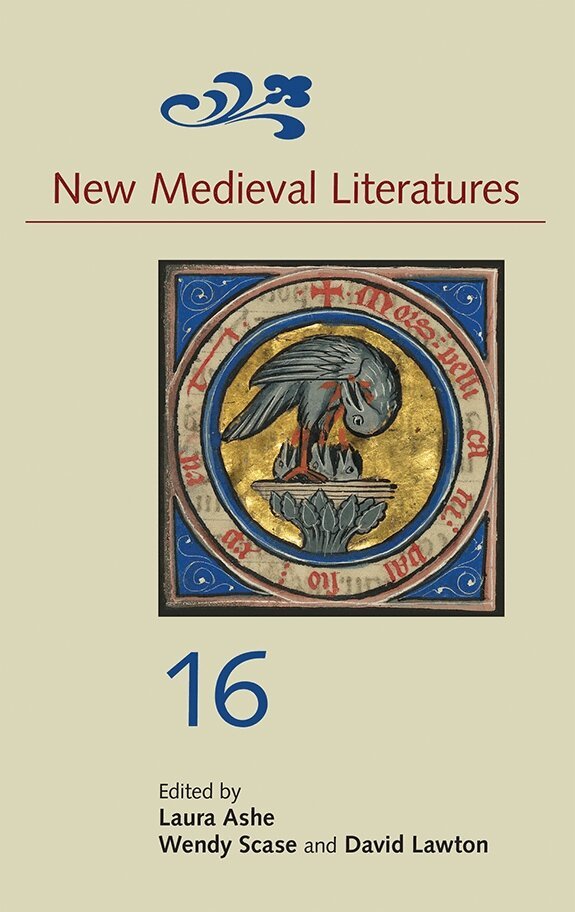
An invigorating annual for those who are interested in medieval textual cultures and open to ways in which diverse post-modern methodologies may be applied to them. Alcuin Blamires, Review of English StudiesNew Medieval Literatures is an annual of work on medieval textual cultures, aiming to engage with intellectual and cultural pluralism in the Middle Ages and now. Its scope is inclusive of work across the theoretical, archival, philological, and historicist methodologies associated with medieval literary studies, and embraces both the British Isles and Europe.Essays in this volume engage with the relations between humans and nonhumans; the power of inanimate objects to animate humans and texts; literary deployments of medical, aesthetic, and economic discourses; the language of friendship; and the surprising value of early readers' casual annotations. Texts discussed include Beowulf, works by Rolle, Chaucer, Langland, Gower, and Lydgate; lyrics of the Occitan troubadour Marcabru and the French poet Richard de Fournival; and the Anglo-Saxon versions of Boethius's De Consolatione Philosophiae and Augustine's Soliloquia.Wendy Scase is Geoffrey Shepherd Professor of Medieval English Literature at the University of Birmingham; David Lawton is Professor of English at Washington University, StLouis; Laura Ashe is Associate Professor of English at Worcester College, Oxford.
1 190 kr
Skickas inom 7-10 vardagar
An invigorating annual for those who are interested in medieval textual cultures and open to ways in which diverse post-modern methodologies may be applied to them. Alcuin Blamires, Review of English StudiesNew Medieval Literatures is an annual of work on medieval textual cultures, aiming to engage with intellectual and cultural pluralism in the Middle Ages and now. Its scope is inclusive of work across the theoretical, archival, philological, and historicist methodologies associated with medieval literary studies, and embraces both the British Isles and Europe.Essays in this volume engage with real and metaphorical relations between humans and nonhumans, with particular focus on spiders, hawks, and demons; discuss some of the earliest Middle English musical and, it is argued, liturgical compositions; describe the generic flexibility and literariness of medical discourse;consider strategies of affective and practical devotion, and their roles in building a community; and offer an example of the creativity of fifteenth-century vernacular religious literature. Texts discussed include the Old English riddles and Alfredian translations of the psalms; the lives of saints Dunstan, Godric, and Juliana, in Latin and English; Piers Plowman, in fascinating juxtaposition with Hugh of Fouilloy's Aviarium; medical remedybooks and uroscopies, many from unedited manuscripts; and the fifteenth-century English Life of Job.LAURA ASHE is Professor of English at the University of Oxford and Fellow and Tutor at Worcester College, Oxford; PHILIP KNOX is University Lecturer in English and Fellow of Trinity College, Cambridge; WENDY SCASE is Geoffrey Shepherd Professor of Medieval English Literature at the University of Birmingham; DAVID LAWTON is Professor of English at Washington University in St Louis.Contributors: Jenny C. Bledsoe, Heather Blurton, Hannah Bower, Megan Cavell, Cathy Hume, Hilary Powell, Isabella Wheater
1 348 kr
Skickas inom 10-15 vardagar
An invigorating annual for those who are interested in medieval textual cultures and open to ways in which diverse post-modern methodologies may be applied to them. Alcuin Blamires, Review of English StudiesNew Medieval Literatures is an annual of work on medieval textual cultures, aiming to engage with intellectual and cultural pluralism in the Middle Ages and now. Its scope is inclusive of work across the theoretical, archival, philological, and historicist methodologies associated with medieval literary studies, and embraces both the British Isles and Europe.Essays in this volume trace institutional histories, examining the textual and memorial practices of religious institutions across the British Isles; explore language games that play with meaning in Anglo-French poetry; examine the interplay of form and matter in Italian song; position Old Norse sagas in an ecocritical and a postcolonial framework; consider the impact of papal politics on Middle English poetry; and read allegorical poetry as a privileged site for asking fundamental questions about the nature of the mind. Texts discussed include lives of St Aebbe of Coldingham, with a focus on the twelfth-century Latin Vita and its afterlives; a range of Latin and vernacular works associated with institutional houses, including the Vie de Edmund le rei by Denis Piramus and the Ecclesiastical History of Orderic Vitalis; both the didactic and lyrical writings of Walter de Bibbesworth; the trecento Italian caccia, especially examples by Vincenzo da Rimini and Lorenzo Masini;Bárðar saga, Egils saga, and other Old Norse works that reveal the traces of encounters with a racial other; John Gower's Confessio Amantis, in striking juxtaposition with late-medieval accounts of ecclesiastical crisis; and Alain Chartier's Livre de l'Espérance.PHILIP KNOX Is University Lecturer in English and Fellow of Trinity College, Cambridge; KELLIE ROBERTSON is Professor of English and Comparative Literature at theUniversity of Maryland; WENDY SCASE is Geoffrey Shepherd Professor of Medieval English Literature at the University of Birmingham; LAURA ASHE is Professor of English at the University of Oxford and Fellow and Tutor at Worcester College, Oxford. Contributors: Daisy Delogu, Thomas Hinton, Thomas O'Donnell, Daniel Remein, Jamie L. Reuland, Zachary Stone, Christiania Whitehead.
1 348 kr
Skickas inom 10-15 vardagar
Cutting-edge and fresh new outlooks on medieval literature, emphasising the vibrancy of the field.New Medieval Literatures is an annual of work on medieval textual cultures, aiming to engage with intellectual and cultural pluralism in the Middle Ages and now. Its scope is inclusive of work across the theoretical, archival, philological, and historicist methodologies associated with medieval literary studies, and embraces the range of European cultures, capaciously defined.Essays in this volume investigate a range of writers from late antiquity to the fifteenth century. They explore encounters between humans and animals in French romance; reflect on what contemporary sound studies can offer to Anglo-French poetry; trace how the reception of Trojan history is influenced by late medieval military practices; attend to the complex multilingualism of a devotional poetry that tests the limits of both language and theology; analyse the ways in which Christ's sexuality upsets religious typology inlate medieval drama; document the lines of national and European affinities found in French poetic manuscripts; and argue for why we should study "ugly" manuscripts of practical instruction not only for what they teach us but alsofor their insights into medieval literacy. Texts discussed include romances such as Chrétien de Troyes's Yvain and Béroul's Tristan; the theologian John of Howden's adaptation of the Philomela legend in his Rossignos; Chaucer's Troilus and Criseyde read alongside siege chronicles of the Hundred Years War; Bruder Hans's quadrilingual Ave Maria; the York Corpus Christi Plays; the poetry of Charles d'Orléans; and a group oflate medieval manuscripts which include herbals, account books, and medical treatises. KELLIE ROBERTSON is Professor of English and Comparative Literature at the University of Maryland; WENDY SCASE is Geoffrey Shepherd Professor of Medieval English Literature at the University of Birmingham; LAURA ASHE is Professor of English at the University of Oxford and Fellow and Tutor at Worcester College, Oxford; PHILIP KNOX Is University Lecturer inEnglish and Fellow of Trinity College, Cambridge, Contributors: Lukas Hadrian Ovrom, Terrence Cullen, Steven Rozenski, Tison Pugh, Rory G. Critten, Daniel Wakelin.
1 190 kr
Skickas inom 7-10 vardagar
Cutting-edge and fresh new outlooks on medieval literature, emphasising the vibrancy of the field.New Medieval Literatures is an annual of work on medieval textual cultures, aiming to engage with intellectual and cultural pluralism in the Middle Ages and now. Its scope is inclusive of work across the theoretical, archival, philological, and historicist methodologies associated with medieval literary studies, and embraces the range of European cultures, capaciously defined.Essays in this volume engage with a wide range of subject matter, from as far back as Livy (d.c.AD 12/18) to Erwin Panofsky (d. 1968). They demonstrate that medieval textual cultures is a radically negotiable category and that medieval understandings of the past were equally diverse and unstable.They reflect on relationships between history, texts, and truth from a range of perspectives, from Foucault to "truthiness", a twenty-first-century media coinage. Materiality and the technical crafts with which humans engage withthe natural world are recurrent themes, opening up new insights on mysticism, knighthood, and manuscript production and reception. Analysis of manuscript illuminations offers new understandings of identity and diversity, while a survey of every thirteenth-century manuscript that contains English currently in Oxford libraries yields a challenging new history of script. Particular texts discussed include Chrétien de Troyes's Conte du Graal, Richard Rolle's Incendium amoris and Melos amoris, and the Middle English verse romances Lybeaus Desconus, The Erle of Tolous, Amis and Amiloun, and Sir Gawain and the Green Knight.
1 329 kr
Skickas inom 7-10 vardagar
Annual volume showcasing the best new work in this field.New Medieval Literatures is an annual of work on medieval textual cultures, aiming to engage with intellectual and cultural pluralism in the Middle Ages and now. Its scope is inclusive of work across the theoretical, archival, philological, and historicist methodologies associated with medieval literary studies, and embraces the range of European cultures, capaciously defined.Essays in this volume engage with widely varied themes, from confession in the domestic household to international politics and statecraft; experimental scientific knowledge, and the supernatural world of demons; canonical Arthurian romance, and scholastic theology in the vernacular; monastic historiographical visions, and geographies of pilgrimage. Investigations range from the twelfth to the fifteenth centuries, and from England to the Holy Land. Chrétien de Troyes's Le chevalier de la charrette and Geoffrey Chaucer's Friar's Tale are examined in new ways, and with new conclusions for their engagements with technologies of embodiment and the hermeneutics of bodily contact; Laȝamon's Brut is shown to bring the expectations of monastic historiography into the vernacular, while Reginald Pecock's radical and sophisticated vernacular theology is explicated in all its dangerous heterodoxy. Multiple narratives converge and are occluded at the Cave of the Patriarchs in Hebron; Albert the Great experiments with animals and reorients humans in the natural world; Alain Chartier strives to build a united French state. Finally, domestic, familial, and civic bonds of obligation emerge in the shared textual communities of anonymous, late-medieval confessional forms. CONTRIBUTORS: ROBYN A. BARTLETT, KANTIK GHOSH, AYLIN MALCOLM, ALASTAIR MINNIS, LUKE SUNDERLAND, JAMIE K. TAYLOR, HANNAH WEAVER, LUCAS WOOD.
912 kr
Skickas inom 7-10 vardagar
Annual volume on medieval textual cultures, engaging with intellectual and cultural pluralism in the Middle Ages, showcasing the best new work in this field.New Medieval Literatures is an annual of work on medieval textual cultures, aiming to engage with intellectual and cultural pluralism in the Middle Ages and now. Its scope is inclusive of work across the theoretical, archival, philological, and historicist methodologies associated with medieval literary studies, and embraces the range of European cultures, capaciously defined.Essays in this volume engage with widely varied themes: law and literature; manuscript production, patronage, and aesthetics; real and imagined geographies; gender and its connections to narrative theory and to psychoanalysis. Investigations range from the eleventh to the fifteenth centuries, from England to the eastern Mediterranean. New arguments are put forward about the dating, context, and occasion of Geoffrey Chaucer's Boece, while the narrative dynamics of Chaucer's "Franklin's Tale" and "Tale of Melibee" are examined from new perspectives. The topography of the Holy Lands appears both as a set of emotional sites, depicted in the Prick of Conscience in its account of the end of the world, and as co-ordinates in the cultural imaginary of medieval the wine-trade. Grendel's mother emerges as the invisible and unavowable centre of male heroic culture in Beowulf, and the fourteenth-century St Erkenwald is brought into contact with the community-building project of the medieval death investigation. Finally, the late medieval Speculum Christiani is revealed to be a work with deep aesthetic investments when read through the framework of how its medieval scribes encountered and shaped that work.
912 kr
Skickas inom 7-10 vardagar
This volume continues the series' engagement with intellectual and cultural pluralism in the Middle Ages, showcasing the best new work in this field.New Medieval Literatures is an annual of work on medieval textual cultures Its scope is inclusive of work across the theoretical, archival, philological, and historicist methodologies associated with medieval literary studies, and embraces the range of European cultures, capaciously defined.Texts analysed here range in date from the late ninth or early tenth centuries to the fifteenth century, and in provenance from the eastern part of the Hungarian kingdom to the British Isles. European understandings of the world are explored in several essays, including historiographical perspectives on the Mongol Empire and "world-building" in the romances of the Round Table. In their consideration of translation - of English diplomatic texts into French, of the Latin Boethius into Old English, of Old Turkic and Mongolian into Latin - several contributors reveal complex medieval multilingual societies, while translatio is shown to be weaponised in international scholarly rivalries. Bibliophilia, book collection, and book production inform identity-formation, shaping both nationalisms and the many-layered identities of fifteenth-century merchants. Several essays engage revealingly with economic humanities. Account books provide traces of book production capacity in the unlikely location of Calais; credit finance provides metaphors for human relations with the divine in the Book of mystic Margery Kempe; and women broker credit in real-world scenarios too. Other essays engage with sensory studies: sight and optics are shown to inform ethnography, while smell and taste - often considered beyond the reach of language - emerge as surprisingly central in some religious and philosophical writings.
1 190 kr
Skickas inom 7-10 vardagar
This volume continues the series' engagement with intellectual and cultural pluralism in the Middle Ages, showing the best new work in the field.Essays in this volume deal with texts from the ninth to the fifteenth century and include some unexpected comparisons with British Romanticism. Great attention is paid to manuscripts in their contexts and situations of production: thirteenth-century mortuary rolls are examined as sites of fluidly variegated scribal training and practice, revealing a "scriptscape" of social networks spread across the country. Elsewhere, close analysis of manuscripts known to have belonged to Henry Despenser, bishop of Norwich (1370-1406) makes the case for an effective scribal atelier in the city, presided over by the "Despenser Master". Three essays are linked by a consideration of didactic writing: the Old English translation of Gregory the Great's Pastoral Care is analysed both textually and paleographically for what it reveals about grammatical study in England's early Middle Ages, and the moral freighting of that learning; a comparative analysis of multilingual retellings of sheep fables making an important contribution to animal studies; and recent, violent historical events are shown to have been reshaped into a parable for the instruction of wives in the Mesnagier de Paris. Finally, Gower's expansive geographical and genealogical imaginary in the Confessio Amantis reveals the impossibility of controlling the affordances of his multivalent "East"; while the Alliterative Morte Arthur is newly examined for its representation of mountains and mountaineering as sites of active moral allegory and spiritual importance, as well as real-world experiences of beauty and danger.
2 009 kr
Skickas inom 3-6 vardagar
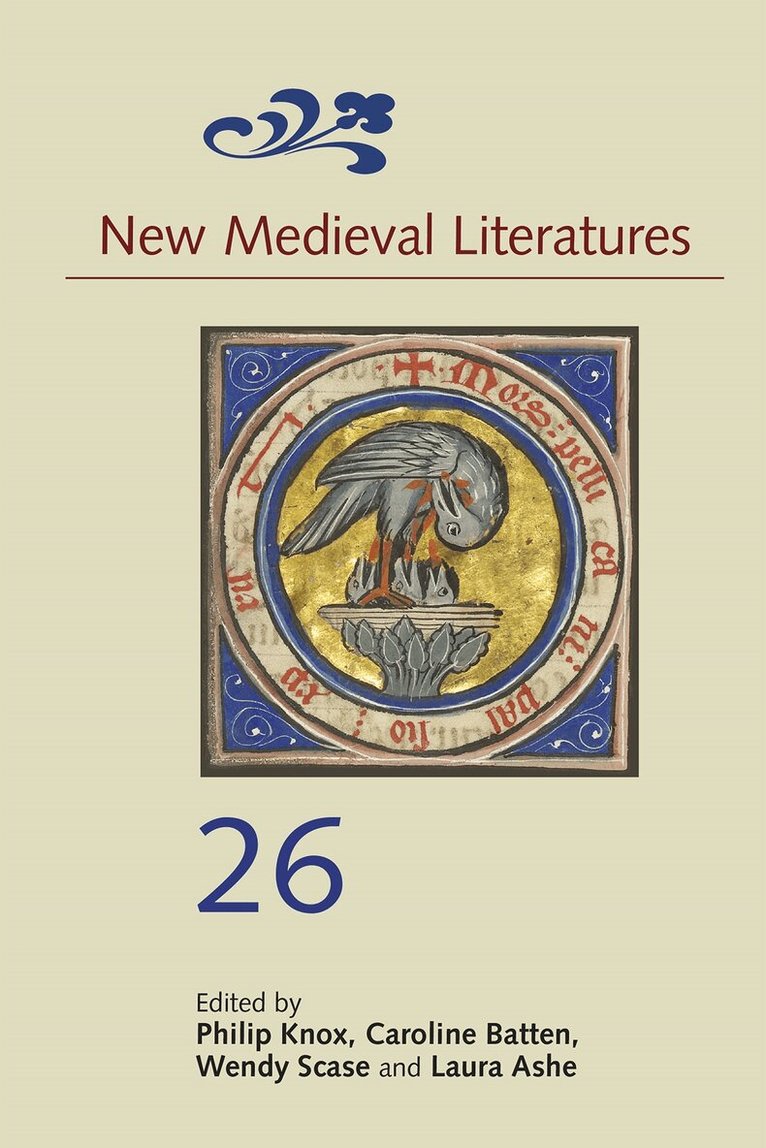
This volume continues the series' engagement with intellectual and cultural pluralism in the Middle Ages, showing the best new work in the field.Essays in this volume cover a rich and diverse range - in chronological terms, from the ninth to the fifteenth century, and across linguistic traditions from Old and Middle English to medieval Latin and Middle French. Using varied conceptual tools and detailed explorations of social, cultural, and intellectual contexts, they offer new interpretations of key works from the central and late Middle Ages. Contributors explore the educational background of the Middle English "Ricardians" - Geoffrey Chaucer, William Langland, John Gower, and the Gawain-poet - through the novel perspective of versification; the intellectual context for the poem St Erkenwald, where a poem about the miraculous salvation of a pagan reflects a detailed engagement with contemporary theology that tests the limits of theological orthodoxy; and the social background of the Gawain-poet, via examples of household hierarchy. A form of textual analysis known as "ergodics" is deployed to offer a way of making sense of the unique challenge of the Old English Maxims, and their position in monastic reading cultures. The Middle English Titus and Vespasian, which tells the story of the siege of Jerusalem, is shown to contain a complex and conflicted form of anti-Judaism, traversed in complex ways by anxieties about gender as well religion and race. Finally, in a linked suite of essays, late medieval heraldry is illuminated from a range of unexpected perspectives drawn from the study of literary form, examining heraldic miscellanies, the creativity of the heraldic imaginary, and the community-building work of the late medieval poetic society known as the Cour Amoureuse.