New Perspectives in Folklore - Böcker
Visar alla böcker i serien New Perspectives in Folklore. Handla med fri frakt och snabb leverans.
5 produkter
5 produkter
2 357 kr
Skickas inom 10-15 vardagar
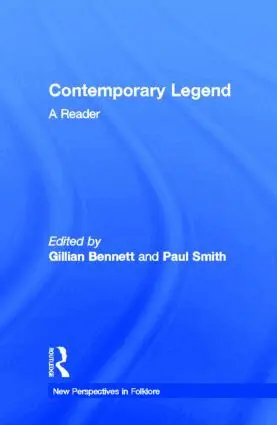
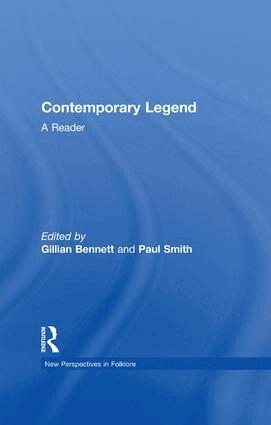
First published in 1996. For most of the time since the Grimm brothers first contrasted the fairy tale (Märchen) and the legend (Sage), the former has enjoyed the greater reputation among folklorists. Only in recent years, and with the work of such scholars as Gillian Bennett and Paul Smith, has it been recognized that—both as art and as news—the legend is now central to contemporary culture in a way that the Märchen no longer is. The present book is the first collection of essays on legend to appear in English since 1971. Nevertheless, its publication consolidates a gradual shift which has taken place over the last two decades, in which English-language scholarship has taken the lead in the study of certain kinds of legends—variously dubbed modern horror legends, urban legends, urban myths or, here, contemporary legends.
1 520 kr
Skickas inom 10-15 vardagar
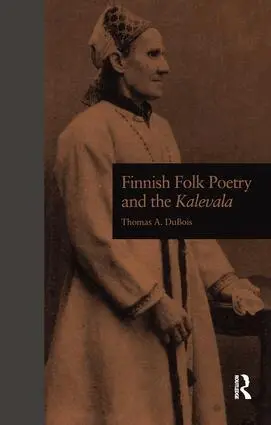
Since its initial publication in the early nineteenth century, Elias Lonnrot’s Finnish epic Kalevala has attracted international interest and scholarship. However, the author comments that the distorting lenses of translation, cultural difference and historical distance, have rendered the work a cryptic and often misinterpreted text outside of its country of origin. Even within Finland, scholars have found it difficult at times to judge the relation of the Kalevala to its oral sources. Lonnrot’s meticulous notes and discussions of intent and accomplishment make clear what he changed and how he went about it, but give us less inkling of why. This study's view is that the key to understanding Lonnrot’s changes lies in Romantic aesthetics and in the intellectual and socio-political agendas which they encode. Lonnrot created a Romantic epic out of Baltic-Finnic folk poetry, an epic complete with the narrative, generic, gendered and political characteristics of literary epics in nineteenth century’ Europe.
1 520 kr
Skickas inom 10-15 vardagar
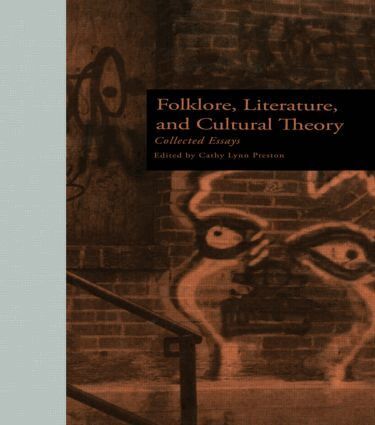
First published in 1996. The need to write, particularly in pre-technological recording days, in order to preserve and to analyze, lies at the heart of folklore and yet to write means to change the medium in which much folk communication and art actually took and takes place. In Part I of the collection, the contributors address literary constructions of traditional and emergent cultures, those of Leslie Marmon Silko, Sandra Cisneros, Pat Mora, Carmen Tafolla, Julio Cortázar, Milan Kundera, Franz Kafka, Philip Roth, Thomas Hardy, and Dacia Maraini. The contributors to Part II of the collection offer readings of a variety of traditional, vernacular, and local performances.
585 kr
Skickas inom 10-15 vardagar
First published in 1996. The need to write, particularly in pre-technological recording days, in order to preserve and to analyze, lies at the heart of folklore and yet to write means to change the medium in which much folk communication and art actually took and takes place. In Part I of the collection, the contributors address literary constructions of traditional and emergent cultures, those of Leslie Marmon Silko, Sandra Cisneros, Pat Mora, Carmen Tafolla, Julio Cortázar, Milan Kundera, Franz Kafka, Philip Roth, Thomas Hardy, and Dacia Maraini. The contributors to Part II of the collection offer readings of a variety of traditional, vernacular, and local performances.
818 kr
Skickas inom 10-15 vardagar
First published in 1996. For most of the time since the Grimm brothers first contrasted the fairy tale (Märchen) and the legend (Sage), the former has enjoyed the greater reputation among folklorists. Only in recent years, and with the work of such scholars as Gillian Bennett and Paul Smith, has it been recognized that—both as art and as news—the legend is now central to contemporary culture in a way that the Märchen no longer is. The present book is the first collection of essays on legend to appear in English since 1971. Nevertheless, its publication consolidates a gradual shift which has taken place over the last two decades, in which English-language scholarship has taken the lead in the study of certain kinds of legends—variously dubbed modern horror legends, urban legends, urban myths or, here, contemporary legends.