Notre Dame Studies in American Catholicism - Böcker
Visar alla böcker i serien Notre Dame Studies in American Catholicism. Handla med fri frakt och snabb leverans.
5 produkter
5 produkter
435 kr
Skickas inom 10-15 vardagar
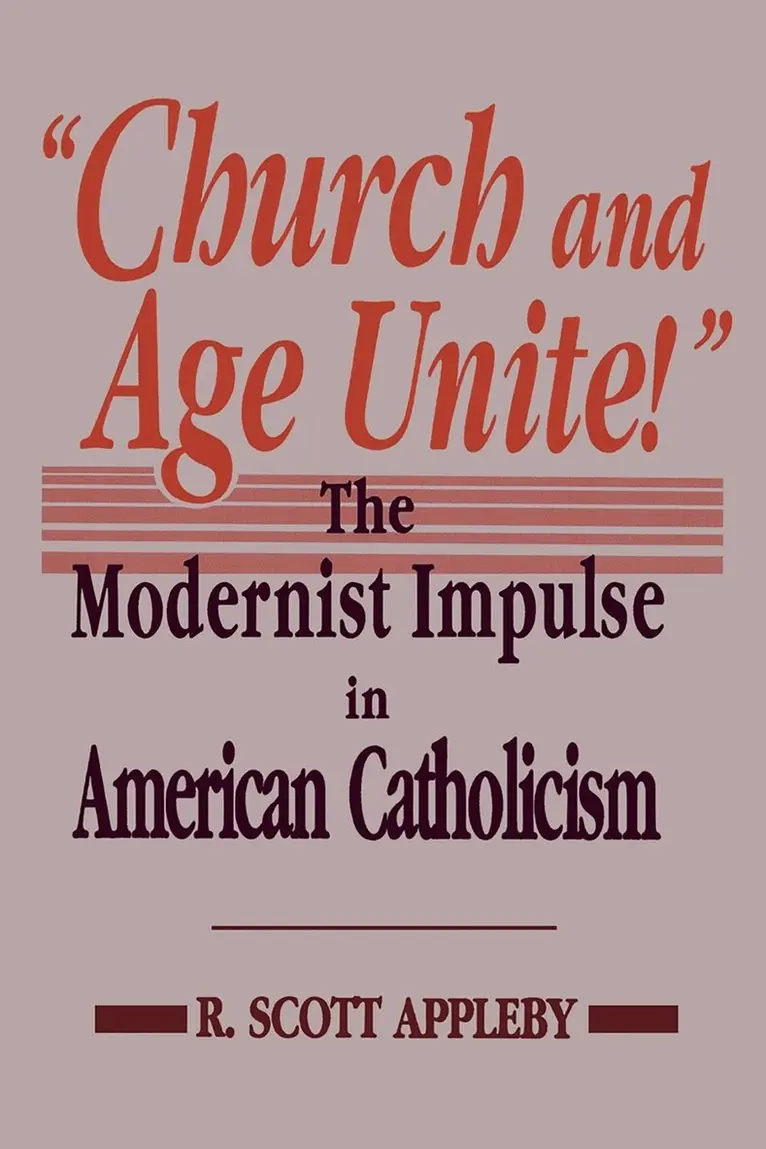
This comprehensive study offers the first book-length examination of the influence of modernism on the intellectual life of the American Catholic community at the beginning of the twentieth century. R. Scott Appleby chronicles the story from 1895, when American Catholic priest John Zahm attempted to reconcile post-Darwinian theories of evolution with Catholic theism, to 1910, when former priest and radical Modernist William L. Sullivan published his Letters to His Holiness Pope Pius X, repudiating Roman authority.Appleby focuses on the ways in which certain priests, scientists, and scholars approached the vital topics of the day-human evolution, the salience of democratic principles and institutions for the vitality of Catholicism, the role of the will and intellect in the assent of faith-by appropriating the insights of the European Catholic Modernists. The Americans probed beyond the limits of the dominant Roman neo-scholasticism and retrieved models, images, and concepts from the apostolic and early medieval eras of church history. As the first experiment with a pluralism of methods and sources in American Catholic theology and philosophy, Appleby argues this was also an attempt to construct a viable Catholic apologetics that would speak to the experiences of American citizens. Because this enterprise resembled that of the condemned Europeans, the Americans also fell under a cloud of suspicion and original research was suspended for a generation.
542 kr
Skickas inom 10-15 vardagar
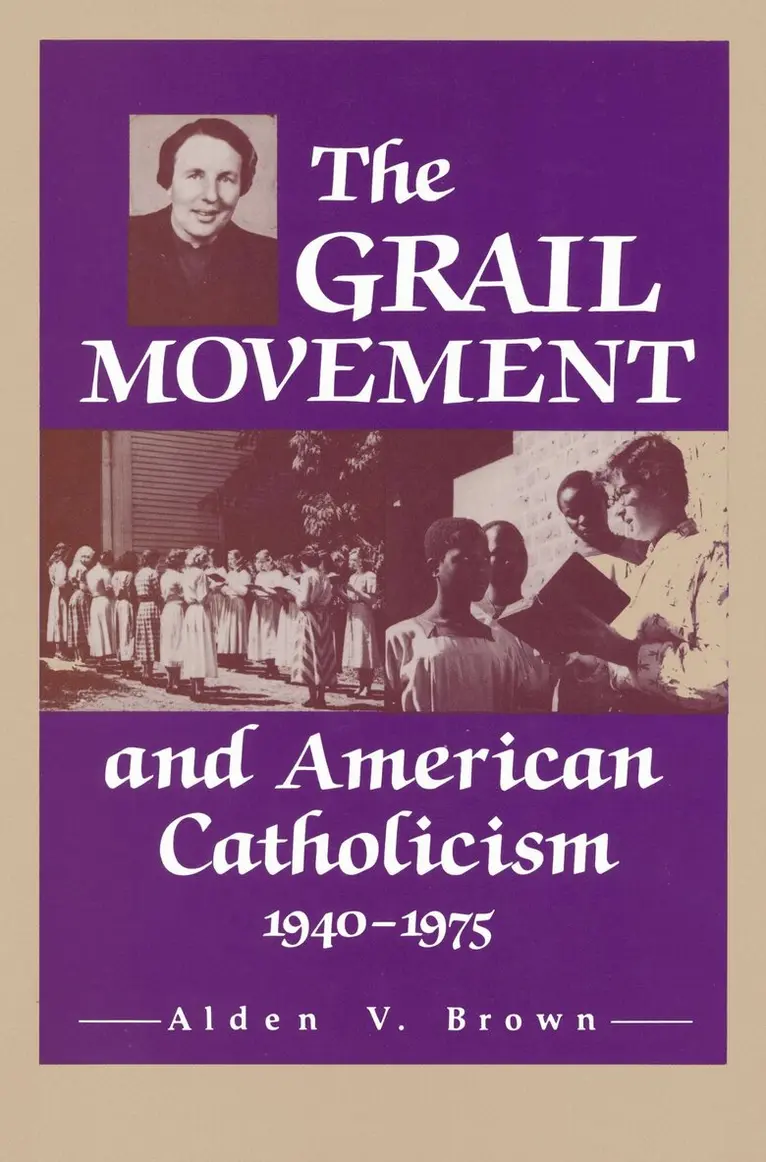
Inspired by a Dutch Jesuit, the Grail movement, a lay apostolate for women, flourished in Europe before corning to the United States in 1940. In the succeeding two decades, it established itself firmly within the American Catholic avant-garde as an attractive alternative to the convent, a pioneer in liturgical renewal, and a champion of the lay apostolate. The Grail Movement and American Catholicism, 1940-1975 chronicles this remarkable community of women who devoted themselves to a life of worship and faith and to creating a "new world in Christ." As Alden V. Brown demonstrates, these women's importance to American Catholic history does not lie solely in their unique purpose, but in the movement itself, which in microcosm mirrored the changes that overtook the American Catholic Church in this century.This ground-breaking study of the Grail movement invites further study of an important part of American Catholic history, namely, the study of the Catholic laity. Brown traces the evolution of the movement from its origins as the Women of Nazareth Society in Holland through its development in the States as an emergent lay Catholicism for women. He then goes on to discuss the Grail's post Vatican II period when the movement underwent a strict reevaluation of its principles in response to the challenges of the 1960s, substantially revising its outlook on the role of women and the relationship of religion and the modern world.In preparing this work, Brown spent three months at the Grail headquarters in Loveland, Ohio. He was the first person allowed access to Grail records and interviewed many Grail members including the Grail's American co-founder, Lydwine Van Kersbergen. Extensively researched and highly readable, this work will interest the specialist as well as the general reader.
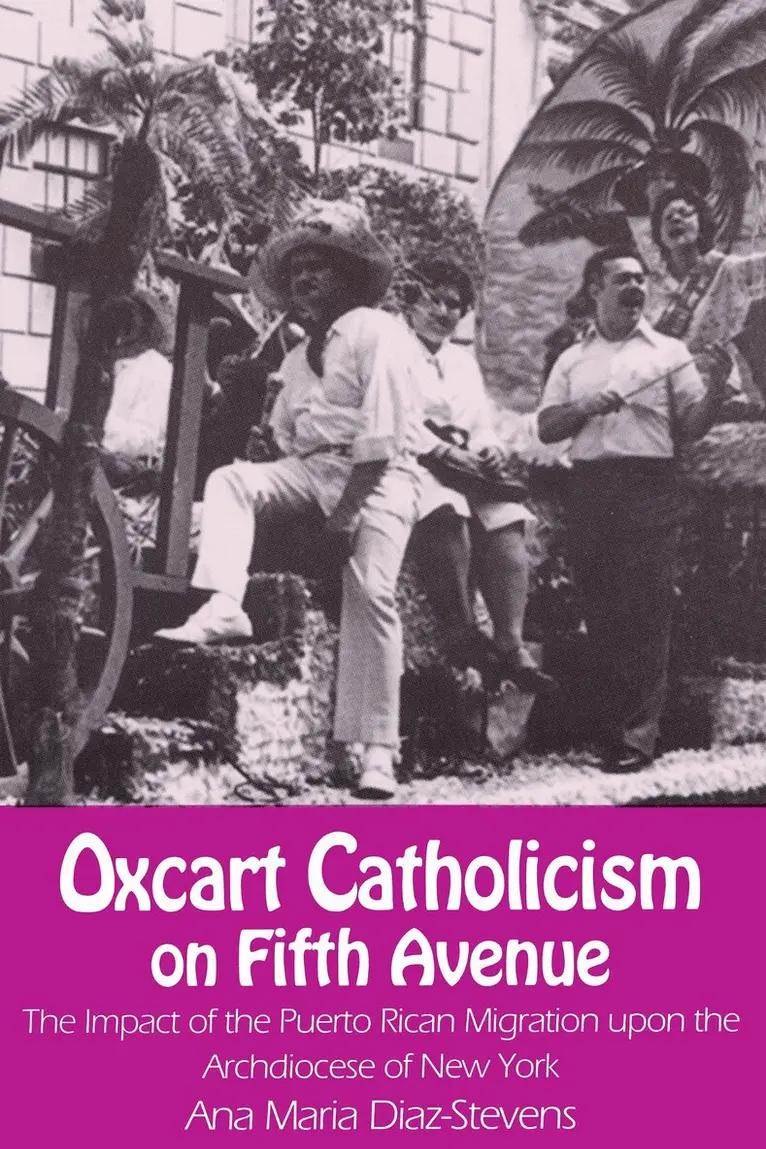
Oxcart Catholicism on Fifth Avenue
The Impact of the Puerto Rican Migration Upon the Archdiocese of New York
Häftad, Engelska, 1993
368 kr
Skickas inom 10-15 vardagar
Today Puerto Ricans are the largest single ethnic group in the city boroughs of the Archdiocese of New York. Oxcart Catholicism on Fifth Avenue presents a fascinating exploration and analysis of the Catholic church's efforts in New York City to meet the needs of migrant Puerto Ricans. Ana Maria Diaz-Stevens combines socio-historical methods and the insights of her personal participation in this process to create the first book-length assessment of this important event in twentieth-century American Catholic history. Diaz-Stevens begins by tracing the historical development of Catholicism in Puerto Rico, first under Spain and then after 1898 under the United States. She suggests the ways in which Puerto Ricans differed from the Irish, Italian, Polish, or other Catholic groups that came to New York. At the same time, she breaks new ground by describing significant differences between Puerto Ricans and Mexican-Americans in the practice of religion. After examining how institutional Catholicism in New York had grown from a loose mix of early nineteenth-century village parishes into a centralized cosmopolitan institution by the middle of the twentieth century, Diaz-Stevens presents a brief review of three historical periods of Puerto Rican migration to the city. She details the development of the "basement church" among Puerto Ricans as a specialized means of maintaining continuity with island traditions within a big city environment. She also discusses key church leaders, such as Francis Cardinal Spellman, Ivan Illich, Robert Fox and Robert Stem, describing how their attempts to deal with a people who presented "problems" evolved into an innovative ministry to Puerto Ricans. In the process, the Spanish-speaking Apostolate moved beyond existing models of ethnic assimilation into a post-Vatican activism, oriented towards social and community needs.
1 427 kr
Skickas inom 10-15 vardagar
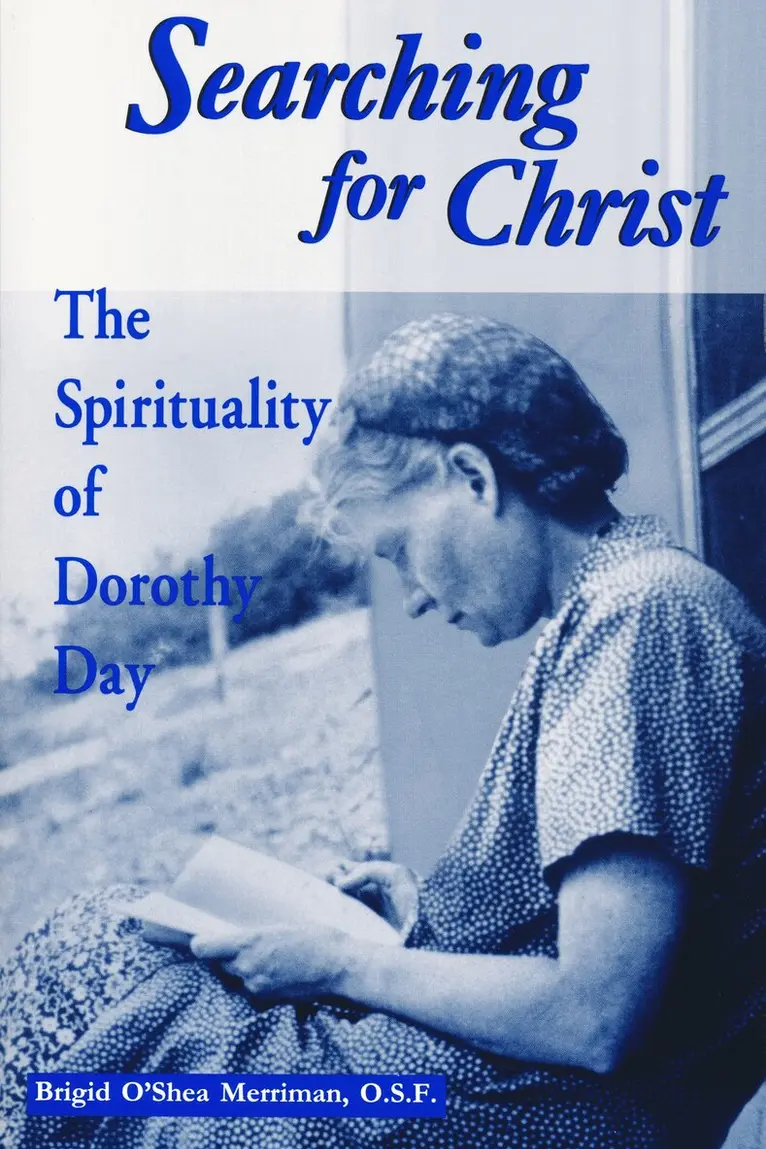
Scholarly and popular interest in Dorothy Day has grown steadily during the past decade. Widely acclaimed as a pioneer of American social Catholicism, as well as for co-founding the Catholic Worker and the movement by the same name, Day's religious vision and lifework have played a dramatic role in modern American Catholic history, profoundly influencing consciences. In this perceptive new study, Brigid O'Shea Merriman, O.S.F., examines the development of Day's spirituality, astutely relating it to twentieth-century intellectual and cultural history. After her conversion to Catholicism in 1927, Dorothy Day met the French peasant-philosopher Peter Maurin in 1932 and together they founded the Catholic Worker newspaper and movement. In this work Day discovered a vocation that would combine her journalistic skills with her long-standing desire for sweeping social change and love of the poor. Merriman demonstrates that Day's leadership of this radical Catholic movement served as the locus for the development and fruition of her spirituality. A work of intellectual or spiritual history rather than biography, Searching for Christ explores Day's spiritual roots in literature, especially the Scriptures, along with her sensibility and her aesthetic vision, all of which have received too little attention up to now. The impact of Christian personalism, monasticism, and the retreat movement on Day's spirituality are also examined, including new material on Day's association with Thomas Merton and a critical analysis of the Lacouture retreat movement. Friendship remained a necessary component of Day's spirituality, and Merriman's final chapter discusses Day's devotion to and enduring friendship withthe saints, as well as her warm relationships with a number of her contemporaries.
277 kr
Skickas inom 10-15 vardagar
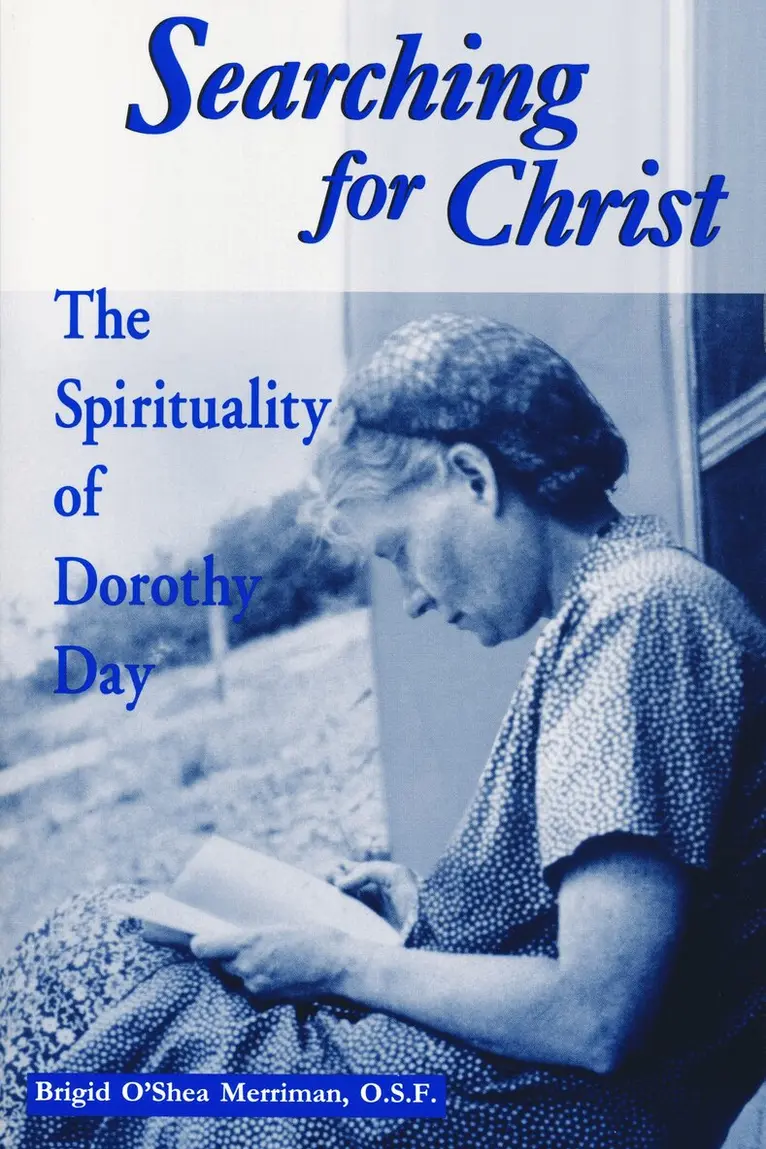
Scholarly and popular interest in Dorothy Day has grown steadily during the past decade. Widely acclaimed as a pioneer of American social Catholicism, as well as for co-founding the Catholic Worker and the movement by the same name, Day's religious vision and lifework have played a dramatic role in modern American Catholic history, profoundly influencing consciences. In this perceptive new study, Brigid O'Shea Merriman, O.S.F., examines the development of Day's spirituality, astutely relating it to twentieth-century intellectual and cultural history. After her conversion to Catholicism in 1927, Dorothy Day met the French peasant-philosopher Peter Maurin in 1932 and together they founded the Catholic Worker newspaper and movement. In this work Day discovered a vocation that would combine her journalistic skills with her long-standing desire for sweeping social change and love of the poor. Merriman demonstrates that Day's leadership of this radical Catholic movement served as the locus for the development and fruition of her spirituality. A work of intellectual or spiritual history rather than biography, Searching for Christ explores Day's spiritual roots in literature, especially the Scriptures, along with her sensibility and her aesthetic vision, all of which have received too little attention up to now. The impact of Christian personalism, monasticism, and the retreat movement on Day's spirituality are also examined, including new material on Day's association with Thomas Merton and a critical analysis of the Lacouture retreat movement. Friendship remained a necessary component of Day's spirituality, and Merriman's final chapter discusses Day's devotion to and enduring friendship withthe saints, as well as her warm relationships with a number of her contemporaries.