Onassis Series in Hellenic Culture – serie
Visar alla böcker i serien Onassis Series in Hellenic Culture. Handla med fri frakt och snabb leverans.
20 produkter
20 produkter
Häftad, Engelska, 2019
314 kr
Skickas inom 5-8 vardagar
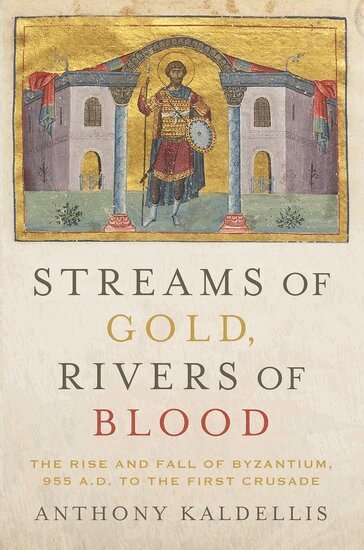
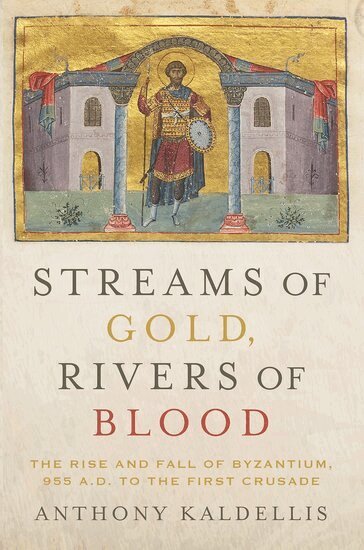
In the second half of the tenth century, Byzantium embarked on a series of spectacular conquests: first in the southeast against the Arabs, then in Bulgaria, and finally in the Georgian and Armenian lands. By the early eleventh century, the empire was the most powerful state in the Mediterranean. It was also expanding economically, demographically, and, in time, intellectually as well. Yet this imperial project came to a crashing collapse fifty years later, when political disunity, fiscal mismanagement, and defeat at the hands of the Seljuks in the east and the Normans in the west brought an end to Byzantine hegemony. By 1081, not only was its dominance of southern Italy, the Balkans, Caucasus, and northern Mesopotamia over but Byzantium's very existence was threatened. How did this dramatic transformation happen? Based on a close examination of the relevant sources, this history-the first of its kind in over a century-offers a new reconstruction of the key events and crucial reigns as well as a different model for understanding imperial politics and wars, both civil and foreign. In addition to providing a badly needed narrative of this critical period of Byzantine history, Streams of Gold, Rivers of Blood offers new interpretations of key topics relevant to the medieval era. The narrative unfolds in three parts: the first covers the years 955-1025, a period of imperial conquest and consolidation of authority under the great emperor Basil "the Bulgar-Slayer." The second (1025-1059) examines the dispersal of centralized authority in Constantinople as well as the emergence of new foreign enemies (Pechenegs, Seljuks, and Normans). The last section chronicles the spectacular collapse of the empire during the second half of the eleventh century, concluding with a look at the First Crusade and its consequences for Byzantine relations with the powers of Western Europe. This briskly paced and thoroughly investigated narrative vividly brings to life one of the most exciting and transformative eras of medieval history.
Inbunden, Engelska, 2016
1 175 kr
Skickas inom 5-8 vardagar
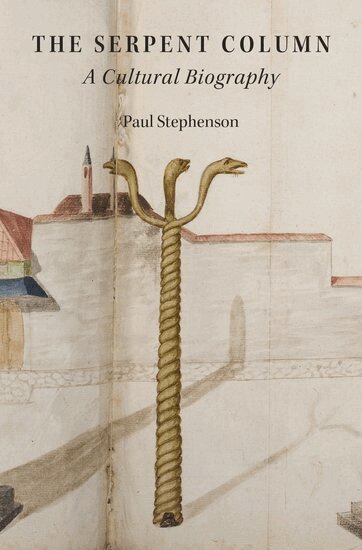
The Serpent Column, a bronze sculpture that has stood in Delphi and Constantinople, today Istanbul, is a Greek representation of the Near Eastern primordial combat myth: it is Typhon, a dragon defeated by Zeus, and also Python slain by Apollo. The column was created after the Battle of Plataia (479BC), where the sky was dominated by serpentine constellations and by the spiralling tails of the Milky Way. It was erected as a votive for Apollo and as a monument to the victory of the united Greek poleis over the Persians. It is as a victory monument that the column was transplanted to Constantinople and erected in the hippodrome. The column remained a monument to cosmic victory through centuries, but also took on other meanings. Through the Byzantine centuries these interpretation were fundamentally Christian, drawing upon serpentine imagery in Scripture, patristic and homiletic writings. When Byzantines saw the monument they reflected upon this multivalent serpentine symbolism, but also the fact that it was a bronze column. For these observers, it evoked the Temple's brazen pillars, Moses' brazen serpent, the serpentine tempter of Genesis (Satan), and the beast of Revelation. The column was inserted into Christian sacred history, symbolizing creation and the end times. The most enduring interpretation of the column, which is unrelated to religion, and therefore survived the Ottoman capture of the city, is as a talisman against snakes and snake-bites. It is this tale that was told by travellers to Constantinople throughout the Middle Ages, and it is this story that is told to tourists today who visit Istanbul. In this book, Paul Stephenson twists together multiple strands to relate the cultural biography of a unique monument.
Häftad, Engelska, 2015
511 kr
Skickas inom 5-8 vardagar
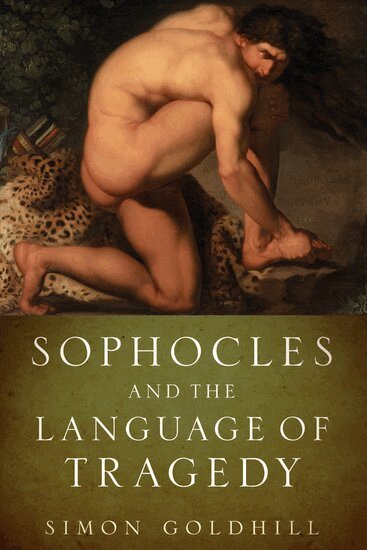
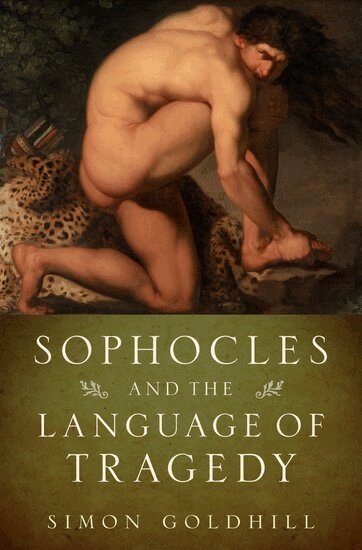
Written by one of the best-known interpreters of classical literature today, Sophocles and the Language of Tragedy presents a revolutionary take on the work of this great classical playwright and on how our understanding of tragedy has been shaped by our literary past. Simon Goldhill sheds new light on Sophocles' distinctive brilliance as a dramatist, illuminating such aspects of his work as his manipulation of irony, his construction of dialogue, and his deployment of the actors and the chorus. Goldhill also investigates how nineteenth-century critics like Hegel, Nietzsche, and Wagner developed a specific understanding of tragedy, one that has shaped our current approach to the genre. Finally, Goldhill addresses one of the foundational questions of literary criticism: how historically self-conscious should a reading of Greek tragedy be? The result is an invigorating and exciting new interpretation of the most canonical of Western authors.
Inbunden, Engelska, 2017
597 kr
Skickas inom 5-8 vardagar
In the second half of the tenth century, Byzantium embarked on a series of spectacular conquests: first in the southeast against the Arabs, then in Bulgaria, and finally in the Georgian and Armenian lands. By the early eleventh century, the empire was the most powerful state in the Mediterranean. It was also expanding economically, demographically, and, in time, intellectually as well. Yet this imperial project came to a crashing collapse fifty years later, when political disunity, fiscal mismanagement, and defeat at the hands of the Seljuks in the east and the Normans in the west brought an end to Byzantine hegemony. By 1081, not only was its dominance of southern Italy, the Balkans, Caucasus, and northern Mesopotamia over but Byzantium's very existence was threatened.How did this dramatic transformation happen? Based on a close examination of the relevant sources, this history -- the first of its kind in over a century -- offers a new reconstruction of the key events and crucial reigns as well as a different model for understanding imperial politics and wars, both civil and foreign. In addition to providing a badly needed narrative of this critical period of Byzantine history, Streams of Gold, Rivers of Blood offers new interpretations of key topics relevant to the medieval era. The narrative unfolds in three parts: the first covers the years 955-1025, a period of imperial conquest and consolidation of authority under the great emperor Basil "the Bulgar-Slayer." The second (1025-1059) examines the dispersal of centralized authority in Constantinople as well as the emergence of new foreign enemies (Pechenegs, Seljuks, and Normans). The last section chronicles the spectacular collapse of the empire during the second half of the eleventh century, concluding with a look at the First Crusade and its consequences for Byzantine relations with the powers of Western Europe. This briskly paced and thoroughly investigated narrative vividly brings to life one of the most exciting and transformative eras of medieval history.
Häftad, Engelska, 2016
623 kr
Skickas inom 7-10 vardagar
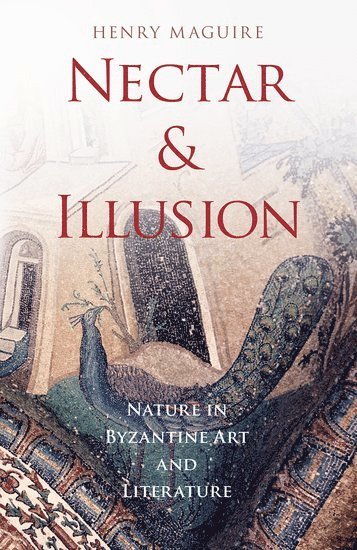
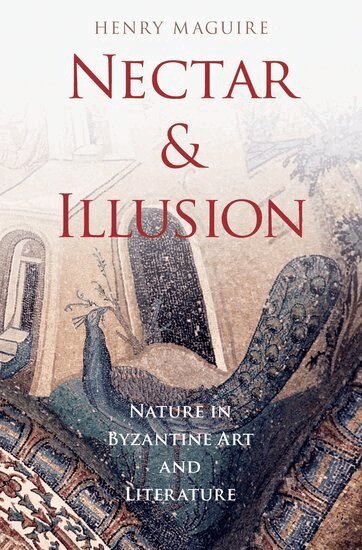
Nature and Illusion is the first extended treatment of the portrayal of nature in Byzantine art and literature. In this richly illustrated study, Henry Maguire shows how the Byzantines embraced terrestrial creation in the decoration of their churches during the fifth to seventh centuries but then adopted a much more cautious attitude toward the depiction of animals and plants in the middle ages, after the iconoclastic dispute of the eighth and ninth centuries. In the medieval period, the art of Byzantine churches became more anthropocentric and less accepting of natural images. The danger that the latter might be put to idolatrous use created a constant state of tension between worldliness, represented by nature, and otherworldliness, represented by the portrait icons of the saints. The book discusses the role of iconoclasm in affecting this fundamental change in Byzantine art, as both sides in the controversy accused the other of "worshipping the creature rather than the Creator." An important theme is the asymmetrical relationship between Byzantine art and literature with respect to the portrayal of nature. A series of vivid texts described seasons, landscapes, gardens, and animals, but these were more sparingly illustrated in medieval art. Maguire concludes by discussing the abstraction of nature in the form of marble floors and revetments and with a consideration of the role of architectural backgrounds in medieval Byzantine art. Throughout Nature and Illusion, medieval Byzantine art is compared with that of Western Europe, where different conceptions of religious imagery allowed a closer engagement with nature.
Inbunden, Engelska, 2016
988 kr
Skickas inom 5-8 vardagar
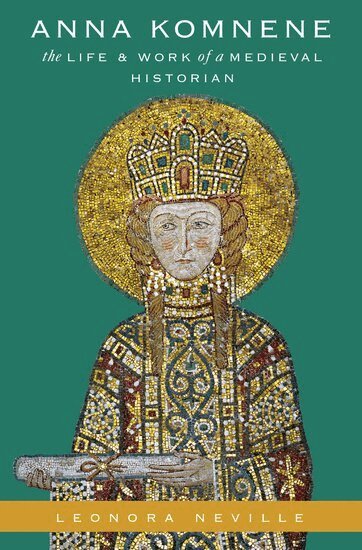
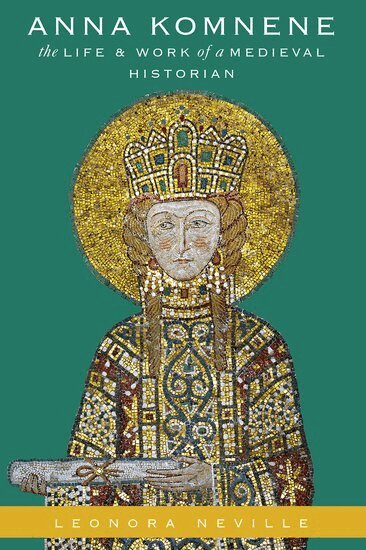
Byzantine princess Anna Komnene is known for two things: plotting to murder her brother to usurp the throne, and writing the Alexiad, an epic history of her father Alexios I Komnenos (1081-1118) that is a key historical source for the era of the First Crusade. Anna Komnene: the Life and Work of a Medieval Historian investigates the relationship between Anna's self-presentation in the Alexiad and the story of her bloodthirsty ambition. It begins by asking why women did not write history in Anna's society, what cultural rules Anna broke by doing so, and how Anna tried to respond to those challenges in her writing. Many of the idiosyncrasies and surprises of Anna's Alexiad are driven by her efforts to be perceived as both a good historian and a good woman. These new interpretations of Anna's authorial persona then spark a thorough re-thinking of the standard story which defines Anna's life by the failure of her supposed political ambitions. The second half of this work reviews the medieval sources with fresh eyes and re-establishes Anna's primary identity as an author and intellectual rather than as a failed conspirator.
Häftad, Engelska, 2017
258 kr
Skickas inom 7-10 vardagar
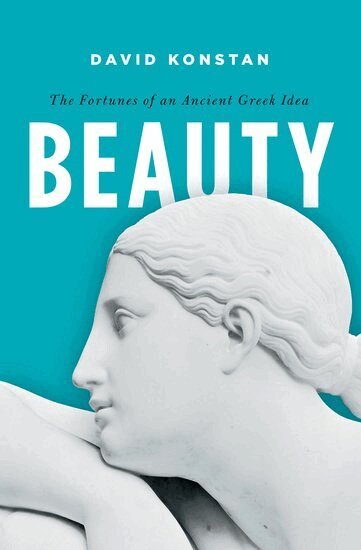
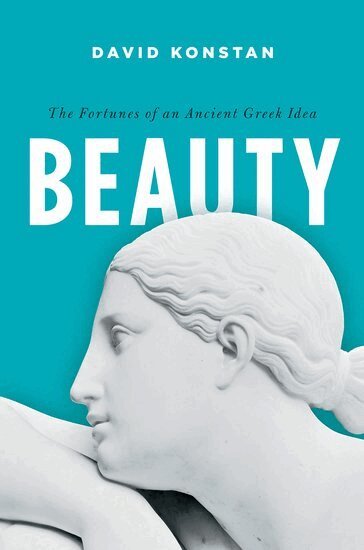
Those who study the nature of beauty are at once plagued by a singular issue: what does it mean to say something is beautiful? On the one hand, beauty is associated with erotic attraction; on the other, it is the primary category in aesthetics, and it is widely supposed that the proper response to a work of art is one of disinterested contemplation. At its core, then, beauty is a contested concept, and both sides feel comfortable appealing to the authority of Plato, and via him, to the ancient Greeks generally. So, who is right--if either? Beauty offers an elegant investigation of ancient Greek notions of beauty and, in the process, sheds light on modern aesthetics and how we ought to appreciate the artistic achievements of the classical world itself. The book begins by reexamining the commonly held notion that the ancient Greeks possessed no term that can be unambiguously defined as "beauty" or "beautiful." Author David Konstan discusses a number of Greek approximations before positioning the heretofore unexamined term kállos as the key to bridging the gap between beauty and desire, and tracing its evolution as applied to physical beauty, art, literature, and more. Throughout, the discussion is enlivened with thought-provoking stories taken from Homer, Plato, Xenophon, Plutarch, and others. The book then examines corresponding terms in ancient Latin literature to highlight the survival of Greek ideas in the Latin West. The final chapter will compare the ancient Greek conception of beauty with modern notions of beauty and aesthetics. In particular, the book will focus on the reception of classical Greek art in the Renaissance and how Vasari and his contemporaries borrowed from Plato the sense that the beauty in art was transcendental, but left out the erotic dimension of viewing. A study of the ancient Greek idea of beauty shows that, even if Greece was the inspiration for modern aesthetic ideals, the Greek view of the relationship between beauty and desire was surprisingly consistent--and different from our own. Through this magisterial narrative, it is possible to identify how the Greeks thought of beauty, and what it was that attracted them. Their perceptions still have something important to tell us about art, love, desire--and beauty.
Häftad, Engelska, 2018
275 kr
Skickas inom 5-8 vardagar
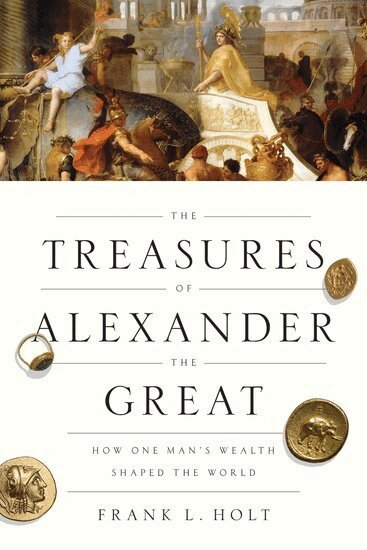
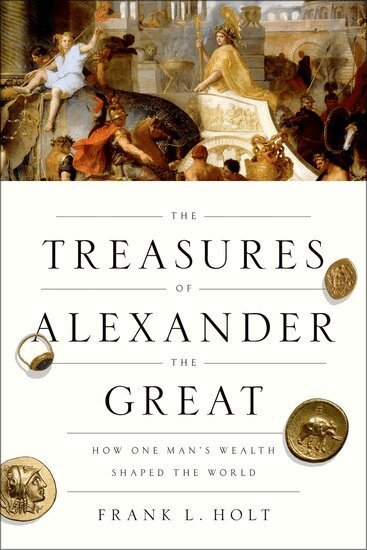
War, the most profitable economic activity in the ancient world, transferred wealth from the vanquished to the victor. Invasions, sieges, massacres, annexations, and mass deportations all redistributed property with dramatic consequences for kings and commoners alike. No conqueror ever captured more people or property in so short a lifetime than Alexander the Great in the late fourth century BC. For all its savagery, the creation of Alexander's empire has generally been hailed as a positive economic event for all concerned. Even those harshly critical of Alexander today tend to praise his plundering of Persia as a means of liberating the moribund resources of the East. To test this popular interpretation, The Treasures of Alexander the Great investigates the kinds and quantities of treasure seized by the Macedonian king, from gold and silver to land and slaves. It reveals what became of the king's wealth and what Alexander's redistribution of these vast resources can tell us about his much-disputed policies and personality. Though Alexander owed his vast fortune to war, battle also distracted him from competently managing his spoils and much was wasted, embezzled, deliberately destroyed, or idled unprofitably. The Treasures of Alexander the Great provides a long-overdue and accessible account of Alexander's wealth and its enormous impact on the ancient world.
Häftad, Engelska, 2019
353 kr
Skickas inom 5-8 vardagar
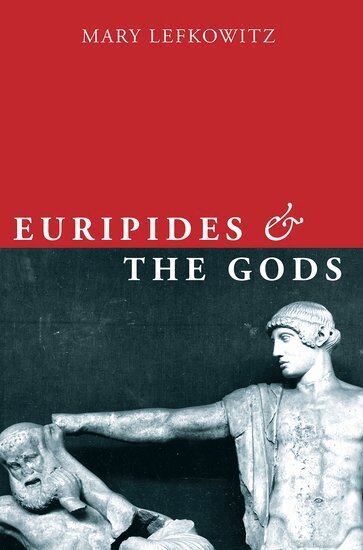
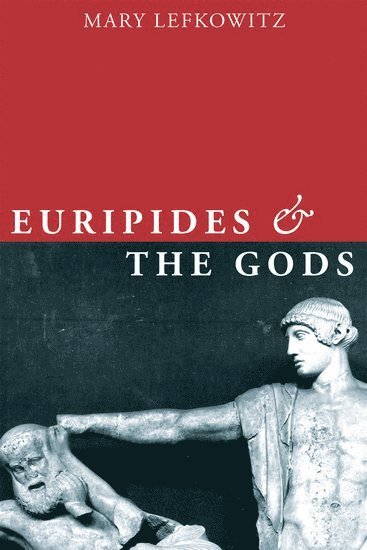
Modern readers find it hard to come to terms with the gods in Euripides' dramas. Readers try to dismiss them as a literary convention. Stage productions leave them out, especially in the cases when they appear ex machina. Instead, they place disproportionate emphasis on the harsh criticisms of the gods uttered by some of the characters in the dramas, and have sought to interpret Euripides ironically, viewing his portrayal of the cruel and capricious gods as a means of drawing attention to the deficiencies of ancient Greek religion. In their view Euripides' dramas seek to question the nature and sometimes even the very existence of traditional Greek gods.In Euripides and the Gods, classicist Mary Lefkowitz sets out to show that the tragedian is not undermining ancient religion, but rather describing with a brutal realism what the gods are like, impressing upon his mortal audience the limitations of human understanding. Writing the first extended treatment of these issues for a general audience, Lefkowitz provides a book that deals with all of Euripides' dramas, and argues for a more tolerant and nuanced understanding of ancient Greek religion. Euripides, like Homer, is making a statement about the nature of the world and human life, terrifying but accurate. She explains how the idea that Euripides was an atheist derives from ancient biographies that drew their evidence from comic poets, and shows why the doubts about the gods expressed by his characters must be understood in their dramatic context. Euripides and the Gods offers a compelling invitation to return to the dramatic masterpieces of Euripides with fresh eyes.
Häftad, Engelska, 2018
369 kr
Skickas inom 5-8 vardagar
Byzantine princess Anna Komnene is known for two things: plotting to murder her brother to usurp the throne, and writing the Alexiad, an epic history of her father Alexios I Komnenos (1081-1118) that is a key historical source for the era of the First Crusade. Anna Komnene: the Life and Work of a Medieval Historian investigates the relationship between Anna's self-presentation in the Alexiad and the story of her bloodthirsty ambition. It begins by asking why women did not write history in Anna's society, what cultural rules Anna broke by doing so, and how Anna tried to respond to those challenges in her writing. Many of the idiosyncrasies and surprises of Anna's Alexiad are driven by her efforts to be perceived as both a good historian and a good woman. These new interpretations of Anna's authorial persona then spark a thorough re-thinking of the standard story which defines Anna's life by the failure of her supposed political ambitions. The second half of this work reviews the medieval sources with fresh eyes and re-establishes Anna's primary identity as an author and intellectual rather than as a failed conspirator.
Inbunden, Engelska, 2012
802 kr
Skickas inom 5-8 vardagar
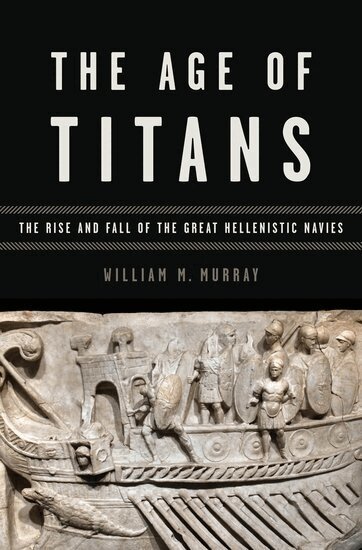
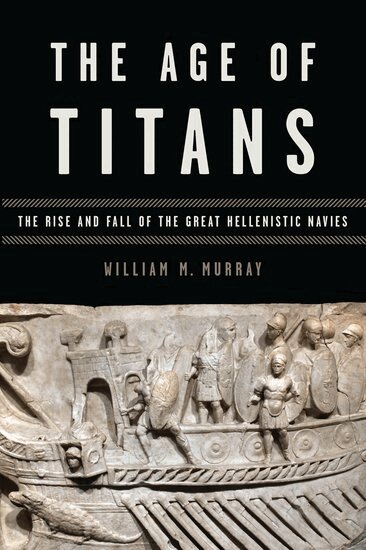
While we know a great deal about naval strategies in the classical Greek and later Roman periods, our understanding of the period in between--the Hellenistic Age--has never been as complete. However, thanks to new physical evidence discovered in the past half-century and the construction of Olympias, a full-scale working model of an Athenian trieres (trireme) by the Hellenic Navy during the 1980s, we now have new insights into the evolution of naval warfare following the death of Alexander the Great. In what has been described as an ancient naval arms race, the successors of Alexander produced the largest warships of antiquity, some as long as 400 feet carrying as many as 4000 rowers and 3000 marines. Vast, impressive, and elaborate, these warships "of larger form"--as described by Livy--were built not just to simply convey power but to secure specific strategic objectives. When these particular factors disappeared, this "Macedonian" model of naval power also faded away--that is, until Cleopatra and Mark Antony made one brief, extravagant attempt to reestablish it, an endeavor Octavian put an end to once and for all at the battle of Actium. Representing the fruits of more than thirty years of research, The Age of Titans provides the most vibrant account to date of Hellenistic naval warfare.
Inbunden, Engelska, 2016
1 124 kr
Skickas inom 5-8 vardagar
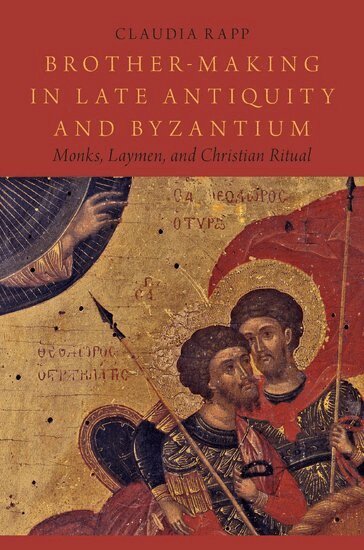
Among medieval Christian societies, Byzantium is unique in preserving an ecclesiastical ritual of adelphopoiesis that pronounces two men as brothers. It has its origin as a spiritual blessing in the monastic world of late antiquity, and it becomes a popular social networking strategy among lay people from the ninth century onwards, even finding application in recent times. Located at the intersection of religious and social history, brother-making exemplifies how social practice can become ritualized and subsequently subjected to attempts of ecclesiastical and legal control. Wide-ranging in its use of sources, from a complete census of the manuscripts containing the ritual of adelphopoiesis to the literature and archaeology of early monasticism, and from the works of hagiographers, historiographers, and legal experts in Byzantium to comparative material in the Latin West and the Slavic world, this book is the first exhaustive treatment of the phenomenon.
Inbunden, Engelska, 2013
1 222 kr
Skickas inom 5-8 vardagar
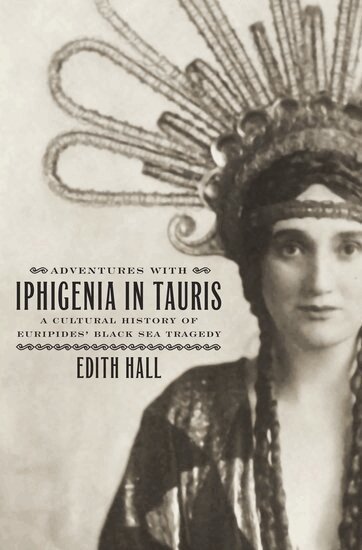
Human sacrifice, a spirited heroine, a quest ending in a hairsbreadth escape, the touching reunion of long-lost siblings, and exquisite poetry--these features have historically made Euripides' Iphigenia in Tauris one of the most influential of Greek tragedies. Yet, despite its influence and popularity in the ancient world, the play remains curiously under-investigated in both mainstream cultural studies and more specialized scholarship. With Adventures with Iphigenia in Tauris, Edith Hall provides a much-needed cultural history of this play, giving as much weight to the impact of the play on subsequent Greek and Roman art and literature as on its manifestations since the discovery of the sole surviving medieval manuscript in the 1500s. The book argues that the reception of the play is bound up with its spectacular setting on the southern coast of the Crimean peninsula in what is now the Ukraine, a territory where world history has often been made. However, it also shows that the play's tragicomic tenor and escape plot have had a tangible influence on popular culture, from romantic fiction to Hollywood action films. The thirteen chapters illustrate how reactions to the play have evolved from the ancient admiration of Aristotle and Ovid, the Christian responses of Milton and Catherine the Great, the anthropological ritualists and theatrical Modernists including James Frazer and Isadora Duncan, to recent feminist and postcolonial dramatists from Mexico to Australia. Individual chapters are devoted to the most significant adaptations of the tragedy, Gluck's opera Iphigénie en Tauride and Goethe's verse drama Iphigenie auf Tauris. Richly illustrated and accessibly written, with all texts translated into English, Adventures with Iphigenia in Tauris argues elegantly for a reappraisal of this Euripidean masterpiece.
Häftad, Engelska, 2014
546 kr
Skickas inom 5-8 vardagar
While we know a great deal about naval strategies in the classical Greek and later Roman periods, our understanding of the period in between--the Hellenistic Age--has never been as complete. However, thanks to new physical evidence discovered in the past half-century and the construction of Olympias, a full-scale working model of an Athenian trieres (trireme) by the Hellenic Navy during the 1980s, we now have new insights into the evolution of naval warfare following the death of Alexander the Great. In what has been described as an ancient naval arms race, the successors of Alexander produced the largest warships of antiquity, some as long as 400 feet carrying as many as 4000 rowers and 3000 marines. Vast, impressive, and elaborate, these warships "of larger form"--as described by Livy--were built not just to simply convey power but to secure specific strategic objectives. When these particular factors disappeared, this "Macedonian" model of naval power also faded away--that is, until Cleopatra and Mark Antony made one brief, extravagant attempt to reestablish it, an endeavor Octavian put an end to once and for all at the battle of Actium. Representing the fruits of more than thirty years of research, The Age of Titans provides the most vibrant account to date of Hellenistic naval warfare.
Inbunden, Engelska, 2018
763 kr
Skickas inom 5-8 vardagar
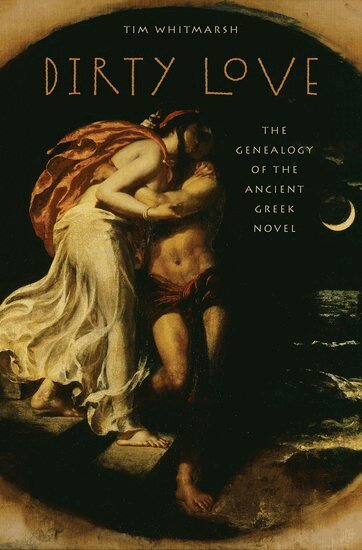
Where does the Greek novel come from? This book argues that whereas much of Greek literature was committed to a form of cultural purism, presenting itself as part of a continuous tradition reaching back to founding fathers within the tradition, the novel revelled in cultural hybridity. The earliest Greek novelistic literature combined Greek and non-Greek traditions (or at least affected to combine them: it is often hard to tell how 'authentic' the non-Greek material is). More than this, however, it also often self-consciously explored its own hybridity by focusing on stories of cultural hybridisation, or what we would now call 'mixed-race' relations. This book is thus not a conventional account of the origins of the Greek novel: it is not an attempt to pinpoint the moment of invention, and to trace its subsequent development in a straight line. Rather, it makes a virtue of the murkiness, or 'dirtiness', of the origins of the novel: there is no single point of creation, no pure tradition, only transgression, transformation and mess. The novel thus emerges as an outlier within the Greek literary corpus: a form of literature written in Greek, but not always committing to Greek cultural identity. Dirty Love focuses particularly on the relationship between Persian, Egyptian, Jewish and Greek literature, and covers such texts as Ctesias' Persica, Joseph and Aseneth, the Alexander Romance and the tale of Ninus and Semiramis. It will appeal to those interested not only in Greek literary history, but also in near-eastern and biblical literature.
Inbunden, Engelska, 2016
1 145 kr
Skickas inom 7-10 vardagar
Many modern readers believe that, in his dramas, Euripides was questioning the nature and sometimes even the existence of the gods. In Euripides and the Gods, eminent classicist Mary K. Lefkowitz shows that the tragedian is not undermining ancient religion, but rather describing with a brutal realism what the gods are like, reminding his mortal audience of the limitations of human understanding. Although some scholars have begun to express similar views about the theology of individual plays, no one so far has written an extended treatment of these issues for a general audience who do not necessarily know ancient Greek. Lefkowitz will provide a book that will deal with all of his dramas, accessible to non-specialist readers, containing a more tolerant and nuanced understanding of ancient Greek religion: Euripides, like Homer, is making "a statement about the nature of the world and human life, terrible and dispassionate." That view of divinity was well known and understood in Euripides' own time. In spite of what has seemed to later critics his brutally realistic characterization of the gods, he was selected in virtually every year of his adult life to be one of the three poets allowed to put on a set of plays at the festival of Dionysus, and even after his death he remained the most popular and influential of the great playwrights in the Greek-speaking world. This would hardly have been the case if his portrayal of the gods appeared impious to the majority of his audiences. Like most of the author's distinguished publications in this field, the book will discuss a number of important related topics, including religion, philosophy, the surviving works of Euripides' contemporaries, and the theater and its significance to Greek society. The result will be a compelling invitation to return to the dramatic masterpieces of Euripides with fresh eyes.
Inbunden, Engelska, 2012
1 044 kr
Skickas inom 5-8 vardagar
Nature and Illusion is the first extended treament of the portrayal of nature in Byzantine art and literature. In this richly illustrated study, Henry Maguire shows how the Byzantines embraced terrestrial creation in the decoration of their churches during the fifth to seventh centuries but then adopted a much more cautious attitude toward the depiction of animals and plants in the middle ages, after the iconoclastic dispute of the eighth and ninth centuries. In the medieval period, the art of Byzantine churches became more anthropocentric and less accepting of natural images. The danger that the latter might be put to idolatrous use created a constant state of tension between worldliness, represented by nature, and otherworldliness, represented by the portrait icons of the saints. The book discusses the role of iconoclasm in affecting this fundamental change in Byzantine art, as both sides in the controversy accused the other of "worshipping the creature rather than the Creator." An important theme is the asymmetrical relationship between Byzantine art and literature with respect to the portrayal of nature. A series of vivid texts described seasons, landscapes, gardens, and animals, but these were more sparingly illustrated in medieval art. Maguire concludes by discussing the abstraction of nature in the form of marble floors and revetments and with a consideration of the role of architectural backgrounds in medieval Byzantine art. Throughout Nature and Illusion, medieval Byzantine art is compared with that of Western Europe, where different conceptions of religious imagery allowed a closer engagement with nature.
Inbunden, Engelska, 2012
719 kr
Skickas inom 5-8 vardagar
Written by one of the best-known interpreters of classical literature today, Sophocles and the Language of Tragedy presents a revolutionary take on the work of this great classical playwright and on how our understanding of tragedy has been shaped by our literary past. Simon Goldhill sheds new light on Sophocles' distinctive brilliance as a dramatist, illuminating such aspects of his work as his manipulation of irony, his construction of dialogue, and his deployment of the actors and the chorus. Goldhill also investigates how nineteenth-century critics like Hegel, Nietzsche, and Wagner developed a specific understanding of tragedy, one that has shaped our current approach to the genre. Finally, Goldhill addresses one of the foundational questions of literary criticism: how historically self-conscious should a reading of Greek tragedy be? The result is an invigorating and exciting new interpretation of the most canonical of Western authors.
Inbunden, Engelska, 2015
518 kr
Skickas inom 3-6 vardagar
Those who study the nature of beauty are at once plagued by a singular issue: what does it mean to say something is beautiful? On the one hand, beauty is associated with erotic attraction; on the other, it is the primary category in aesthetics, and it is widely supposed that the proper response to a work of art is one of disinterested contemplation. At its core, then, beauty is a contested concept, and both sides feel comfortable appealing to the authority of Plato, and via him, to the ancient Greeks generally. So, who is right--if either? Beauty offers an elegant investigation of ancient Greek notions of beauty and, in the process, sheds light on modern aesthetics and how we ought to appreciate the artistic achievements of the classical world itself. The book begins by reexamining the commonly held notion that the ancient Greeks possessed no term that can be unambiguously defined as "beauty" or "beautiful." Author David Konstan discusses a number of Greek approximations before positioning the heretofore unexamined term kállos as the key to bridging the gap between beauty and desire, and tracing its evolution as applied to physical beauty, art, literature, and more. Throughout, the discussion is enlivened with thought-provoking stories taken from Homer, Plato, Xenophon, Plutarch, and others. The book then examines corresponding terms in ancient Latin literature to highlight the survival of Greek ideas in the Latin West. The final chapter will compare the ancient Greek conception of beauty with modern notions of beauty and aesthetics. In particular, the book will focus on the reception of classical Greek art in the Renaissance and how Vasari and his contemporaries borrowed from Plato the sense that the beauty in art was transcendental, but left out the erotic dimension of viewing. A study of the ancient Greek idea of beauty shows that, even if Greece was the inspiration for modern aesthetic ideals, the Greek view of the relationship between beauty and desire was surprisingly consistent--and different from our own. Through this magisterial narrative, it is possible to identify how the Greeks thought of beauty, and what it was that attracted them. Their perceptions still have something important to tell us about art, love, desire--and beauty.
Inbunden, Engelska, 2016
392 kr
Skickas inom 5-8 vardagar
War, the most profitable economic activity in the ancient world, transferred wealth violently from the vanquished to the victor. Invasions, massacres, confiscations, deportations, the sacking of cities, and the selling of survivors into slavery all redistributed property with epic consequences for kings and commoners alike. The most notable example occurred in the late fourth century BC, when Alexander the Great conquered the Persian Empire. For all of its savagery, this invasion has generally been heralded as a positive economic event for all concerned. Even those harshly critical of the king today tend to praise his plundering of Persia as a means of liberating the moribund resources of the East. To test that popular interpretation, this book investigates the kinds and quantities of treasure seized by the Macedonian king, from gold and silver to land and slaves. It reveals what became of the king's wealth, and what Alexander's redistribution of these vast resources can tell us about his much-disputed policies and personality. Although war made Alexander unbelievably wealthy, it distracted him from managing his spoils competently. Much was wasted, embezzled, deliberately destroyed, or idled again unprofitably. These facts force us to reassess the notion, prevalent since the nineteenth century, that Alexander the Great used the profits of war to improve the ancient economies in the lands that he conquered.