Oxford Cognitive Science Series - Böcker
Visar alla böcker i serien Oxford Cognitive Science Series. Handla med fri frakt och snabb leverans.
14 produkter
14 produkter
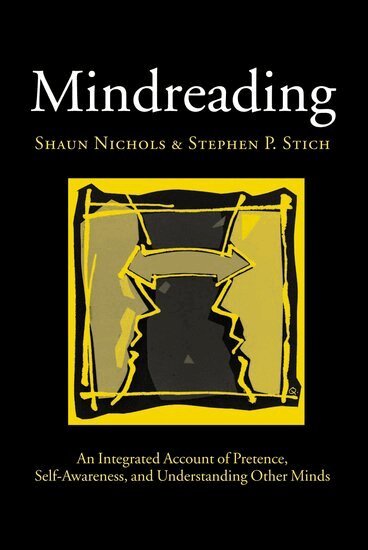
Mindreading
An Integrated Account of Pretence, Self-Awareness, and Understanding Other Minds
Inbunden, Engelska, 2003
1 844 kr
Skickas inom 5-8 vardagar
The everyday capacity to understand the mind, or "mindreading", plays an enormous role in our ordinary lives. Shaun Nichols and Stephen Stich provide a detailed and integrated account of the intricate web of mental components underlying this fascinating and multifarious skill. The imagination, they argue, is essential to understanding others, and there are special cognitive mechanisms for understanding oneself. The account that emerges has broad implications for longstanding philosophical debates over the status of folk psychology.
Mindreading
An Integrated Account of Pretence, Self-Awareness, and Understanding Other Minds
Häftad, Engelska, 2003
642 kr
Skickas inom 5-8 vardagar
The everyday capacity to understand the mind, fancifully dubbed 'mindreading', plays an enormous role in our lives. In the latter half of the 20th century mindreading became the object of sustained scientific and theoretical research, capturing the attention of a wide range of disciplines, including philosophy, developmental psychology, behavioral ecology, anthropology, and cognitive psychopathology. What has been missing is a detailed and integrated account of the mental components that underlie this remarkable capacity. Nichols and Stich develop and defend a new account of the psychological mechanisms underlying mindreading. They maintain that it is, as common sense would suggest, vital to distinguish between reading others' minds and reading one's own. In reading other minds, the imagination plays a central role. As a result, the authors begin with an explicit and systematic account of pretence and imagination which proposes that pretence representations are contained in a separate mental workspace, the 'Possible World Box', which is part of the basic architecture of the human mind. The mechanisms underlying pretence get recruited when people attempt to understand others and predict their behaviour. In some cases, we use our own mental mechanisms to simulate the mental processes of another, as suggested by the 'simulation theory' of mindreading. However, mindreading also implicates very different kinds of mechanisms that rely on rich bodies of information, as suggested by information-based accounts of mindreading. In addition, the authors argue, reading other minds involves important processes that don't fit into either category. None of these mechanisms, though, explain how we read our own minds, which, according to the authors, requires invoking an entirely independent set of mechanisms.What we find, then, is an intricate web of mental components to explain our fascinating and multifarious knack of understanding minds. This account provides a valuable framework for future work on mindreading and has broad implications for philosophical debates that have surrounded the issue for the last quarter century.
642 kr
Skickas inom 5-8 vardagar
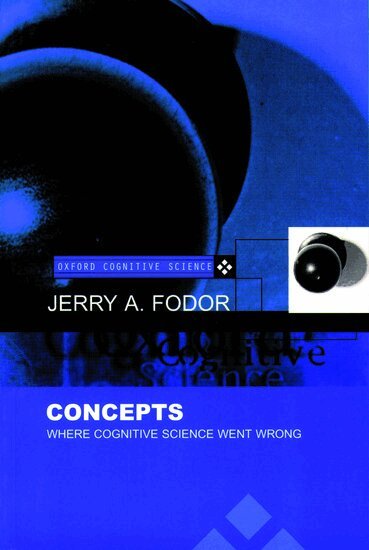
Oxford Cognitive Science SeriesGeneral Editors: Martin Davies, Wilde Reader in Mental Philosophy, University of Oxford, UK, James Higginbotham, Professor of General Linguistics, University of Oxford, UK, John O'Keefe, Professor of Cognitive Neuroscience, University College, London, UK, Christopher Peacocke, Waynflete Professor of Metaphysical Philosophy, University of Oxford, UK, and Kim Plunkett, University Lecturer in Psychology, University of Oxford, UKThe Oxford Cognitive Science series is a forum for the best contemporary work in this flourishing field, where various disciplines--cognitive psychology, philosophy, linguistics, cognitive neuroscience, and computational theory--join forces in the investigation of thought, awareness, understanding, and associated workings of the mind. Each book will represent an original contribution to its subject, but will be accessible beyond the ranks of specialists, so as to reach a broad interdisciplinary readership. The series will be carefully shaped and steered by the general editors, with the aim of representing the most important developments in the field and bringing together its constituent disciplines. About this bookThe renowned philosopher Jerry Fodor, who has been a leading figure in the study of the mind for more than twenty years, presents a strikingly original theory of the basic constituents of thought. He suggests that the heart of a cognitive science is its theory of concepts, and that cognitive scientists have gone badly wrong in many areas because their assumptions about concepts have been seriously mistaken. Fodor argues compellingly for an atomistic theory of concepts, deals out witty and pugnacious demolitions of the rival theories that have prevailed in recent years, and suggests that future work on human cognition should build upon new foundations.This lively, conversational, and surprisingly accessible book is the first volume in the Oxford Cognitive Science Series, where the best original work in this field will be presented to a broad readership. Concepts will fascinate anyone interested in contemporary work on mind and language. Cognitive science will never be the same again.
1 740 kr
Skickas inom 5-8 vardagar
Oxford Cognitive Science Series General Editors: Martin Davies, Wilde Reader in Mental Philosophy, University of Oxford, UK, James Higginbotham , Professor of General Linguistics, University of Oxford, UK, John O'Keefe, Professor of Cognitive Neuroscience, University College, London, UK, Christopher Peacocke, Waynflete Professor of Metaphysical Philosophy, University of Oxford, UK, and Kim Plunkett, University Lecturer in Psychology, University of Oxford, UKThe Oxford Cognitive Science series is a forum for the best contemporary work in this flourishing field, where various disciplines--cognitive psychology, philosophy, linguistics, cognitive neuroscience, and computational theory--join forces in the investigation of thought, awareness, understanding, and associated workings of the mind. Each book will represent an original contribution to its subject, but will be accessible beyond the ranks of specialists, so as to reach a broad interdisciplinary readership. The series will be carefully shaped and steered by the general editors, with the aim of representing the most important developments in the field and bringing together its constituent disciplines. About this book The renowned philosopher Jerry Fodor, who has been a leading figure in the study of the mind for more than twenty years, presents a strikingly original theory of the basic constituents of thought. He suggests that the heart of a cognitive science is its theory of concepts, and that cognitive scientists have gone badly wrong in many areas because their assumptions about concepts have been seriously mistaken. Fodor argues compellingly for an atomistic theory of concepts, deals out witty and pugnacious demolitions of the rival theories that have prevailed in recent years, and suggests that future work on human cognition should build upon new foundations. This lively, conversational, accessible book is the first volume in the Oxford Cognitive Science Series, where the best original work in this field will be presented to a broad readership. Concepts will fascinate anyone interested in contemporary work on mind and language. Cognitive science will never be the same again.
564 kr
Skickas inom 5-8 vardagar
In Context and Content Robert Stalnaker develops a philosophical picture of the nature of speech and thought and the relations between them. Two themes in particular run through these collected essays: the role that the context in which speech takes place plays in accounting for the way language is used to express thought, and the role of the external environment in determining the contents of our thoughts. Stalnaker argues against the widespread assumption of the priority of linguistic over mental representation, which he suggests has had a distorting influence on our understanding. The first part of the book develops a framework for representing contexts and the way they interact with the interpretation of what is said in them. This framework is used to help to explain a range of linguistic phenomena concerning presupposition and assertion, conditional statements, the attribution of beliefs, and the use of names, descriptions, and pronouns to refer. Stalnaker then draws out the conception of thought and its content that is implicit in this framework. He defends externalism about thought--the assumption that our thoughts have the contents they have in virtue of the way we are situated in the world--and explores the role of linguistic action and linguistic structure in determining the contents of our thoughts. Context and Content offers philosophers and cognitive scientists a summation of Stalnaker's important and influential work in this area. His new introduction to the volume gives an overview of this work and offers a convenient way in for those who are new to it. The Oxford Cognitive Science series is a new forum for the best contemporary work in this flourishing field, where various disciplines--cognitive psychology, philosophy, linguistics, cognitive neuroscience, and computational theory--join forces in the investigation of thought, awareness, understanding, and associated workings of the mind. Each book constitutes an original contribution to its subject, but will be accessible beyond the ranks of specialists, so as to reach a broad interdisciplinary readership. The series will be carefully shaped and steered with the aim of representing the most important developments in the field and bringing together its constituent disciplines.
1 757 kr
Skickas inom 5-8 vardagar
In Context and Content Robert Stalnaker develops a philosophical picture of the nature of speech and thought and the relations between them. Two themes in particular run through these collected essays: the role that the context in which speech takes place plays in accounting for the way language is used to express thought, and the role of the external environment in determining the contents of our thoughts. Stalnaker argues against the widespread assumption of the priority of linguistic over mental representation, which he suggests has had a distorting influence on our understanding. The first part of the book develops a framework for representing contexts and the way they interact with the interpretation of what is said in them. This framework is used to help to explain a range of linguistic phenomena concerning presupposition and assertion, conditional statements, the attribution of beliefs, and the use of names, descriptions, and pronouns to refer. Stalnaker then draws out the conception of thought and its content that is implicit in this framework. He defends externalism about thought--the assumption that our thoughts have the contents they have in virtue of the way we are situated in the world--and explores the role of linguistic action and linguistic structure in determining the contents of our thoughts. Context and Content offers philosophers and cognitive scientists a summation of Stalnaker's important and influential work in this area. His new introduction to the volume gives an overview of this work and offers a convenient way in for those who are new to it. The Oxford Cognitive Science series is a new forum for the best contemporary work in this flourishing field, where various disciplines--cognitive psychology, philosophy, linguistics, cognitive neuroscience, and computational theory--join forces in the investigation of thought, awareness, understanding, and associated workings of the mind. Each book constitutes an original contribution to its subject, but will be accessible beyond the ranks of specialists, so as to reach a broad interdisciplinary readership. The series will be carefully shaped and steered with the aim of representing the most important developments in the field and bringing together its constituent disciplines.
1 322 kr
Skickas inom 5-8 vardagar
'A picture is worth a thousand words' Or is it? What difference does it make whether information is presented using illustrations or language? 'Seeing Reason' is an interdisciplinary study of a central topic in cognitive science: how does the mind respond to different kinds of representation of the same information, especially when learning, reasoning, and communicating. It uses philosophical, logical, linguistic, psychological, and educational methods to explore this topic, reporting theories, observations, and arguments developed during several years' research. Though the focus is on fundamental cognitive theories of human capacities, the issues are closely related to intensely practical issues about the teaching and learning of reasoning and communication skills. Along the way it examines why the human mind has so evolved, the relationship between private language and public thought, and integrates cognitive and social accounts of communication.Written to be accessible to students and researchers within the fields of philosophy and psychology, this book shares new insights into how people process information, and how we use that information to reason, make decisions, and develop theories about the world in which we live.
1 200 kr
Skickas inom 5-8 vardagar
Ways of seeing is a book about human vision. It results from the collaboration between a world famous cognitive neuroscientist and an eminent philosopher. In the past forty years, cognitive neuroscience has made many startling discoveries about the human brain, and about the human visual system in particular. This book brings many recent empirical findings, from electrophysiological recordings in animals, the neuropsychological examination of human patients, psychophysics, and developmental cognitive psychology, to bear on questions traditionally addressed by philosophers. What is the meaning of the English verb 'to see'? How does visual perception yield knowledge of the world? How does visual perception relate to thought? What is the role of conscious visual experience in visually guided actions? How does seeing actions relate to seeing objects? In the process the book provides a new assessment of the 'two visual systems' hypothesis, according to which the human visual system comprises two anatomical pathways with separable visual functions. The first truly interdisciplinary book about human vision, it will be of interest to students and researchers in many areas of cognitive science and the philosophy of mind.
1 091 kr
Skickas inom 7-10 vardagar
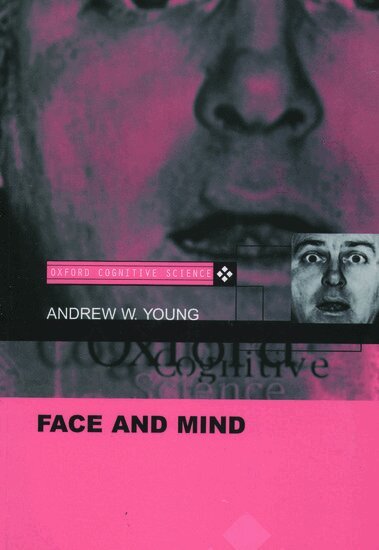
In Act 1 scene iv of Macbeth, Duncan reflects that: 'There's no art to find the mind's construction in the face'. In contrast, the claim that Andy Young sets out in this book is that we are now developing a science of face perception which can indeed shed light on certain aspects of mental life. Face and Mind consists of a series of seminal research and review papers on face perception published by the author and his colleagues over the last 12 years. A comprehensive introductory chapter, written especially for this volume, serves to draw together the various themes explored in the different contributions. The book examines the question of how faces are special, in terms of their social, biological, and theoretical roles. In particular, Face and Mind seeks to determine what our understanding of the face can tell us about the human brain. It discusses the evidence for an evolved neural substrate for face perception, and the question of whether we are innately predisposed to recognise faces, to find them attractive, and to decode the many social signals they give us. The ability of the human brain to process and remember the many different faces that we see and subsequently recall is analysed. Young includes detailed studies of the types of impairment to face perception which can follow brain injury or psychiatric illness, and uses them to address these questions, as well as other issues of high intrinsic and interdisciplinary interest. These include the extent to which our mental lives result from the operation of discrete components devoted to different purposes, the differences between conscious and non-conscious processes, and how we use evidence to support our beliefs about the world. Because of the huge variety of social signals read from the face, it can offer unique theoretical and philosophical insights into these questions. This fascinating book will be of interest not only to psychologists and neuropsychologists working in the field of visual perception, but to cognitive scientists generally. It provides an excellent summary of the most important theorietical and empirical work done on face perception in recent years, and as such will be of interest to advanced undergraduate and post-graduate students in psychology, philosophy, and cognitive science.
1 147 kr
Skickas inom 5-8 vardagar
Are people rational? This question was central to Greek thought and has been at the heart of psychology and philosophy for millennia. This book provides a radical and controversial reappraisal of conventional wisdom in the psychology of reasoning, proposing that the Western conception of the mind as a logical system is flawed at the very outset. It argues that cognition should be understood in terms of probability theory, the calculus of uncertain reasoning, rather than in terms of logic, the calculus of certain reasoning.
2 498 kr
Skickas inom 5-8 vardagar
Are people rational? This question was central to Greek thought; and has been at the heart of psychology and philosophy for millennia. This book provides a radical and controversial reappraisal of conventional wisdom in the psychology of reasoning, proposing that the Western conception of the mind as a logical system is flawed at the very outset. It argues that cognition should be understood in terms of probability theory, the calculus of uncertain reasoning, rather than in terms of logic, the calculus of certain reasoning.
1 444 kr
Skickas inom 5-8 vardagar
'If' is one of the most important and interesting words in the English language. It is used to express hypothetical thought - an essential part of human reasoning and decision making. This type of thought occurs wherever there is uncertainty, and uncertainty is everywhere in our lives. The use of conditional terms such as 'if' also distinguishes human intelligence from that of all other animals, permitting a higher level of rationality in human reasoning and decision making. Until now, such conditionals have been the subject of independent study by psychologists and philosophers. In this volume, Jonathan Evans and David Over present a new theoretical approach to understanding hypothetical thought. The book draws on studies from the psychology of judgement and decision making, as well as philosophical logic.A new volume in the acclaimed Oxford Cognitive Science series, 'If' will be an important book for both psychologists and philosophers interested in human reasoning. Advance praise for If:"This book brings together a wealth of work in cognitive psychology and will be valuable to both psychologists and philosophers. There is not, as far as I know, another book which covers this ground." Professor Dorothy Edgington, Dept of Philosophy, University of Oxford"This is a wonderful book. It is excellently written and provides convincing arguments for a new perspective on conditionals." Dr Klaus Oberauer, Department of Psychology, University of Potsdam, Germany
1 192 kr
Skickas inom 3-6 vardagar
John Campbell investigates how consciousness of the world explains our ability to think about the world. So your ability to think about objects you can see depends on your capacity for conscious visual attention to those things. "Reference and Consciousness" illuminates classical problems about thought, reference and experience by looking at the underlying psychological mechanisms on which conscious attention depends.
686 kr
Skickas inom 5-8 vardagar
What explains our ability to refer to the objects we perceive? John Campbell argues that our capacity for reference is explained by our capacity to attend selectively to the objects of which we are aware; that this capacity for conscious attention to a perceived object is what provides us with our knowledge of reference. When someone makes a reference to a perceived object, your knowledge of which thing they are talking about is constituted by your consciously attending to the relevant object. Campbell articulates the connections between these three concepts: reference, attention and consciousness. He looks at the metaphysical conception of the environment demanded by such an account, and at the demands imposed on our conception of consciousness by the point that consciousness of objects is what explains our capacity to think about them. He argues that empirical work on the binding problem can illuminate our grasp of the way in which we have knowledge of reference, supplied by conscious attention to the relevant object.Reference and Consciousness illuminates fundamental problems about thought, reference, and experience by looking at the underlying psychological mechanisms on which conscious attention depends. It is an original and stimulating contribution to philosophy and to cognitive science.The Oxford Cognitive Science Series is a forum for the best contemporary work in this flourishing field, where various disciplines - cognitive psychology, philosophy, linguistics, cognitive neuroscience, and computational theory - join forces in the investigation of thought, awareness, understanding, and associated workings of the mind. Each book will constitute an original contribution to its subject, but will be accessible beyond the ranks of specialists, so as to reach a broad interdisciplinary readership. The series will be carefully shaped and steered with the aim of representing the most important developments in the field and bringing together its constituent disciplines.General Editors: Martin Davies, James Higginbotham, Philip Johnson-Laird, Christopher Peacocke, Kim Plunkett