Oxford Commentaries on Flavian Poetry - Böcker
Visar alla böcker i serien Oxford Commentaries on Flavian Poetry. Handla med fri frakt och snabb leverans.
7 produkter
7 produkter
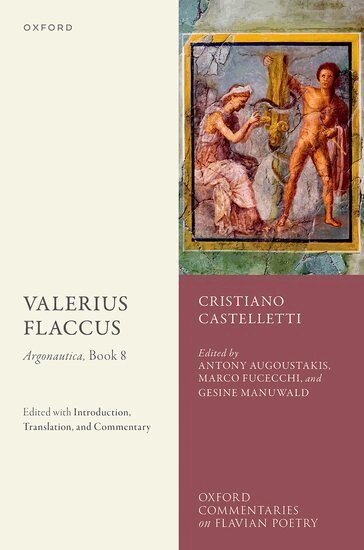
Valerius Flaccus: Argonautica, Book 8
Edited with Introduction, Translation, and Commentary
Inbunden, Engelska, 2022
2 814 kr
Skickas inom 5-8 vardagar
This is the first dedicated commentary on the eighth and final book of Valerius Flaccus' Flavian epic Argonautica. It includes the Latin text, a new English translation, and detailed discussion of a range of literary, linguistic, and textual issues. It is the final work of the promising scholar Cristiano Castelletti, edited by friends and colleagues. The edition benefits from his wide-ranging knowledge of ancient poetry and provides perceptive insights into the texture of this important book. It will make the final section of the poem more easily accessible to an international readership and addresses questions of the original length of the poem, of intertextuality, and of poetic practices in late first-century CE Rome.
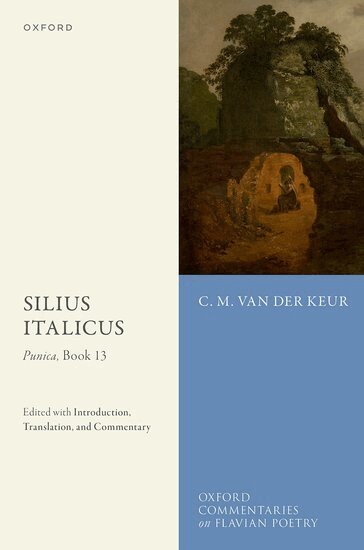
Silius Italicus: Punica, Book 13
Edited with Introduction, Translation, and Commentary
Inbunden, Engelska, 2024
2 992 kr
Skickas inom 5-8 vardagar
Book 13 of Silius Italicus' Punica marks an important turning point in this Latin epic poem on the Second Punic War. After twelve books of Carthaginian dominance, Rome begins to gain the upper hand. Following his failed attempt to attack Rome, Hannibal is devastated to learn that his role model Diomedes had provided Aeneas' heirs with the protective talisman of the Palladium, and leaves for southern Italy. This allows the Romans to finish their siege of Capua, Hannibal's rich ally in Italy, in punishment for its treachery; Capua's fall marks the beginning of the end for Carthage. The book's central theme of the anticipation of Rome's destined victory is continued in the third and longest part of the book, where young Scipio, the future Africanus, ventures into the underworld, and into the depths of the rich poetic past, to be inspired by the shades he encounters and to define his own position as an epic hero.This volume presents the first full-scale literary and linguistic analysis of the entirety of Punica 13, including the famous Nekyia episode. The notes, which cover matters of syntax, textual criticism, style, a selection of realia, and important verbal and conceptual parallels, are complemented with extended introductory paragraphs for each scene focusing on poetic models, themes, intertextual interpretation, and narrative structure. C. M. van der Keur's General Introduction discusses the book against its Flavian background, its position within the epic and within the literary tradition, and Silius' use of metre and verse composition. The Latin text is presented alongside an English translation.
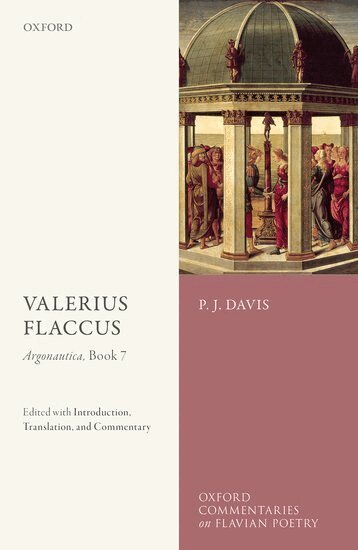
Valerius Flaccus: Argonautica, Book 7
Edited with Introduction, Translation, and Commentary
Inbunden, Engelska, 2020
2 146 kr
Skickas inom 5-8 vardagar
The story of Jason and the Argonauts is one of the best known of ancient Greek myths and has captivated people for over two and a half thousand years. Focusing on Medea's attempts to resist her love for Jason, Book 7 of Valerius Flaccus' Argonautica presents one of the most attractive and engaging episodes in all of Greco-Roman epic: the key moment when Jason and Medea fall in love and when Jason, with Medea's help, yokes the king's fire-breathing bulls, sows the dragon's teeth, and compels the earthborn men to destroy themselves. Although versions of the story of the Argo's journey from Greece to the Black Sea had been told by many earlier poets, this Roman account of the myth differs from its predecessors in important ways. First, Valerius presents the Argo as the first ship and the voyage as a decisive turning point in human history: the Argo's breaking down of natural barriers will lead to interchange between human communities and to a sequence of empires, culminating of course in that of the Romans. Second, Valerius constantly foreshadows other parts of Medea's myth, most notably the explosion of violence in Corinth well known to Valerius' audience and to us from the Medea tragedies of Euripides and Seneca. Third, and most important, Valerius concentrates attention on the inner workings of Medea's mind as she fights against the combined efforts of two goddesses who ultimately compel her to betray her father and help Jason to win the golden fleece. This new edition of Argonautica 7 offers the first detailed commentary on this book of the poem in English, as well as a substantial introduction intended to be as accessible to as many readers as possible, a new Latin text, and a facing-page prose translation. The commentary is primarily literary, emphasizing Valerius' engagement with the epic tradition and with earlier treatments of the Medea story, as well as the elegance and power of his poetry, and is intended to be of use to scholars and students at all levels of study
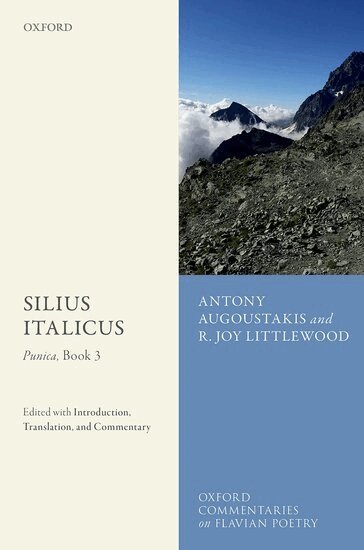
Silius Italicus: Punica, Book 3
Edited with Introduction, Translation, and Commentary
Inbunden, Engelska, 2022
3 125 kr
Skickas inom 5-8 vardagar
Hannibal's crossing of the Alps represents a momentous event in the beginning of the Second Punic War (218-202 BCE). The third book of Silius Italicus' Punica reimagines this courageous feat, retracing the journey of Hannibal and his army from the temple of Hercules/Melqart in Gades, across the Pyrenees, the Rhone, and the Alpine peaks into northern Italy. Significant stages in the journey are marked by prophecies: the gods reveal to Hannibal in a dream his future destruction of Italy through a dream with a giant snake; Jupiter unveils to his daughter Venus the future of the Roman empire through the Flavians and Domitian himself; the oracle of Hammon in the African desert prophesies the Roman defeat at Cannae. The Flavian poet builds his narrative around several key episodes that programmatically set the tone for the whole poem: separation from family, a futuristic distinction between African and Iberian troops in the catalogue, the transgressive nature of Hannibal's struggle with nature and the divine. The commentary explores each scene in the context of the poetic, philosophical, and historiographic background, with reference also to material culture. The philological and stylistic exegeses aim to reveal the linguistic complexities which colour this fascinating Flavian reconstruction of the topos of 'the epic hero's journey'. The Latin text is presented alongside an English translation and supplemented with maps and images to support understanding the broad historical context of Silius' poem.
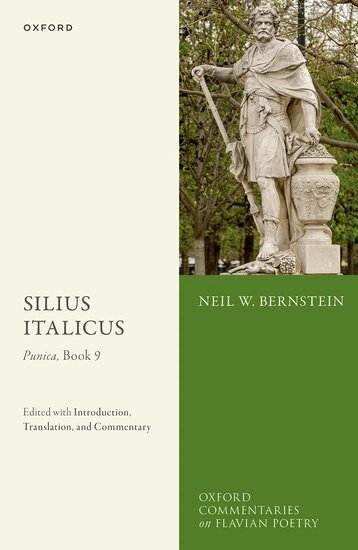
Silius Italicus: Punica, Book 9
Edited with Introduction, Translation, and Commentary
Inbunden, Engelska, 2022
2 635 kr
Skickas inom 5-8 vardagar
Book 9 of Silius Italicus' first-century Latin epic poem Punica begins the narrative of the Battle of Cannae (August 216 BC). This book is an integral part of the epic's three-book movement that narrates one of the largest battles in Roman history. It opens with the dispute between the consuls Paulus and Varro over giving battle, in the face of hostile omens and Hannibal's record of successful combat. On the eve of the battle, the Roman soldier Solymus accidentally kills his father Satricus, thereby presenting an omen of disaster for the Roman army. After Hannibal and Varro encourage their troops, the initial phase of the battle commences. The gods descend to the battlefield, and Mars and Minerva fight the sole full-scale theomachy in Latin epic. Aeolus summons the Vulturnus wind at Juno's request to devastate the Roman ranks. After the gods have departed, Hannibal's elephant troops advance and scatter the Roman forces. The book ends by recapitulating the opening episode: Varro admits his mistake in giving battle and flees the battlefield.This volume is the first full-scale commentary in English devoted exclusively to Punica 9. It features the Latin text with a critical apparatus and a parallel English translation. Detailed commentary notes provide information on literary style, use of language, poetic intertexts, and scholarly interpretation. The Introduction offers further context and background, including sections on Silius Italicus and his era, the historiographic and rhetorical traditions that he adopted, the inter- and intra-textuality of the Cannae episode, and the book's use of diction and metre.
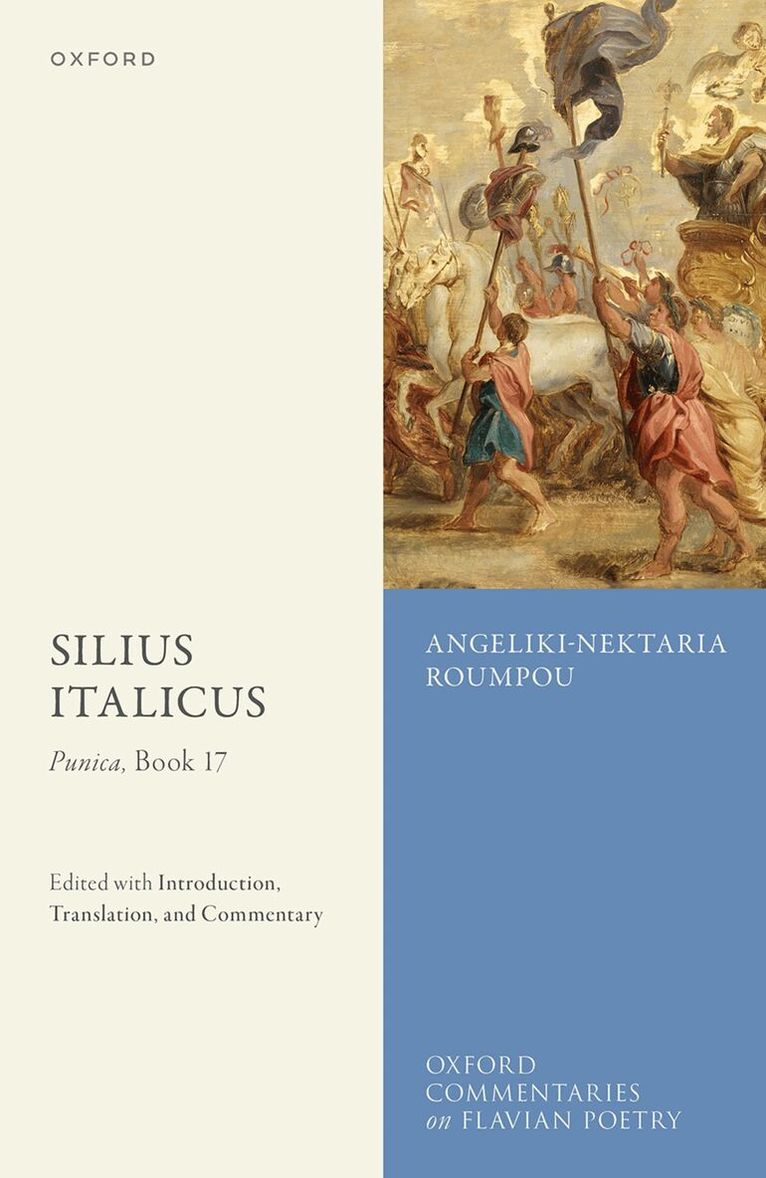
Silius Italicus: Punica, Book 17
Edited with Introduction, Translation, and Commentary
Inbunden, Engelska, 2025
2 555 kr
Skickas inom 5-8 vardagar
Book 17 of Silius Italicus' Punica serves as the powerful conclusion of the epic, detailing the final stages of the Second Punic War, culminating in the Battle of Zama, where Roman dominance is secured. The narrative intertwines divine intervention with human conflict. Silius narrates Carthage's submission to Rome and Rome's victory, bringing the Second Punic War to a close and solidifying the epic's significance within the literary tradition. At the same time, the narrative reflects concerns of Flavian Rome, offering a nuanced interpretation of the political and cultural issues of the poet's own era. Through elevated language, intricate metre, and vivid imagery, Silius amplifies the grandeur of the final battle, highlighting themes of divine influence, heroic struggle, and political power. By revisiting earlier narrative motifs, Book 17 masterfully unifies the epic's central themes, offering a resolution that is both conclusive and thought-provoking. This volume presents a new edition and translation into English of Book 17, along with an introduction and line-by-line commentary shedding light on the poet's dialogue with the epic tradition and the unique methods employed to bring the poem's narrative to a resonant close. Angeliki Nektaria Roumpou's General Introduction explores the poem's literary and historical context, offering an analysis and interpretation of the book's central themes. The commentary explores Silius' framing of the epic, and illuminates key historiographical, textual, linguistic, and literary issues embedded in the narrative, providing essential insights into Silius Italicus' artistry and the enduring legacy of his Punica.
3 447 kr
Skickas inom 3-6 vardagar
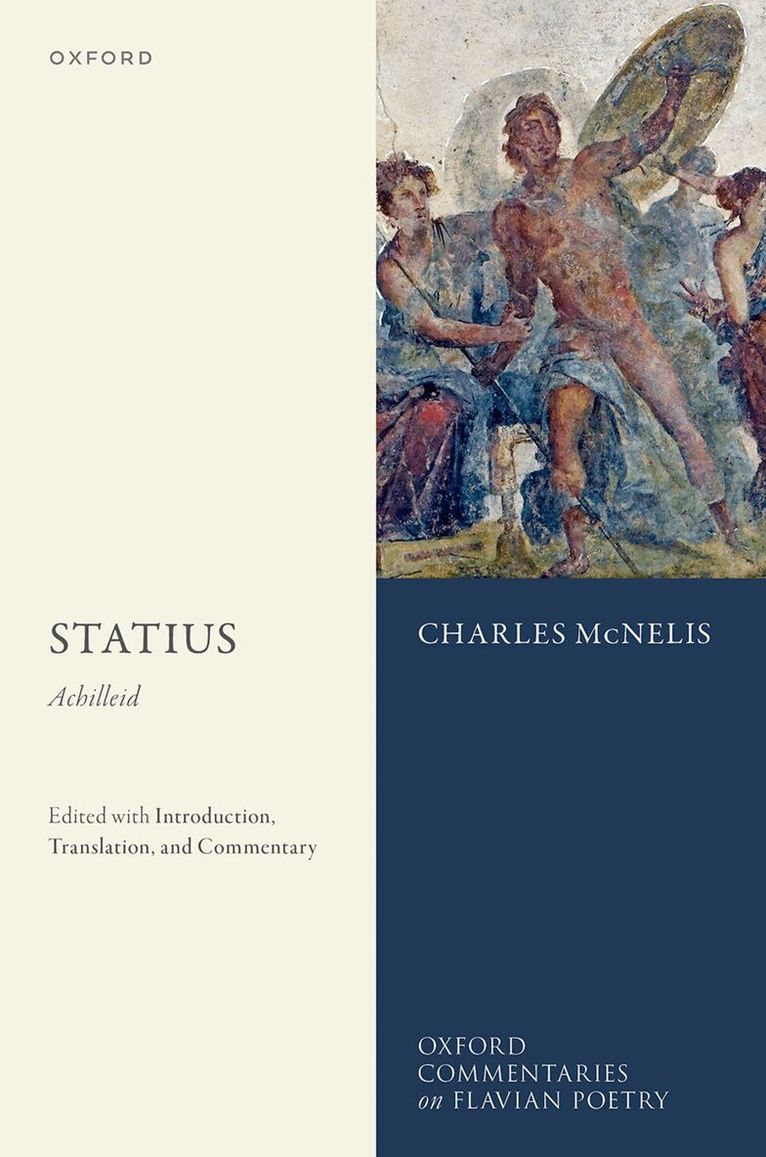
Statius' Achilleid is the most extensive treatment of the myth of Achilles hiding disguised as a girl on the island of Scyros. In the Achilleid, the hero, who had been trained to be an outstanding warrior by the centaur Chiron, complies with a scheme devised by his divine mother, Thetis, who does not want him to sail to Troy since her son is fated to die there. She proposes that he dress as a girl in order to hide himself from the Greeks who wish to enlist him in the martial expedition; despite his inclinations developed by Chiron, Achilles acquiesces, but only in order to pursue his desire for the princess Deidamia. Odysseus and Diomedes, sent by the Greek army, come to Scyros to reclaim Achilles, and the poem depicts the struggles faced by Deidamia and Achilles' future comrades as they coax him in opposite directions. While Achilles tries to sort out his desires, he reflects upon love, family, social obligations, and the lessons that have been imparted to him. Throughout the Middle Ages and up to the current day, Statius' depiction of the great Greek hero has attracted artistic and scholarly attention for its treatment of themes such as education, heroism, fate, and gender and sexuality. Statius' poem, written at the end of the first century CE, also engages deeply with the entirety of the Greek and Roman literary traditions--in particular, epic poems such as the Iliad, the Odyssey, Vergil's Aeneid, and Ovid's Metamorphoses. The Achilleid's reworking of these earlier poems amounts to a tour-de-force reconsideration of the entire genre of epic poetry. This new edition of the Achilleid contains an extensive introduction (encompassing mythological background, details about Statius' language and meter, and a survey of the reception of the poem since late antiquity), a Latin text (based upon recent scholarship) with facing-page English translation, and the first full-scale commentary in English in nearly 70 years.