Oxford History of Early Modern Europe – serie
Visar alla böcker i serien Oxford History of Early Modern Europe. Handla med fri frakt och snabb leverans.
11 produkter
11 produkter
Häftad, Engelska, 1998
906 kr
Skickas
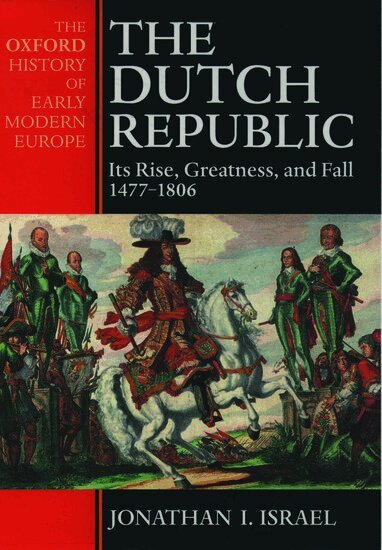
The `Dutch Golden Age', the age of Grotius, Spinoza, Rembrandt, Vermeer, and a host of other renowned artists and writers was also remarkable for its immense impact in the spheres of commerce, finance, shipping, and technology. It was in fact one of the most spectacularly creative episodes in the history of the world. In this book, Jonathan Israel gives the definitive account of the emergence of the United Provinces as a great power, and explains the subsequent decline in the eighteenth century. He places the thought, politics, religion, and social developments of the Golden Age in their broad context, and examines the changing relationship between the northern Netherlands and the south, which was to develop into modern Belgium.One of the principal aims of the book is to counter the oversimplification which characterizes so much history writing today, and to provide a new type of integrated history which draws the different dimensions of the discipline firmly together in strictly non-technical language. The result is a comprehensive and lucid account as useful to the reader primarily interested in artistic and cultural history as to the student who needs a survey of the Republic's institutions, class structure, and economic development. At the same time it will provide an invaluable aid to scholars interested in new research and new interpretations.
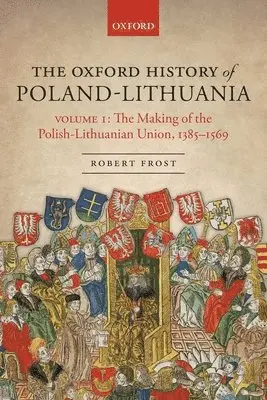
The Oxford History of Poland-Lithuania
Volume I: The Making of the Polish-Lithuanian Union, 1385-1569
Inbunden, Engelska, 2015
2 333 kr
Skickas inom 5-8 vardagar
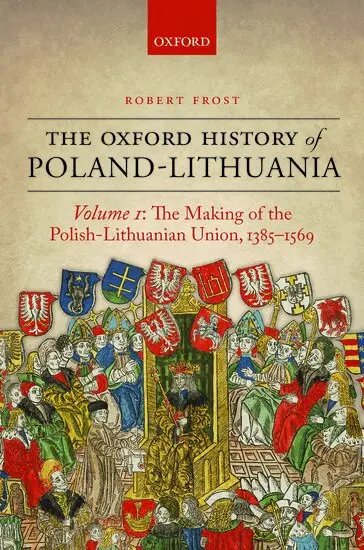
The history of eastern European is dominated by the story of the rise of the Russian empire, yet Russia only emerged as a major power after 1700. For 300 years the greatest power in Eastern Europe was the union between the kingdom of Poland and the grand duchy of Lithuania, one of the longest-lasting political unions in European history. Yet because it ended in the late-eighteenth century in what are misleadingly termed the Partitions of Poland, it barely features in standard accounts of European history.The Making of the Polish-Lithuanian Union 1385-1569 tells the story of the formation of a consensual, decentralised, multinational, and religiously plural state built from below as much as above, that was founded by peaceful negotiation, not war and conquest. From its inception in 1385-6, a vision of political union was developed that proved attractive to Poles, Lithuanians, Ruthenians, and Germans, a union which was extended to include Prussia in the 1450s and Livonia in the 1560s. Despite the often bitter disagreements over the nature of the union, these were nevertheless overcome by a republican vision of a union of peoples in one political community of citizens under an elected monarch. Robert Frost challenges interpretations of the union informed by the idea that the emergence of the sovereign nation state represents the essence of political modernity, and presents the Polish-Lithuanian union as a case study of a composite state.The modern history of Poland, Lithuania, Ukraine, and Belarus cannot be understood without an understanding of the legacy of the Polish-Lithuanian union. This volume is the first detailed study of the making of that union ever published in English.
Inbunden, Engelska, 2011
2 270 kr
Skickas inom 5-8 vardagar
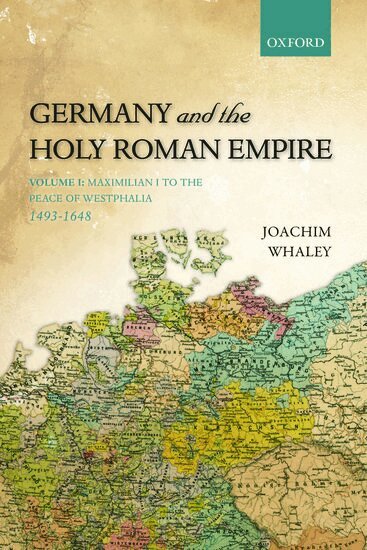
Germany and the Holy Roman Empire offers a new interpretation of the development of German-speaking central Europe and the Holy Roman Empire or German Reich, from the great reforms of 1495-1500 to its dissolution in 1806 after the turmoil of the French Revolutionary and Napoleonic Wars. Going against the notion that this was a long period of decline, Joachim Whaley shows how imperial institutions developed in response to the crises of the sixteenth and seventeenth centuries, notably the Reformation and Thirty Years War, and assesses the impact of international developments on the Reich. Central themes are the tension between Habsburg aspirations to create a German monarchy and the desire of the German princes and cities to maintain their traditional rights, and how the Reich developed the functions of a state during this period. The first single-author account of German history from the Reformation to the early nineteenth century since Hajo Holborn's study written in the 1950s, it also illuminates the development of the German territories subordinate to the Reich. Whaley explores the implications of the Reformation and subsequent religious reform movements, both Protestant and Catholic, and the Enlightenment for the government of both secular and ecclesiastical principalities, the minor territories of counts and knights and the cities. The Reich and the territories formed a coherent and workable system and, as a polity, the Reich developed its own distinctive political culture and traditions of German patriotism over the early modern period.Whaley explains the development of the Holy Roman Empire as an early modern polity and illuminates the evolution of the several hundred German territories within it. He gives a rich account of topics such as the Reformation, the Thirty Years War, Pietism and baroque Catholicism, the Aufklärung or German Enlightenment and the impact on the Empire and its territories of the French Revolution and Napoleon. It includes consideration of language, cultural aspects and religious and intellectual movements. Germany and the Holy Roman Empire engages with all the major debates among both German and English-speaking historians about early modern German history over the last sixty years and offers a striking new interpretation of this important period.Volume I extends from the late fifteenth century through to the Thirty Years War.
The Oxford History of Poland-Lithuania
Volume I: The Making of the Polish-Lithuanian Union, 1385-1569
Häftad, Engelska, 2018
530 kr
Skickas inom 5-8 vardagar
The history of eastern European is dominated by the story of the rise of the Russian empire, yet Russia only emerged as a major power after 1700. For 300 years the greatest power in Eastern Europe was the union between the kingdom of Poland and the grand duchy of Lithuania, one of the longest-lasting political unions in European history. Yet because it ended in the late-eighteenth century in what are misleadingly termed the Partitions of Poland, it barely features in standard accounts of European history. The Making of the Polish-Lithuanian Union 1385-1569 tells the story of the formation of a consensual, decentralised, multinational, and religiously plural state built from below as much as above, that was founded by peaceful negotiation, not war and conquest. From its inception in 1385-6, a vision of political union was developed that proved attractive to Poles, Lithuanians, Ruthenians, and Germans, a union which was extended to include Prussia in the 1450s and Livonia in the 1560s. Despite the often bitter disagreements over the nature of the union, these were nevertheless overcome by a republican vision of a union of peoples in one political community of citizens under an elected monarch. Robert Frost challenges interpretations of the union informed by the idea that the emergence of the sovereign nation state represents the essence of political modernity, and presents the Polish-Lithuanian union as a case study of a composite state. The modern history of Poland, Lithuania, Ukraine, and Belarus cannot be understood without an understanding of the legacy of the Polish-Lithuanian union. This volume is the first detailed study of the making of that union ever published in English.
Inbunden, Engelska, 2017
1 818 kr
Skickas inom 5-8 vardagar
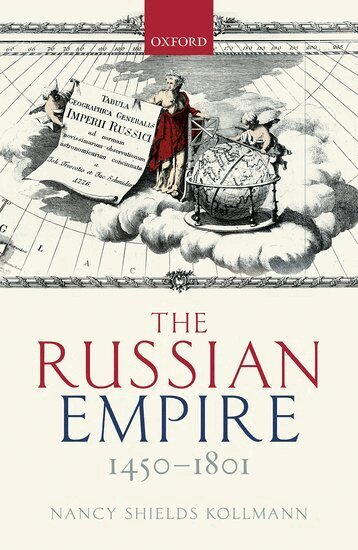
Modern Russian identity and historical experience has been largely shaped by Russia's imperial past: an empire that was founded in the early modern era and endures in large part today. The Russian Empire 1450-1801 surveys how the areas that made up the empire were conquered and how they were governed. It considers the Russian empire a 'Eurasian empire', characterized by a 'politics of difference': the rulers and their elites at the center defined the state's needs minimally - with control over defense, criminal law, taxation, and mobilization of resources - and otherwise tolerated local religions, languages, cultures, elites, and institutions. The center related to communities and religions vertically, according each a modicum of rights and autonomies, but didn't allow horizontal connections across nobilities, townsmen, or other groups potentially with common interests to coalesce. Thus, the Russian empire was multi-ethnic and multi-religious; Nancy Kollmann gives detailed attention to the major ethnic and religious groups, and surveys the government's strategies of governance - centralized bureaucracy, military reform, and a changed judicial system. The volume pays particular attention to the dissemination of a supranational ideology of political legitimacy in a variety of media - written sources and primarily public ritual, painting, and particularly architecture. Beginning with foundational features, such as geography, climate, demography, and geopolitical situation, The Russian Empire 1450-1801 explores the empire's primarily agrarian economy, serfdom, towns and trade, as well as the many religious groups - primarily Orthodoxy, Islam, and Buddhism. It tracks the emergence of an 'Imperial nobility' and a national self-consciousness that was, by the end of the eighteenth century, distinctly imperial, embracing the diversity of the empire's many peoples and cultures.
Inbunden, Engelska, 2008
1 236 kr
Skickas inom 5-8 vardagar
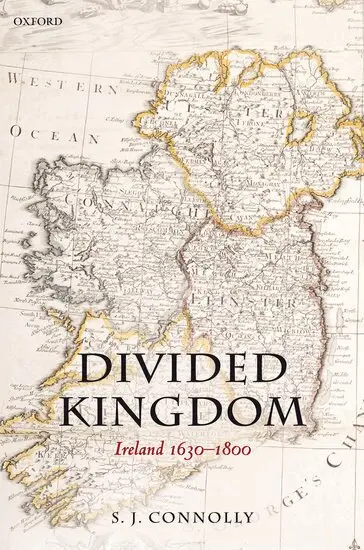
For Ireland the seventeenth and eighteenth centuries were an era marked by war, economic transformation, and the making and remaking of identities. By the 1630s the era of wars of conquest seemed firmly in the past. But the British civil wars of the mid-seventeenth century fractured both Protestant and Catholic Ireland along lines defined by different combinations of religious and political allegiance. Later, after 1688, Ireland became the battlefield for what was otherwise Britain's bloodless (and so Glorious) Revolution. The eighteenth century, by contrast, was a period of peace, permitting Ireland to emerge, first as a dynamic actor in the growing Atlantic economy, then as the breadbasket for industrialising Britain. But at the end of the century, against a background of international revolution, new forms of religious and political conflict came together to produce another period of multi-sided conflict. The Act of Union, hastily introduced in the aftermath of civil war, ensured that Ireland entered the nineteenth century still divided, but no longer a kingdom.
Häftad, Engelska, 2009
664 kr
Skickas inom 7-10 vardagar
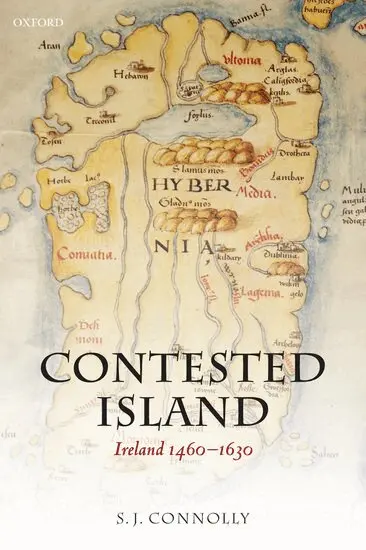
Between the 1460s and the 1630s Ireland was transformed from a medieval into a modern society. A poor society on the periphery of Europe, dominated by the conflicts of competing warlords- Irish and English- it later became a centralized political unit with a single government and code of laws, and a still primitive, but rapidly developing, market economy. These changes, however, had been achieved by brutal wars of conquest, while large scale colonization projects had created lasting tensions between old inhabitants and recent settlers. At the same time the great religious divide of the Reformation had introduced a further source of conflict to Ireland, dividing the population into two hostile camps, while at the same time giving it a new and dangerous role in the conflict between England and its continental enemies. Against this confused and constantly changing background, individuals and groups repeatedly had to adapt their customs and behaviour, their political allegiances and aspirations, and their sense of who they were. A long and complex story, with many false starts and numerous dead ends, it is the story of the people who became the modern Irish.
Häftad, Engelska, 2010
684 kr
Skickas inom 7-10 vardagar
For Ireland the seventeenth and eighteenth centuries were an era marked by war, economic transformation, and the making and remaking of identities. By the 1630s the era of wars of conquest seemed firmly in the past. But the British civil wars of the mid-seventeenth century fractured both Protestant and Catholic Ireland along lines defined by different combinations of religious and political allegiance. Later, after 1688, Ireland became the battlefield for what was otherwise Britain's bloodless (and so Glorious) Revolution. The eighteenth century, by contrast, was a period of peace, permitting Ireland to emerge, first as a dynamic actor in the growing Atlantic economy, then as the breadbasket for industrialising Britain. But at the end of the century, against a background of international revolution, new forms of religious and political conflict came together to produce another period of multi-sided conflict. The Act of Union, hastily introduced in the aftermath of civil war, ensured that Ireland entered the nineteenth century still divided, but no longer a kingdom.
Häftad, Engelska, 2013
705 kr
Skickas inom 5-8 vardagar
Germany and the Holy Roman Empire offers a striking new interpretation of a crucial era in German and European history, from the great reforms of 1495-1500 to the dissolution of the Reich in 1806. Over two volumes, Joachim Whaley rejects the notion that this was a long period of decline, and shows instead how imperial institutions developed in response to the crises of the sixteenth and seventeenth centuries, notably the Reformation and Thirty Years War. The impact of international developments on the Reich is also examined.The first volume begins with an account of the reforms of the reign of Maximilian I and concludes with the Peace of Westphalia in 1648. It offers a new interpretation of the Reformation, the Peasants' War, the Schmalkaldic War and the Peace of Augsburg, and of the post-Reformation development of Protestantism and Catholicism. The German policy successfully resisted the ambitions of Charles V and the repeated onslaughtsof both the Ottomans and the French, and it remained stable in the face of the French religious wars and the Dutch Revolt. The volume concludes with an analysis of the Thirty Years War as an essentially German constitutional conflict, triggered by the problems of the Habsburg dynasty and prolonged by the interventions of foreign powers. The Peace of Westphalia, which ended the conflict, both reflected the development of the German polity since the late fifteenth century and created teh framework for its development over the next hundred and fifty years.
Häftad, Engelska, 2013
705 kr
Skickas inom 5-8 vardagar
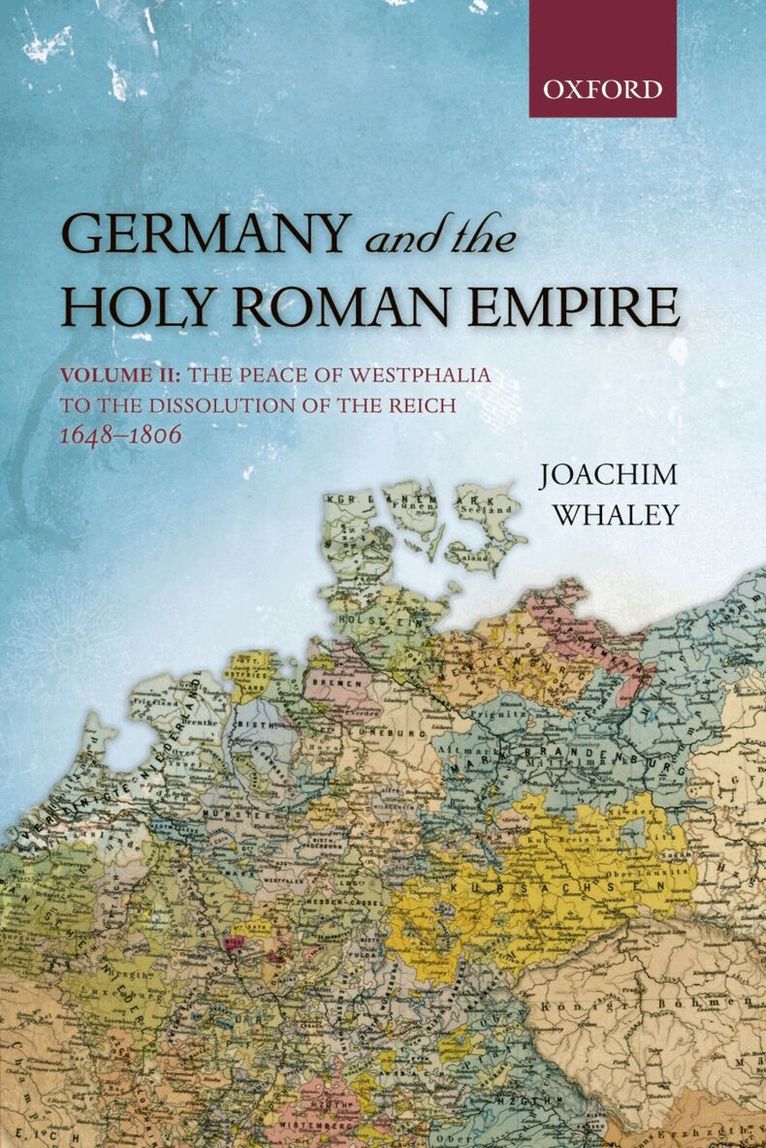
Germany and the Holy Roman Empire offers a striking new interpretation of a crucial era in German and European history, from the great reforms of 1495-1500 to the dissolution of the Reich in 1806. Over two volumes, Joachim Whaley rejects the notion that this was a long period of decline, and shows instead how imperial institutions developed in response to the crises of the sixteenth and seventeenth centuries, notably the Reformation and Thirty Years War. The impact of international developments on the Reich is also examined.Volume II begins with the Peace of Westphalia and concludes with the dissolution of the Reich. Whaley analyses the remarkable resurgence of the Reich after the Thirty Years War, which saw the Habsburg emperors achieve a new position of power and influence and which enabled the Reich to withstand the military threats posed by France and the Turks in the later seventeenth century. He gives a rich account of topics such as Pietism and baroque Catholicism, the German enlightenment, and the impact on the Empire and its territories of the French Revolution and Napolean. Whaley emphasizes the continuing viability of the Reich's institutions to the end, and the vitality of a political culture of freedom that has been routinely underestimated by historians of modern Germany.
Inbunden, Engelska, 2011
2 270 kr
Skickas inom 5-8 vardagar
Germany and the Holy Roman Empire offers a new interpretation of the development of German-speaking central Europe and the Holy Roman Empire or German Reich, from the great reforms of 1495-1500 to its dissolution in 1806 after the turmoil of the French Revolutionary and Napoleonic Wars. Going against the notion that this was a long period of decline, Joachim Whaley shows how imperial institutions developed in response to the crises of the sixteenth and seventeenth centuries, notably the Reformation and Thirty Years War, and assesses the impact of international developments on the Reich. Central themes are the tension between Habsburg aspirations to create a German monarchy and the desire of the German princes and cities to maintain their traditional rights, and how the Reich developed the functions of a state during this period. The first single-author account of German history from the Reformation to the early nineteenth century since Hajo Holborn's study written in the 1950s, it also illuminates the development of the German territories subordinate to the Reich. Whaley explores the implications of the Reformation and subsequent religious reform movements, both Protestant and Catholic, and the Enlightenment for the government of both secular and ecclesiastical principalities, the minor territories of counts and knights and the cities. The Reich and the territories formed a coherent and workable system and, as a polity, the Reich developed its own distinctive political culture and traditions of German patriotism over the early modern period. Whaley explains the development of the Holy Roman Empire as an early modern polity and illuminates the evolution of the several hundred German territories within it. He gives a rich account of topics such as the Reformation, the Thirty Years War, Pietism and baroque Catholicism, the Aufklärung or German Enlightenment and the impact on the Empire and its territories of the French Revolution and Napoleon. It includes consideration of language, cultural aspects and religious and intellectual movements. Germany and the Holy Roman Empire engages with all the major debates among both German and English-speaking historians about early modern German history over the last sixty years and offers a striking new interpretation of this important period.Volume II starts with the end of the Thirty Years War and extends to the dissolution of the Reich