Oxford Private Law Theory - Böcker
Visar alla böcker i serien Oxford Private Law Theory. Handla med fri frakt och snabb leverans.
15 produkter
15 produkter
1 056 kr
Skickas inom 5-8 vardagar
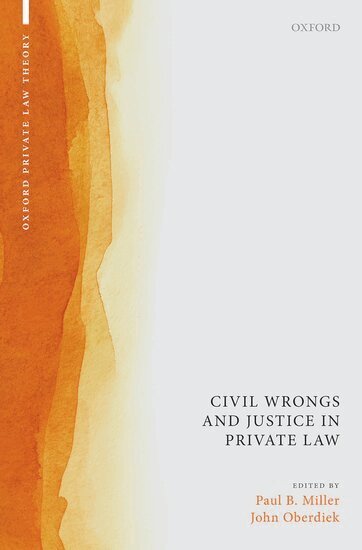
Civil wrongs occupy a significant place in private law. They are particularly prominent in tort law, but equally have a place in contract law, property and intellectual property law, unjust enrichment, fiduciary law, and in equity more broadly. Civil wrongs are also a preoccupation of leading general theories of private law, including corrective justice and civil recourse theories. According to these and other theories, the centrality of civil wrongs to civil liability shows that private law is fundamentally concerned with the expression and enforcement of norms of justice appropriate to interpersonal interaction and association. Others, sounding notes of caution or criticism, argue that a preoccupation with wrongs and remedies has meant neglect of other ways in which private law serves justice, and ways in which private law serves values other than justice. This volume comprises original papers written by a wide variety of legal theorists and philosophers exploring the nature of civil wrongs, their place in private law, and their relationship to other forms of wrongdoing.
1 316 kr
Skickas inom 5-8 vardagar
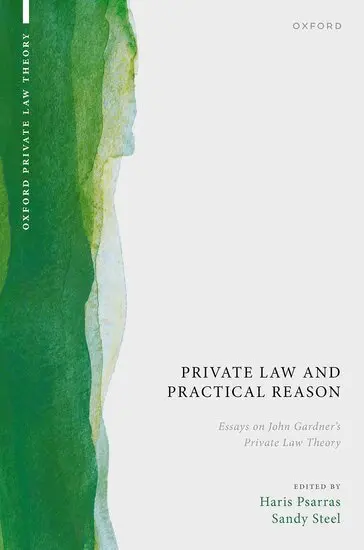
The contributions to this edited volume engage with John Gardner's philosophical work on private law. The content is divided into three parts. The first part gathers contributions on general theoretical issues that bear upon private law. The second part is concerned with Gardner's well-known views on responding to wrongs and the justification of reparative duties - an issue that spans all of private law. The third part turns to theoretical issues within particular areas of private law. Its focus is Gardner's focus: tort law, but it also includes chapters on contract law and equity.The primary aim of Private Law and Practical Reason is to facilitate a critical assessment of the private law thinking of one of the most important legal philosophers of the last fifty years. Gardner's contributions to private law theory are recognised to be amongst the most significant and philosophically rich. This work assembles a group of contributors with diverse theoretical commitments, many of whom have not directly engaged previously with Gardner's work, and is intended to act as a reference point for central debates in private law theory, such as the role of moral duties, the justification of reparative obligations, and, more broadly, the role of reasons in private law.
1 295 kr
Skickas inom 5-8 vardagar
Non-instrumentalist private law theory has been dominated by an interpretivist methodology that seeks to understand the concepts, doctrines, and structures of the law in principled terms. This has resulted in the neglect of purely normative analysis and a failure to engage systematically with the methodologies of moral and political philosophy.Wrongs, Harms, and Compensation: Paying for our Mistakes departs from this approach, arguing instead that the justification of tort law is dependent on our underlying moral corrective duties. In this book, Adam Slavny develops a pluralistic account of these duties, which encompasses both wrongful and non-wrongful conduct, complicating the view that torts should be regarded as a coherent set of wrongs. He also places the practice of enforcing corrective duties in a broader context, arguing that it should not be isolated or immune to critiques based on distributive justice, and that our duties are in fact consistent with institutional arrangements other than tort law, including various types of compensation schemes. What emerges is neither a wholesale defence of or attack on tort law, but an insistence that its normative foundations are much more complex, diverse, and malleable than a focus on current legal practices would suggest.
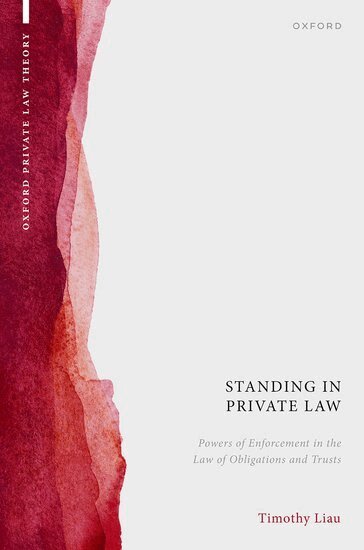
Standing in Private Law
Powers of Enforcement in the Law of Obligations and Trusts
Inbunden, Engelska, 2023
1 748 kr
Skickas
Standing in Private Law: Powers of Enforcement in the Law of Obligations and Trusts develops the idea that we should attend more to 'standing', conceived as a power to hold another accountable before a court as a distinct private law concept. Prominent lawyers have claimed that private law does not have or need standing rules, yet this seems implausible. If private law is obligation-imposing, we need rules about who can sue on these obligations to hold their bearers accountable. This book argues that a reason why standing has been relatively overlooked and under-conceptualized, receiving meagre attention from private lawyers, is because it has been obscured from plain sight: it has been swallowed up by the more dominant and capacious concept of a 'right'. However, standing is a distinct and separable private law concept that can and should be distinguished more clearly from 'right'. Doing so is necessary for the continued rational development of private law doctrine. It is also necessary for a deeper theoretical understanding of standing's significance, and its place within the remedial apparatus of private law. This book argues that an implicit standing rule exists across the law of obligations. It examines its justifiability, and the justifiability of exceptions to the rule. It also shows how and why recognising standing's distinctiveness can help us to interpret, develop, and resolve debates within different areas of private law, including the laws of contract, torts, unjust enrichments, and relatedly, the law of trusts.
1 082 kr
Skickas
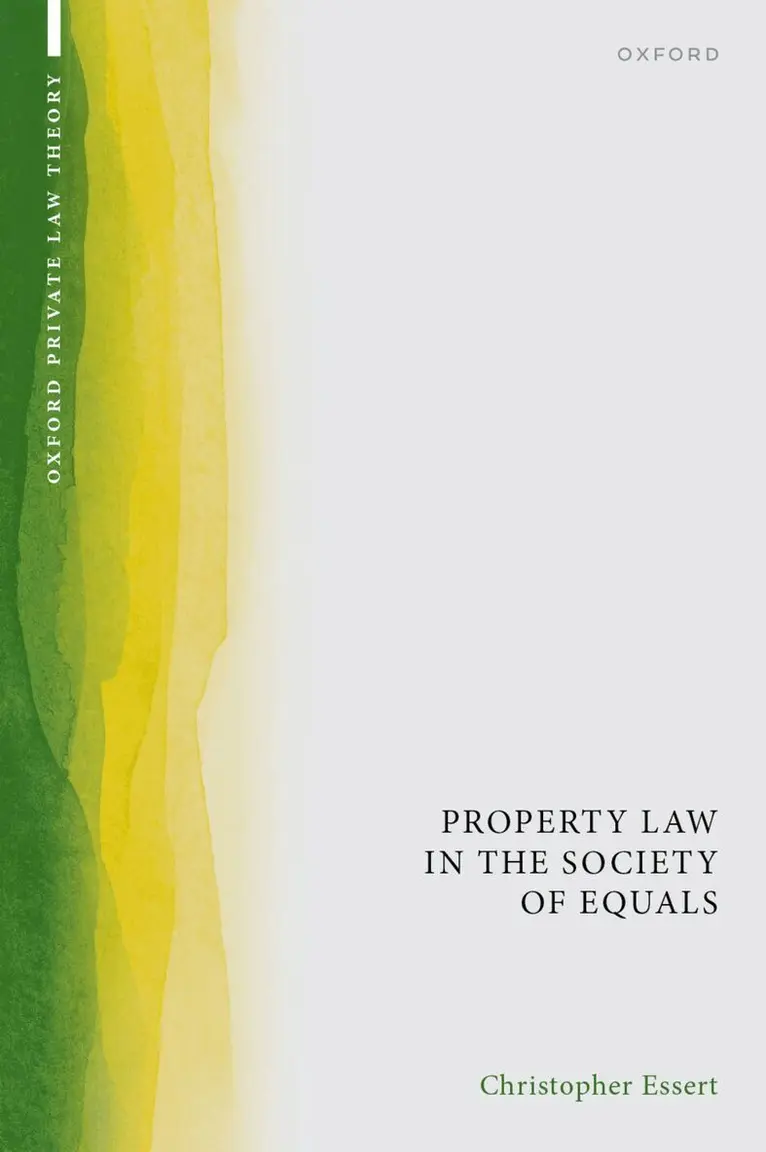
Property is often seen as fundamentally inegalitarian, leading many to believe that a world without property would be a more equal one. Property Law in the Society of Equals challenges this view, demonstrating instead that property is essential for a society of equals. Property, as the legal realization of the idea of yours and mine, creates the conditions for us to relate to each other on equal terms. This conception of property allows for an examination of many of its core doctrines, including trespass and nuisance law, the law of acquisition, possession, and transfer, the law of leases, and the law of servitudes. It also reveals the distinctive place of property within private law more generally, and how to think about novel or controversial cases of property rights. Moreover, the idea that property is fundamentally egalitarian generates a radical critique of our present systems of property. It shows that various forms of public law regulation of property - including the right to housing and public housing itself - are justified by the same principles that underlie the need for property in the first place.Property Law in the Society of Equals offers a thorough and insightful account of a fundamental legal subject matter, and a compelling call for the reform of property on more egalitarian lines.
1 409 kr
Skickas inom 7-10 vardagar
This is an open access title. It is available to read and download as a free PDF version on Oxford Academic and is made available under a Creative Commons Attribution-Non Commercial-No Derivatives 4.0 International licence.Oxford Studies in Private Law Theory is a biennial forum for some of the best new work in private law theory by scholars from around the world. The essays range widely over issues in general private law theory as well as specific fields, including the theoretical analysis of tort law, property law, contract law, fiduciary law, trust law, remedies and restitution, and the law of equity. OSPLT will be essential reading for academic lawyers, philosophers, political scientists, economists, and historians who wish to keep up with the latest developments in the flourishing field of private law theory.
1 735 kr
Skickas inom 3-6 vardagar
Tort law draws a fundamental distinction between doing harm and failing to prevent it. Generally, there is no positive duty upon private individuals to prevent harm. However, there are instances in which a failure to prevent harm—an omission—can have legal consequences.Omissions in Tort Law analyses the distinction drawn by tort law and argues that it is not best understood in terms of the distinction between acts and omissions, but in terms of making things worse versus not making things better. It considers when the law will and should impose duties to improve anothers position. It provides novel conceptual analyses of the basic concepts that inform the imposition of positive duties, such as creation of risk, interfering with aid, assuming responsibility, controlling a source of risk, and the normative considerations that underpin them. It considers the ways in which the law differentiates between actively causing harm and failing to protect from harm, and makes recommendations as to how the law could be improved. Exploring the ways in which conceptions of morality intersect with legal obligations, Omissions in Tort Law offers a detailed and nuanced perspective on omissions and positive duties.
1 191 kr
Skickas inom 5-8 vardagar
This is an open access title. It is available to read and download as a free PDF version on Oxford Academic and is made available under a Creative Commons Attribution-Non Commercial-No Derivatives 4.0 International licence.Oxford Studies in Private Law Theory is a biennial forum for some of the best new work in private law theory by scholars from around the world. The essays range widely over issues in general private law theory as well as specific fields, including the theoretical analysis of tort law, property law, contract law, fiduciary law, trust law, remedies and restitution, and the law of equity. OSPLT will be essential reading for academic lawyers, philosophers, political scientists, economists, and historians who wish to keep up with the latest developments in the flourishing field of private law theory.Volume II ranges widely over a diverse array of topics, including the standing to enforce private rights, the power-constraining role of equity, the grounds and limits of repair, dimensions of liability, the fiduciary duties of lawyers, as well as broader questions concerning the place of autonomy and democracy in private law and the justification of private law itself.
1 544 kr
Skickas inom 3-6 vardagar
What makes private law private? What is its domain? What are the values it promotes? Relational Justice: A Theory of Private Law addresses these foundational questions in a robust analysis of the key doctrines of private law, including torts, contracts, and restitution.Discarding the vision of private law as a bastion of negative duties of non-interference or efficiency maximization, this book reframes private law in terms of what it calls 'relational justice' - reciprocal respect for self-determination and substantive equality. By vindicating self-determination, private law can forge the horizontal interactions vital to the ability to shape and implement a conception of the good life. By structuring these interactions in terms requiring parties to respect one another for who they are, private law can cast them as interactions between equals. In the book's first part, the authors set out a normative position they term relational justice, whereby the rules of private law abide by the fundamental maxim of reciprocal respect for self-determination and substantive equality. The second part of the book applies this framework to an analysis of familiar private law doctrinal areas, followed by a third part charting newer areas including workplace safety, poverty, discrimination, and implications for international law. Throughout, the authors show how relational justice theory provides a normative vocabulary for evaluating core features of existing private law, while suggesting directions for necessary or desirable reforms.
1 846 kr
Skickas inom 5-8 vardagar
Methodology in Private Law Theory: Between New Private Law and Rechtsdogmatik represents a first-of-its-kind dialogue between leading lights in German and American private law theory. The chapters in this volume build upon established traditions of scholarship in German private law and harness resurgent scholarly interest in private law in the United States, inviting readers to question how private law functions on both sides of the Atlantic. In the context of the cross-fertilization of legal scholarship, the transnationalization of law, and the historical ties between US and German debates on methodology, the volume encourages reasoned engagement with private law doctrines and institutions. It further invites reflexive consideration of diverse ways in which methods of legal analysis influence social practices where law is given, received, asserted, and negotiated. Leading methodologies of the past and present are subject to fresh elucidation and insightful criticism, including those of legal formalism, legal conceptualism, legal realism, law and economics, legal philosophy, legal history, empirical jurisprudence, Rechtsdogmatik, and other varieties of doctrinal scholarship. Providing the necessary background for understanding different legal cultures and traditions in private law, Methodology in Private Law Theory is a must-read for anyone working within the field.
Responsibility for Negligence in Ethics and Law
Aspiration, Perspective, and Civic Maturity
Inbunden, Engelska, 2025
1 362 kr
Skickas inom 5-8 vardagar
Negligent or inadvertent action in both law and ethics is a matter of agency. The pre-theoretical and philosophical views agree that we are responsible for things that we do intentionally, but it is less clear whether we are responsible for inadvertent or negligent actions. The law of negligence in tort law attributes responsibility for inadvertent acts, while in ethics there is deep and serious scepticism about the responsibility for negligent or inadvertent action. How can we be responsible for things that happen beyond the realm of our knowledge or control?Positioned at the intersection of law and ethics, Responsibility for Negligence in Ethics and Law: Aspiration, Perspective and Civic Maturity responds to these fundamental questions by advancing the idea that the underpinning feature of negligent or inadvertent acts is the phenomenon of akrasia - the lack of integration of character and intelligent thinking. When we act akratically, we are acting contrary to our deliberated intention, due to an uneven development of character and thoughts about what is right, dutiful, and good. Using an Aristotelian-inspired model of deliberation, the book illustrates how legal decisions in negligence invite citizens to adopt a deliberative-aspirational perspective. This perspective encourages them to reshape, redescribe, and rethink their duties of care to meet the aspirational standard of the reasonable person. Consequently, the book argues that the purpose of negligence law is to promote values of citizen engagement and civic maturity.Combining tort law theory, Aristotelian conceptions of deliberation, and theories of practical rationality, responsibility, and action, this book invites us to rethink private law's purpose and methodology.
1 400 kr
Kommande
This collection of essays brings together leading experts with emerging scholars from different common law jurisdictions to deal with foundational questions about the relationship between property and contract. The volume is structured in five parts: forms of property; contract and conveyance; institutions; structure of private law; and theories of contract.Some essays focus in on specific institutions along the property contract interface, including bailments, leases, security interests, and trusts, as well as the role of contract in property transfer. Others use the lens of property and contract to analyse debt, money, and choses in action. Overall, the essays exemplify the vigour of scholarship in this area and point to further directions for deepening our understanding of the property-contract interface.
1 521 kr
Skickas
Oxford Studies in Private Law Theory is a biennial forum for some of the best new work in private law theory by scholars from around the world. The essays range widely over issues in general private law theory as well as specific fields, including the theoretical analysis of tort law, property law, contract law, fiduciary law, trust law, remedies and restitution, and the law of equity. OSPLT is essential reading for academic lawyers, philosophers, political scientists, economists, and historians who wish to keep up with the latest developments in the flourishing field of private law theory.Volume III explores a diverse array of topics, including the social function of property in a digital society, corrective justice beyond private law, knowledge gaps in contract law, and the underlying conceptions of fiduciary law, as well as broader questions about the role and responsibility of private law in relation to sustainability and the need for greater coherence in legal reasoning across legal systems. This is an open access title available under the terms of a CC BY-NC-ND 4.0 International licence. It is free to read on Oxford Scholarship Online and offered as a free PDF download from OUP and selected open access locations.
1 628 kr
Skickas inom 5-8 vardagar
Conflict between Equals argues that tort law has to be understood and ultimately vindicated as the actualization of two theories: the conflict and the equality theory of tort law. It is not harm, wrongdoing, or social cost that gives us reason to have tort law in the first place. Instead, it is human conflict-specifically, conflict between our fundamental interests-that serves as the moral function of tort law. How we respond to such conflicts determines which harms, wrongs, or costs should, if at all, be addressed by tort law. The conflict theory elaborates on the nature and normative significance of three types of conflict: inherently valuable, tolerably valuable, and valueless. The theory emphasizes the importance of preventing valueless conflict, containing tolerably valuable conflict, and constructing the conditions necessary for inherently valuable conflict to arise. Moreover, the human conflict to which tort law responds reflects a commitment to treating the parties to a conflict as equals. The equality theory is grounded in the egalitarian ideal of relating as equals, thus tort law must determine terms of interaction that take seriously differences in the interests and conditions of the interacting parties. By doing so, tort law secures the ability of the parties in a conflict to relate as substantive, rather than merely formal, equals.
1 296 kr
Skickas inom 5-8 vardagar
Rights, Wrongs, and Injustices is the first comprehensive account of the scope, foundations, and structure of remedial law in common law jurisdictions. The rules governing the kinds of complaints that common law courts will accept are generally well understood. However, the rules governing when and how they respond to such complaints are not. This book provides that understanding. It argues that remedies are judicial rulings, and that remedial law is the law governing their availability and content. Focusing on rulings that resolve private law disputes (for example, damages, injunctions, and restitutionary orders), this book explains why remedial law is distinctive, how it relates to substantive law, and what its foundational principles are. The book advances four main arguments. First, the question of what courts should do when individuals seek their assistance (the focus of remedial law) is different from the question of how individuals should treat one another in their day-to-day lives (the focus of substantive law). Second, remedies provide distinctive reasons to perform the actions they command; in particular, they provide reasons different from those provided by either rules or sanctions. Third, remedial law has a complex relationship to substantive law. Some remedies are responses to rights-threats, others to wrongs, and yet others to injustices. Further, remedies respond to these events in different ways: while many remedies (merely) replicate substantive duties, others modify substantive duties and some create entirely new duties. Finally, remedial law is underpinned by general principles-principles that cut across the traditional distinctions between so-called "legal" and "equitable" remedies. Together, these arguments provide an understanding of remedial law that takes the concept of a remedy seriously, classifies remedies according to their grounds and content, illuminates the relationship between remedies and substantive law, and presents remedial law as a body of principles rather than a historical category.