• Fri frakt över 249 kr
  • •
  • Snabba leveranser
  • •
  • Billiga böcker
Kundservice

Du är på sajten för privatpersoner.

Företag, bibliotek eller offentlig verksamhet?

Du handlar på classic.bokus.com, där alla dina funktioner finns intakta.
Till classic.bokus.com
Bokus logotyp. Gå till startsidan.
  • Erbjudanden
  • Nyheter
  • Student
  • Topplistor
  • Barn & ungdom
  • Bokus Play
  • E-böcker
  • Pocketböcker
  • Spel & pussel

10% rabatt på allt med kod: NYSTART10 →

Sidfot

Mina sidor

    Hjälp

    • Kundservice
    • Vanliga frågor och svar
    • Frakt och leverans
    • Retur vid ångerrätt
    • Reklamera vara
    • Betalning
    • Köpvillkor
    • Allmänna villkor
    • Information om webbplatsens tillgänglighet

    Om Bokus

    • Om oss
    • Pressrum
    • För studenter
    • För företag
    • För bibliotek och offentlig verksamhet
    • För leverantörer
    • Hållbarhet

    Populärt

    • Aktuella erbjudanden
    • Presentkort
    • Studentlitteratur
    • Nya böcker
    • Topplistor
    • Signerade böcker
    • Engelska böcker

    Inspiration

    • Boktips
    • BookTok
    • Populära bokserier
    • Barnbokskaraktärer
    • Populära författare
    Logotyp för Bokus
    Följ oss på Facebook (extern länk)Följ oss på Instagram (extern länk)Följ oss på YouTube (extern länk)Följ oss på TikTok (extern länk)
    bokus @ CookiesAnpassa cookiesIntegritetspolicyKöpvillkor
    Till Citymail hemsida (extern länk)Till Budbee hemsida (extern länk)Till Postnord hemsida (extern länk)Till Schenker hemsida (extern länk)Till Early Bird hemsida (extern länk)Till Walleys hemsida (extern länk)
    1. Juridik
    2. Särskilda rättsområden
    3. Civilrätt

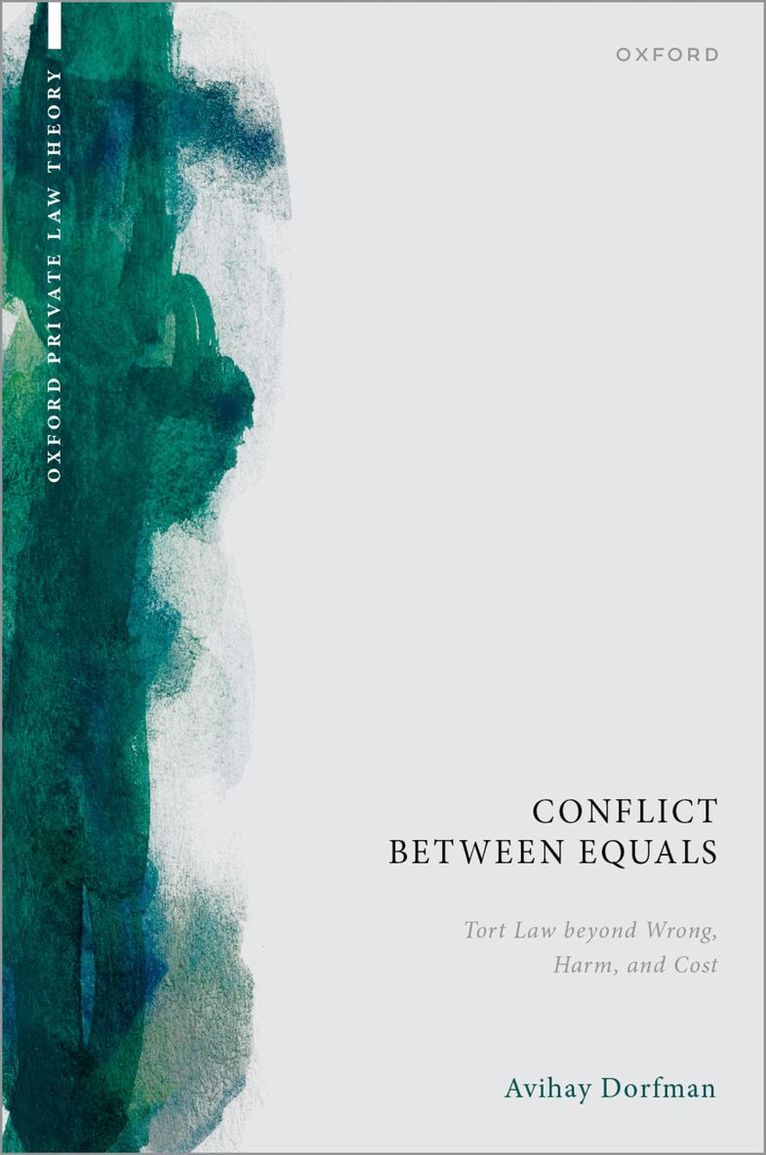
    Conflict between Equals

    Tort Law beyond Wrong, Harm, and Cost

    AvAvihay Dorfman

    Inbunden, Engelska, 2026

    Del i serien Oxford Private Law Theory

    1 658 kr

    Beställningsvara. Skickas inom 5-8 vardagar. Fri frakt över 249 kr.

    Fler format och utgåvor

    E-bok

    944 kr

    E-bok

    944 kr

    Beskrivning

    Conflict between Equals argues that tort law has to be understood and ultimately vindicated as the actualization of two theories: the conflict and the equality theory of tort law. It is not harm, wrongdoing, or social cost that gives us reason to have tort law in the first place. Instead, it is human conflict-specifically, conflict between our fundamental interests-that serves as the moral function of tort law. How we respond to such conflicts determines which harms, wrongs, or costs should, if at all, be addressed by tort law. The conflict theory elaborates on the nature and normative significance of three types of conflict: inherently valuable, tolerably valuable, and valueless. The theory emphasizes the importance of preventing valueless conflict, containing tolerably valuable conflict, and constructing the conditions necessary for inherently valuable conflict to arise. Moreover, the human conflict to which tort law responds reflects a commitment to treating the parties to a conflict as equals. The equality theory is grounded in the egalitarian ideal of relating as equals, thus tort law must determine terms of interaction that take seriously differences in the interests and conditions of the interacting parties. By doing so, tort law secures the ability of the parties in a conflict to relate as substantive, rather than merely formal, equals.

    Produktinformation

    • Utgivningsdatum:2026-04-30
    • Mått:160 x 240 x 30 mm
    • Vikt:795 g
    • Format:Inbunden
    • Språk:Engelska
    • Serie:Oxford Private Law Theory
    • Antal sidor:432
    • Förlag:OUP OXFORD
    • ISBN:9780198979876

    Utforska kategorier

    • Civilrätt inom Juridik
    • Skada, kränkningar och kompensation inom Juridik

    Mer om författaren

    Avihay Dorfman is "The Friends of Joe Jamail" Regents Chair in Law and Founding Academic Director of the Private Law Theory Program at the University of Texas at Austin. His work focuses on the conceptual and normative foundations of law. He has written on fundamental questions in private law theory and doctrine, as well as on the morality of public ordering. His research on the latter includes investigations into why privatization may sometimes be impermissible and what might make political authority legitimate. Across these areas, Dorfman emphasizes the non-instrumental values that underpin key legal and political institutions. His work explores the non-contingent implications of the law for enabling valuable forms of interaction between-and among-individuals.

    Recensioner i media

    Avihay Dorfman has written a masterpiece. Conflict between Equals fundamentally reframes the field of tort theory, moving sophisticatedly beyond the traditional concepts of "wrongs", "recourse" and "cost-internalization". By insisting that the law must construct, not merely correct, human interaction, Dorfman vindicates tort law as a constitutive institution of a liberal society. With philosophical rigor and doctrinal sensitivity, he offers a profound vision of how private persons can relate as substantive equals. This transformative work that will shape the conversation for decades to come, is essential reading for legal scholars, philosophers, students, and practitioners.

    Innehållsförteckning

    • Part I. Tort Law's Challenges Introduction Chapter 1: Why Tort Law? Two Challenges PART II. THE CONFLICT THEORY OF TORT LAW Chapter 2: The Conflict Theory: Foundations Chapter 3: Inherently Valuable Conflicts: Elaboration and Illustrations Chapter 4: Tolerably Valuable Conflicts: Duties Liberate Chapter 5: Valueless Conflicts: Why and When Suing in Tort Law Matters Chapter 6: Valueless Omissions: Easy Rescue Redux Chapter 7: The Legal Practice of Conflict: Tort Law in Action Chapter 8: The Propriety of Proprietary Conflicts: Nuisance Law Chapter 9: The Propriety of Proprietary Conflicts: Trespass Law Chapter 10: The Tort of Discrimination Part III. The Equality Theory of Tort Law Chapter 11: Equality First Chapter 12: Why Tort Duties? Why Tort Law? Relating as Agents Chapter 13: Tort Duties for Egalitarians: Relating as Substantive Equals Chapter 14: Due Care and Substantive Equality: Hand Formula Redux Chapter 15: Egalitarian Accommodation Chapter 16: Equality and Uncertainty: the Burden of Proof in Tort Lawsuits Chapter 17: The Tort of Private Censorship Part IV. Concluding Remarks Conclusion