715 kr
Civilrätt
- Häftad, Svenska, 2025Civilrätten rör relationer mellan enskilda personer eller företag – i handeln, på arbetsplatsen, i familjerelationer med mera. I Civilrättens grunder belyses hela civilrätten. Boken är avsedd att läsas vid allehanda universitetsutbildningar, antingen som introduktionsbok eller som enda bok beroende på utbildningens inriktning. Den kan med fördel även användas som komplement på mer avancerade kurser. Framställningen ger en systematisk överblick och framhäver sambanden mellan olika delar av civilrätten. På de centrala områdena – rörande olika slags avtal, skadestånd och familjejuridik – är boken tillräcklig som handbok för många praktiskt verksamma och i privatlivet.
- Häftad, Svenska, 2025
795 kr
Boken Civilrätt är en mer än 100-årig klassiker. Den ger en introduktion till civilrätten.
Efter en inledande översikt av rättsordningen behandlas centrala delar av civilrätten:
allmän förmögenhetsrätt särskilda avtalstyper immaterialrätt fastighetsrätt associationsrätt och arbetsrätt skadeståndsrätt och försäkringsrätt familjerätt och successionsrätt.I denna 28:e upplaga har omfattande ändringar gjorts på arbetsrättens område. På grund av den nya lagen om företagsrekonstruktion är det avsnittet omskrivet. Avsnittet om upphovsrätt har också reviderats med anledning av nya lagregler. I övrigt har uppdateringar gjorts på grund av nya lagregler om kvarglömd egendom, distansavtal, betalningar, utmätning, bostadsrätter och skadestånd.
Till denna bok hör Civilrätt Övningsbok av Stefan Zetterström, som också utkommit i en ny uppdaterad upplaga. Köps separat.
Om författareC.G. Björling var bokens ursprungliga författare. Han efterträddes av Åke Malmström som efterträddes av Anders Agell. Tore Sigeman författade under kapitlet om arbetsrätt. Sedan 2010 är Christina Ramberg ansvarig för revidering av boken.
- Häftad, Svenska, 2025
535 kr
Med fler än 700 frågor – inklusive svar och lösningar – är Civilrätt Övningsbok ett heltäckande komplement till den klassiska boken Malmströms Civilrätt. Boken kan dock även användas fristående.
Boken är avsedd för både studenten och läraren. Ytterligare inlärningsstöd ges genom ett antal övningstentor och korsord.
Till sin struktur bygger frågedelen på samma avsnittsindelning som huvudboken. Kortsvarsfrågorna syftar främst till att studenten ska lära sig olika begrepp, deras innebörd och betydelse. De problemorienterade frågorna är i huvudsak utformade som hypotetiska fall, vilka resulterar i olika rättsliga konflikter som studenten ställs inför. Svaren till frågorna baseras på Civilrätt och aktuell författningstext – det krävs inga andra kunskapskällor.
Övningsboken till Civilrätt följer såväl upplägg som omarbetningar av Civilrätt.
Om författarenStefan Zetterström är jur. kand. och universitetsadjunkt i civilrätt vid Juridiska fakulteten, Uppsala universitet. Han har tidigare gett ut flera läroböcker.
- Häftad, Svenska, 2024
356 kr
Skickas
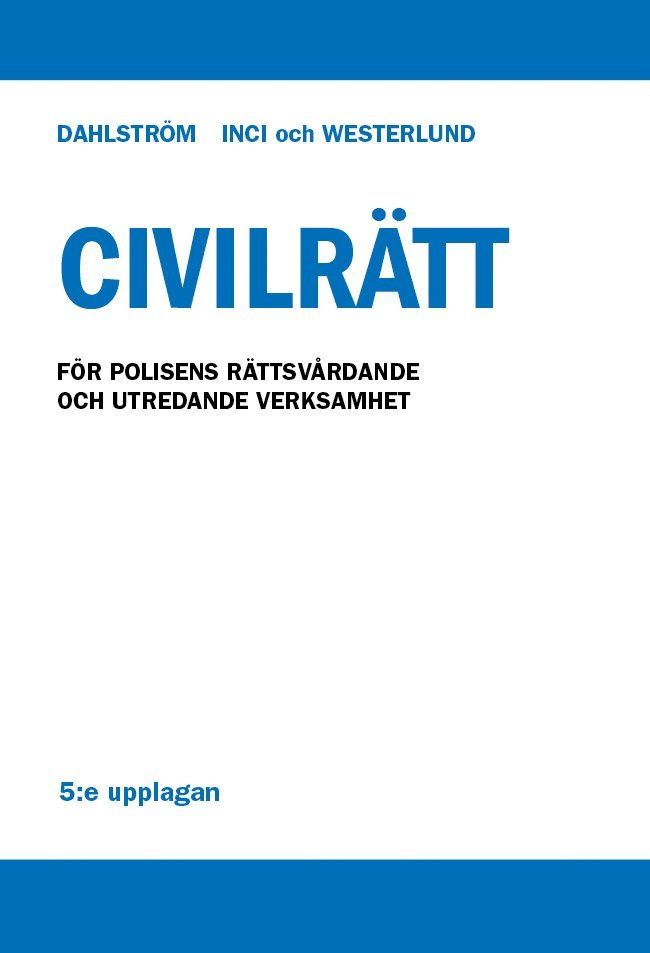
Dagligen uppstår frågor av civilrättslig karaktär som polisen på ett eller annat sätt måste ta ställning till i sin dagliga verksamhet. Som exempel kan nämnas allemansrätten och hittegodslagen men även frågor om vad som gäller i förhållande till störande grannar. Många straffbestämmelser grundas på civilrättsliga begrepp. Vid brottsutredningar är det viktigt att känna till dessa. Så är t ex fallet med många förmögenhetsbrott respektive förfalskningsbrott. Några exempel på sådana grundbegrepp är äganderätt, besittning, fullmakt och urkund. I konflikter och våld i nära relationer eller mellan grannar har kunskaper i familjerätt respektive hyresrätt ofta visat sig vara av stort värde i kommunikationen med parterna. Här kan särskilt nämnas ändringar i Jordabalken som har förbättrat villkoren för en hyresgäst som utsatts för våld av en närstående att få överta ett hyreskontrakt. Därför behandlas dessa ändringar utförligt i denna upplaga. Boken är en handledning i när polisen får, respektive inte får, befatta sig med civilrättsliga problem. När polisen inte får agera, ges råd om vilken information som kan lämnas. Efterfrågan på denna bok har varit så stor, att vi nu har valt att ge ut en ny uppdaterad femte upplaga. Författarna har samtliga erfarenhet av praktisk juridisk verksamhet varför även denna upplaga har fått en klar och pedagogisk utformning. Redaktionellt ansvarig är jur.dr. Gösta Westerlund. - Häftad, Svenska, 2018

1 292 kr
Skickas
Tredje upplagan kom ut 2011. Sedan dess har Högsta domstolen tagit ställning i ett betydande antal frågor som har beröringspunkter med de lagar som kommenteras i denna framställning. Betydande ändringar har också skett i räntelagen. Liksom i tredje upplagan syftar denna fjärde upplaga till att uppdatera Walins kommentar med huvuddragen i rättsutvecklingen på området under de år som gått och med en viss modernisering av språket. Strävan har dock varit att detta fortfarande skall vara Walins kommentar och att framställningen skall kunna användas på det sättet.I denna upplaga beaktas såväl nya upplagor av äldre litteratur som ny litteratur, särskilt Stefan Lindskogs Betalning som gavs ut i en första upplaga 2014 och som nu kommer ut i en ny, andra upplaga. - Inbunden, Engelska, 2026
1 658 kr
Skickas inom 5-8 vardagar
Comparative Reflections in Private Law celebrates the scholarly legacy of Professor Simon Whittaker, whose work has left a profound mark on the field of comparative law. Reflecting the breadth and depth of his influence, the volume brings together leading scholars to explore central themes in private law from a comparative perspective. The volume is split into three distinct parts. The first part of the volume focuses on contract law, examining topics ranging from defects in the formation of a contract, interpretation, illegality, the doctrine of change of circumstances, and remedies. These chapters reflect Whittaker's commitment to doctrinal precision, analytical depth, and the value of comparative law as a means of understanding other legal traditions and re-examining one's own with a fresh perspective. The second part turns to tort law, with contributions exploring topics such as the role of violation of a right, the concept of foreseeability, the justifications for the non-recoverability of pure economic loss, and the treatment of illegality in product liability. These essays engage critically with fundamental concepts while also offering comparative insights into the functions and structure of tort law, an approach that reflects Whittaker's distinctive ability to draw deep connections between legal systems, both in their doctrinal rules and in the principles and goals that underpin them. The final part of the volume turns to private law intersections, addressing challenges that cut across traditional boundaries, such as the doctrine of the subsidiarity of unjustified enrichment and the difficulty of devising harmonized contract law in the European Union from the plurality of laws and languages of the Member States. Taken together, the contributions included in this volume highlight the distinctive blend of intellectual rigour, curiosity, and openness to both tradition and innovation, which has so distinctively characterized Simon Whittaker's scholarship. - Häftad, Engelska, 2016
179 kr
Skickas inom 5-8 vardagar
- Inbunden, Engelska, 2011
590 kr
Skickas inom 10-15 vardagar
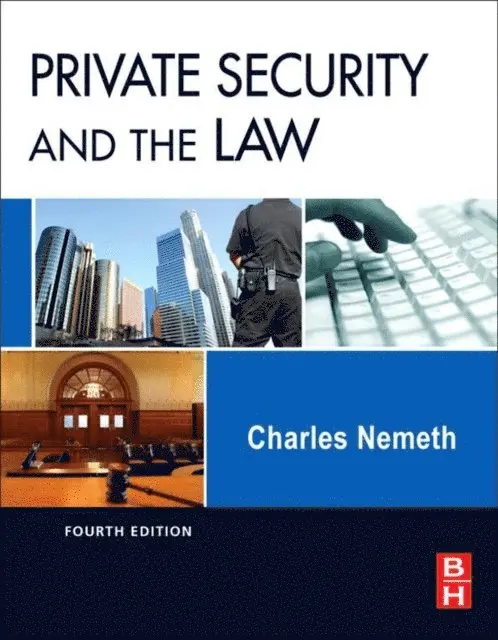
Private Security and the Law, Fourth Edition, is a unique resource that provides a comprehensive analysis of practices in the security industry as they relate to law, regulation, licensure, and constitutional questions of case and statutory authority. It is an authoritative, scholarly treatise that serves as a solid introduction for students regarding the legal and ethical standards that shape the industry.
The book takes you step-by-step through the analysis of case law as it applies to situations commonly faced by security practitioners. It describes the legal requirements faced by security firms and emphasizes the liability problems common to security operations, including negligence and tortious liability, civil actions frequently litigated, and strategies to avoid legal actions that affect business efficiency. It also examines the constitutional and due-process dimensions of private security both domestically and internationally, including recent cases and trends that are likely to intensify in the future. New features of this edition include: a chapter on the legal implications of private contractors operating in war zones like Afghanistan; updated coverage of statutory authority, as well as state and federal processes of oversight and licensure; and special analysis of public-private cooperative relationships in law enforcement. A historical background helps readers understand the present by seeing the full context of recent developments.
This book will appeal to: students in physical security, security management, and criminal justice programs in traditional and for-profit schools; security professionals; and those working in law enforcement.
Authoritative, scholarly treatise sheds light on this increasingly important area of the law Historical background helps readers understand the present by seeing the full context of recent developments National scope provides crucial parameters to security practitioners throughout the US NEW TO THIS EDITION! A chapter on the legal implications of private contractors operating in war zones like Afghanistan, updated coverage of statutory authority, updated coverage of state and federal processes of oversight and licensure, special analysis of public-private cooperative relationships in law enforcement - E-bokEngelska, 2011
625 kr
Läs direkt efter köp
Private Security and the Law, Fourth Edition, is a unique resource that provides a comprehensive analysis of practices in the security industry as they relate to law, regulation, licensure, and constitutional questions of case and statutory authority. It is an authoritative, scholarly treatise that serves as a solid introduction for students regarding the legal and ethical standards that shape the industry.The book takes you step-by-step through the analysis of case law as it applies to situations commonly faced by security practitioners. It describes the legal requirements faced by security firms and emphasizes the liability problems common to security operations, including negligence and tortious liability, civil actions frequently litigated, and strategies to avoid legal actions that affect business efficiency. It also examines the constitutional and due-process dimensions of private security both domestically and internationally, including recent cases and trends that are likely to intensify in the future. New features of this edition include: a chapter on the legal implications of private contractors operating in war zones like Afghanistan; updated coverage of statutory authority, as well as state and federal processes of oversight and licensure; and special analysis of public-private cooperative relationships in law enforcement. A historical background helps readers understand the present by seeing the full context of recent developments.This book will appeal to: students in physical security, security management, and criminal justice programs in traditional and for-profit schools; security professionals; and those working in law enforcement.- Authoritative, scholarly treatise sheds light on this increasingly important area of the law- Historical background helps readers understand the present by seeing the full context of recent developments- National scope provides crucial parameters to security practitioners throughout the US- NEW TO THIS EDITION! A chapter on the legal implications of private contractors operating in war zones like Afghanistan, updated coverage of statutory authority, updated coverage of state and federal processes of oversight and licensure, special analysis of public-private cooperative relationships in law enforcement - E-bokPDF, Engelska, 2020
238 kr
Läs direkt efter köp
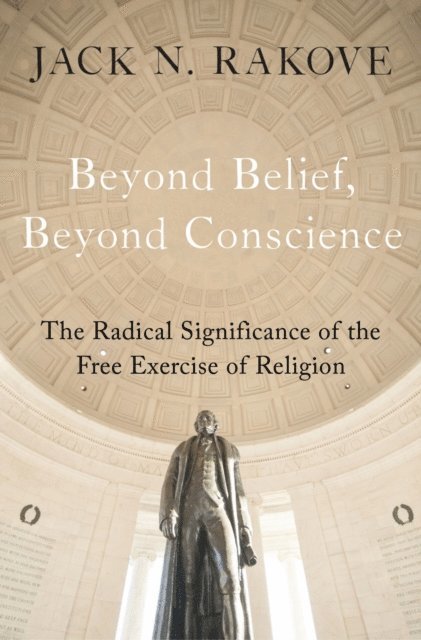
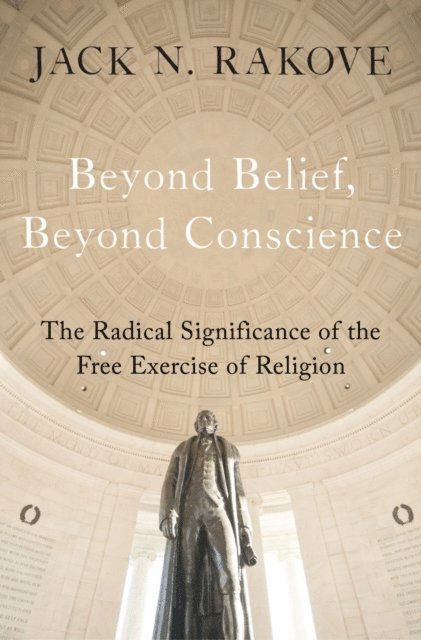
Today, Americans believe that the early colonists came to the New World in search of religious liberty. What we often forget is that they wanted religious liberty for themselves, not for those who held other views that they rejected and detested. Yet, by the mid-18th century, the colonists agreed that everyone possessed a sovereign right of conscience. How did this change develop? In Beyond Belief, Beyond Conscience, Pulitzer Prize-winning author Jack Rakove tracks the unique course of religious freedom in America.He finds that, as denominations and sects multiplied, Americans became much more tolerant of the free expression of rival religious beliefs. During the Revolutionary era, he explains, most of the new states moved to disestablish churches and to give constitutional recognition to rights of conscience. These two developments explain why religious freedom originally represented the most radical right of all. No other right placed greater importance on the moral autonomy of individuals, or better illustrated how the authority of government could be limited by denying the state authority to act. Together, these developments made possible the great revival of religion in 19th-century America.As Rakove explains, America''s intense religiosity eventually created a new set of problems for mapping the relationship between church and state. He goes on to examine some of our contemporary controversies over church and state not from the vantage point of legal doctrine, but of the deeper history that gave the U.S. its own approach to religious freedom. In this book, he tells the story of how American ideas of religious toleration and free exercise evolved over time, and why questions of church and state still vex us. - E-bokEngelska, 2020
238 kr
Läs direkt efter köp
Today, Americans believe that the early colonists came to the New World in search of religious liberty. What we often forget is that they wanted religious liberty for themselves, not for those who held other views that they rejected and detested. Yet, by the mid-18th century, the colonists agreed that everyone possessed a sovereign right of conscience. How did this change develop? In Beyond Belief, Beyond Conscience, Pulitzer Prize-winning author Jack Rakove tracks the unique course of religious freedom in America.He finds that, as denominations and sects multiplied, Americans became much more tolerant of the free expression of rival religious beliefs. During the Revolutionary era, he explains, most of the new states moved to disestablish churches and to give constitutional recognition to rights of conscience. These two developments explain why religious freedom originally represented the most radical right of all. No other right placed greater importance on the moral autonomy of individuals, or better illustrated how the authority of government could be limited by denying the state authority to act. Together, these developments made possible the great revival of religion in 19th-century America.As Rakove explains, America''s intense religiosity eventually created a new set of problems for mapping the relationship between church and state. He goes on to examine some of our contemporary controversies over church and state not from the vantage point of legal doctrine, but of the deeper history that gave the U.S. its own approach to religious freedom. In this book, he tells the story of how American ideas of religious toleration and free exercise evolved over time, and why questions of church and state still vex us. - Inbunden, Engelska, 2018
453 kr
Skickas inom 3-6 vardagar
Cheating is deeply embedded in everyday life. The costs of the most common forms of cheating total close to a trillion dollars annually. Part of the problem is that many individuals fail to see such behavior as a serious problem. "Everyone does it" is a common rationalization, and one that comes uncomfortably close to the truth. That perception is also self-perpetuating. The more that individuals believe that cheating is widespread, the easier it becomes to justify. Yet what is most notable about analysis of the problem is how little there is of it. Whether or not Americans are cheating more, they appear to be worrying about it less. In Cheating, eminent legal scholar Deborah Rhode offers the only recent comprehensive account of cheating in everyday life and the strategies necessary to address it. Because cheating is highly situational, Rhode drills down on its most common forms in sports, organizations, taxes, academia, copyright infringement, marriage, and insurance and mortgages. Cheating also reviews strategies necessary to address the pervasiveness and persistence of cheating in these contexts. We clearly need more cultural reinforcement of ethical conduct. Efforts need to begin early, with values education by parents, teachers, and other role models who can display and reinforce moral behaviors. Organizations need to create ethical cultures, in which informal norms, formal policies, and reward structures all promote integrity. People also need more moral triggers that remind them of their own values. Equally important are more effective enforcement structures, including additional resources and stiffer sanctions. Finally, all of us need to take more responsibility for combatting cheating. We need not only to subject our own conduct to more demanding standards, but also to assume a greater obligation to prevent and report misconduct. Sustaining a culture that actively discourages cheating is a collective responsibility, and one in which we all have a substantial stake. - E-bokEngelska, 2013
439 kr
Läs direkt efter köp
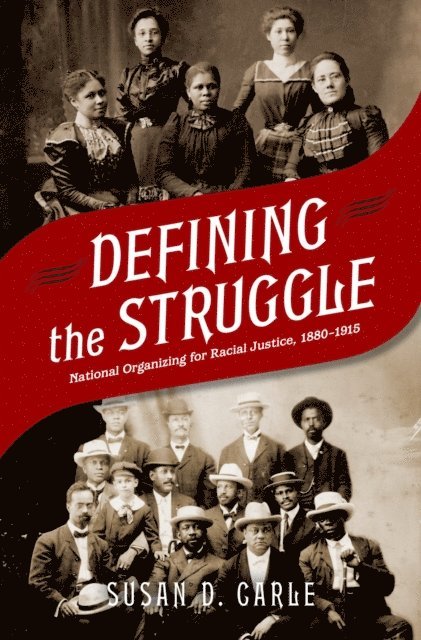
Since its founding in 1910--the same year as another national organization devoted to the economic and social welfare aspects of race advancement, the National Urban League--the NAACP has been viewed as the vanguard national civil rights organization in American history. But these two flagship institutions were not the first important national organizations devoted to advancing the cause of racial justice. Instead, it was even earlier groups -- including the National Afro American League, the National Afro American Council, the National Association of Colored Women, and the Niagara Movement - that developed and transmitted to the NAACP and National Urban League foundational ideas about law and lawyering that these latter organizations would then pursue. With unparalleled scholarly depth, Defining the Struggle explores these forerunner organizations whose contributions in shaping early twentieth century national civil rights organizing have largely been forgotten today. It examines the motivations of their leaders, the initiatives they undertook, and the ideas about law and racial justice activism they developed and passed on to future generations. In so doing, it sheds new light on how these early origins helped set the path for twentieth century legal civil rights activism in the United States. - E-bokPDF, Engelska, 2018
311 kr
Läs direkt efter köp
The American legal system is experiencing a period of extreme stress, if not crisis, as it seems to be losing its legitimacy with at least some segments of its constituency. Nowhere is this legitimacy deficit more apparent than in a portion of the African American community in the U.S., as incidents of police killing black suspects - whether legally justified or not - have become almost routine. However, this legitimacy deficit has largely been documented through anecdotal evidence and a steady drumbeat of journalistic reports, not rigorous scientific research. This book offers an all-inclusive account of how and why African Americans differ in their willingness to ascribe legitimacy to legal institutions, as well as in their willingness to accept the policy decisions those institutions promulgate.Based on two nationally-representative samples of African Americans, this book ties together four dominant theories of public opinion: Legitimacy Theory, Social Identity Theory, theories of adulthood political socialization and learning through experience, and information processing theories. The findings reveal a gaping chasm in legal legitimacy between black and white Americans. More importantly, black people themselves differ in their perceptions of legal legitimacy. Group identities and experiences with legal authorities play a crucial role in shaping whether and how black people extend legitimacy to the legal institutions that so much affect them.This book is one of the most comprehensive analyses produced to date of legal legitimacy within the American black community, with many surprising and counter-intuitive results. - E-bokEngelska, 2018
311 kr
Läs direkt efter köp
The American legal system is experiencing a period of extreme stress, if not crisis, as it seems to be losing its legitimacy with at least some segments of its constituency. Nowhere is this legitimacy deficit more apparent than in a portion of the African American community in the U.S., as incidents of police killing black suspects - whether legally justified or not - have become almost routine. However, this legitimacy deficit has largely been documented through anecdotal evidence and a steady drumbeat of journalistic reports, not rigorous scientific research. This book offers an all-inclusive account of how and why African Americans differ in their willingness to ascribe legitimacy to legal institutions, as well as in their willingness to accept the policy decisions those institutions promulgate.Based on two nationally-representative samples of African Americans, this book ties together four dominant theories of public opinion: Legitimacy Theory, Social Identity Theory, theories of adulthood political socialization and learning through experience, and information processing theories. The findings reveal a gaping chasm in legal legitimacy between black and white Americans. More importantly, black people themselves differ in their perceptions of legal legitimacy. Group identities and experiences with legal authorities play a crucial role in shaping whether and how black people extend legitimacy to the legal institutions that so much affect them.This book is one of the most comprehensive analyses produced to date of legal legitimacy within the American black community, with many surprising and counter-intuitive results. - Inbunden, Engelska, 2020
2 055 kr
Skickas inom 5-8 vardagar
Civil wrongs occupy a significant place in private law. They are particularly prominent in tort law, but equally have a place in contract law, property and intellectual property law, unjust enrichment, fiduciary law, and in equity more broadly. Civil wrongs are also a preoccupation of leading general theories of private law, including corrective justice and civil recourse theories. According to these and other theories, the centrality of civil wrongs to civil liability shows that private law is fundamentally concerned with the expression and enforcement of norms of justice appropriate to interpersonal interaction and association. Others, sounding notes of caution or criticism, argue that a preoccupation with wrongs and remedies has meant neglect of other ways in which private law serves justice, and ways in which private law serves values other than justice. This volume comprises original papers written by a wide variety of legal theorists and philosophers exploring the nature of civil wrongs, their place in private law, and their relationship to other forms of wrongdoing. - E-bokPDF, Engelska, 2020
1 323 kr
Läs direkt efter köp
Civil wrongs occupy a significant place in private law. They are particularly prominent in tort law, but equally have a place in contract law, property and intellectual property law, unjust enrichment, fiduciary law, and in equity more broadly. Civil wrongs are also a preoccupation of leading general theories of private law, including corrective justice and civil recourse theories. According to these and other theories, the centrality of civil wrongs to civil liability shows that private law is fundamentally concerned with the expression and enforcement of norms of justice appropriate to interpersonal interaction and association. Others, sounding notes of caution or criticism, argue that a preoccupation with wrongs and remedies has meant neglect of other ways in which private law serves justice, and ways in which private law serves values other than justice. This volume comprises original papers written by a wide variety of legal theorists and philosophers exploring the nature of civil wrongs, their place in private law, and their relationship to other forms of wrongdoing. - E-bokEngelska, 2020
1 323 kr
Läs direkt efter köp
Civil wrongs occupy a significant place in private law. They are particularly prominent in tort law, but equally have a place in contract law, property and intellectual property law, unjust enrichment, fiduciary law, and in equity more broadly. Civil wrongs are also a preoccupation of leading general theories of private law, including corrective justice and civil recourse theories. According to these and other theories, the centrality of civil wrongs to civil liability shows that private law is fundamentally concerned with the expression and enforcement of norms of justice appropriate to interpersonal interaction and association. Others, sounding notes of caution or criticism, argue that a preoccupation with wrongs and remedies has meant neglect of other ways in which private law serves justice, and ways in which private law serves values other than justice. This volume comprises original papers written by a wide variety of legal theorists and philosophers exploring the nature of civil wrongs, their place in private law, and their relationship to other forms of wrongdoing. - E-bokPDF, Engelska, 2013
319 kr
Läs direkt efter köp
In this classic study, Alan Brudner investigates the basic structure of the common law of transactions. For decades, that structure has been the subject of intense debate between formalists, who say that transactional law is a private law for interacting parties, and functionalists, who say that it is a public law serving the collective ends of society. Against both camps, Brudner proposes a synthesis of formalism and functionalism in which private law is modified bya common good without being subservient to it. Drawing on Hegel''s legal philosophy, the author exhibits this synthesis in each of transactional law''s main divisions: property, contract, unjust enrichment, and tort. Each is a whole composed of private-law and public-law parts that complement eachother, and the idea connecting the parts to each other is also latently present in each. Moreover, Brudner argues, a single narrative thread connects the divisions of transactional law to each other. Not a row of disconnected fields, transactional law is rather a story about the realization in law of the agent''s claim to be a dignified end-master of its body, its acquisitions, and the shape of its life. Transactional law''s divisions are stages in the progress toward that goal, each generating apotential developed by the next. Thus, contract law fulfils what is incompletely realized in property law, negligence law what is germinal in contract law, public insurance what is seminal in negligence law, and transactional law as a whole what is underdeveloped in public insurance. The end pointis the limit of what a transactional law can contribute to a life sufficient for dignity.Reconfigured and expanded with a contribution by Jennifer Nadler, The Unity of the Common Law stands out among contemporary theories of private law in that it depicts private law as purposive without being instrumental and as autonomous without being emptily formal. - E-bokEngelska, 2013
480 kr
Läs direkt efter köp
In this classic study, Alan Brudner investigates the basic structure of the common law of transactions. For decades, that structure has been the subject of intense debate between formalists, who say that transactional law is a private law for interacting parties, and functionalists, who say that it is a public law serving the collective ends of society. Against both camps, Brudner proposes a synthesis of formalism and functionalism in which private law is modified bya common good without being subservient to it. Drawing on Hegel''s legal philosophy, the author exhibits this synthesis in each of transactional law''s main divisions: property, contract, unjust enrichment, and tort. Each is a whole composed of private-law and public-law parts that complement eachother, and the idea connecting the parts to each other is also latently present in each. Moreover, Brudner argues, a single narrative thread connects the divisions of transactional law to each other. Not a row of disconnected fields, transactional law is rather a story about the realization in law of the agent''s claim to be a dignified end-master of its body, its acquisitions, and the shape of its life. Transactional law''s divisions are stages in the progress toward that goal, each generating apotential developed by the next. Thus, contract law fulfils what is incompletely realized in property law, negligence law what is germinal in contract law, public insurance what is seminal in negligence law, and transactional law as a whole what is underdeveloped in public insurance. The end pointis the limit of what a transactional law can contribute to a life sufficient for dignity.Reconfigured and expanded with a contribution by Jennifer Nadler, The Unity of the Common Law stands out among contemporary theories of private law in that it depicts private law as purposive without being instrumental and as autonomous without being emptily formal. - E-bokPDF, Engelska, 2014
1 470 kr
Läs direkt efter köp
In recent years the impact of human rights and fundamental rights on private law has risen in prominence and led to a whole series of detailed investigations. ''Constitutionalization of private law'' is the flag under which most of the research on the increasing impact of national constitutional rights on national private legal orders is sailing. In the absence of a European Constitution, the constitutionalization of European private law suggests a process: constitutionalization instead of constituent power, demos, and the magic constitutional moment. The Charter of Fundamental Rights and the European Convention of Human Rights constitute the two pillars on which the transformation of European private law rests. This volume clearly demonstrates the change that has taken place, at the national and at the European level. Private law is no longer immune to the intrusion of fundamental and human rights. Whilst member states and the EU are driving the process by adopting ever more concrete and more comprehensive lists of human and fundamental rights, at the national, the European, and international level with overlapping contents, the true and key players in this development are the national and European courts. Contributions to this volume give this process a face and a direction, which is highlighted in the introduction by Hans-W. Micklitz. - E-bokEngelska, 2014
1 470 kr
Läs direkt efter köp
In recent years the impact of human rights and fundamental rights on private law has risen in prominence and led to a whole series of detailed investigations. ''Constitutionalization of private law'' is the flag under which most of the research on the increasing impact of national constitutional rights on national private legal orders is sailing. In the absence of a European Constitution, the constitutionalization of European private law suggests a process: constitutionalization instead of constituent power, demos, and the magic constitutional moment. The Charter of Fundamental Rights and the European Convention of Human Rights constitute the two pillars on which the transformation of European private law rests. This volume clearly demonstrates the change that has taken place, at the national and at the European level. Private law is no longer immune to the intrusion of fundamental and human rights. Whilst member states and the EU are driving the process by adopting ever more concrete and more comprehensive lists of human and fundamental rights, at the national, the European, and international level with overlapping contents, the true and key players in this development are the national and European courts. Contributions to this volume give this process a face and a direction, which is highlighted in the introduction by Hans-W. Micklitz. - E-bokEngelska, 2006
590 kr
Läs direkt efter köp
Foundations of Private Law is a treatise on the Western law of property, contract, tort and unjust enrichment in both common law systems and civil law systems. The thesis of the book is that underlying these fields of law are common principles, and that these principles can be used to explain the history and development of these areas. These underlying common principles are matters of common sense, which were given their archetypal expression by older jurists who wrote in the Aristotelian tradition. These principles shaped the development of Western law but can resolve legal problems which these older writers did not confront. - E-bokPDF, Engelska, 2014
1 976 kr
Läs direkt efter köp
The use of third-party funding in the UK has been increasing and has moved into the mainstream as a funding option for clients involved in litigation, particularly following on from the positive endorsement of litigation funding by Lord Justice Jackson in his Review of Civil Litigation Costs where he said: ''I remain of the view that, in principle, third-party funding is beneficial and should be supported.''. This has now culminated in the formation of the Association of Litigation Funders to monitor compliance and the launch of the Code of Conduct for those funding in England and Wales. This practical guide to litigation funding provides the first comprehensive one-stop third-party funding reference to help practitioners in preparation for seeking funding and in their decision making. It examines the impact of the Jackson Reforms and Damages Based Agreements as well as the Code of Conduct and the Association of Litigation Funders. It would also include practical examples and a review of notable cases, including the important decisions of Gulf Azov Shipping, Arkin, London & Regional and Merchantbridge and their impact on funders, solicitors, and clients. - E-bokEngelska, 2014
1 976 kr
Läs direkt efter köp
The use of third-party funding in the UK has been increasing and has moved into the mainstream as a funding option for clients involved in litigation, particularly following on from the positive endorsement of litigation funding by Lord Justice Jackson in his Review of Civil Litigation Costs where he said: ''I remain of the view that, in principle, third-party funding is beneficial and should be supported.''. This has now culminated in the formation of the Association of Litigation Funders to monitor compliance and the launch of the Code of Conduct for those funding in England and Wales. This practical guide to litigation funding provides the first comprehensive one-stop third-party funding reference to help practitioners in preparation for seeking funding and in their decision making. It examines the impact of the Jackson Reforms and Damages Based Agreements as well as the Code of Conduct and the Association of Litigation Funders. It would also include practical examples and a review of notable cases, including the important decisions of Gulf Azov Shipping, Arkin, London & Regional and Merchantbridge and their impact on funders, solicitors, and clients. - E-bokPDF, Engelska, 2011
1 928 kr
Läs direkt efter köp
Launching a major new research project examining the principles of succession law in comparative perspective, this book discusses the formalities which the law imposes in order for a person to make a testamentary disposal of property. Among the questions considered are the following. How are wills made? What precisely are the rules - as to the signature of the testator, the use of witnesses, the need for a notary public or lawyer, and so on? Is there is a choice of will-type and, if so, which type is used most often and what are the advantages and disadvantages of each? How common is will-making or do most people die intestate? What happens if formalities are not observed? How can requirements of form be explained and justified? How did the law develop historically, what is the state of the law today, and what are the prospects for the future?The focus is on Europe, and on countries which have been influenced by the European experience. Thus in addition to giving a detailed treatment of the law in Austria, Belgium, England and Wales, France, Germany, Hungary, Italy, the Netherlands, Poland, and Spain, the book explores legal developments in Australia, New Zealand, the United States of America, and in some of the countries of Latin America with a particular emphasis on Brazil. It also includes chapters on two of the mixed jurisdictions - Scotland and South Africa - and on Islamic Law. The book opens with chapters on Roman law and on the early modern law in Europe, thus setting the historical scene as well as anticipating and complementing the accounts of national history which appear in subsequent chapters; and it concludes with an assessment of the overall development of the law in the countries surveyed, and with some wider reflections on the nature and purpose of testamentary formalities. - E-bokPDF, Engelska, 2014
621 kr
Läs direkt efter köp
The Roman Law of Obligations presents a series of lectures delivered by the late Peter Birks as an introductory course in Roman law. Discovered in complete manuscript form following his death, the lectures are published here in paperback for the first time.The lectures present a clear conceptual map of the Roman law of obligations, guiding readers through the institutional structure of contract, delict, quasi-contract, and quasi-delict. They introduce readers to the terminology needed to understand the foundations of Roman law, and the conceptual framework of the law of obligations that left an enduring legacy on European private law.The lectures offer an invaluable introduction to Roman private law for those coming to the subject for the first time. They will also make stimulating reading for academics and lawyers interested in Roman law, European legal history, and the lasting influence of Roman law on modern private law. - E-bokEngelska, 2014
621 kr
Läs direkt efter köp
The Roman Law of Obligations presents a series of lectures delivered by the late Peter Birks as an introductory course in Roman law. Discovered in complete manuscript form following his death, the lectures are published here in paperback for the first time.The lectures present a clear conceptual map of the Roman law of obligations, guiding readers through the institutional structure of contract, delict, quasi-contract, and quasi-delict. They introduce readers to the terminology needed to understand the foundations of Roman law, and the conceptual framework of the law of obligations that left an enduring legacy on European private law.The lectures offer an invaluable introduction to Roman private law for those coming to the subject for the first time. They will also make stimulating reading for academics and lawyers interested in Roman law, European legal history, and the lasting influence of Roman law on modern private law. - E-bokPDF, Engelska, 2015
770 kr
Läs direkt efter köp
The third edition of The Principles of the Law of Restitution brings this widely cited and influential volume fully up to date. It has been substantially rewritten to reflect the significant changes in the law of restitution and the expansion in the theoretical and critical commentary on the subject.Following important decisions of the Supreme Court and other courts, large-scale changes have been made to the chapters on enrichment, at the expense of the claimant, mistake, claims against public authorities, and change of position. Additionally, this edition contains a new chapter on the operation of juridical bars on restitutionary claims. References to developments in other jurisdictions have been expanded for this edition, reflecting the significance of these changes and how they assistin the interpretation of English law and provide a basis for criticising that law. Further, in the light of leading cases and the contributions of restitutionary scholars around the world, the author''s views on specific controversial debates about the ambit, function, and interpretation of the subjecthave changed, sometimes radically.One significant aspect of the book remains unchanged: the book continues to focus on the identification and analysis of the principles which underpin the law of restitution as a whole, but with reference to its three distinct parts: unjust enrichment, restitution for wrongs, and the vindication of property rights. This approach provides the reader with a peerless guide to the law of restitution. - E-bokEngelska, 2015
770 kr
Läs direkt efter köp
The third edition of The Principles of the Law of Restitution brings this widely cited and influential volume fully up to date. It has been substantially rewritten to reflect the significant changes in the law of restitution and the expansion in the theoretical and critical commentary on the subject.Following important decisions of the Supreme Court and other courts, large-scale changes have been made to the chapters on enrichment, at the expense of the claimant, mistake, claims against public authorities, and change of position. Additionally, this edition contains a new chapter on the operation of juridical bars on restitutionary claims. References to developments in other jurisdictions have been expanded for this edition, reflecting the significance of these changes and how they assistin the interpretation of English law and provide a basis for criticising that law. Further, in the light of leading cases and the contributions of restitutionary scholars around the world, the author''s views on specific controversial debates about the ambit, function, and interpretation of the subjecthave changed, sometimes radically.One significant aspect of the book remains unchanged: the book continues to focus on the identification and analysis of the principles which underpin the law of restitution as a whole, but with reference to its three distinct parts: unjust enrichment, restitution for wrongs, and the vindication of property rights. This approach provides the reader with a peerless guide to the law of restitution.