Oxford Series on Cognitive Models and Architectures – serie
Visar alla böcker i serien Oxford Series on Cognitive Models and Architectures. Handla med fri frakt och snabb leverans.
20 produkter
20 produkter
Häftad, Engelska, 2021
432 kr
Skickas inom 5-8 vardagar
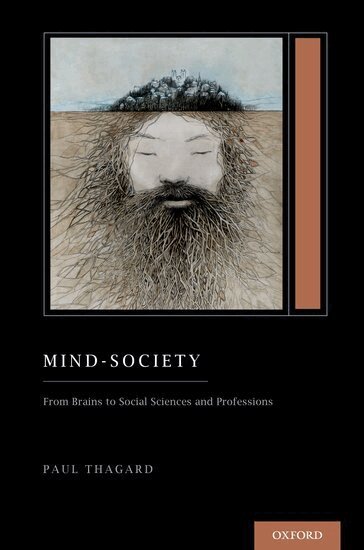
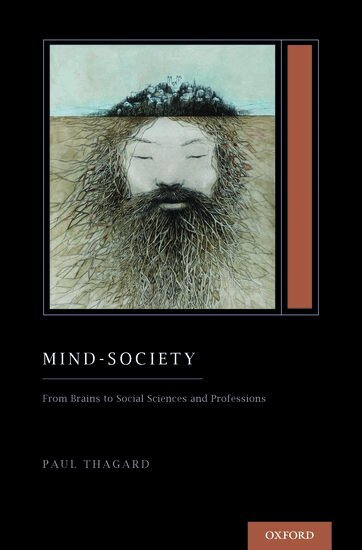
How do minds make societies, and how do societies change? Paul Thagard systematically connects neural and psychological explanations of mind with major social sciences (social psychology, sociology, politics, economics, anthropology, and history) and professions (medicine, law, education, engineering, and business). Social change emerges from interacting social and mental mechanisms.Many economists and political scientists assume that individuals make rational choices, despite the abundance of evidence that people frequently succumb to thinking errors such as motivated inference. Much of sociology and anthropology is taken over with postmodernist assumptions that everything is constructed on the basis of social relations such as power, with no inkling that these relations are mediated by how people think about each other.Mind-Society displays the interdependence of the cognitive and social sciences by describing the interconnections among mental and social mechanisms, which interact to generate social changes ranging from marriage patterns to wars. Validation comes from detailed studies of important social changes, from norms about romantic relationships to economic practices, political institutions, religious customs, and international relations.This book belongs to a trio that includes Brain-Mind: From Neurons to Consciousness and Creativity and Natural Philosophy: From Social Brains to Knowledge, Reality, Morality, and Beauty. They can be read independently, but together they make up a Treatise on Mind and Society that provides a unified and comprehensive treatment of the cognitive sciences, social sciences, professions, and humanities.
Häftad, Engelska, 2015
578 kr
Skickas inom 5-8 vardagar
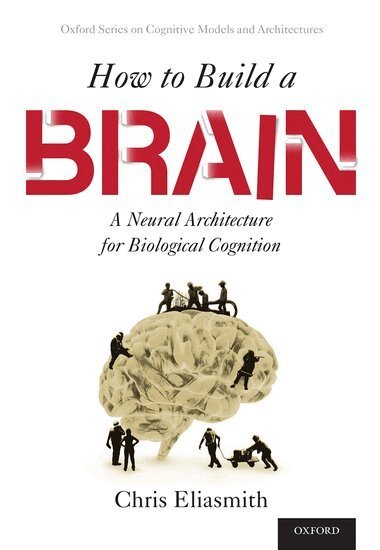
One goal of researchers in neuroscience, psychology, and artificial intelligence is to build theoretical models that can explain the flexibility and adaptiveness of biological systems. How to Build a Brain provides a guided exploration of a new cognitive architecture that takes biological detail seriously while addressing cognitive phenomena. The Semantic Pointer Architecture (SPA) introduced in this book provides a set of tools for constructing a wide range of biologically constrained perceptual, cognitive, and motor models. Examples of such models are provided to explain a wide range of data including single-cell recordings, neural population activity, reaction times, error rates, choice behavior, and fMRI signals. Each of the models addressed in the book introduces a major feature of biological cognition, including semantics, syntax, control, learning, and memory. These models are presented as integrated considerations of brain function, giving rise to what is currently the world's largest functional brain model. The book also compares the Semantic Pointer Architecture with the current state of the art, addressing issues of theory construction in the behavioral sciences, semantic compositionality, and scalability, among other considerations. The book concludes with a discussion of conceptual challenges raised by this architecture, and identifies several outstanding challenges for SPA and other cognitive architectures. Along the way, the book considers neural coding, concept representation, neural dynamics, working memory, neuroanatomy, reinforcement learning, and spike-timing dependent plasticity. Eight detailed, hands-on tutorials exploiting the free Nengo neural simulation environment are also included, providing practical experience with the concepts and models presented throughout.
Inbunden, Engelska, 2016
1 109 kr
Skickas inom 5-8 vardagar
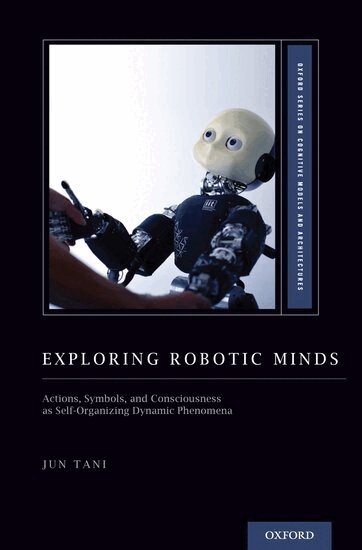
In Exploring Robotic Minds: Actions, Symbols, and Consciousness as Self-Organizing Dynamic Phenomena, Jun Tani sets out to answer an essential and tantalizing question: How do our minds work? By providing an overview of his "synthetic neurorobotics" project, Tani reveals how symbols and concepts that represent the world can emerge in a neurodynamic structure--iterative interactions between the top-down subjective view, which proactively acts on the world, and the bottom-up recognition of the resultant perceptual reality. He argues that nontrivial problems of consciousness and free will could be addressed through structural understanding of such iterative, conflicting interactions between the top-down and the bottom-up pathways. A wide range of readers will enjoy this wonderful journey of the mind and will follow the author on interdisciplinary discussions that span neuroscience, dynamical systems theories, robotics, and phenomenology. The book also includes many figures, as well as a link to videos of Tani's exciting robotic experiments.
Inbunden, Engelska, 2019
642 kr
Skickas inom 5-8 vardagar
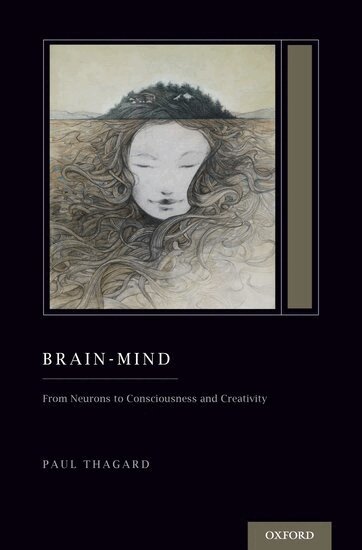
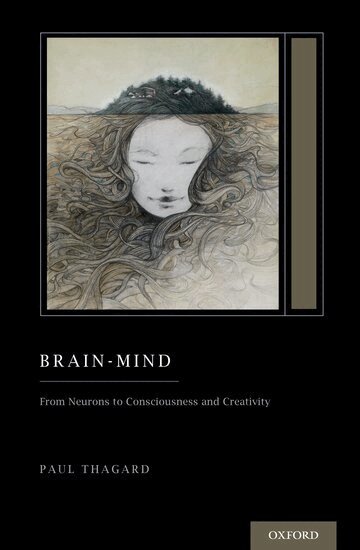
How do brains make minds? Paul Thagard presents a unified, brain-based theory of cognition and emotion with applications to the most complex kinds of thinking, right up to consciousness and creativity. Neural mechanisms are used to explain mental operations for analogy, action, intention, language, and the self. Brain-Mind develops a brilliant account of mental operations using promising new ideas from theoretical neuroscience. Single neurons cannot do much by themselves, but groups of neurons work together to accomplish powerful kinds of mental representation, including concepts, images, and rules.Minds enable people to perceive, imagine, solve problems, understand, learn, speak, reason, create, and be emotional and conscious. Competing explanations of how the mind works have identified it as soul, computer, brain, dynamical system, or social construction. This book explains minds in terms of interacting mechanisms operating at multiple levels, including the social, mental, neural, and molecular. Unification comes from systematic application of Chris Eliasmith's powerful Semantic Pointer Architecture, a highly original synthesis of neural network and symbolic ideas about how the mind works.This book belongs to a trio that includes Mind-Society: From Brains to Social Sciences and Professions and Natural Philosophy: From Social Brains to Knowledge, Reality, Morality, and Beauty. They can be read independently, but together they make up a Treatise on Mind and Society that provides a unified and comprehensive treatment of the cognitive sciences, social sciences, professions, and humanities.
Inbunden, Engelska, 2019
782 kr
Skickas inom 5-8 vardagar
How do minds make societies, and how do societies change? Paul Thagard systematically connects neural and psychological explanations of mind with major social sciences (social psychology, sociology, politics, economics, anthropology, and history) and professions (medicine, law, education, engineering, and business). Social change emerges from interacting social and mental mechanisms. Many economists and political scientists assume that individuals make rational choices, despite the abundance of evidence that people frequently succumb to thinking errors such as motivated inference. Much of sociology and anthropology is taken over with postmodernist assumptions that everything is constructed on the basis of social relations such as power, with no inkling that these relations are mediated by how people think about each other. Mind-Society displays the interdependence of the cognitive and social sciences by describing the interconnections among mental and social mechanisms, which interact to generate social changes ranging from marriage patterns to wars. Validation comes from detailed studies of important social changes, from norms about romantic relationships to economic practices, political institutions, religious customs, and international relations. This book belongs to a trio that includes Brain-Mind: From Neurons to Consciousness and Creativity and Natural Philosophy: From Social Brains to Knowledge, Reality, Morality, and Beauty. They can be read independently, but together they make up a Treatise on Mind and Society that provides a unified and comprehensive treatment of the cognitive sciences, social sciences, professions, and humanities.
Inbunden, Engelska, 2019
581 kr
Skickas inom 5-8 vardagar
Paul Thagard uses new accounts of brain mechanisms and social interactions to forge theories of mind, knowledge, reality, morality, justice, meaning, and the arts. Natural Philosophy brings new methods for analyzing concepts, understanding values, and achieving coherence. It shows how to unify the humanities with the cognitive and social sciences. How can people know what is real and strive to make the world better? Philosophy is the attempt to answer general questions about the nature of knowledge, reality, and values. Natural Philosophy pursues these questions by drawing heavily on the sciences and finds no room for supernatural entities such as souls, gods, and possible worlds. It provides original accounts of the traditional branches of philosophy, including epistemology, metaphysics, ethics, and aesthetics.Rather than reducing the humanities to the sciences, this book displays fertile interconnections that show that philosophical questions and artistic practices can be much better understood by considering how human brains operate and interact in social contexts. The sciences and the humanities are interdependent, because both the natural and social sciences cannot avoid questions about methods and values that are primarily the province of philosophy.This book belongs to a trio that includes Brain-Mind: From Neurons to Consciousness and Creativity and Mind-Society: From Brains to Social Sciences and Professions. They can be read independently, but together they make up a Treatise on Mind and Society that provides a unified and comprehensive treatment of the cognitive sciences, social sciences, professions, and humanities.
Inbunden, Engelska, 2025
786 kr
Skickas inom 5-8 vardagar
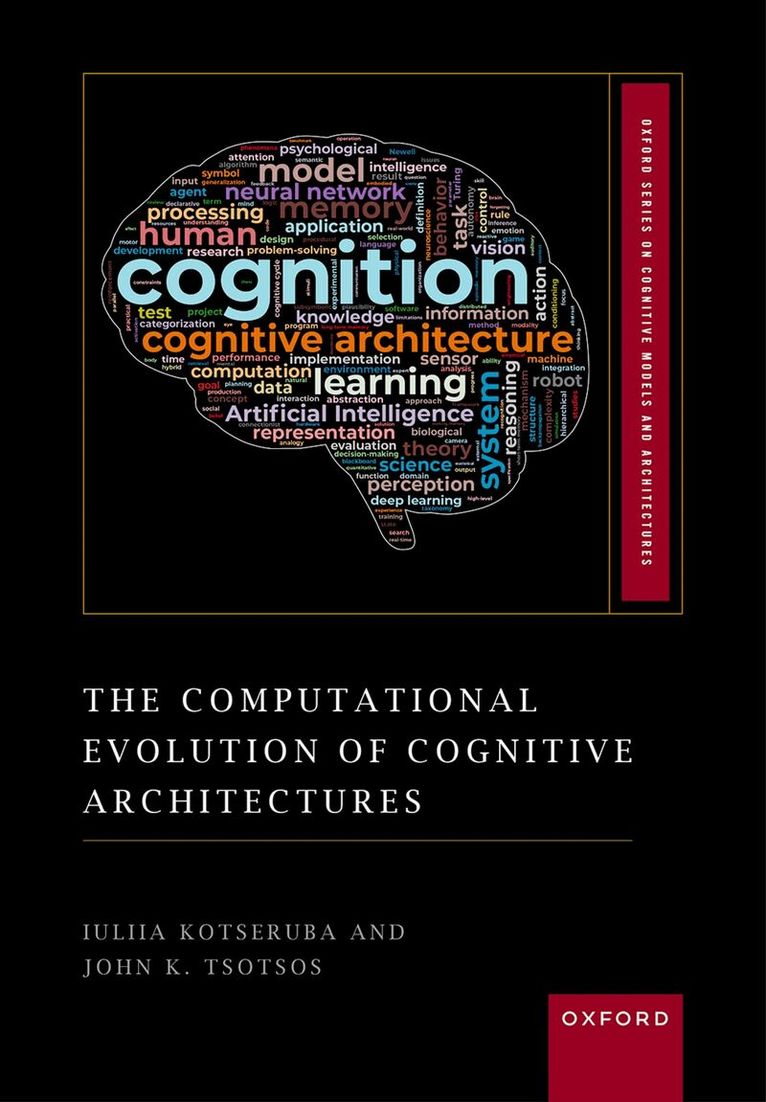
What is the human mind, and how does it work? These questions have occupied humanity since antiquity but have only recently received rigorous scientific investigation. Cognitive architectures are complex software programs whose goal is to approach human-like behavior on a wide variety of tasks. This is accomplished by employing human-like, or at least human-plausible, mechanisms within an integrated framework that is claimed representative of human cognitive, perceptual, and movement capabilities. By examining how close their behavior is to human, they help us understand how the human mind and brain work. They contribute to our understanding as computational models that can be tested and whose details in turn provide insights on new aspects of the human brain and mind. This field of cognitive architectures emerged at the intersection of artificial intelligence and cognitive science and in less than fifty years has spawned hundreds of projects.In The Computational Evolution of Cognitive Architectures, the authors trace the evolution of cognitive architectures, their abilities, and future prospects, from their early logic-based beginnings to their recent melding of classic methodologies with deep learning concepts. Analyzing over 3000 publications on more than eighty cognitive architectures and hundreds more surveys, research papers, and opinion pieces spanning philosophy, cognitive science, computer science, and robotics, the authors aggregate their findings into broad themes, such as common components of the architectures, their organization, interaction, and relation to human cognitive abilities. They discuss both theoretical elements of cognitive architectures and their performance before finally considering the future of cognitive architectures and their challenges.
Inbunden, Engelska, 2007
1 333 kr
Skickas inom 5-8 vardagar
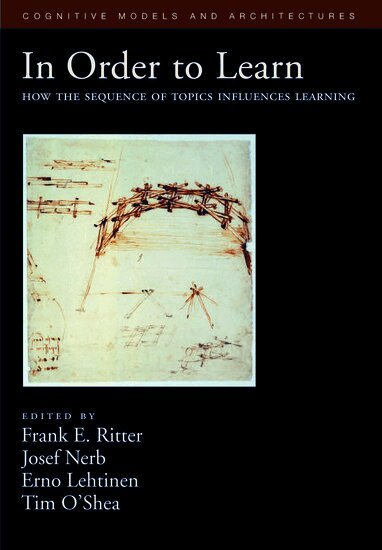
The order that material, for both facts and skills, is presented or explored by a learner can strongly influence what is learned, how fast performance increases, and sometimes, even that the material is learned at all. In the proposed volume, the contributors argue that these effects are more pervasive and important than they have been treated. They explore some of the foundational topics in this area of intersection between psychology, machine learning, AI, cognitive modelling, education, and instructional design. They include case studies and present numerous questions that will lead to further research projects and provide food for thought for professionals working in these principles.
Inbunden, Engelska, 2007
916 kr
Skickas inom 7-10 vardagar
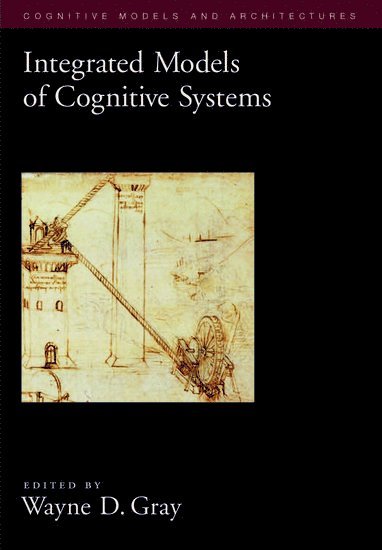
The field of cognitive modelling has progressed beyond modelling cognition in the context of simple laboratory tasks and begun to attack the problem of modelling cognition in more complex, realistic environments, such as those studied by researchers in the field of human-factors. The problems that the human-factors community is tackling focus on modelling certain problems of communication and control that arise in the integration of implicit and explicit knowledge, emotion, and cognition, and the cognitive system with the external environment. These problems must be addressed in order to produce integrated cognitive models of moderately complex tasks. Architectures of cognition in these tasks focus on the control of a central system, which includes control of the central processor itself, initiation of functional processes, such as visual search and memory retrieval, and harvesting the results of functional processes. Because the control of the central system is conceptually different from the internal control required by individual functional processes, a complete architecture of cognition must incorporate two types of theories of control: type 1 theories of the structure, functionality, and operation of the controller, and type 2 theories of the internal control of functional processes, how, and what they communicate to the controller. This volume presents, for both types of theories, the current state of the art, as well as contrasts among current approaches to human-performance models.
Inbunden, Engelska, 2007
846 kr
Skickas inom 5-8 vardagar
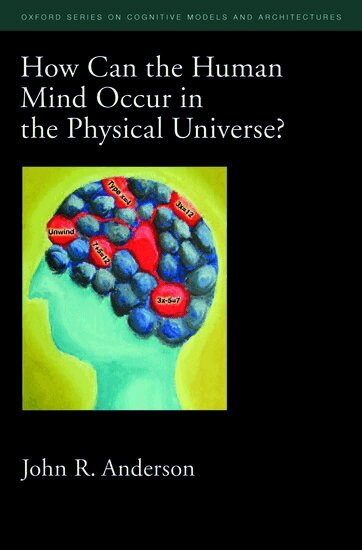
"The question for me is how can the human mind occur in the physical universe? We now know that the world is governed by physics. We now understand the way biology nestles comfortably within that. The issue is how will the mind do that as well?" Alan Newell, 4 December 1991, Carnegie Mellon UniversityThe argument John Anderson gives in this book was inspired by the passage above, from the last lecture by one of the pioneers of cognitive science. Alan Newell describes what, for him, is the pivotal question of scientific inquiry, and Anderson gives an answer that is emerging from the study of brain and behaviour.Humans share the same basic cognitive architecture with all primates, but they have evolved abilities to exercise abstract control over cognition and process more complex relational patterns. The human cognitive architecture consists of a set of largely independent modules associated with different brain regions. This book discusses in detail how these various modules can combine to produce behaviors as varied as driving a car and solving an algebraic equation, but focuses principally on two of the modules: the declarative and procedural. The declarative module involves a memory system that, moment by moment, attempts to give each person the most appropriate possible window into his or her past. The procedural module involves a central system that strives to develop a set of productions that will enable the most adaptive response from any state of the modules. Newell argued that the answer to his question must take the form of a cognitive architecture, and Anderson organizes his answer around the ACT-R architecture, but broadens it by bringing in research from all areas of cognitive science, including how recent work in brain imaging maps onto the cognitive architecture.
Inbunden, Engelska, 2021
715 kr
Skickas inom 5-8 vardagar
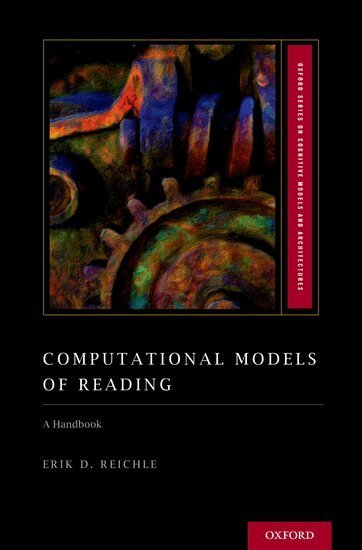
This book is about computational models of reading, or models that explain (and often simulate) the mental processes that allow us to convert the marks on a printed page into the representations that allow us to understand the contents of what we are reading. Computational Models of Reading assumes no prior knowledge of the topic and is intended for psychologists, linguists, and educators who are interested in gaining a better understanding of what happens in the mind during reading. Erik D. Reichle includes introductory chapters on reading research and computational modelling, and the "core" chapters of the book review both important empirical findings and the models designed to explain those findings within four domains of reading research: word identification, sentence processing, discourse representation, and eye-movement control (which involves coordinating word, sentence, and discourse processing with the perceptual, cognitive, and motoric systems responsible for vision, attention, and eye movements). The final chapter of the book describes a new integrative model of reading, Über-Reader, and several simulations using the models that demonstrate how it explains several key reading phenomena.
Inbunden, Engelska, 2009
1 216 kr
Skickas inom 5-8 vardagar
Although computational models of cognition have become very popular, these models are relatively limited in their coverage of cognition-- they usually only emphasize problem solving and reasoning, or treat perception and motivation as isolated modules. The first architecture to cover cognition more broadly is Psi theory, developed by Dietrich Dorner. By integrating motivation and emotion with perception and reasoning, and including grounded neuro-symbolic representations, Psi contributes significantly to an integrated understanding of the mind. It provides a conceptual framework that highlights the relationships between perception and memory, language and mental representation, reasoning and motivation, emotion and cognition, autonomy and social behavior. It is, however, unfortunate that Psi's origin in psychology, its methodology, and its lack of documentation have limited its impact. The proposed book adapts Psi theory to cognitive science and artificial intelligence, by elucidating both its theoretical and technical frameworks, and clarifying its contribution to how we have come to understand cognition.
Inbunden, Engelska, 2014
1 550 kr
Skickas inom 5-8 vardagar
Recent years have seen the rise of a remarkable partnership between the social and computational sciences on the phenomena of emotions. Rallying around the term Affective Computing, this research can be seen as revival of the cognitive science revolution, albeit garbed in the cloak of affect, rather than cognition. Traditional cognitive science research, to the extent it considered emotion at all, cases it as at best a heuristic but more commonly a harmful bias to cognition. More recent scholarship in the social sciences has upended this view. Increasingly, emotions are viewed as a form of information processing that serves a functional role in human cognition and social interactions. Emotions shape social motives and communicate important information to social partners. When communicating face-to-face, people can rapidly detect nonverbal affective cues, make inferences about the other party's mental state, and respond in ways that co-construct an emotional trajectory between participants. Recent advances in biometrics and artificial intelligence are allowing computer systems to engage in this nonverbal dance, on the one hand opening a wealth of possibilities for human-machine systems, and on the other, creating powerful new tools for behavioral science research. Social Emotions in Nature and Artifact reports on the state-of-the-art in both social science theory and computational methods, and illustrates how these two fields, together, can both facilitate practical computer/robotic applications and illuminate human social processes.
Häftad, Engelska, 2009
385 kr
Skickas inom 5-8 vardagar
'The question for me is how can the human mind occur in the physical universe. We now know that the world is governed by physics. We now understand the way biology nestles comfortably within that. The issue is how will the mind do that as well.'--Alan Newell, December 4, 1991, Carnegie Mellon UniversityThe argument John Anderson gives in this book was inspired by the passage above, from the last lecture by one of the pioneers of cognitive science. Newell describes what, for him, is the pivotal question of scientific inquiry, and Anderson gives an answer that is emerging from the study of brain and behavior. Humans share the same basic cognitive architecture with all primates, but they have evolved abilities to exercise abstract control over cognition and process more complex relational patterns. The human cognitive architecture consists of a set of largely independent modules associated with different brain regions. In this book, Anderson discusses in detail how these various modules can combine to produce behaviors as varied as driving a car and solving an algebraic equation, but focuses principally on two of the modules: the declarative and procedural. The declarative module involves a memory system that, moment by moment, attempts to give each person the most appropriate possible window into his or her past. The procedural module involves a central system that strives to develop a set of productions that will enable the most adaptive response from any state of the modules. Newell argued that the answer to his question must take the form of a cognitive architecture, and Anderson organizes his answer around the ACT-R architecture, but broadens it by bringing in research from all areas of cognitive science, including how recent work in brain imaging maps onto the cogntive architecture.
Häftad, Engelska, 2021
479 kr
Skickas
How do brains make minds? Paul Thagard presents a unified, brain-based theory of cognition and emotion with applications to the most complex kinds of thinking, right up to consciousness and creativity. Neural mechanisms are used to explain mental operations for analogy, action, intention, language, and the self.Brain-Mind develops a brilliant account of mental operations using promising new ideas from theoretical neuroscience. Single neurons cannot do much by themselves, but groups of neurons work together to accomplish powerful kinds of mental representation, including concepts, images, and rules. Minds enable people to perceive, imagine, solve problems, understand, learn, speak, reason, create, and be emotional and conscious. Competing explanations of how the mind works have identified it as soul, computer, brain, dynamical system, or social construction. This book explains minds in terms of interacting mechanisms operating at multiple levels, including the social, mental, neural, and molecular. Unification comes from systematic application of Chris Eliasmith's powerful Semantic Pointer Architecture, a highly original synthesis of neural network and symbolic ideas about how the mind works. This book belongs to a trio that includes Mind-Society: From Brains to Social Sciences and Professions and Natural Philosophy: From Social Brains to Knowledge, Reality, Morality, and Beauty. They can be read independently, but together they make up a Treatise on Mind and Society that provides a unified and comprehensive treatment of the cognitive sciences, social sciences, professions, and humanities.
Häftad, Engelska, 2022
341 kr
Skickas inom 7-10 vardagar
Paul Thagard uses new accounts of brain mechanisms and social interactions to forge theories of mind, knowledge, reality, morality, justice, meaning, and the arts. Natural Philosophy brings new methods for analyzing concepts, understanding values, and achieving coherence. It shows how to unify the humanities with the cognitive and social sciences. How can people know what is real and strive to make the world better? Philosophy is the attempt to answer general questions about the nature of knowledge, reality, and values. Natural Philosophy pursues these questions by drawing heavily on the sciences and finds no room for supernatural entities such as souls, gods, and possible worlds. It provides original accounts of the traditional branches of philosophy, including epistemology, metaphysics, ethics, and aesthetics. Rather than reducing the humanities to the sciences, this book displays fertile interconnections that show that philosophical questions and artistic practices can be much better understood by considering how human brains operate and interact in social contexts. The sciences and the humanities are interdependent, because both the natural and social sciences cannot avoid questions about methods and values that are primarily the province of philosophy. This book belongs to a trio that includes Brain-Mind: From Neurons to Consciousness and Creativity and Mind-Society: From Brains to Social Sciences and Professions. They can be read independently, but together they make up a Treatise on Mind and Society that provides a unified and comprehensive treatment of the cognitive sciences, social sciences, professions, and humanities.
Inbunden, Engelska, 2010
924 kr
Skickas inom 5-8 vardagar
Multitasking is all around us: the office worker interrupted by a phone call, the teenager texting while driving, the salesperson chatting while entering an order. When multitasking, the mind juggles all the many tasks we're doing this second, this hour, this week, and tries to perform them together-sometimes with great ease, sometimes with great difficulty. We don't often stop to think about how exactly we accomplish these feats of multitasking great and small. How do we switch from one task to another? What types of multitasking are disruptive, and when are they most disruptive? And ultimately, how can we take advantage of the benefits of multitasking while alleviating its negative effects in our daily lives?This book presents the theory of threaded cognition, a theory that aims to explain the multitasking mind. The theory states that multitasking behavior can be expressed as cognitive threads-independent streams of thought that weave through the mind's processing resources to produce multitasking behavior, and sometimes experience conflicts to produce multitasking interference. Grounded in the ACT-R cognitive architecture, threaded cognition incorporates computational representations and mechanisms used to simulate and predict multitasking behavior and performance.The book describes the implications of threaded cognition theory across three traditionally disparate domains: concurrent multitasking (doing multiple tasks at once), sequential multitasking (interrupting and resuming tasks), and multitask skill acquisition (learning and practicing multiple tasks). The work stresses the importance of unifying basic and applied research by alternating between in-depth descriptions of basic research phenomena and broader treatments of phenomena in applied domains, such as driver distraction and human-computer interaction. The book also includes practical guidelines for designers of interactive systems intended for multitasking contexts.
Inbunden, Engelska, 2013
1 961 kr
Skickas inom 5-8 vardagar
In this book, Chris Eliasmith presents a new approach to understanding the neural implementation of cognition in a way that is centrally driven by biological considerations. He calls the general architecture that results from the application of this approach the Semantic Pointer Architecture (SPA), based on the Semantic Pointer Hypothesis. According to this hypothesis, higher-level cognitive functions in biological systems are made possible by semantic pointers. These pointers are neural representations that carry partial semantic content and can be built up into the complex representational structures necessary to support cognition. The SPA architecture demonstrates how neural systems generate, compose, and control the flow of semantics pointers. Eliasmith describes in detail the theory and empirical evidence supporting the SPA, and presents several examples of its application to cognitive modeling, covering the generation of semantic pointers from visual data, the application of semantic pointers for motor control, and most important, the use of semantic pointers for representation of language-like structures, cognitive control, syntactic generalization, learning of new cognitive strategies, and language-based reasoning. He agues that the SPA provides an alternative to the dominant paradigms in cognitive science, including symbolicism, connectionism, and dynamicism.
Inbunden, Engelska, 2016
1 206 kr
Skickas inom 5-8 vardagar
This book aims to understand human cognition and psychology through a comprehensive computational theory of the human mind, namely, a computational "cognitive architecture" (or more specifically, the CLARION cognitive architecture). The goal of this work is to develop a unified framework for understanding the human mind, and within the unified framework, to develop process-based, mechanistic explanations of a large variety of psychological phenomena. Specifically, the book first describes the essential CLARION framework and its cognitive-psychological justifications, then its computational instantiations, and finally its applications to capturing, simulating, and explaining various psychological phenomena and empirical data. The book shows how the models and simulations shed light on psychological mechanisms and processes through the lens of a unified framework.In fields ranging from cognitive science, to psychology, to artificial intelligence, and even to philosophy, researchers, graduate and undergraduate students, and practitioners of various kinds may have interest in topics covered by this book. The book may also be suitable for seminars or courses, at graduate or undergraduate levels, on cognitive architectures or cognitive modeling (i.e. computational psychology).
Inbunden, Engelska, 2013
824 kr
Skickas inom 5-8 vardagar
Norms are prescribed conducts applied by the majority of people. Getting across cultures and centuries, norms evolved to rule all human relationships, from the most formal to the most intimate. Impinging on any sphere of life, from religious to political, norms affect social, moral, and even aesthetical behaviours. They are enforced through centralized sanctions or distributed control, and originate through deliberate acts of issuing or from spontaneous interaction in informal settings. Despite ubiquity and universality, norms are still awaiting for a general comprehensive theory, simultaneously doing justice to three intuitions: that, under variable contents, norms correspond to a common notion; that, once brought about, norms feedback on their producers, affecting their conducts; and finally that before and in order to drive the behaviours of individuals, norms must affect their beliefs and goals: people must detect and accept norms before converting them into observable behaviours.This volume presents an unprecedented attempt to account for all the three intuitions at once, providing a systematic view of norms. Based on a unitary and operational notion of norms, as behaviours spreading thanks to and to the extent that the corresponding prescriptions spread as well, a cognitive architecture, EMIL-A, which is the main output of a research project on norm emergence, is described. EMIL-A is a BDI-like platform for simulation, endowed with modules for detecting, reasoning and deciding upon norms. Next, the EMIL-A platform is applied to generate norms in different simulated scenarios (from a multi-setting world to a virtual Wikipedia), through a complex bidirectional dynamics, i.e., the bottom-up emergence of norms thanks to a gradual, top-down process, denoted as immergence. As simulations results show, norms emerge while immerging in agents' minds, thanks to their detecting, reasoning, and deciding whether to respect them or not.