OXFORD STU IN HISTORICAL THEOLOGY SERIES – serie
Visar alla böcker i serien OXFORD STU IN HISTORICAL THEOLOGY SERIES. Handla med fri frakt och snabb leverans.
6 produkter
6 produkter
1 464 kr
Skickas inom 5-8 vardagar
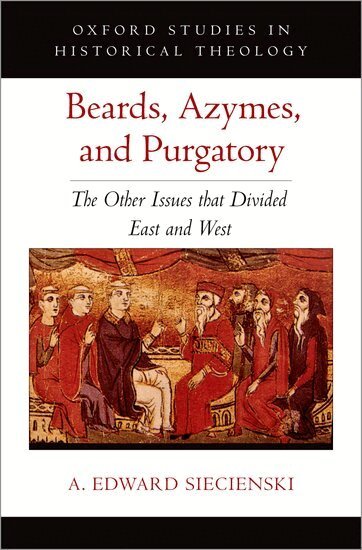
The Catholic and Orthodox churches have been divided for nearly a thousand years. The issues that divide them are weighty matters of theology, from a dispute over the Nicene Creed to the question of the authority of the Pope. But while these issues are cited as the most important reasons for the split, they were not necessarily the issues that caused it. In Beards, Azymes, and Purgatory A. Edward Siecienski argues that other, seemingly minor issues also played a significant role in the schism. Although rarely included in modern-day ecumenical dialogues, for centuries these "other issues"--the beardlessness of the Latin clergy, the Western use of unleavened bread in the Eucharist, and the doctrine of Purgatory--were among the most frequently cited reasons for the dispute between East and West. Disagreements about bread, beards, and the state of souls after death may not, at first, appear to be church-dividing issues, but they are the nevertheless among the reasons why the church today is divided. This was a schism over azymes long before it was a schism over the primacy of the Bishop of Rome, and the beardlessness of the Latin clergy was cited as a reason for breaking communion with the Latin Church prior to all the subsequent arguments about the wording of the Nicene Creed. To understand the schism between East and West, Siecienski contends, we must grasp not only the reasons it remains, but also the reasons it began.
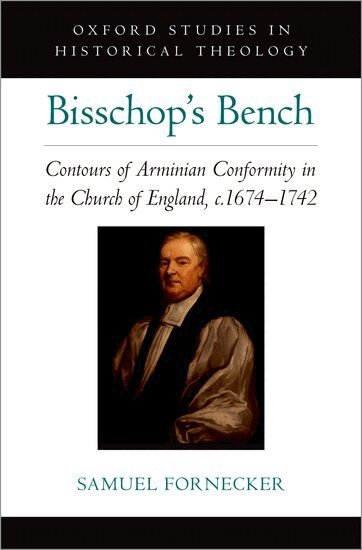
Bisschop's Bench
Contours of Arminian Conformity in the Church of England, c.1674—1742
Inbunden, Engelska, 2023
1 132 kr
Skickas inom 5-8 vardagar
The relationship between English conformity and the Arminian tradition has long defied neat explanation. In Bisschop's Bench, Samuel D. Fornecker charts the incompatible theological agendas into which post-Restoration Arminian conformity proliferated and challenges the thesis that a monolithic Arminianism marched steadily from the post-Restoration period into the early Hanoverian.Fornecker examines the theological life of the English Church by paying particular attention to the Arminian conformists who accentuated Reformed divinity in an unprecedented display of disambiguation from the Dutch Arminian tradition and those who exercised authority from the Bishops' bench. By demonstrating the scope of intra-Arminian divergence and the negatively defined consensus that united traditionalist clergy otherwise at odds over grace and predestination, Bisschop's Bench provides an illuminating perspective on the Arminian tradition in the political, confessional, and educative contexts of late seventeenth- and early eighteenth-century England.
1 010 kr
Skickas inom 5-8 vardagar
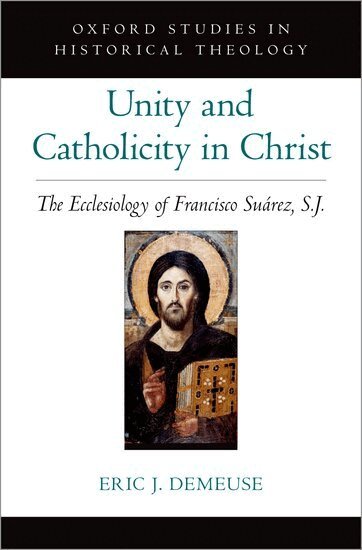
Debates concerning the relationship between Tridentine Catholicism and Catholicism after Vatican II dominate theological conversation today, particularly with regard to the Church and its engagement with the world. Current historical narratives paint ecclesiology after the Council of Trent as dominated by juridical concerns, uniformity, and institutionalism. Purportedly neglected are the spiritual, diverse, and missional aspects of the Church. This book challenges such narratives by investigating the theology of ecclesial unity and catholicity of the renowned Spanish Jesuit Francisco Suárez (1548-1617). Analyzing standard as well as overlooked sources of Suárez's ecclesiology, Eric J. DeMeuse shows how Suárez wrestles with the new demands of his time and anticipates later ecumenical developments in twentieth-century Catholic ecclesiology. Early modern expansion prompted theologians after Trent to reckon with the ecclesial status of baptized Protestants, the Greek Orthodox, and non-believers in the New World. It further prompted reflection on the universality, or catholicity, of the Church, and how the Church's mission to the nations serves her greater unity in Christ. DeMeuse demonstrates Suárez's vision of the Church to be deeply spiritual, diverse, and missional--not at the expense of the institutional, but as its necessary and life-giving source. This book further explores not only Suárez's speculative ecclesiology, but how the unity and catholicity of the body of Christ are lived out in practice: in the worship and works of the faithful, and, most notably, in the charism of his own religious order, the Society of Jesus. Suárez's theology shows what the spiritual dynamic between Christic unity and missional catholicity should look like in the Church.
1 024 kr
Skickas inom 5-8 vardagar
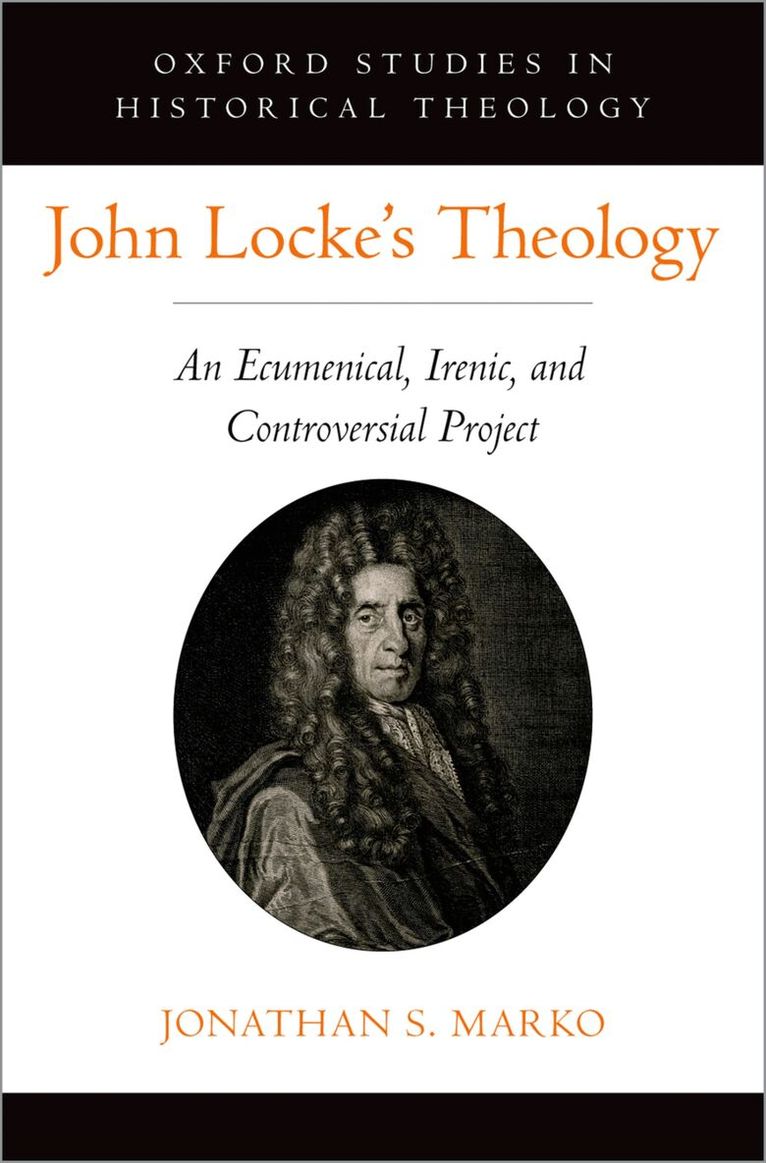
In John Locke's Theology: An Ecumenical, Irenic, and Controversial Project, Jonathan S. Marko offers the closest work available to a theological system derived from the writings of John Locke. Marko argues that Locke's intent for The Reasonableness of Christianity, his most noted theological work, was to describe and defend his version of the fundamental doctrines of Christianity and not his personal theological views. Locke, Marko says, intended the work to be an ecumenical and irenic project during a controversial time in philosophy and theology. Locke described what qualifies someone as a Christian in simple and irenic terms, and argued for the necessity of Scripture and the reasonableness of God's means of conveying his authoritative messages. The Reasonableness of Christianity could be construed as personal, but mainly in the sense that it puts the burden of understanding Scripture and arriving at theological convictions on the autonomous individual, rejecting the notion that one should base one's doctrinal opinions on so-called authorities. His work was inadvertently controversial partly because then, like today, readers typically failed to make a distinction between Locke's personal and programmatic positions. Marko also points to places in Locke's corpus where he avoids advocating for a particular sectarian position in his treatment of theological doctrines. What is more, it shows why attempting to categorize Locke--a philosopher, theologian, and political scientist all at once--according to traditional Christian paradigms is a dangerous misstep and a difficult scholarly feat.
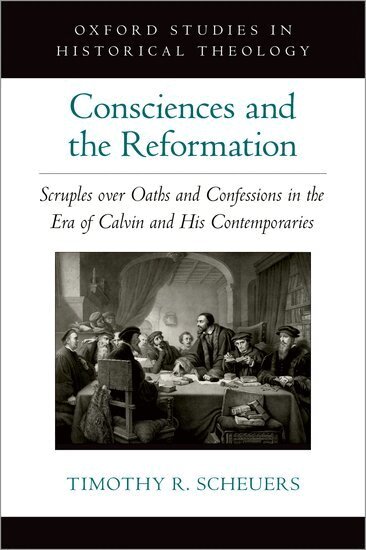
Consciences and the Reformation
Scruples over Oaths and Confessions in the Era of Calvin and His Contemporaries
Inbunden, Engelska, 2023
780 kr
Skickas inom 5-8 vardagar
This book examines the contentious relationship between oath-taking, confessional subscription, and the binding of the conscience in reforms led by John Calvin. Calvin and his closest Reformed colleagues routinely distinguished what they believed were impious rules and constitutions in the Roman Church--human traditions claiming to bind the consciences of the faithful by putting them in fear of losing their salvation--and legitimate church observances, such as oaths and formal subscription to Reformed confessional standards. Doctrinal and moral reform in the cities became difficult, however, when friends and foes alike accused Calvin and his partners of burdening consciences with extra-Scriptural statements of faith composed by human authorities--a claim that, if true, would necessarily shape our assessment of the integrity of Calvin's Reformation.In light of these conflicts, author Timothy R. Scheuers offers a close reading of the texts and controversies surrounding Calvin's struggle for reform. In particular, he shows how they reveal the unique challenges Calvin and his colleagues encountered as they attempted to employ oath-swearing and formal confession of faith in order to consolidate the reformation of church and society. This book demonstrates how oaths and vows were used to shape confessional identity, secure social order, forge community, and promote faithfulness in public and private contracts. It also illustrates the complex and difficult task of protecting the individual conscience as Calvin sought to bring his new take on Christian freedom into Reformed communities.
339 kr
Skickas inom 5-8 vardagar
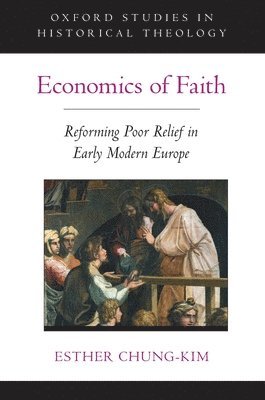
Economics of Faith examines the role of religious leaders in the development of poor relief institutions in early modern Europe. As preachers, policy makers, advocates, and community leaders, these reformers offered a new interpretation of salvation and good works that provided the religious foundation for poor relief reform. Although poverty was once associated with the religious image of piety, reformers no longer saw it as a spiritual virtue. Rather they considered social welfare reform to be an integral part of religious reform and worked to modify existing poor relief institutions or to set up new ones. Population growth, economic crises, and migration in early modern Europe caused poverty and begging to be an ever-increasing concern, and religious leaders encouraged the development and expansion of poor relief institutions. This new cadre of reformers served as catalysts, organizers, stabilizers, and consolidators of strategies to alleviate poverty, the most glaring social problem of early modern society. Although different roles emerged from varying relationships and negotiations with local political authorities and city councils, reform-minded ministers and lay leaders shaped a variety of institutions to address the problem of poverty and to promote social and communal responsibility. As religious options multiplied within Christianity, one's understanding of community determined the boundaries, albeit contested and sometimes fluid, of responsible poor relief. This goal of communal care would be especially relevant for religious refugees who as foreigners and strangers became responsible for caring for their own group.