Oxford Studies in Philosophy and Lit - Böcker
Visar alla böcker i serien Oxford Studies in Philosophy and Lit. Handla med fri frakt och snabb leverans.
10 produkter
10 produkter
538 kr
Skickas inom 5-8 vardagar
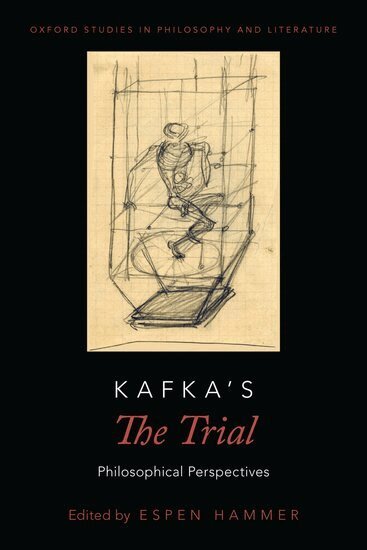
Kafka's novel The Trial, written from 1914 to 1915 and published in 1925, is a multi-faceted, notoriously difficult manifestation of European literary modernism, and one of the most emblematic books of the 20th Century. It tells the story of Josef K., a man accused of a crime he has no recollection of committing and whose nature is never revealed to him. The novel is often interpreted theologically as an expression of radical nihilism and a world abandoned by God. It is also read as a parable of the cold, inhumane rationality of modern bureaucratization. Like many other novels of this turbulent period, it offers a tragic quest-narrative in which the hero searches for truth and clarity (whether about himself, or the anonymous system he is facing), only to fall into greater and greater confusion. This collection of nine new essays and an editor's introduction brings together Kafka experts, intellectual historians, literary scholars, and philosophers in order to explore the novel's philosophical and theological significance. Authors pursue the novel's central concerns of justice, law, resistance, ethics, alienation, and subjectivity. Few novels display human uncertainty and skepticism in the face of rapid modernization, or the metaphysical as it intersects with the most mundane aspects of everyday life, more insistently than The Trial. Ultimately, the essays in this collection focus on how Kafka's text is in fact philosophical in the ways in which it achieves its literary aims. Rather than considering ideas as externally related to the text, the text is considered philosophical at the very level of literary form and technique.
1 760 kr
Skickas inom 5-8 vardagar
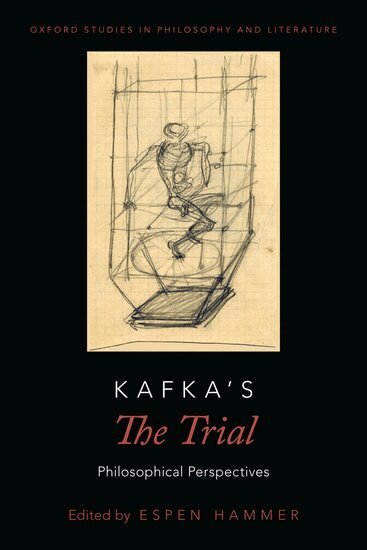
Kafka's novel The Trial, written from 1914 to 1915 and published in 1925, is a multi-faceted, notoriously difficult manifestation of European literary modernism, and one of the most emblematic books of the 20th Century. It tells the story of Josef K., a man accused of a crime he has no recollection of committing and whose nature is never revealed to him. The novel is often interpreted theologically as an expression of radical nihilism and a world abandoned by God. It is also read as a parable of the cold, inhumane rationality of modern bureaucratization. Like many other novels of this turbulent period, it offers a tragic quest-narrative in which the hero searches for truth and clarity (whether about himself, or the anonymous system he is facing), only to fall into greater and greater confusion. This collection of nine new essays and an editor's introduction brings together Kafka experts, intellectual historians, literary scholars, and philosophers in order to explore the novel's philosophical and theological significance. Authors pursue the novel's central concerns of justice, law, resistance, ethics, alienation, and subjectivity. Few novels display human uncertainty and skepticism in the face of rapid modernization, or the metaphysical as it intersects with the most mundane aspects of everyday life, more insistently than The Trial. Ultimately, the essays in this collection focus on how Kafka's text is in fact philosophical in the ways in which it achieves its literary aims. Rather than considering ideas as externally related to the text, the text is considered philosophical at the very level of literary form and technique.
1 440 kr
Skickas inom 5-8 vardagar
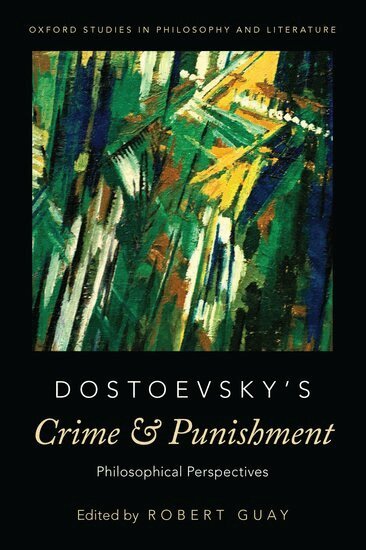
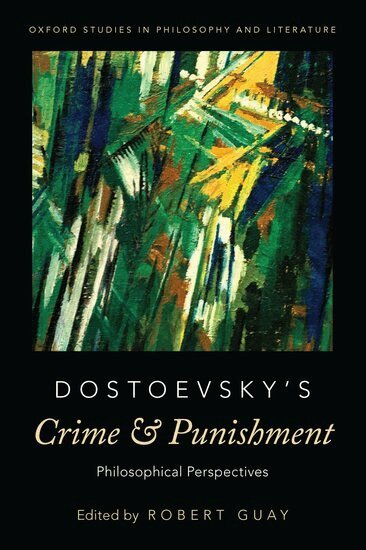
The gruesome double-murder upon which the novel Crime and Punishment hinges leads its culprit, Raskolnikov, into emotional trauma and obsessive, destructive self-reflection. But Raskolnikov's famous philosophical musings are just part of the full philosophical thought manifest in one of Dostoevsky's most famous novels. This volume, uniquely, brings together prominent philosophers and literary scholars to deepen our understanding of the novel's full range of philosophical thought. The seven essays treat a diversity of topics, including: language and the representation of the human mind, emotions and the susceptibility to loss, the nature of agency, freedom and the possibility of evil, the family and the failure of utopian critique, the authority of law and morality, and the dialogical self. Further, authors provide new approaches for thinking about the relationship between literary representation and philosophy, and the way that Dostoevsky labored over intricate problems of narrative form in Crime and Punishment.Together, these essays demonstrate a seminal work's full philosophical worth--a novel rich with complex themes whose questions reverberate powerfully into the 21st century.
421 kr
Skickas inom 5-8 vardagar
The gruesome double-murder upon which the novel Crime and Punishment hinges leads its culprit, Raskolnikov, into emotional trauma and obsessive, destructive self-reflection. But Raskolnikov's famous philosophical musings are just part of the full philosophical thought manifest in one of Dostoevsky's most famous novels. This volume, uniquely, brings together prominent philosophers and literary scholars to deepen our understanding of the novel's full range of philosophical thought. The seven essays treat a diversity of topics, including: language and the representation of the human mind, emotions and the susceptibility to loss, the nature of agency, freedom and the possibility of evil, the family and the failure of utopian critique, the authority of law and morality, and the dialogical self. Further, authors provide new approaches for thinking about the relationship between literary representation and philosophy, and the way that Dostoevsky labored over intricate problems of narrative form in Crime and Punishment.Together, these essays demonstrate a seminal work's full philosophical worth--a novel rich with complex themes whose questions reverberate powerfully into the 21st century.
1 440 kr
Skickas inom 5-8 vardagar
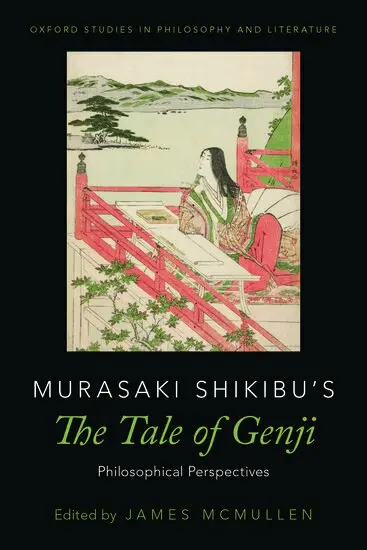
Murasaki Shikibu's The Tale of Genji is variously read as a work of feminist protest, the world's first psychological novel and even as a post-modern masterpiece. Commonly seen as Japan's greatest literary work, its literary, cultural, and historical significance has been thoroughly acknowledged. As a work focused on the complexities of Japanese court life in the Heian period, however, the The Tale of Genji has never before been the subject of philosophical investigation. The essays in this volume address this oversight, arguing that the work contains much that lends itself to philosophical analysis. The authors of this volume demonstrate that The Tale of Genji confronts universal themes such as the nature and exercise of political power, freedom, individual autonomy and agency, renunciation, gender, and self-expression; it raises deep concerns about aesthetics and the role of art, causality, the relation of man to nature, memory, and death itself. Although Murasaki Shikibu may not express these themes in the text as explicitly philosophical problems, the complex psychological tensions she describes and her observations about human conduct reveal an underlying framework of philosophical assumptions about the world of the novel that have implications for how we understand these concerns beyond the world of Genji. Each essay in this collection reveals a part of this framework, situating individual themes within larger philosophical and historical contexts. In doing so, the essays both challenge prevailing views of the novel and each other, offering a range of philosophical interpretations of the text and emphasizing the The Tale of Genji's place as a masterful work of literature with broad philosophical significance.
409 kr
Skickas inom 5-8 vardagar
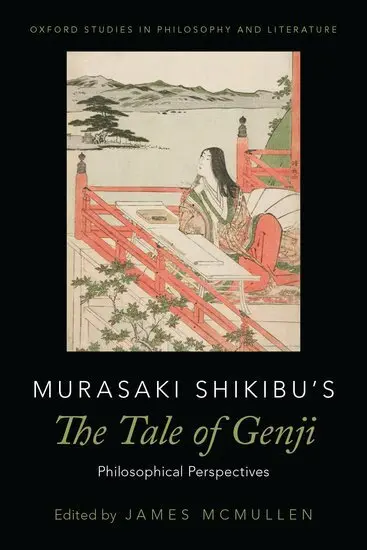
Murasaki Shikibu's The Tale of Genji is variously read as a work of feminist protest, the world's first psychological novel and even as a post-modern masterpiece. Commonly seen as Japan's greatest literary work, its literary, cultural, and historical significance has been thoroughly acknowledged. As a work focused on the complexities of Japanese court life in the Heian period, however, the The Tale of Genji has never before been the subject of philosophical investigation. The essays in this volume address this oversight, arguing that the work contains much that lends itself to philosophical analysis. The authors of this volume demonstrate that The Tale of Genji confronts universal themes such as the nature and exercise of political power, freedom, individual autonomy and agency, renunciation, gender, and self-expression; it raises deep concerns about aesthetics and the role of art, causality, the relation of man to nature, memory, and death itself. Although Murasaki Shikibu may not express these themes in the text as explicitly philosophical problems, the complex psychological tensions she describes and her observations about human conduct reveal an underlying framework of philosophical assumptions about the world of the novel that have implications for how we understand these concerns beyond the world of Genji. Each essay in this collection reveals a part of this framework, situating individual themes within larger philosophical and historical contexts. In doing so, the essays both challenge prevailing views of the novel and each other, offering a range of philosophical interpretations of the text and emphasizing the The Tale of Genji's place as a masterful work of literature with broad philosophical significance.
1 440 kr
Skickas inom 5-8 vardagar
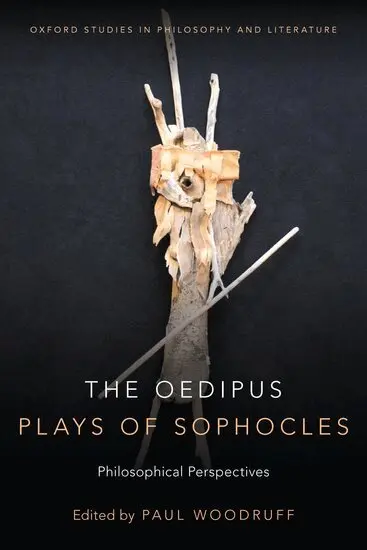
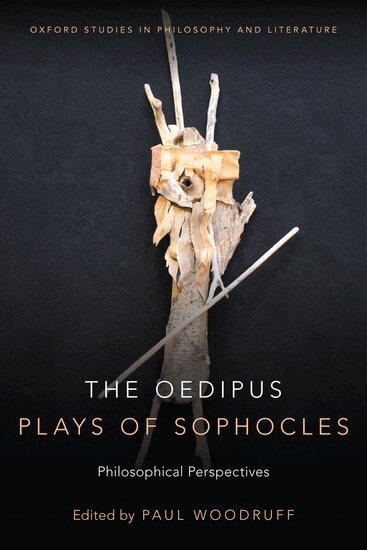
Oedipus presents ceaseless paradoxes that have fascinated readers for centuries. He is proud of his intellect, but he does not know himself and succumbs easily to self-deceptions. As a ruler he expresses the greatest good will toward his people, but as an exile he will do nothing to save them from their enemies. Faced with a damning prophecy, he tries to take destiny into his own hands and fails. Realizing this, he struggles at the end of his life for a serenity that seems to elude him. In his last misery, he is said to illustrate the tragic lament that it is better not to be born, or, once born, better to die young than to live into old age. Such are the themes a set of powerful thinkers take on in this volume-self-knowledge, self-deception, destiny, the value of a human life. There are depths to the Oedipus tragedies that only philosophers can plumb; readers who know the plays will be startled by what they find in this volume. There is nothing in literature to compare with the Oedipus plays of Sophocles that let us see the same basic myth through different lenses. The first play was the product of a poet in vibrant late middle age, the second of a man who was probably in his eighties, with the vision of a very old poet still at the height of his powers. In the volume's introduciton, Paul Woodruff provides historical backdrop to Sophocles and the plays, and connections to the contributions by philosophers and classicists that follow.
409 kr
Skickas inom 5-8 vardagar
Oedipus presents ceaseless paradoxes that have fascinated readers for centuries. He is proud of his intellect, but he does not know himself and succumbs easily to self-deceptions. As a ruler he expresses the greatest good will toward his people, but as an exile he will do nothing to save them from their enemies. Faced with a damning prophecy, he tries to take destiny into his own hands and fails. Realizing this, he struggles at the end of his life for a serenity that seems to elude him. In his last misery, he is said to illustrate the tragic lament that it is better not to be born, or, once born, better to die young than to live into old age. Such are the themes a set of powerful thinkers take on in this volume-self-knowledge, self-deception, destiny, the value of a human life. There are depths to the Oedipus tragedies that only philosophers can plumb; readers who know the plays will be startled by what they find in this volume. There is nothing in literature to compare with the Oedipus plays of Sophocles that let us see the same basic myth through different lenses. The first play was the product of a poet in vibrant late middle age, the second of a man who was probably in his eighties, with the vision of a very old poet still at the height of his powers. In the volume's introduciton, Paul Woodruff provides historical backdrop to Sophocles and the plays, and connections to the contributions by philosophers and classicists that follow.
1 606 kr
Skickas inom 7-10 vardagar
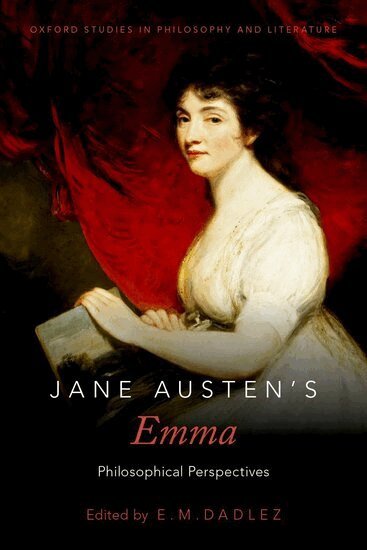
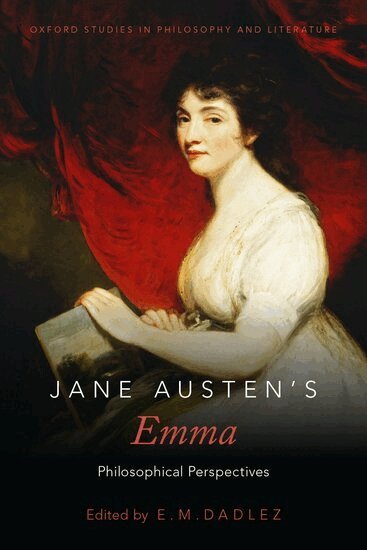
What has Emma Woodhouse, "handsome, clever, and rich, with a comfortable home and very little to distress or vex her" to say to a discipline like philosophy? How is a novel like Emma, inaccurately but not infrequently caricatured as a high-toned version of a pedestrian romance, to supply material for philosophical insight or speculation? Jane Austen's Emma is many things to many readers but it is as inaccurate as it is reductive to consider it just a romance. The minutia of daily living on which it concentrates permit not a rehearsal of platitudes, but a closer look at human emotions and motives, as well as the opportunity to hone our interpretive and empathetic skills. Emma flies in the face of conventional notions of femininity by presenting a heroine with hubris. It shows how friendships can affect one's ways of dealing with the world, how shame can reconfigure self-understanding, how gossip functions in sustaining a community. Emma rehabilitates conceptions of romance by rejecting melodrama in favor of naturalism. It explores the waywardness of the imagination and the myriad ways in which different people with different biases and agendas may evaluate the same evidence. It dwells on the limits of autonomy in that it explores the ease with which one may submit to the will of another. Emma is not itself a work of philosophy. Rather, it leads us to think philosophically. In this volume, a myriad group of scholars and philosophers explore the philosophical resonances of Emma.
453 kr
Skickas inom 5-8 vardagar
What has Emma Woodhouse, "handsome, clever, and rich, with a comfortable home and very little to distress or vex her" to say to a discipline like philosophy? How is a novel like Emma, inaccurately but not infrequently caricatured as a high-toned version of a pedestrian romance, to supply material for philosophical insight or speculation? Jane Austen's Emma is many things to many readers but it is as inaccurate as it is reductive to consider it just a romance. The minutia of daily living on which it concentrates permit not a rehearsal of platitudes, but a closer look at human emotions and motives, as well as the opportunity to hone our interpretive and empathetic skills. Emma flies in the face of conventional notions of femininity by presenting a heroine with hubris. It shows how friendships can affect one's ways of dealing with the world, how shame can reconfigure self-understanding, how gossip functions in sustaining a community. Emma rehabilitates conceptions of romance by rejecting melodrama in favor of naturalism. It explores the waywardness of the imagination and the myriad ways in which different people with different biases and agendas may evaluate the same evidence. It dwells on the limits of autonomy in that it explores the ease with which one may submit to the will of another. Emma is not itself a work of philosophy. Rather, it leads us to think philosophically. In this volume, a myriad group of scholars and philosophers explore the philosophical resonances of Emma.