Oxford Studies in the History of Economics – serie
Visar alla böcker i serien Oxford Studies in the History of Economics. Handla med fri frakt och snabb leverans.
10 produkter
10 produkter
851 kr
Skickas inom 5-8 vardagar
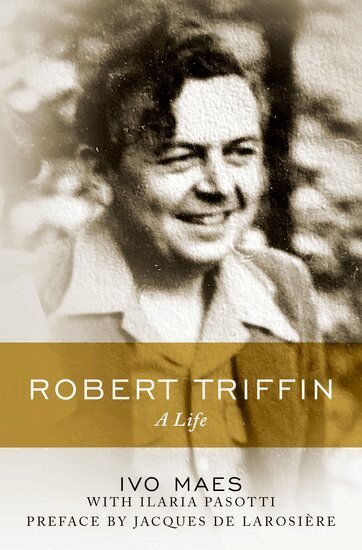
With World War II still raging, nations came together to create a new international monetary order, the Bretton Woods system. This agreement created the International Monetary Fund, the World Bank, and a system of stable exchange rates with currencies pegged against the dollar. One man saw the political, economic, and moral tensions inherent in keeping the dollar, a national currency, as a global reserve currency. When the monetary arrangement collapsed in 1973, economist Robert Triffin had already predicted its downfall two decades previously. Robert Triffin, a Belgian-American scholar and policy advisor, was a defining voice in economics and international politics in the twentieth century and an architect of the new multilateral liberal world order in his own right. Best known for his analysis of the vulnerabilities of the international monetary system - the "Triffin dilemma" - Triffin was a voice of reason and compassion in the postwar period. Triffin played a key role in the debates on European monetary integration, especially with his proposals for a European Reserve Fund and a European currency unit, becoming one of the intellectual fathers of Europe's single currency, the euro. This intellectual biography evaluates what made Triffin a crucial figure in modern economic history. With an emphasis on the ideas that shaped the postwar international system, Robert Triffin: A Life explores both the man and the mission. In addition to analyzing his work in economics and policymaking, Ivo Maes and Ilaria Pasotti trace Triffin's story from a very modest background, as the son of a butcher, who grew up through the interwar period, to a singularly influential economist in the late twentieth century. The first biography of one of the intellectual giants of the postwar era, Robert Triffin critically examines the accomplishments and the legacy of a scholar who believed that innovations in economic policy could lead to a better and more peaceful world.
1 298 kr
Skickas inom 5-8 vardagar
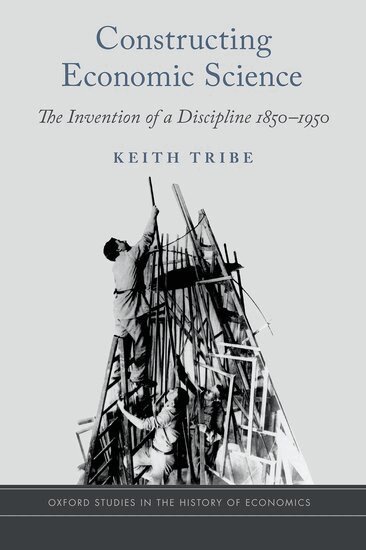
An accessible account of the role of the modern university in the creation of economics During the late nineteenth century concerns about international commercial rivalry were often expressed in terms of national provision for training and education, and the role of universities in such provision. It was in this context that the modern university discipline of economics emerged. The first undergraduate economics program was inaugurated in Cambridge in 1903; but this was merely a starting point. Constructing Economic Science charts the path through commercial education to the discipline of economics and the creation of an economics curriculum that could then be replicated around the world. Rather than describing this transition epistemologically, as a process of theoretical creation, Keith Tribe shows how the new "science" of economics was primarily an institutional creation of the modern university. He demonstrates how finance, student numbers, curricula, teaching, new media, the demands of employment, and more broadly, the international perception that industrializing economies required a technically-skilled workforce, all played their part in shaping economics as we know it today. This study explains the conditions originally shaping the science of economics, providing in turn a foundation for an understanding of the way in which this new language transformed public policy.
1 375 kr
Skickas inom 7-10 vardagar
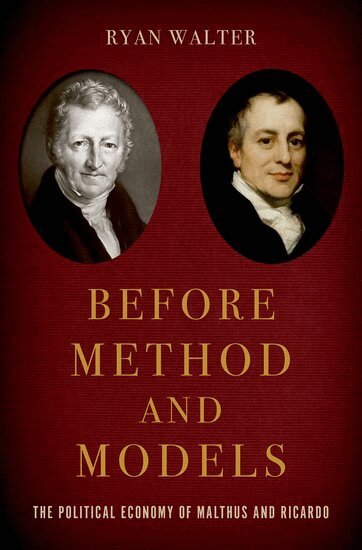
A boldly revisionist history of the first disputes in nineteenth-century Britain over the role of economists in society Economics now so dominates our understanding of how the world works that some of the field's most influential concepts seem akin to natural laws. Yet economists themselves are a relatively recent species of intellectual, first emerging in the late eighteenth and early nineteenth centuries. And like the economists of our own era, the pioneering work of the early economists was decidedly a product of its time. Before Method and Models looks back to the first disputes in nineteenth-century Britain over the role of economists in society to explain how the broader historical and intellectual context has always shaped the field. Ryan Walter's boldly revisionist history focuses on Thomas Robert Malthus and David Ricardo, both of whom were attacked for producing a type of knowledge that was perceived to be dangerous to society. Rather than simply assuming that "classical political economy" always existed, Walter recovers the historical circumstances that actually shaped the development of their methods and concepts. The book delves into the major political controversies of the time - the Bullion Controversy and the Corn Laws debate - and the arguments that Malthus and Ricardo advanced in order to shape the outcome. By examining the hostile responses of Malthus and Ricardo's contemporaries, the book shows how the major challenge facing the first economists was to legitimize the activity of theorizing and then reforming economic life. In a time when debate about commerce and politics was conducted without our modern methods and models, Malthus and Ricardo fought for the creation of the new field of political economy and a role for their work at the center of politics. Walter's reconstruction of the era reveals an exceedingly sophisticated debate regarding the costs and benefits of reforming both institutions and laws through the new science of political economy.
1 335 kr
Skickas inom 7-10 vardagar
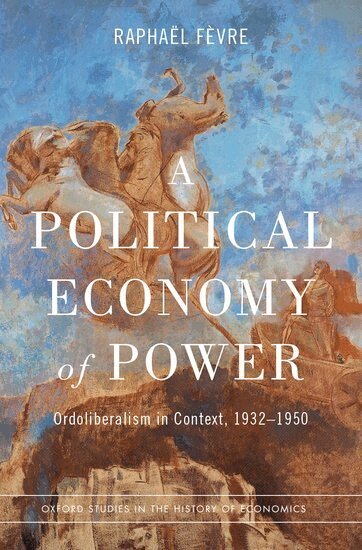
The first English analysis of German ordoliberalism from the perspective of both intellectual history and history of economic thought In comparison with Keynesianism, monetarism, or other economic paradigms of the twentieth century, ordoliberalism has been generally neglected. However, after first emerging in Germany during interwar years, ordoliberalism is now at the center of the ongoing debates about the foundations, the present governance, and the future prospects of the European Union. In A Political Economy of Power, Raphaël Fèvre retraces the intellectual history of ordoliberalism, focusing on the works of its main representatives Walter Eucken and Wilhelm Röpke, together with the contributions of Franz Böhm, Alexander Rüstow, Leonhard Miksch, and Friedrich Lutz. Fèvre provides a clear and comprehensive definition of ordoliberalism, describes in detail its principles, and explains how ordoliberalism came to heavily influence German post-war reconstruction despite its emergence during the Nazi period. He also investigates the reasons for its success in West Germany in the immediate aftermath of the war, and its lasting influence through a partial transformation to a contemporary form of neoliberal orthodoxy. A Political Economy of Power provides a contextualized and interdisciplinary study of ordoliberalism-one of the most influential intellectual projects of the second half of the twentieth century in Europe.
831 kr
Skickas inom 5-8 vardagar
Just as the Industrial Revolution in Britain suggested a promise of abundance, David Ricardo, Robert Malthus, and their colleagues formalized classical political economy with its emphasis on scarcity, self-interest, and private accumulation of capital. At the same time, Robert Owen took a different path arguing that the new technologies open a new world. In effect, his ideas turn classical political economy on its head. Building this new social science, Owen emphasizes abundance, public spiritedness, and communal accumulation of capital. Although the history of the cooperative movement is well documented, the social psychology, architecture, and logic of its economics stand in need of reappraisal. This book describes, often restates, and in places reconstructs the social science of British cooperative writers-from Robert Owen, through William Thompson and Anna Doyle Wheeler, J.S. Mill and Harriet Taylor Mill, the Christian Socialists, the consumer cooperative movement, the Women's Cooperative Guild, William Morris, and the Guild Socialists. Each of these writers makes theoretical assumptions concerning social psychology, proposes institutional structures, and then derives consequences for the material economy, happiness, and human development. Some postulate a feedback mechanism strengthening and stabilizing an enlarged self-interest. Sparked by the intellectual optimism and fellow feeling of the early British cooperative theorists, Madden and Persky start to rebuild their humane social science. While enriching our understanding of intellectual history, Building a Social Science carries insights relevant to the present concerning employment relations, persistent inequality, and low levels of human development.
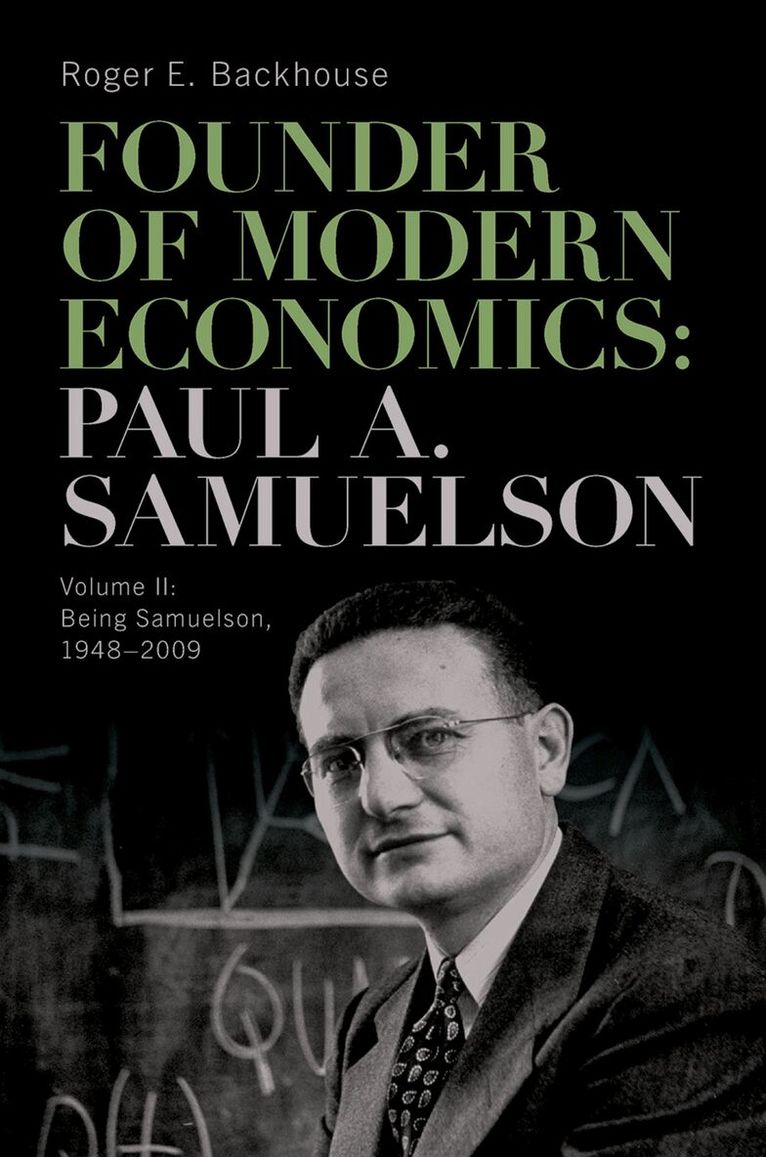
Founder of Modern Economics: Paul A. Samuelson
Volume II: Being Samuelson, 1948–2009
Inbunden, Engelska, 2026
347 kr
Kommande
Paul A. Samuelson is widely regarded as the world's leading economist in the so-called “Age of Keynes”, the three decades after WWII, acknowledged by his being the first American to win the Nobel prize in economics. Foundations of Economic Analysis was a manual on how economic theory should be done, and the nineteen editions of Economics: An Introductory Analysis provided the first exposure to economics for millions of students worldwide. Volume I of this intellectual biography told the story of someone who established himself as the most promising economist of his generation. This volume shows how he went on to dominate the subject. He was well known as a mathematical economist at a time when the use of mathematics in economics was in its infancy but, as this volume shows, he was far more than that. He wrote seminal articles in field after field, including consumer behaviour, international trade, consumer, finance, public expenditure, optimal taxation, the economics of inflation and unemployment, and many others. He had the ability to use his knowledge of mathematics to simplify economic problems, providing the concepts that other economists could use and yet he could write in a style that entertained as well as informed his readers. He helped transform of his department at the Massachusetts Institute of Technology from a relative backwater into the most influential economics department in the United States, its graduates filling influential positions in academia, central banks, and the provision of economic advice to government. He was active in trading commodities and played a significant role in the establishment of index funds. An innovative feature of this biography is that it is not confined to what he called his scientific work but covers his political economy (his analysis of current events and his policy advice) in depth. From the start of his academic career, he was in demand as an economic adviser, his most prominent role being as adviser to President John Kennedy, and he was a regular columnist for newspapers and news magazines from the Financial Times to the Washington Post and Newsweek and a range of Japanese and Korean newspapers.
875 kr
Skickas inom 5-8 vardagar
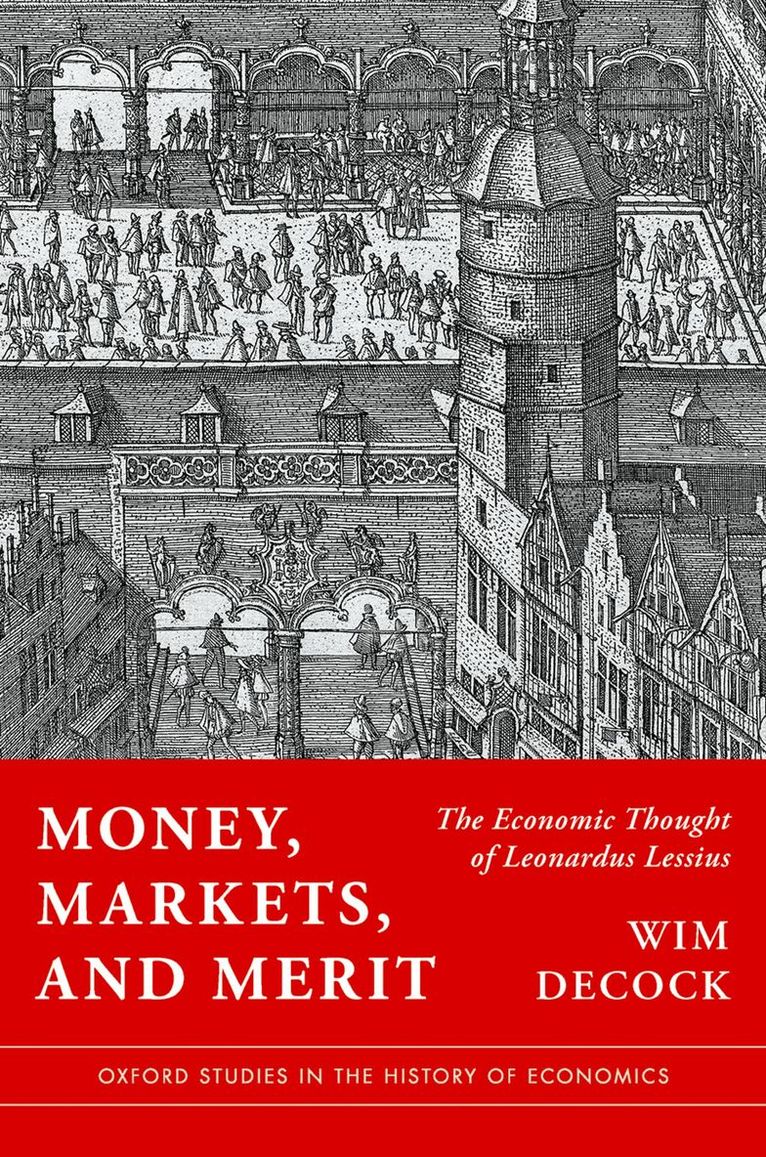
To understand the genesis of the modern economy, we must also investigate its normative foundations. More than a century after Max Weber's The Protestant Ethic and the Spirit of Capitalism, the pursuit of this key methodological intuition remains unfinished. This book revisits the legacy of a neglected protagonist in the history of economic thought: Leonardus Lessius (1554-1623). Lessius' work provides unique insight into the normative roots of modern economic thought. In a context characterised by the globalization of trade, the rise of stock exchanges, and profound political and religious upheavals, merchants, bankers, and princes eagerly sought his advice to navigate the New World. Praised by Joseph A. Schumpeter as a 'father of modern economic analysis', Lessius became known in his own time as the 'Oracle of the Netherlands'. His main treatise, 'On Justice and Law', quickly gained the status of a reference work due to the clarity of its economic observations and Lessius' brilliant mastery of legal and moral reasoning. He offered practical solutions to a wide range of cases of conscience related to speculation, insurance, insider trading, subprime debt, interest-taking, abuse of market power, monopolies, public banks, safe investment vehicles, and many other economic and financial issues. It certainly was not his intention to turn the whole world into a competitive market without any limits as Lessius deplored humanity's inclination to succumb to the 'sacred hunger for gold'. However, he did wish to encourage effort, hard work and clever dealings, thus contributing significantly to the normative justification of modern commerce and finance. In a time marked as much by fierce debates on grace and free will as by doubts about the legitimacy of the first global economy, Lessius offers a glimpse into the interconnectedness between ideas on spiritual salvation and material prosperity.
1 240 kr
Kommande
Charles S. Peirce (1839-1914) is most famous today as a philosopher, the founder of the philosophical school of Pragmatism, and as a logician. In his own day, he was better known as a bench scientist, astronomer, and metrologist, renowned in the international scientific community for his measurements of gravity. Peirce was, in fact, one of history's great polymaths: mathematician, a founder of semiotics and one of the earliest experimental psychologists, as well as a contributor to a number of other disciplines, lexicography, and for decades a scientific contributor to The Nation. Perhaps the least understood of Peirce's many contributions are his forays into economics. In the 1870s, no one in the world had a better understanding of mathematical economics or its applications to real-world problems. Peirce's Science of Economics and Economics of Science is a careful examination of his engagement with economics. It takes an interdisciplinary approach. As history of economics, it reconstructs how Peirce came to possess a cutting-edge knowledge of mathematical economics at the dawn of the so-called "marginalist revolution," how he used that knowledge in concrete applications, and how he understood the nature of economics as a science. As a wider history of science, it shows how Peirce created the economics of science out of a whole cloth as part of resolving methodological problems that arose in his work of measuring gravity. The book explores applications of Peirce's ideas about economics to some long-standing problems in the philosophy of science and shows how these ideas have implications for real-world science.
414 kr
Kommande
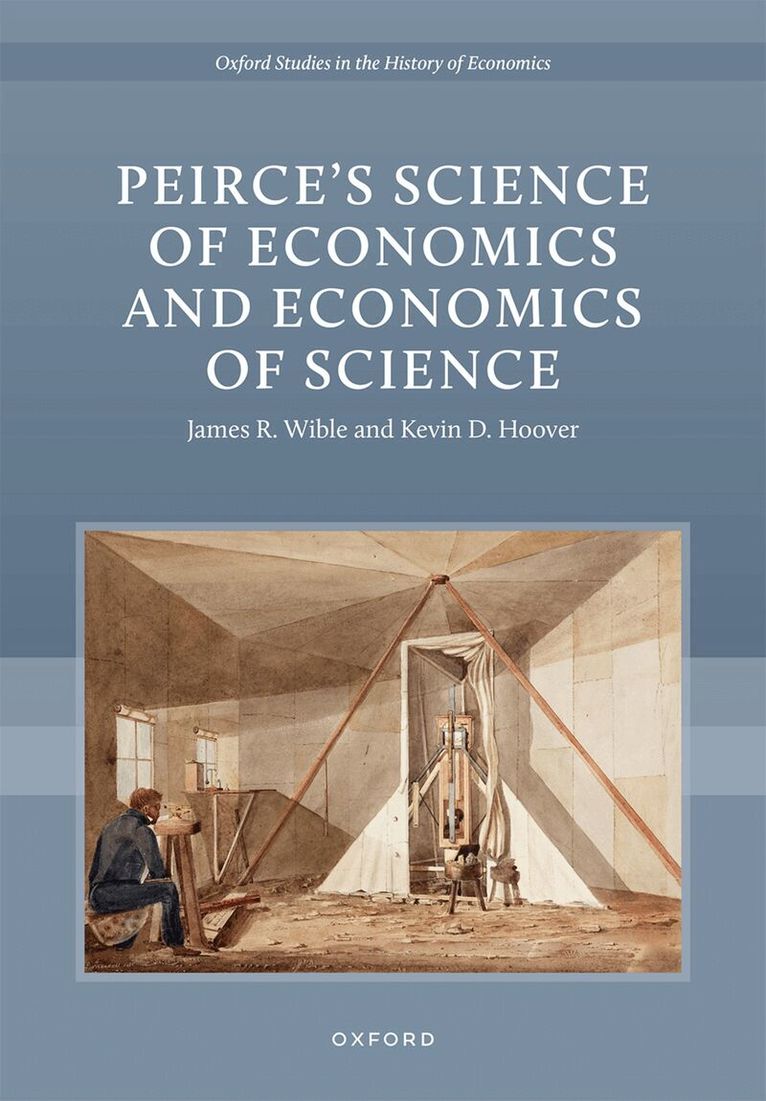
Charles S. Peirce (1839-1914) is most famous today as a philosopher, the founder of the philosophical school of Pragmatism, and as a logician. In his own day, he was better known as a bench scientist, astronomer, and metrologist, renowned in the international scientific community for his measurements of gravity. Peirce was, in fact, one of history's great polymaths: mathematician, a founder of semiotics and one of the earliest experimental psychologists, as well as a contributor to a number of other disciplines, lexicography, and for decades a scientific contributor to The Nation. Perhaps the least understood of Peirce's many contributions are his forays into economics. In the 1870s, no one in the world had a better understanding of mathematical economics or its applications to real-world problems. Peirce's Science of Economics and Economics of Science is a careful examination of his engagement with economics. It takes an interdisciplinary approach. As history of economics, it reconstructs how Peirce came to possess a cutting-edge knowledge of mathematical economics at the dawn of the so-called "marginalist revolution," how he used that knowledge in concrete applications, and how he understood the nature of economics as a science. As a wider history of science, it shows how Peirce created the economics of science out of a whole cloth as part of resolving methodological problems that arose in his work of measuring gravity. The book explores applications of Peirce's ideas about economics to some long-standing problems in the philosophy of science and shows how these ideas have implications for real-world science.
673 kr
Skickas inom 5-8 vardagar
This book reconsiders the role of the Phillips curve in macroeconomic analysis in the first twenty years following the famous work by A. W. H. Phillips, after whom it is named. It argues that the story conventionally told is entirely misleading. In that story, Phillips made a great breakthrough but his work led to a view that inflationary policy could be used systematically to maintain low unemployment, and that it was only after the work of Milton Friedman and Edmund Phelps about a decade after Phillips' that this view was rejected. On the contrary, a detailed analysis of the literature of the times shows that the idea of a negative relation between wage change and unemployment - supposedly Phillips' discovery - was commonplace in the 1950s, as were the arguments attributed to Friedman and Phelps by the conventional story. And, perhaps most importantly, there is scarcely any sign of the idea of the inflation-unemployment tradeoff promoting inflationary policy, either in the theoretical literature or in actual policymaking. The book demonstrates and identifies a number of main strands of the actual thinking of the 1950s, 1960s, and 1970s on the question of the determination of inflation and its relation to other variables. The result is not only a rejection of the Phillips curve story as it has been told, and a reassessment of the understanding of the economists of those years of macroeconomics, but also the construction of an alternative, and historically more authentic account, of the economic theory of those times. A notable outcome is that the economic theory of the time was not nearly so naïve as it has been portrayed.