Pacific Islands Monograph Series - Böcker
Visar alla böcker i serien Pacific Islands Monograph Series. Handla med fri frakt och snabb leverans.
9 produkter
9 produkter
339 kr
Skickas inom 10-15 vardagar
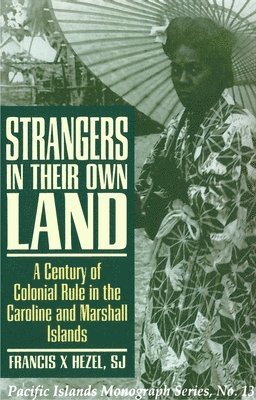
Strangers in Their Own Land
A Century of Colonial Rule in the Caroline and Marshall Islands
Häftad, Engelska, 2003
331 kr
Skickas inom 11-20 vardagar
This is a summary of colonial rule in the Caroline and Marshall Islands.
641 kr
Skickas inom 7-10 vardagar
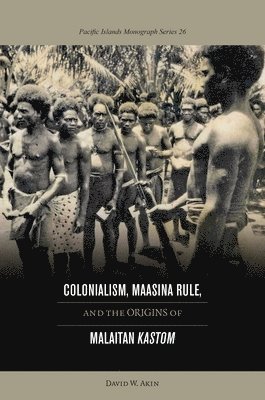
This book is a political history of the island of Malaita in the British Solomon Islands Protectorate from 1927, when the last violent resistance to colonial rule was crushed, to 1953 and the inauguration of the island’s first representative political body, the Malaita Council. At the book’s heart is a political movement known as Maasina Rule, which dominated political affairs in the southeastern Solomons for many years after World War II. The movement’s ideology, kastom, was grounded in the determination that only Malaitans themselves could properly chart their future through application of Malaitan sensibilities and methods, free from British interference. Kastom promoted a radical transformation of Malaitan lives by sweeping social engineering projects and alternative governing and legal structures. When the government tried to suppress Maasina Rule through force, its followers brought colonial administration on the island to a halt for several years through a labour strike and massive civil resistance actions that overflowed government prison camps. David Akin draws on extensive archival and field research to present a practice-based analysis of colonial officers’ interactions with Malaitans in the years leading up to and during Maasina Rule. A primary focus is the place of knowledge in the colonial administration. Many scholars have explored how various regimes deployed “colonial knowledge” of subject populations in Asia and Africa to reorder and rule them. The British imported to the Solomons models for “native administration” based on such an approach, particularly schemes of indirect rule developed in Africa. The concept of “custom” was basic to these schemes and to European understandings of Melanesians, and it was made the lynchpin of government policies that granted limited political roles to local ideas and practices. Officers knew very little about Malaitan cultures, however, and Malaitans seized the opportunity to transform custom into kastom, as the foundation for a new society. The book’s overarching topic is the dangerous road that colonial ignorance paved for policy makers, from young cadets in the field to high officials in distant Fiji and London. Today kastom remains a powerful concept on Malaita, but continued confusion regarding its origins, history, and meanings hampers understandings of contemporary Malaitan politics and of Malaitan people’s ongoing, problematic relations with the state.
655 kr
Skickas inom 7-10 vardagar
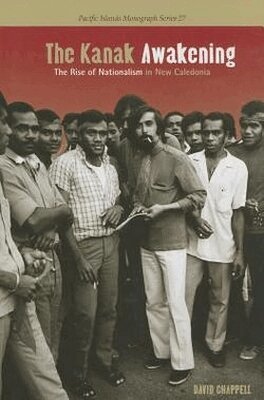
In 1853, France annexed the Melanesian islands of New Caledonia to establish a convict colony and strategic port of call. Unlike other European settler–dominated countries in the Pacific, the territory’s indigenous people remained more numerous than immigrants for over a century. Despite military conquest, land dispossession, and epidemics, its thirty language groups survived on tribal reserves and nurtured customary traditions and identities. In addition, colonial segregation into the racial category of canaques helped them to find new unity. When neighbouring anglophone colonies began to decolonize in the 1960s, France retained tight control of New Caledonia for its nickel reserves, reversing earlier policies that had granted greater autonomy for the islands. Anticolonial protest movements culminated in the 1980s Kanak revolt, after which two negotiated peace accords resulted in autonomy in a progressive form and officially recognized Kanak identity for the first time. But the near-parity of settlers and Kanak continues to make nation-building a challenging task, despite a 1998 agreement among Kanak and settlers to seek a “common destiny”.This study examines the rise in New Caledonia of rival identity formations that became increasingly polarized in the 1970s and examines in particular the emergence of activist discourses in favour of Kanak cultural nationalism and land reform, multiracial progressive sovereignty, or a combination of both aspirations. Most studies of modern New Caledonia focus on the violent 1980s uprising, which left deep scars on local memories and identities. Yet the genesis of that rebellion began with a handful of university students who painted graffiti on public buildings in 1969, and such activists discussed many of the same issues that face the country’s leadership today. After examining the historical, cultural, and intellectual background of that movement, this work draws on new research in public and private archives and interviews with participants to trace the rise of a nationalist movement that ultimately restored self-government and legalized indigenous aspirations for sovereignty in a local citizenship with its own symbols. Kanak now govern two out of three provinces and have an important voice in the Congress of New Caledonia, but they are a slight demographic minority. Their quest for nationhood must achieve consensus with the immigrant communities, much as the founders of the independence movement in the 1970s recommended.
286 kr
Skickas inom 10-15 vardagar
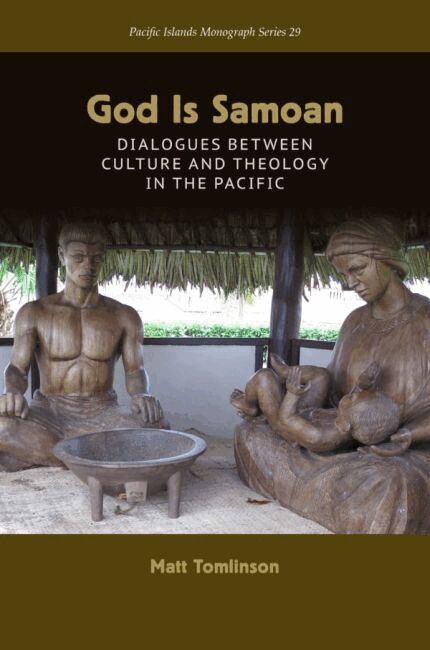
Christian theologians in the Pacific Islands see culture as the grounds on which one understands God. In this pathbreaking book, Matt Tomlinson engages in an anthropological conversation with the work of "contextual theologians", exploring how the combination of Pacific Islands culture and Christianity shapes theological dialogues. Employing both scholarly research and ethnographic fieldwork, the author addresses a range of topics: from radical criticisms of biblical stories as inappropriate for Pacific audiences to celebrations of traditional gods such as Tagaloa as inherently Christian figures. This book presents a symphony of voices-engaged, critical, prophetic-from the contemporary Pacific's leading religious thinkers and suggests how their work articulates with broad social transformations in the region.Each chapter in this book focuses on a distinct type of culturally driven theological dialogue. One type is between readers and texts, in which biblical scholars suggest new ways of reading, and even rewriting, the Bible so it becomes more meaningful in local terms. A second kind concerns the state of the church and society. For example, feminist theologians and those calling for "prophetic" action on social problems propose new conversations about how people in Oceania should navigate difficult times. A third kind of discussion revolves around identity, emphasizing what makes Oceania unique and culturally coherent. A fourth addresses the problems of climate change and environmental degradation to sacred lands by encouraging "eco-theological" awareness and interconnection. Finally, many contextual theologians engage with the work of other disciplines' prominently, anthropology-as they develop new discourse on God, people, and the future of Oceania.Contextual theology allows people in Oceania to speak with God and fellow humans through the idiom of culture in a distinctly Pacific way. Tomlinson concludes, however, that the most fruitful topic of dialogue might not be culture, but rather the nature of dialogue itself. Written in an accessible, engaging style and presenting innovative findings, this book will interest students and scholars of anthropology, world religion, theology, globalization, and Pacific studies.
972 kr
Skickas inom 7-10 vardagar
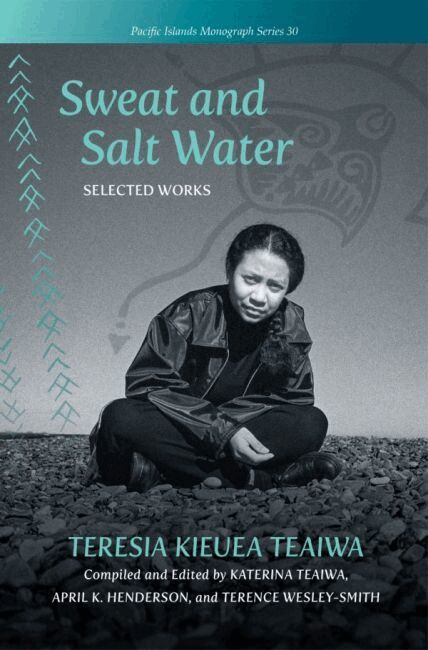
On 21 March 2017, Associate Professor Teresia Kieuea Teaiwa passed away at the age of forty-eight. News of Teaiwa's death precipitated an extraordinary outpouring of grief unmatched in the Pacific studies community since Epeli Hau'ofa's passing in 2009. Mourners referenced Teaiwa's nurturing interactions with numerous students and colleagues, her innovative program building at Victoria University of Wellington, her inspiring presence at numerous conferences around the globe, her feminist and political activism, her poetry, her Banaban/I-Kiribati/Fiji Islander and African American heritage, and her extraordinary ability to connect and communicate with people of all backgrounds.This volume features a selection of Teaiwa's scholarly and creative contributions captured in print over a professional career cut short at the height of her productivity. The collection honors her legacy in various scholarly fields, including Pacific studies, Indigenous studies, literary studies, security studies, and gender studies, and on topics ranging from militarism and tourism to politics and pedagogy. It also includes examples of Teaiwa's poems. Many of these contributions have had significant and lasting impacts. Teaiwa's "bikinis and other s/pacific notions," published in The Contemporary Pacific in 1995, could be regarded as her breakthrough piece, attracting considerable attention at the time and still cited regularly today. With its innovative two-column format and reflective commentary, "Lo(o)sing the Edge," part of a special issue of The Contemporary Pacific in 2001, had similar impact. Teaiwa's writings about what she dubbed "militourism," and more recent work on militarization and gender, continue to be very influential. Perhaps her most significant contribution was to Pacific studies itself, an emerging interdisciplinary field of study with distinctive goals and characteristics. In several important journal articles and book chapters reproduced here, Teaiwa helped define the essential elements of Pacific studies and proposed teaching and learning strategies appropriate for the field. Sweat and Salt Water includes fifteen of Teaiwa's most influential pieces and four poems organized into three categories: Pacific Studies, Militarism and Gender, and Native Reflections. A foreword by Sean Mallon, Teaiwa's spouse, is followed by a short introduction by the volume's editors. A comprehensive bibliography of Teaiwa's published work is also included.
324 kr
Skickas inom 7-10 vardagar
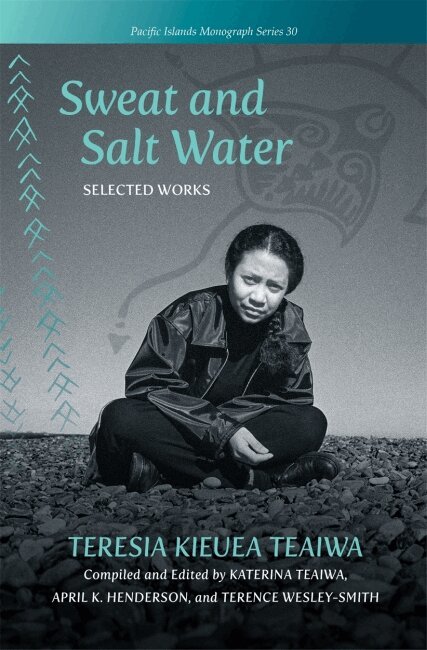
On 21 March 2017, Associate Professor Teresia Kieuea Teaiwa passed away at the age of forty-eight. News of Teaiwa's death precipitated an extraordinary outpouring of grief unmatched in the Pacific studies community since Epeli Hau'ofa's passing in 2009. Mourners referenced Teaiwa's nurturing interactions with numerous students and colleagues, her innovative program building at Victoria University of Wellington, her inspiring presence at numerous conferences around the globe, her feminist and political activism, her poetry, her Banaban/I-Kiribati/Fiji Islander and African American heritage, and her extraordinary ability to connect and communicate with people of all backgrounds.This volume features a selection of Teaiwa's scholarly and creative contributions captured in print over a professional career cut short at the height of her productivity. The collection honors her legacy in various scholarly fields, including Pacific studies, Indigenous studies, literary studies, security studies, and gender studies, and on topics ranging from militarism and tourism to politics and pedagogy. It also includes examples of Teaiwa's poems. Many of these contributions have had significant and lasting impacts. Teaiwa's "bikinis and other s/pacific notions," published in The Contemporary Pacific in 1995, could be regarded as her breakthrough piece, attracting considerable attention at the time and still cited regularly today. With its innovative two-column format and reflective commentary, "Lo(o)sing the Edge," part of a special issue of The Contemporary Pacific in 2001, had similar impact. Teaiwa's writings about what she dubbed "militourism," and more recent work on militarization and gender, continue to be very influential. Perhaps her most significant contribution was to Pacific studies itself, an emerging interdisciplinary field of study with distinctive goals and characteristics. In several important journal articles and book chapters reproduced here, Teaiwa helped define the essential elements of Pacific studies and proposed teaching and learning strategies appropriate for the field. Sweat and Salt Water includes fifteen of Teaiwa's most influential pieces and four poems organized into three categories: Pacific Studies, Militarism and Gender, and Native Reflections. A foreword by Sean Mallon, Teaiwa's spouse, is followed by a short introduction by the volume's editors. A comprehensive bibliography of Teaiwa's published work is also included.
749 kr
Skickas inom 7-10 vardagar
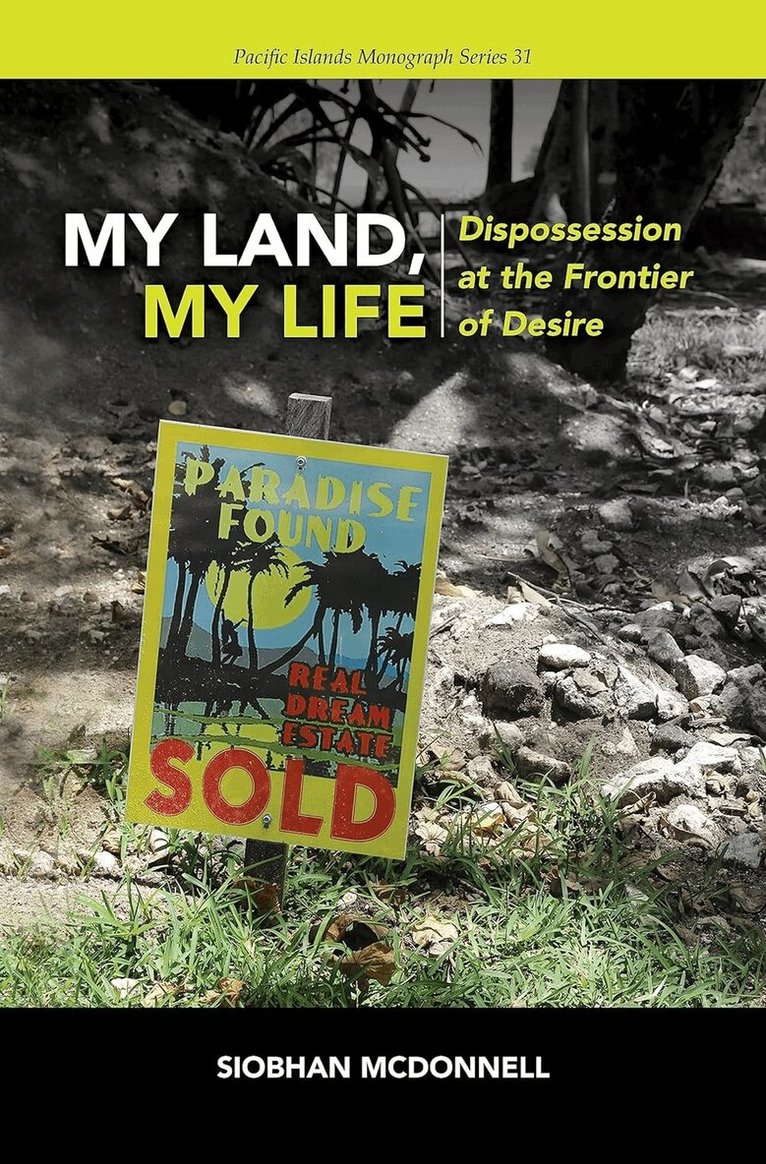
Throughout Oceania, land is central to identity because it is understood to be spiritually nourishing and sustaining. Land is the mother. Land, and the kinship it nurtures, is the basis for sustaining livelihoods and ways of life. Therefore, Indigenous dispossession from the land has deep and far-reaching consequences. My Land My Life: Dispossession at the Frontier of Desire explores the land rush that took place in Vanuatu from 2001 to 2014 which resulted in over ten percent of all customary land being leased. In this book, Siobhan McDonnell offers new insights into the drivers of capitalist land transformations. Using multi-scalar and multi-sited ethnography she describes not simply a linear march toward commodification of the landscape by foreign interests, but a complex web replete with the local powerful Indigenous men involved in manipulating power and property. McDonnell meticulously describes land-leasing processes and maps the relationships between investors, middlemen, and local men. She shows how property is a tool with which foreigners reassert capitalism and neocolonial control over Indigenous landscapes. The legal identity of "landowner" contains foundational contradictions between the rights established in Vanuatu’s kastom system and those afforded by property, as individualized rights over land. Property has also created sites for the production of masculine authority and enabled men to manipulate claims to land and entrench their personal power. This book explores how transactions of customary land have created new domains of agency and frontiers of desire: foreign desire to possess land and local desire to lease land for cash. It concludes with a discussion of Vanuatu’s constitutional and land reform package, drafted by the author, which took effect in 2014 and delivered a more empathetic approach to Indigenous land rights and ended the land rush.Informed by decades of study, legal work, and community engagement, My Land My Life demonstrates an engaged anthropological practice based on reciprocity that responds directly to what Indigenous people have asked for. This book is certain to appeal to a wide range of scholars as well as policy makers.
317 kr
Skickas inom 7-10 vardagar
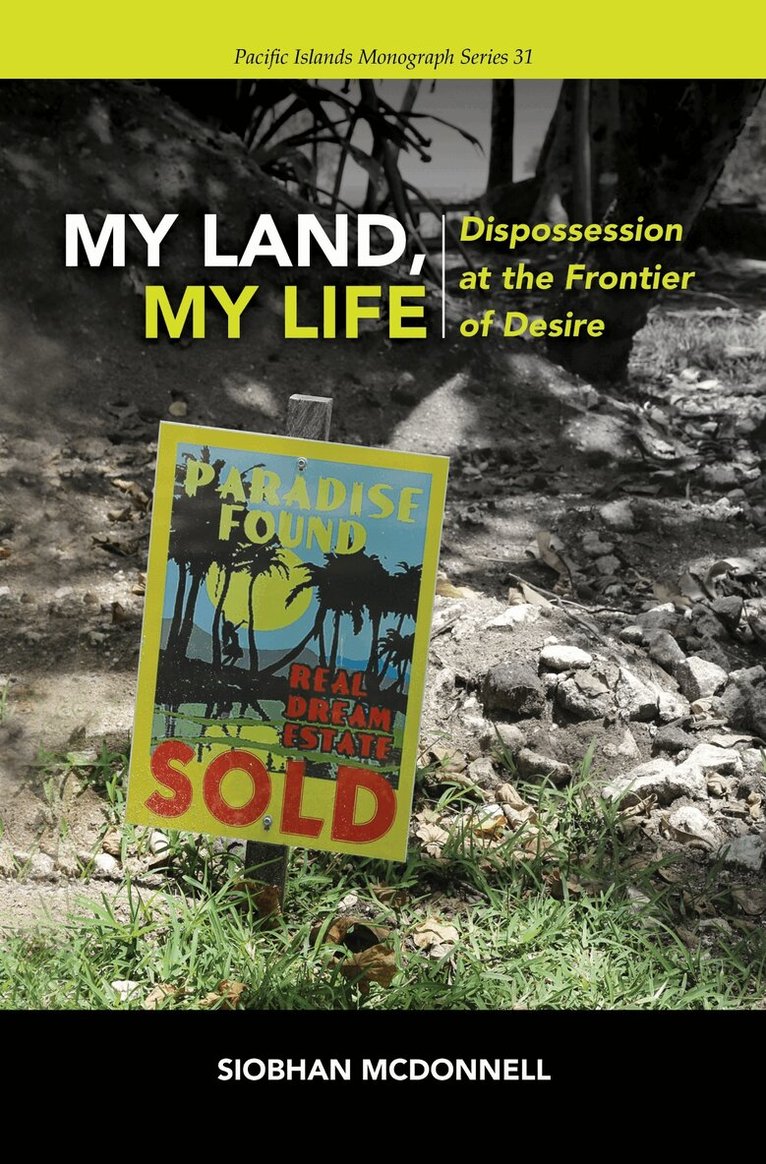
Throughout Oceania, land is central to identity because it is understood to be spiritually nourishing and sustaining. Land is the mother. Land, and the kinship it nurtures, is the basis for sustaining livelihoods and ways of life. Therefore, Indigenous dispossession from the land has deep and far-reaching consequences. My Land, My Life: Dispossession at the Frontier of Desire explores the land rush that took place in Vanuatu from 2001 to 2014 which resulted in over ten percent of all customary land being leased. In this book, Siobhan McDonnell offers new insights into the drivers of capitalist land transformations. Using multi-scalar and multi-sited ethnography, she describes not simply a linear march toward commodification of the landscape by foreign interests, but a complex web replete with the local powerful Indigenous men involved in manipulating power and property. McDonnell meticulously describes land-leasing processes and maps the relationships between investors, middlemen, and local men. She shows how property is a tool with which foreigners reassert capitalism and neocolonial control over Indigenous landscapes. The legal identity of "landowner" contains foundational contradictions between the rights established in Vanuatu’s kastom system and those afforded by property, as individualized rights over land. Property has also created sites for the production of masculine authority and enabled men to manipulate claims to land and entrench their personal power. This book explores how transactions of customary land have created new domains of agency and frontiers of desire: foreign desire to possess land and local desire to lease land for cash. It concludes with a discussion of Vanuatu’s constitutional and land reform package, drafted by the author, which took effect in 2014 and delivered a more empathetic approach to Indigenous land rights and ended the land rush.Informed by decades of study, legal work, and community engagement, My Land, My Life demonstrates an engaged anthropological practice based on reciprocity that responds directly to what Indigenous people have asked for. This book is certain to appeal to a wide range of scholars as well as policy makers.