Perspectives on the Twentieth Century – Serie
Visar alla böcker i serien Perspectives on the Twentieth Century. Handla med fri frakt och snabb leverans.
4 produkter
4 produkter
Minority Protection in Post-Apartheid South Africa
Human Rights, Minority Rights, and Self-Determination
Inbunden, Engelska, 2002
1 009 kr
Skickas inom 10-15 vardagar
Accommodation of population diversity is a vital issue for any multinational society. The legacy of Apartheid in South Africa complicates this effort considerably. Henrard introduces a theoretical framework regarding how to accommodate minority protection in the most appropriate way and analyzes the respective contributions of individual rights, minority rights, and the right to self-determination. Subsequent chapters examine the case study of post-apartheid South Africa and attempt to investigate its constitutional development. Henrard finds that provisions within the 1996 Constitution do acknowledge an interrelation between these three important factors; however, implementation of minority protection policy is often quite a different matter.In seeking appropriate means of minority protection, this study stresses inclusionism, integration, and the essential right to identity and real equality. While Henrard reviews and discusses the entire democratic transformation process in South Africa, she cautions that, because current developments are characterized by their unsettled nature, major transformation and flux, analysis of the implementation phase can be only indicative. The apartheid history does not in itself inhibit progressive stances on this important issue. Still, despite the promising nature of the 1996 Constitution, the picture that emerges in terms of policy development aimed at minority protection is ambivalent.
1 177 kr
Skickas inom 10-15 vardagar
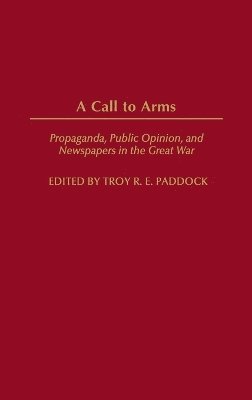
World War I highlighted the influence of newspapers in rousing and maintaining public support for the war effort. Discussions of the role of the press in the Great War have, to date, largely focused on atrocity stories. This book offers the first comparative analysis of how newspapers in Great Britain, France, Russia, Germany, and Austria-Hungary attempted to define war, its objectives, and the enemy. Presented country-by-country, expert essays examine, through use of translated articles from the contemporary press, how newspapers of different nations defined the war for their readership and the ideals they used to justify a war and support governments that some segments of the press had opposed just a few months earlier.During the opening months of the war, governments attempted to influence public opinion functioned in a largely negative fashion, for example, the censoring of military information or criticisms of government policies. There was little effort to provide a positive message to sway readers. As a result, newspapers had a relatively free hand in justifying the war and the reasons for their respective nation's involvement. Partisan politics was a staple of the pre-war press; thus, newspapers could and did define the war in terms that reflected their own political ideals and agenda. Conservative, liberal, and socialist newspapers all largely supported the war (the ones that did not were shut down immediately), but they did so for different reasons and hoped for different outcomes if their side was victorious.
833 kr
Skickas inom 10-15 vardagar
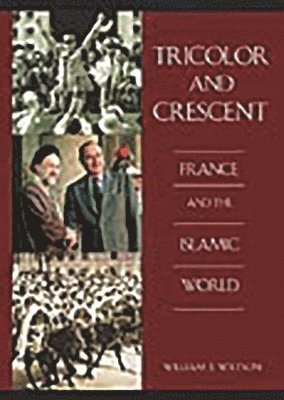
For 1,400 years, France has been in contact with Islam and Muslim populations. This study explores their long relationship and history, examining in particular the expansion and contraction of France's Islamic Empire throughout the 20th century. This modern empire essentially consisted of conquered territories inhabited by Muslims and administered by Frenchmen. Thus far, France has avoided a September 11-type terrorist attack despite the intra-country presence of Muslim terrorist groups like the Roubaix gang and Bin Laden's al-Qa'ida. Other Western countries can learn a great deal from France's long and varied experiences.Watson addresses the origins of Franco-Muslim contact and details early cases of French expansion into the Islamic world. The bulk of the book, however, focuses on the creation of the modern French Empire in Saharan and Sudannic Africa, as well as in Syria and the Lebanese Mandates, during the New Imperialism of the 19th and 20th centuries. Features include a selection of pertinent documents that illustrate the extent of French involvement with the Islamic world.
1 039 kr
Skickas inom 10-15 vardagar
What makes up a capital city? In this first comprehensive look at the architectural and urban visions for a European capital, Hein examines how these visions compare to the reality of the three headquarter cities for the European Union: Strasbourg, Luxembourg, and Brussels. Tracing the history of the EU and its creation of the new political entity of the polycentric capital, Hein explores the impact that European unification has on visionary projects and the transformation of EU member cities. Widely researched, the book also brings in architectural projects that have remained largely unknown until now.Using architectural and urban history as a lens, Hein examines the past five decades of European unification. Also analyzed for the first time are the debates, plans, projects, and constructions—both realized and failed—that accompanied this process. Looking to the future, Hein asserts that the task of these three capital cities is to balance the needs of a collective Europe with national, local, and—increasingly—regional demands.