Carola Hein - Böcker
Visar alla böcker från författaren Carola Hein. Handla med fri frakt och snabb leverans.
13 produkter
13 produkter
1 039 kr
Skickas inom 10-15 vardagar
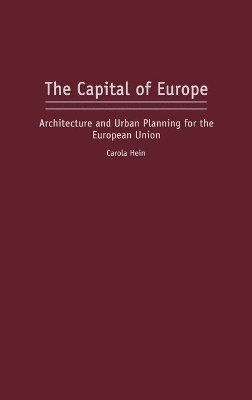
What makes up a capital city? In this first comprehensive look at the architectural and urban visions for a European capital, Hein examines how these visions compare to the reality of the three headquarter cities for the European Union: Strasbourg, Luxembourg, and Brussels. Tracing the history of the EU and its creation of the new political entity of the polycentric capital, Hein explores the impact that European unification has on visionary projects and the transformation of EU member cities. Widely researched, the book also brings in architectural projects that have remained largely unknown until now.Using architectural and urban history as a lens, Hein examines the past five decades of European unification. Also analyzed for the first time are the debates, plans, projects, and constructions—both realized and failed—that accompanied this process. Looking to the future, Hein asserts that the task of these three capital cities is to balance the needs of a collective Europe with national, local, and—increasingly—regional demands.
1 105 kr
Skickas inom 10-15 vardagar
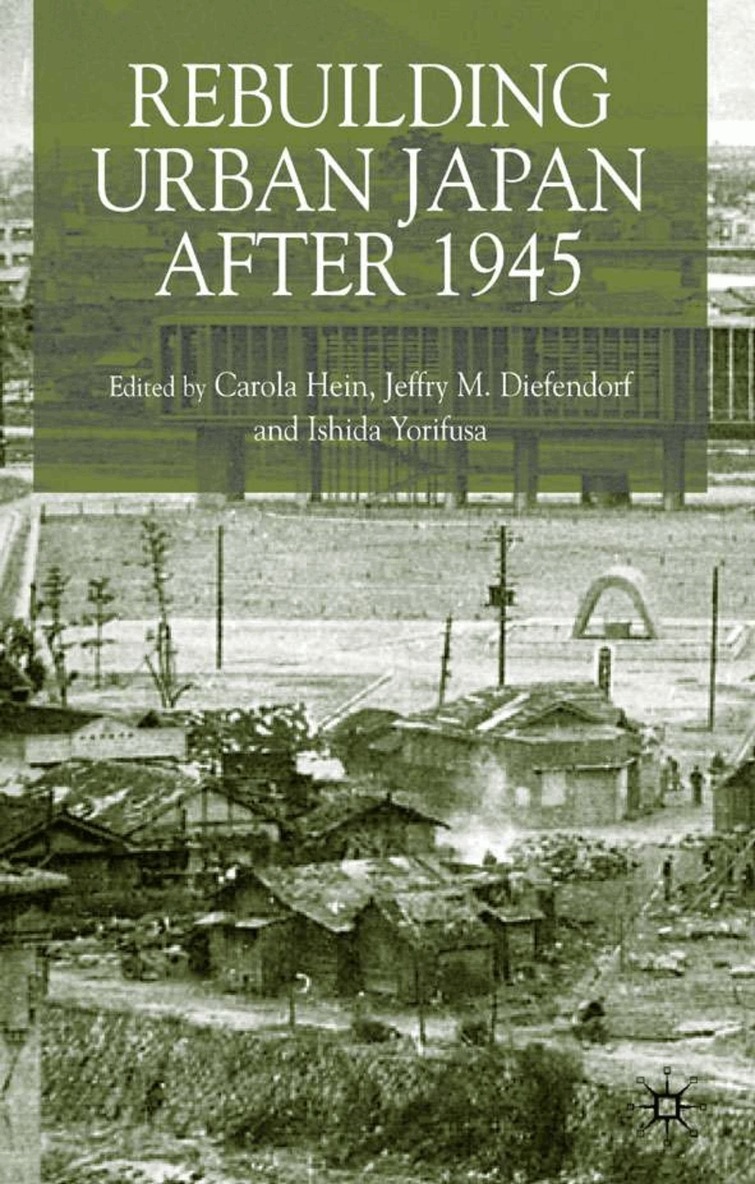
Examining the reconstruction of Japan's bombed cities after World War II, this volume presents five case studies (of Tokyo, Hiroshima, Osaka, Okinawa and Nagaoka) which are framed by broader essays on the evolution of Japanese planning and architecture, Japan's urban policies in Manchuria and comparisons between Japanese and European reconstruction. It should be of interest to Japan specialists and also for those interested in urban history and planing anywhere.
553 kr
Skickas inom 10-15 vardagar
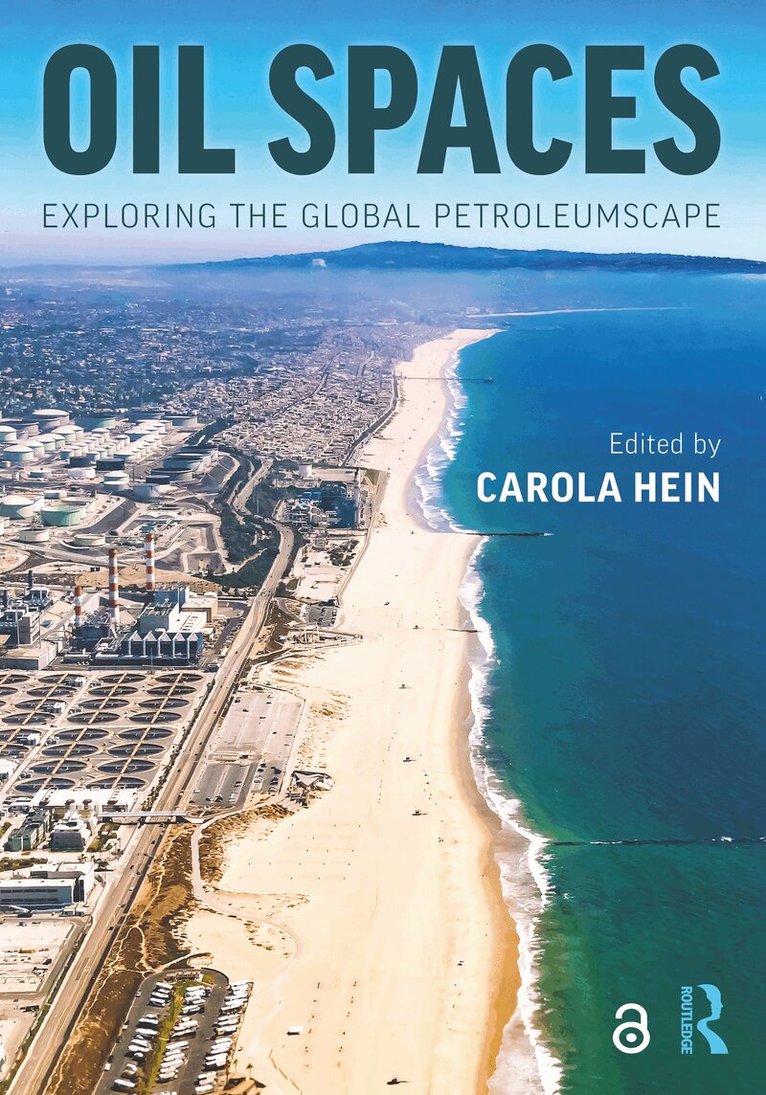
Oil Spaces traces petroleum’s impact through a range of territories from across the world, showing how industrially drilled petroleum and its refined products have played a major role in transforming the built environment in ways that are often not visible or recognized. Over the past century and a half, industrially drilled petroleum has powered factories, built cities, and sustained nation-states. It has fueled ways of life and visions of progress, modernity, and disaster.In detailed international case studies, the contributors consider petroleum’s role in the built environment and the imagination. They study how petroleum and its infrastructure have served as a source of military conflict and political and economic power, inspiring efforts to create territories and reshape geographies and national boundaries. The authors trace ruptures and continuities between colonial and postcolonial frameworks, in locations as diverse as Sumatra, northeast China, Brazil, Nigeria, Tanzania, and Kuwait as well as heritage sites including former power stations in Italy and the port of Dunkirk, once a prime gateway through which petroleum entered Europe.By revealing petroleum’s role in organizing and imagining space globally, this book takes up a key task in imagining the possibilities of a post-oil future. It will be invaluable reading to scholars and students of architectural and urban history, planning, and geography of sustainable urban environments.
2 103 kr
Skickas inom 10-15 vardagar
Oil Spaces traces petroleum’s impact through a range of territories from across the world, showing how industrially drilled petroleum and its refined products have played a major role in transforming the built environment in ways that are often not visible or recognized. Over the past century and a half, industrially drilled petroleum has powered factories, built cities, and sustained nation-states. It has fueled ways of life and visions of progress, modernity, and disaster.In detailed international case studies, the contributors consider petroleum’s role in the built environment and the imagination. They study how petroleum and its infrastructure have served as a source of military conflict and political and economic power, inspiring efforts to create territories and reshape geographies and national boundaries. The authors trace ruptures and continuities between colonial and postcolonial frameworks, in locations as diverse as Sumatra, northeast China, Brazil, Nigeria, Tanzania, and Kuwait as well as heritage sites including former power stations in Italy and the port of Dunkirk, once a prime gateway through which petroleum entered Europe.By revealing petroleum’s role in organizing and imagining space globally, this book takes up a key task in imagining the possibilities of a post-oil future. It will be invaluable reading to scholars and students of architectural and urban history, planning, and geography of sustainable urban environments.
724 kr
Skickas inom 10-15 vardagar
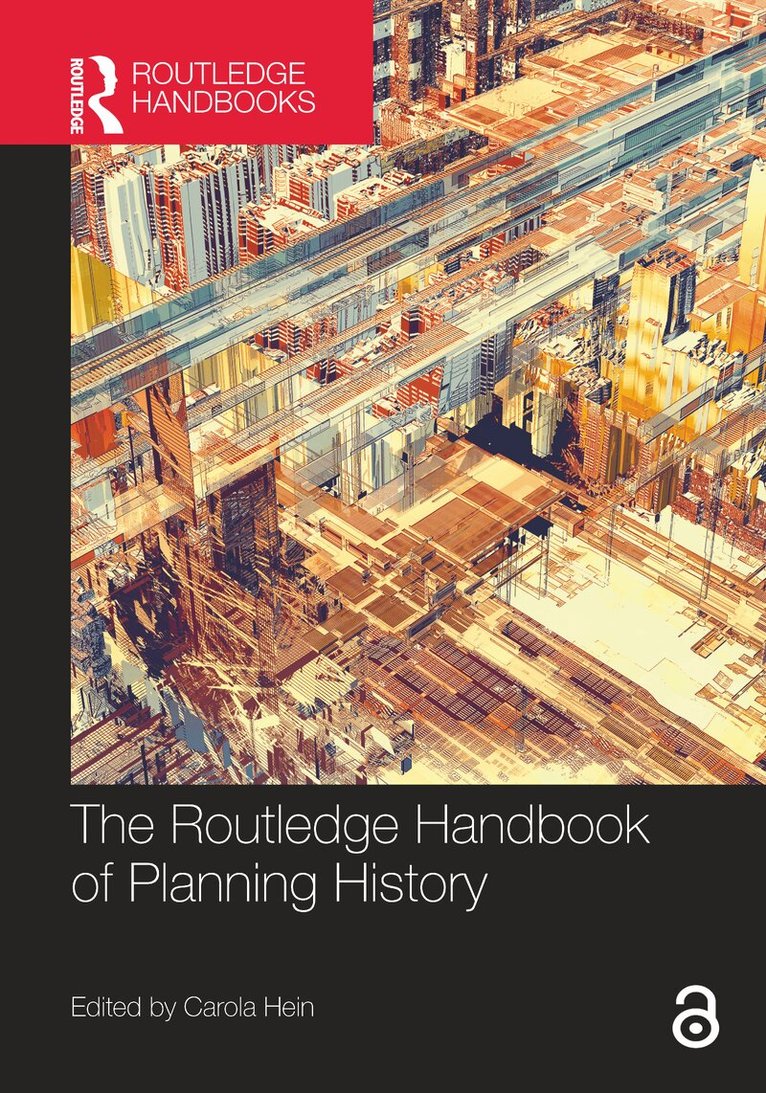
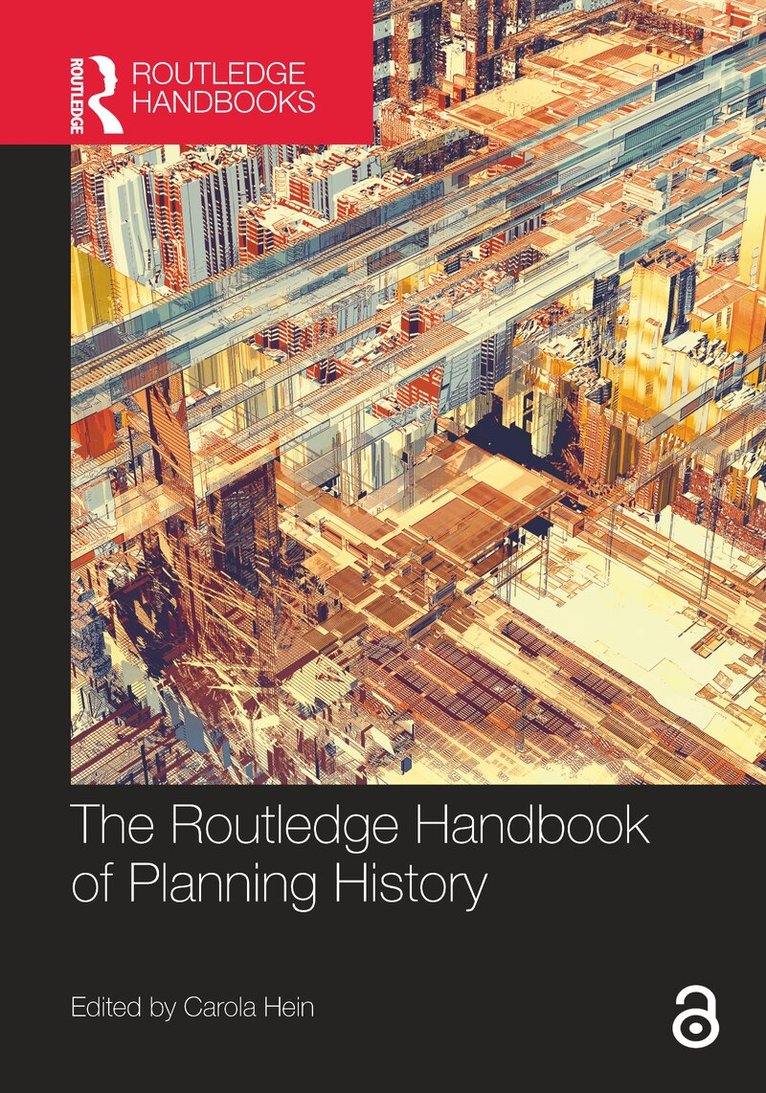
2018 IPHS Special Book Prize Award Recipient The Routledge Handbook of Planning History offers a comprehensive interdisciplinary overview of planning history since its emergence in the late 19th century, investigating the history of the discipline, its core writings, key people, institutions, vehicles, education, and practice. Combining theoretical, methodological, historical, comparative, and global approaches to planning history, The Routledge Handbook of Planning History explores the state of the discipline, its achievements and shortcomings, and its future challenges. A foundation for the discipline and a springboard for scholarly research, The Routledge Handbook of Planning History explores planning history on an international scale in thirty-eight chapters, providing readers with unique opportunities for comparison. The diverse contributions open up new perspectives on the many ways in which contemporary events, changing research needs, and cutting-edge methodologies shape the writing of planning history.
2 170 kr
Skickas inom 10-15 vardagar
Adding a new perspective to the current literature on decentralization in Japan, Cities, Autonomy and Decentralization in Japan, approaches the subject from an urban studies and planning approach. The essays in the collection present a cogent compilation of case studies focusing on the past, present and future of decentralization in Japan. These include small scale development in the fields such as citizen participation (machizukuri), urban form and architecture, disaster prevention and conservation of monuments.The contributors suggest that new trends are emerging after the bursting of Japan's economic bubble and assess them in the context of the country's larger socio-political system. This in-depth analysis of the development outside of Japan provides a valuable addition to students of Urban, Asian and Japanese Studies.
676 kr
Skickas inom 10-15 vardagar
Adding a new perspective to the current literature on decentralization in Japan, Cities, Autonomy and Decentralization in Japan, approaches the subject from an urban studies and planning approach. The essays in the collection present a cogent compilation of case studies focusing on the past, present and future of decentralization in Japan. These include small scale development in the fields such as citizen participation (machizukuri), urban form and architecture, disaster prevention and conservation of monuments.The contributors suggest that new trends are emerging after the bursting of Japan's economic bubble and assess them in the context of the country's larger socio-political system. This in-depth analysis of the development outside of Japan provides a valuable addition to students of Urban, Asian and Japanese Studies.
2 653 kr
Skickas inom 10-15 vardagar
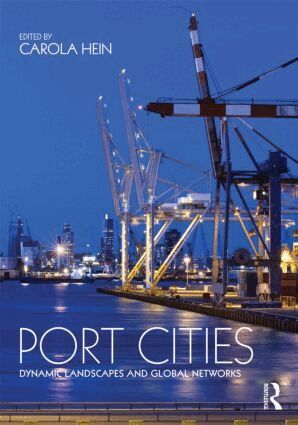
Ports have been and continue to be critical in not just the global movement of goods, but also the global movement of ideas, social change, and cultural phenomena, including architecture and urban form. The connected points of a multi-faceted network, ports profoundly affect both each other and the cities and regions to which they belong. Shipping and trade networks have created a legacy embodied in the street patterns, land use and buildings of interconnected port cities. Multiple forces are at play: technological requirements, elite preferences and working class needs, urban policy and globalization. Port Cities brings together original scholarship by both well-published and younger scholars from multiple disciplines and builds upon long-standing research on the international exchange of architectural and planning ideas. A carefully selected series of essays examines comprehensively and globally the changing built and urban environment of selected port cities. They explore similarities, dissimilarities, and how sea-based networking has influenced urban landscapes and architecture, socio-economic and cultural development from the nineteenth to the twenty-first centuries. The first section examines global networks linking ports and cities and explores the effect of inter-continental transfers on architecture and planning. The second part focuses on interconnected port cities in regional contexts, analyzing socio-economic structures and urban and built form. The third section examines the built environment of selected cities in view of their response to changing technology, transforming socio-economic networks and political contexts, as well as evolving design concepts. Overall, the book proposes a networked analysis of the built and urban environment, arguing that international maritime networks are paradigmatic for the creation of dynamic, multi-scaled, and interconnected "port cityscapes."
780 kr
Skickas inom 10-15 vardagar
Ports have been and continue to be critical in not just the global movement of goods, but also the global movement of ideas, social change, and cultural phenomena, including architecture and urban form. The connected points of a multi-faceted network, ports profoundly affect both each other and the cities and regions to which they belong. Shipping and trade networks have created a legacy embodied in the street patterns, land use and buildings of interconnected port cities. Multiple forces are at play: technological requirements, elite preferences and working class needs, urban policy and globalization. Port Cities brings together original scholarship by both well-published and younger scholars from multiple disciplines and builds upon long-standing research on the international exchange of architectural and planning ideas. A carefully selected series of essays examines comprehensively and globally the changing built and urban environment of selected port cities. They explore similarities, dissimilarities, and how sea-based networking has influenced urban landscapes and architecture, socio-economic and cultural development from the nineteenth to the twenty-first centuries. The first section examines global networks linking ports and cities and explores the effect of inter-continental transfers on architecture and planning. The second part focuses on interconnected port cities in regional contexts, analyzing socio-economic structures and urban and built form. The third section examines the built environment of selected cities in view of their response to changing technology, transforming socio-economic networks and political contexts, as well as evolving design concepts. Overall, the book proposes a networked analysis of the built and urban environment, arguing that international maritime networks are paradigmatic for the creation of dynamic, multi-scaled, and interconnected "port cityscapes."
3 280 kr
Skickas inom 10-15 vardagar
2018 IPHS Special Book Prize Award RecipientThe Routledge Handbook of Planning History offers a comprehensive interdisciplinary overview of planning history since its emergence in the late 19th century, investigating the history of the discipline, its core writings, key people, institutions, vehicles, education, and practice. Combining theoretical, methodological, historical, comparative, and global approaches to planning history, The Routledge Handbook of Planning History explores the state of the discipline, its achievements and shortcomings, and its future challenges.A foundation for the discipline and a springboard for scholarly research, The Routledge Handbook of Planning History explores planning history on an international scale in thirty-eight chapters, providing readers with unique opportunities for comparison. The diverse contributions open up new perspectives on the many ways in which contemporary events, changing research needs, and cutting-edge methodologies shape the writing of planning history.The Open Access version of this book, available at http://www.taylorfrancis.com, has been made available under a Creative Commons Attribution (CC-BY) 4.0 license.
535 kr
Skickas inom 10-15 vardagar
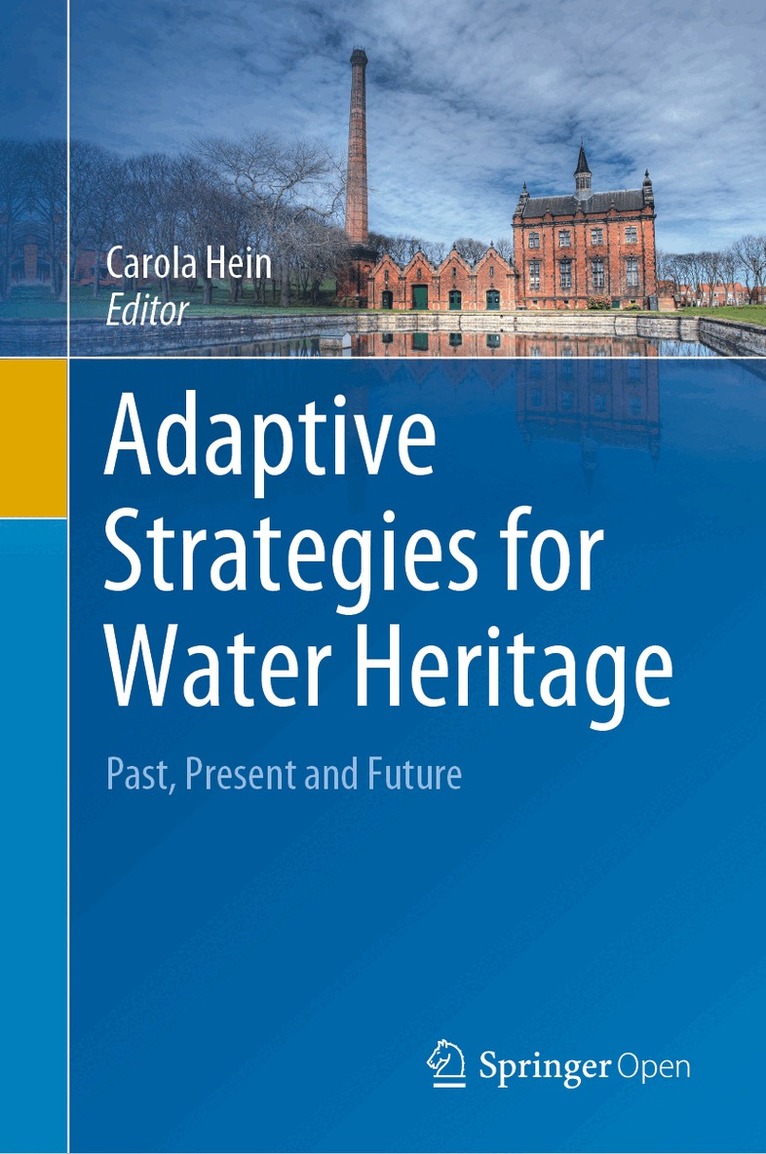
This Open Access book, building on research initiated by scholars from the Leiden-Delft-Erasmus Centre for Global Heritage and Development (CHGD) and ICOMOS Netherlands, presents multidisciplinary research that connects water to heritage.
760 kr
Skickas inom 3-6 vardagar
The digital transformation is accompanied by two simultaneous processes: digital humanities challenging the humanities, their theories, methodologies and disciplinary identities and pushing computer science to get involved in new fields. But how can qualitative and quantitative methods be usefully combined in one research project? What are the theoretical and methodological principles across all disciplinary digital approaches? This volume focusses on driving innovation and conceptualising the humanities in the 21st century. Building on the results of 10 research projects, it serves as a useful tool for designing cutting-edge research that goes beyond conventional strategies.
571 kr
Skickas inom 7-10 vardagar
This publication accompanies the exhibition "Transform! Design and the Future of Energy" at the Vitra Design Museum. Energy is the central driving force of our society; Energy is political; Energy is invisible. But all buildings, infrastructure and products with which energy is generated, distributed and used are designed. Design must therefore also play a central role in urgently needed energy transition. This publication accompanying the exhibition “Transform! Designing the Future of Energy" explores the current, radical transformation of the energy sector from a design perspective: from products that harvest renewable energies to the design of solar houses and wind turbines, from intelligent mobility concepts to future visions of self-sufficient cities. It sheds light on the global thirst for energy and asks critical questions: How can design contribute to making greater use of renewable energies and to reducing our energy consumption?