• Fri frakt över 249 kr
  • •
  • Snabba leveranser
  • •
  • Billiga böcker
Kundservice

Du är på sajten för privatpersoner.

Företag, bibliotek eller offentlig verksamhet?

Du handlar på classic.bokus.com, där alla dina funktioner finns intakta.
Till classic.bokus.com
Bokus logotyp. Gå till startsidan.
  • Erbjudanden
  • Nyheter
  • Student
  • Topplistor
  • Barn & ungdom
  • Bokus Play
  • E-böcker
  • Pocketböcker
  • Spel & pussel

10% rabatt på allt med kod: NYSTART10 →

Sidfot

Mina sidor

    Hjälp

    • Kundservice
    • Vanliga frågor och svar
    • Frakt och leverans
    • Retur vid ångerrätt
    • Reklamera vara
    • Betalning
    • Köpvillkor
    • Allmänna villkor
    • Information om webbplatsens tillgänglighet

    Om Bokus

    • Om oss
    • Pressrum
    • För studenter
    • För företag
    • För bibliotek och offentlig verksamhet
    • För leverantörer
    • Hållbarhet

    Populärt

    • Aktuella erbjudanden
    • Presentkort
    • Studentlitteratur
    • Nya böcker
    • Topplistor
    • Signerade böcker
    • Engelska böcker

    Inspiration

    • Boktips
    • BookTok
    • Populära bokserier
    • Barnbokskaraktärer
    • Populära författare
    Logotyp för Bokus
    Följ oss på Facebook (extern länk)Följ oss på Instagram (extern länk)Följ oss på YouTube (extern länk)Följ oss på TikTok (extern länk)
    bokus @ CookiesAnpassa cookiesIntegritetspolicyKöpvillkor
    Till Citymail hemsida (extern länk)Till Budbee hemsida (extern länk)Till Postnord hemsida (extern länk)Till Schenker hemsida (extern länk)Till Early Bird hemsida (extern länk)Till Walleys hemsida (extern länk)
    1. Samhälle och politik
    2. Samhälle och kultur
    3. Kultur och medier
    4. Kulturvetenskap

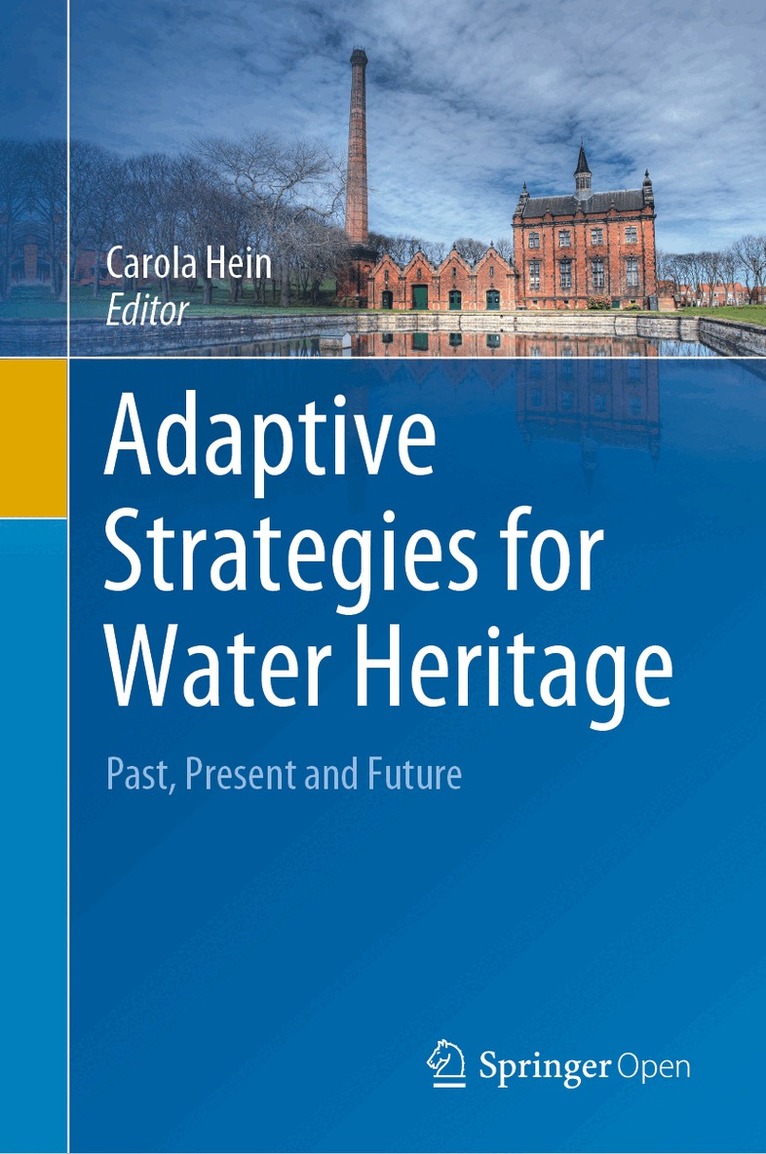
    Adaptive Strategies for Water Heritage

    Past, Present and Future

    AvCarola Hein

    Inbunden, Engelska, 2019

    547 kr

    Beställningsvara. Skickas inom 10-15 vardagar. Fri frakt över 249 kr.

    Beskrivning

    This Open Access book, building on research initiated by scholars from the Leiden-Delft-Erasmus Centre for Global Heritage and Development (CHGD) and ICOMOS Netherlands, presents multidisciplinary research that connects water to heritage. Through twenty-one chapters it explores landscapes, cities, engineering structures and buildings from around the world. It describes how people have actively shaped the course, form and function of water for human settlement and the development of civilizations, establishing socio-economic structures, policies and cultures; a rich world of narratives, laws and practices; and an extensive network of infrastructure, buildings and urban form. The book is organized in five thematic sections that link practices of the past to the design of the present and visions of the future: part I discusses drinking water management; part II addresses water use in agriculture; part III explores water management for land reclamation and defense;part IV examines river and coastal planning; and part V focuses on port cities and waterfront regeneration. Today, the many complex systems of the past are necessarily the basis for new systems that both preserve the past and manage water today: policy makers and designers can work together to recognize and build on the traditional knowledge and skills that old structure embody. This book argues that there is a need for a common agenda and an integrated policy that addresses the preservation, transformation and adaptive reuse of historic water-related structures. Throughout, it imagines how such efforts will help us develop sustainable futures for cities, landscapes and bodies of water.

    Produktinformation

    • Utgivningsdatum:2019-10-29
    • Mått:155 x 235 x 23 mm
    • Vikt:900 g
    • Format:Inbunden
    • Språk:Engelska
    • Antal sidor:435
    • Förlag:Springer Nature Switzerland AG
    • ISBN:9783030002671

    Utforska kategorier

    • Kulturvetenskap inom Samhälle och politik
    • Miljövetenskap och miljöpolitik inom Naturvetenskap och teknik
    • Regional planering inom Naturvetenskap och teknik

    Innehållsförteckning

    • Introduction: Connecting Water and Heritage for the Future.- PART I: Drinking Water.- Silent and Unseen: Stewardship of Water Infrastructural Heritage.- The Qanat System: A Reflection on the Heritage of the Extraction of Hidden Waters.- Studying Ancient Water Management in Monte Albán, Mexico, to Solve Water Issues, Improve Urban Living, and Protect Heritage in the Present.- Thirsty Cities: Learning from Dutch Water Supply Heritage.- PART II: Agricultural Water.- Water Meadows as European Agricultural Heritage.- Holler Colonies and the Altes Land: A vivid example of the importance of European intangible and tangible heritage.- Archaic Water: the role of a legend in constructing the water management heritage of Sanbonkihara, Japan.- How Citizens Reshaped a Plan for an Aerotropolis and Preserved the Water Heritage System of the Taoyuan Tableland.- PART III: Land Reclamation and Defense.- Reassessing Heritage: Contradiction and Discrepancy between Fishery and Agriculture in planning the Hachirogata Polder and its Surrounding Lagoon in Mid-20th Century Japan.- The Noordoostpolder: A landscape planning perspective on the preservation and development of 20th century polder landscapes in the Netherlands.- Europolders A European program on polder landscape, heritage, and innovation.- Hold the Line: The transformation of the New Dutch Waterline and the Future Possibilities of Heritage River and Coastal Planning.- PART IV: River and Coastal Planning.- ‘Absent-present’ heritage: the cultural heritage of dwelling on the Changjian (Yangtze) River.- Neglected and undervalued cultural heritage: Waterfronts and riverbanks of Alblasserwaard, the Netherlands.- Room for the River: Trend, Break, or Tradition? The Case of the Noordwaard.- Heritage in European Coastal Landscapes – Four Reasons for Interregional Knowledge Exchange.- PART V: Port Cities and Waterfronts.- The Impact of Planning Reform on Water-related Heritage Values and on Recalling Collective Maritime Identity of PortCities: The Case of Rotterdam.- From HERITAGE to HERITAJE: How economic path dependencies in the Caribbean cruise destinations are distorting the uses of heritage architecture and urban form.- Using Heritage to Develop Sustainable Port-City Relationships: Lisbon’s shift from Object-based to Landscape Approaches.-  Towards A Cultural Heritage of Adaptation: A plea to embrace the heritage of a culture of risk, vulnerability and adaptation.