Philosophy and Cultural Identity - Böcker
Visar alla böcker i serien Philosophy and Cultural Identity. Handla med fri frakt och snabb leverans.
8 produkter
8 produkter
Against Individualism
A Confucian Rethinking of the Foundations of Morality, Politics, Family, and Religion
Inbunden, Engelska, 2015
1 343 kr
Skickas inom 10-15 vardagar
The first part of Against Individualism: A Confucian Rethinking of the Foundations of Morality, Politics, Family, and Religion is devoted to showing how and why the vision of human beings as free, independent and autonomous individuals is and always was a mirage that has served liberatory functions in the past, but has now become pernicious for even thinking clearly about, much less achieving social and economic justice, maintaining democracy, or addressing the manifold environmental and other problems facing the world today. In the second and larger part of the book Rosemont proffers a different vision of being human gleaned from the texts of classical Confucianism, namely, that we are first and foremost interrelated and thus interdependent persons whose uniqueness lies in the multiplicity of roles we each live throughout our lives. This leads to an ethics based on those mutual roles in sharp contrast to individualist moralities, but which nevertheless reflect the facts of our everyday lives very well. The book concludes by exploring briefly a number of implications of this vision for thinking differently about politics, family life, justice, and the development of a human-centered authentic religiousness. This book will be of value to all students and scholars of philosophy, political theory, and Religious, Chinese, and Family Studies, as well as everyone interested in the intersection of morality with their everyday and public lives.
Against Individualism
A Confucian Rethinking of the Foundations of Morality, Politics, Family, and Religion
Häftad, Engelska, 2016
675 kr
Skickas inom 10-15 vardagar
The first part of Against Individualism: A Confucian Rethinking of the Foundations of Morality, Politics, Family, and Religion is devoted to showing how and why the vision of human beings as free, independent and autonomous individuals is and always was a mirage that has served liberatory functions in the past, but has now become pernicious for even thinking clearly about, much less achieving social and economic justice, maintaining democracy, or addressing the manifold environmental and other problems facing the world today. In the second and larger part of the book Rosemont proffers a different vision of being human gleaned from the texts of classical Confucianism, namely, that we are first and foremost interrelated and thus interdependent persons whose uniqueness lies in the multiplicity of roles we each live throughout our lives. This leads to an ethics based on those mutual roles in sharp contrast to individualist moralities, but which nevertheless reflect the facts of our everyday lives very well. The book concludes by exploring briefly a number of implications of this vision for thinking differently about politics, family life, justice, and the development of a human-centered authentic religiousness. This book will be of value to all students and scholars of philosophy, political theory, and Religious, Chinese, and Family Studies, as well as everyone interested in the intersection of morality with their everyday and public lives.
What Is a Public Education and Why We Need It
A Philosophical Inquiry into Self-Development, Cultural Commitment, and Public Engagement
Häftad, Engelska, 2017
541 kr
Skickas inom 10-15 vardagar
The unique mission of a public education is to reproduce a civic public. For the most part this will not happen in a vacuum and requires specific institutions, the most prominent of which are the public schools. Publicly supported schools have other functions as well. They socialize, train, produce a workforce, and, hopefully, promote individual growth and autonomy. Walter Feinberg argues that while all of these functions may be carried on by private or religious schools as well, public schools should have the additional responsibility of reproducing a civic public for a diverse pluralistic society. As Feinberg demonstrates, the problem is that in the context of neoliberal ideology, where all the other educational functions are reduced to economic ones within a market context ruled by competition—nation to nation, state to state, community to community, school to school, teacher to teacher, student to student—the public function becomes less and less central and more and more difficult to carry out. What Is a Public Education and Why We Need It suggests ways to change this by bringing the idea of a true public education back into focus.
1 142 kr
Skickas inom 10-15 vardagar
This book explores two contemporary combative views regarding the search for just families. These views arise from the conundrum of the family being seen as a supportive, nurturing “haven” versus a grievously unjust, harmful institution that violates the rights and freedoms of any individual family member. Triggered by anti-family movements, which have been inspired by the ideas of some theorists and writers, the book addresses the question: Is family destined to wither away? It challenges the radical idea that the solution to the problem of unjust families is their complete replacement by purportedly just anti-familial alternatives. Chhanda Gupta advances a distinct reformist and reconciliatory view that the expulsion of either side of the family-anti-family binary is not the answer. She seeks to syncretize the seemingly irreconcilable ideas propagated through that philosophical binary. Furthermore, she urges that the search for just families must find its answer in clarifying how the term “just” applies to the characters, behaviors, and attitudes of people who comprise actual families. The search is not for a perfectly just society or polity, or even for a perfectly just family. Instead it is a search for ways to redress the remediable injustices that occur in families, in order to benefit and uplift individuals and families and the societies in which they live.
1 276 kr
Skickas inom 10-15 vardagar
Strategic Intelligence is a form of meaning that promises the possibility of strategic advantage, dignity, the achievement of objective, and the fulfillment of potential in hostile environments. In The Cultural Roots of Strategic Intelligence Gino LaPaglia demonstrates that the strategic aspect of reason—arising in human experience, encoded as value, and born by culture as a strategic resource—has been encoded as values that have been memorialized in culturally authoritative sources in various Eurasian cultures for thousands of years. These sources have validated a strategic orientation in the world, legitimized the strategist as a heroic identity, and transmitted a coherent world view that enables the practitioner of strategy to overcome asymmetric threat. By excavating the provenance of strategic thought expressed in the cultural identity of the strategist in the most culturally authoritative mythological, literary, philosophical and religious sources, and excavating the underlying strategic values expressed in cultural products, LaPaglia demonstrates that the strategic aspect of human rationality is one of the most basic structural dynamics of human meaning, and that the transmission of this strategic way of being and acting in the world offers hope for life’s underdogs.
488 kr
Skickas inom 10-15 vardagar
Strategic Intelligence is a form of meaning that promises the possibility of strategic advantage, dignity, the achievement of objective, and the fulfillment of potential in hostile environments. In The Cultural Roots of Strategic Intelligence Gino LaPaglia demonstrates that the strategic aspect of reason—arising in human experience, encoded as value, and born by culture as a strategic resource—has been encoded as values that have been memorialized in culturally authoritative sources in various Eurasian cultures for thousands of years. These sources have validated a strategic orientation in the world, legitimized the strategist as a heroic identity, and transmitted a coherent world view that enables the practitioner of strategy to overcome asymmetric threat. By excavating the provenance of strategic thought expressed in the cultural identity of the strategist in the most culturally authoritative mythological, literary, philosophical and religious sources, and excavating the underlying strategic values expressed in cultural products, LaPaglia demonstrates that the strategic aspect of human rationality is one of the most basic structural dynamics of human meaning, and that the transmission of this strategic way of being and acting in the world offers hope for life’s underdogs.
1 142 kr
Skickas inom 10-15 vardagar
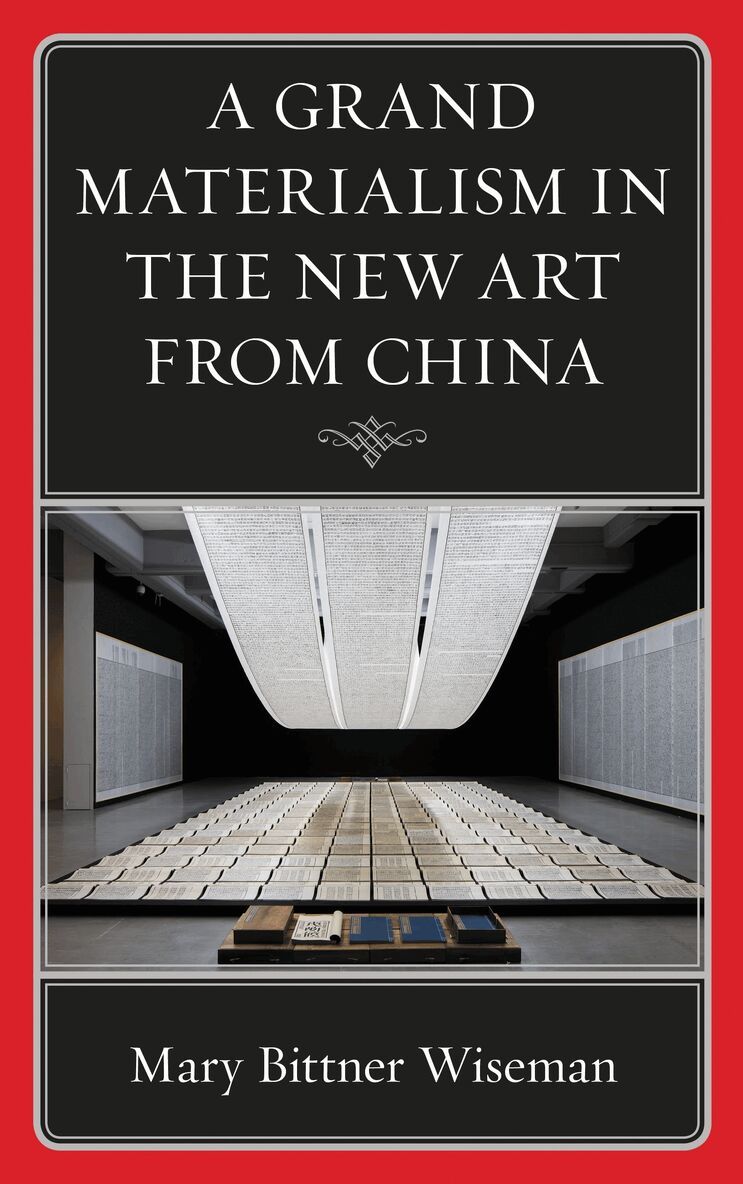
In A Grand Materialism in the New Art from China, Mary Bittner Wiseman shows that material matters in the work of Chinese artists, where the goal is to call attention to its subjects through the directness and immediacy of its material (like dust from 9/11, 1001 Chinese citizens, paintings made with gunpowder, written words) or the specificity of its sites (such as the Three Gorges Dam). Artists are working below the level of language where matter and gesture, texture and touch, instinct and intuition live. Not reduced to the words applied to them, art's subjects appear in their concrete particularity, embedded in the stories of their materials or their sites. Wiseman argues that it is global in being able to be understood by all thanks to its materials and the stories that accompany it, and the art is contemporary in having to make the case for itself that it is art. Finally, it satisfies Arthur Danto’s characterization of art as any representation that puts its subject in a new light by way of a rhetorical figure that the viewer interprets. The material art from China is the paradigm for an art that is global and contemporary.
1 476 kr
Skickas inom 10-15 vardagar
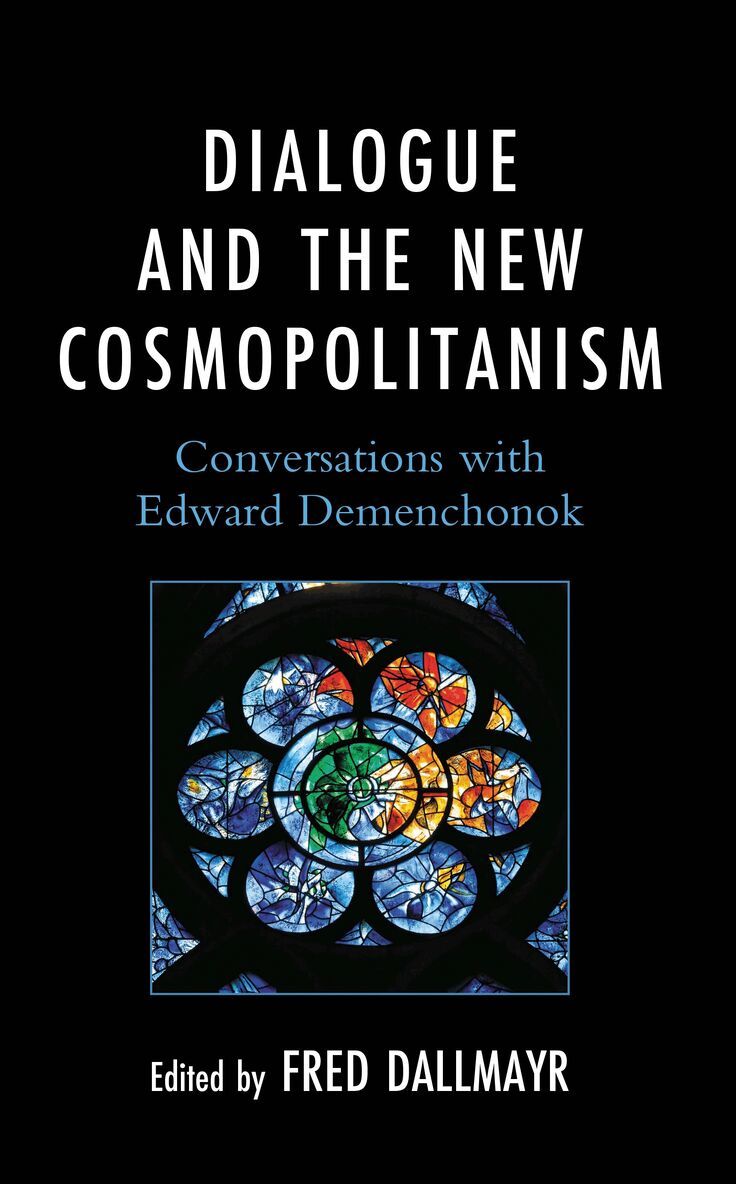
Dialogue and the New Cosmopolitanism: Conversations with Edward Demenchonok stands in opposition to the doctrine that might makes right and that the purpose of politics is to establish domination over others rather than justice and the good life for all. In the pursuit of the latter goal, the book stresses the importance of dialogue with participants who take seriously the views and interests of others and who seek to reach a fair solution. In this sense, the book supports the idea of cosmopolitanism, which—by contrast to empire—involves multi-lateral cooperation and thus the quest for a just cosmopolis. The international contributors to this volume, with their varied perspectives, are all committed to this same quest. Edited by Fred Dallmayr, the chapters take the form of conversations with Edward Demenchonok, a well-known practitioner of international and cross-cultural philosophy. The conversations are structured in parts that stress the philosophical, anthropological, cultural, and ethical dimensions of global dialogue. In our conflicted world, it is inspiring to find so many authors from different places agreeing on a shared vision.