Mary Bittner Wiseman – författare
Visar alla böcker från författaren Mary Bittner Wiseman. Handla med fri frakt och snabb leverans.
4 produkter
Ecstasies of Roland Barthes
E-bok, 2016
837 kr
Lägg i varukorg
In this book, first published in 1989, Mary Bittner Wiseman interprets Roland Barthes’s experiments as efforts to reposition the human subject with respect to language and to time in order to let the subject escape from the language of a particular culture and the present time. With her insistent …
Ecstasies of Roland Barthes
Inbunden, 2016
2879 kr
Lägg i varukorg
In this book, first published in 1989, Mary Bittner Wiseman interprets Roland Barthes’s experiments as efforts to reposition the human subject with respect to language and to time in order to let the subject escape from the language of a particular culture and the present time. With her insistent …
Ecstasies of Roland Barthes
Häftad, 2018
709 kr
Lägg i varukorg
In this book, first published in 1989, Mary Bittner Wiseman interprets Roland Barthes’s experiments as efforts to reposition the human subject with respect to language and to time in order to let the subject escape from the language of a particular culture and the present time. With her insistent …
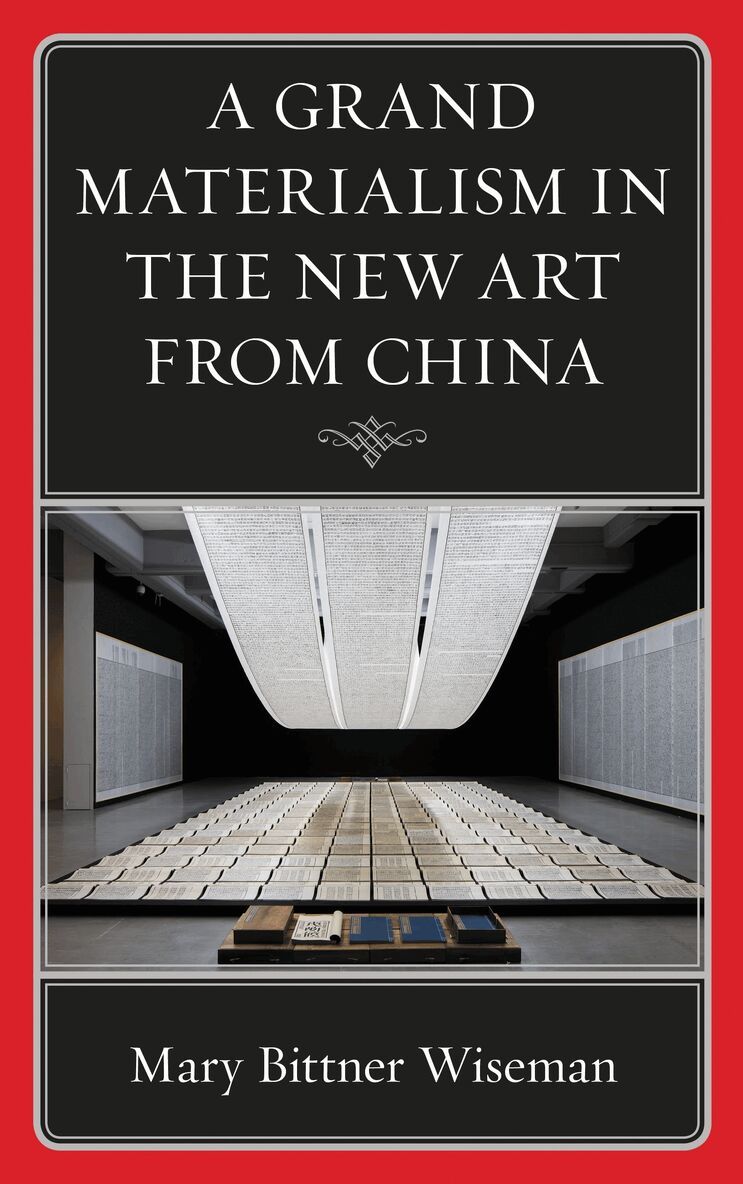
Grand Materialism in the New Art from China
Inbunden, 2020
1204 kr
Lägg i varukorg
In A Grand Materialism in the New Art from China, Mary Bittner Wiseman shows that material matters in the work of Chinese artists, where the goal is to call attention to its subjects through the directness and immediacy of its material (like dust from 9/11, 1001 Chinese citizens, paintings made …