Queer Screens - Böcker
Visar alla böcker i serien Queer Screens. Handla med fri frakt och snabb leverans.
13 produkter
13 produkter
370 kr
Skickas inom 10-15 vardagar
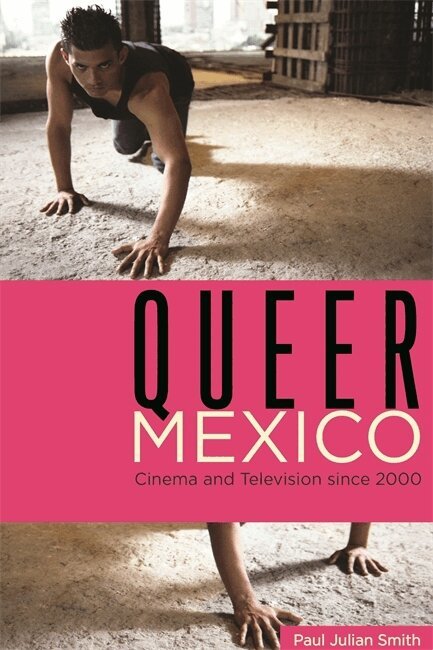
Explores the rich and varied LGBT cinema and television of Mexico since the new millennium.Queer Mexico: Cinema and Television since 2000 provides critical analysis of both mainstream and independent audiovisual works, many of them little known, produced in Mexico since the turn of the twenty-first century. In the book, author Paul Julian Smith aims to tease out the symbiotic relationship between culture and queerness in Mexico. Smith begins with the year 2000 because of the political shift that happened within the government—the Institutional Revolutionary Party (PRI) was voted out of national office after over seventy years in power. Judicial and social changes for LGBT Mexicans came in the wake of what was known at the time as simply ""the change"" (""el cambio"") at the start of the millennium, bringing about an increased visibility and acknowledgment of the LGBT community.Divided into five chapters, Queer Mexico demonstrates the diversity of both representation and production processes in the Mexican film and television industry. It attempts also to reconstruct a queer cultural field for Mexico that incorporates multiple genres and techniques. The first chapter looks at LGBT festivals, porn production, and a web-distributed youth drama, claimed by its makers to be the first wholly gay series made in Mexico. The second chapter examines selected features and shorts by Mexico’s sole internationally distributed art house director, Julián Hernández. The third chapter explores the rising genre of documentary on transgender themes. The fourth chapter charts the growing trend of a gay, lesbian, or trans-focused mainstream cinema. The final chapter addresses the rich and diverse history of queer representation in Mexico’s dominant television genre and, arguably, national narrative: the telenovela. The first book to come out of the Queer Screens series, Queer Mexico is a groundbreaking monograph for anyone interested in media or LGBT studies, especially as it relates to the culture of Latin America.
381 kr
Skickas inom 10-15 vardagar
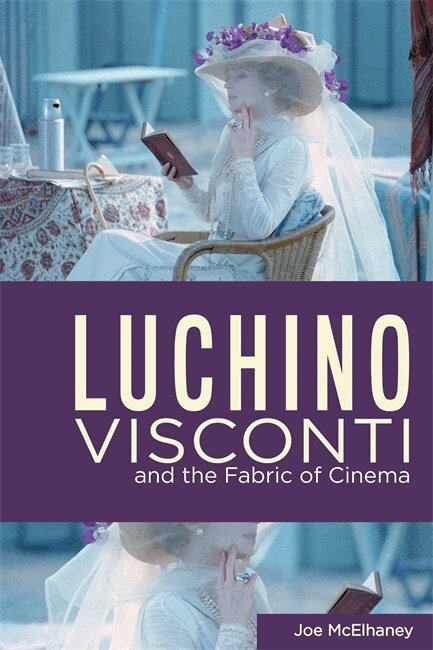
In Luchino Visconti and the Fabric of Cinema, Joe McElhaney situates Visconti's films as privileged and deeply expressive instances of a trope that McElhaney identifies as the ""cinema of fabric"": a reoccurrence in film in which textiles-clothing, curtains, tablecloths, bedsheets-determine the filming process. An Italian neorealist, Visconti emerges out of a movement immediately following WWII wherein fabric assumes crucial functions, yet Visconti's use of fabric surpasses his colleagues in many ways, including its fluid, multifaceted articulations of space and time. Visconti's homosexuality is central to this theory in that it assumes metaphoric potential in addressing ""forbidden"" sexual desires that are made visible in the films. Visconti's cinema of fabric gives voice to desires not simply for human bodies draped in fabric but also for entire environments, a world of the senses in which fabric becomes a crucial method for giving form to such desires. McElhaney examines Visconti's neorealist origins in Ossessione, La terra trema, and Rocco and His Brothers, particularly through fabric's function within literary realism and naturalism. Neorealist revisionism through the extravagant drapings of the diva film is examined in Bellissima and Senso whereas White Nights and The Stranger are examined for the theatricalizing through fabric of their literary sources. Visconti's interest in German culture vis-?á-vis The Damned, Death in Venice, and Ludwig, is articulated through a complex intertwining of fabric, aesthetics, politics, and transgressive sexual desire. Finally, Visconti's final two films, Conversation Piece and The Innocent, assess through fabric both the origins of Italian fascism and the political tensions contemporaneous with the films' productions. Fabric in Visconti is often tied to the aesthetic impulse itself in a world of visionaries attempting to dominate their surrounding environments and where a single piece of fabric may come to represent the raw material for creation. This book will tantalize any reader with a keen eye and strong interest in film and queer studies.
392 kr
Skickas inom 10-15 vardagar
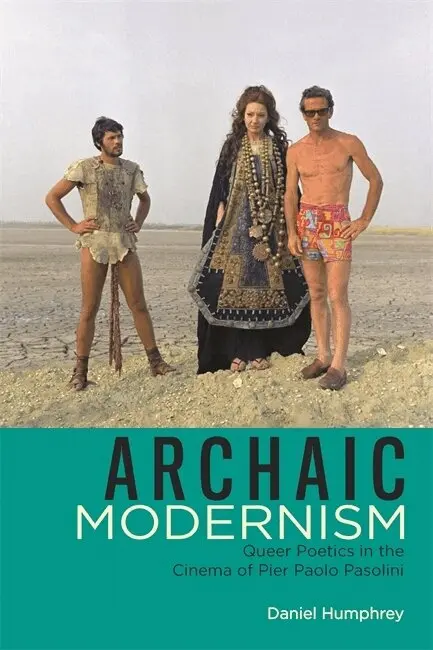
In Archaic Modernism, Daniel Humphrey offers the first book-length, English-language examination of three adaptations of Greek tragedy produced by the gay and Marxist Italian filmmaker Pier Paolo Pasolini: Oedipus Rex (1967), Medea (1969), and Notes Towards an African Orestes (1970/1973). Considering Pasolini's own theories of a "Cinema of Poetry" alongside Jacques Derrida's concept of écriture, as well as more recent scholarship by queer theory scholars advocating for an antirelational and antisocial subjectivity, Humphrey maintains that Pasolini's Greek tragedy films exemplify a paradoxical sense of "archaic modernism" that is at the very heart of the filmmaker's project. More daringly, he contends that they ultimately reveal the queer roots of Western civilization's formative texts.Archaic Modernism is comprised of three chapters. Chapter 1 focuses on Oedipus Rex, assessing both the filmic language employed and the deeply queer mythological source material that haunts the tragedy even as it remains largely at a subtextual yet palpable level. Chapter 2 extends and deepens the concept of queer fate and queer negativity in a scene-by-scene analysis of Medea. Chapter 3 looks at the most obscure of Pasolini's feature length films, Notes Towards an African Orestes, a film long misunderstood as an unwitting failure, but which could perhaps best be understood as a deliberate, sacrificial act on the filmmaker's part. Considering the film as the third in an informal, maybe unconscious, trilogy, Humphrey concludes his monograph by arguing that this "trilogy of myth" can best be understood as a deconstruction, gradually more and more severe, of three of the most important origin tales of Western civilization.Archaic Modernism makes the case that these three films are as essential as those Pasolini films more often studied in the Anglophone world: Mamma Roma, The Gospel According to Matthew, Teorema, The Trilogy of Life, and Salò, and that they are of continuing, perhaps even increasing, value today. This book is of specific interest to scholars, students, and researchers of film and queer studies.
991 kr
Skickas inom 10-15 vardagar
In Archaic Modernism, Daniel Humphrey offers the first book-length, English-language examination of three adaptations of Greek tragedy produced by the gay and Marxist Italian filmmaker Pier Paolo Pasolini: Oedipus Rex (1967), Medea (1969), and Notes Towards an African Orestes (1970/1973). Considering Pasolini's own theories of a "Cinema of Poetry" alongside Jacques Derrida's concept of écriture, as well as more recent scholarship by queer theory scholars advocating for an antirelational and antisocial subjectivity, Humphrey maintains that Pasolini's Greek tragedy films exemplify a paradoxical sense of "archaic modernism" that is at the very heart of the filmmaker's project. More daringly, he contends that they ultimately reveal the queer roots of Western civilization's formative texts.Archaic Modernism is comprised of three chapters. Chapter 1 focuses on Oedipus Rex, assessing both the filmic language employed and the deeply queer mythological source material that haunts the tragedy even as it remains largely at a subtextual yet palpable level. Chapter 2 extends and deepens the concept of queer fate and queer negativity in a scene-by-scene analysis of Medea. Chapter 3 looks at the most obscure of Pasolini's feature length films, Notes Towards an African Orestes, a film long misunderstood as an unwitting failure, but which could perhaps best be understood as a deliberate, sacrificial act on the filmmaker's part. Considering the film as the third in an informal, maybe unconscious, trilogy, Humphrey concludes his monograph by arguing that this "trilogy of myth" can best be understood as a deconstruction, gradually more and more severe, of three of the most important origin tales of Western civilization.Archaic Modernism makes the case that these three films are as essential as those Pasolini films more often studied in the Anglophone world: Mamma Roma, The Gospel According to Matthew, Teorema, The Trilogy of Life, and Salò, and that they are of continuing, perhaps even increasing, value today. This book is of specific interest to scholars, students, and researchers of film and queer studies.
1 182 kr
Skickas inom 10-15 vardagar
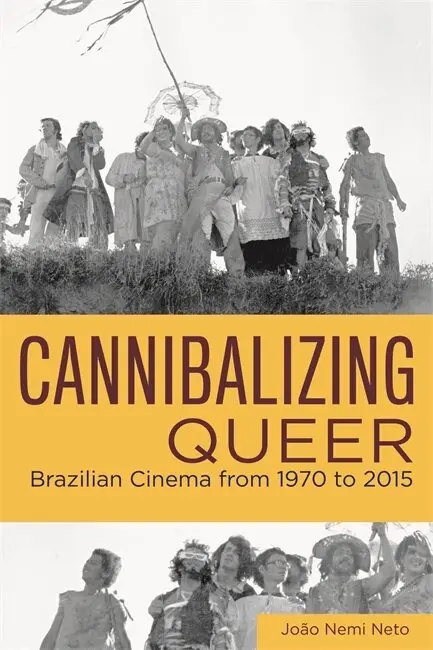
Puts forward a new, provocative history of queer cinema in Brazil.Through an analysis of contemporary Brazilian cinematic production,Cannibalizing Queer: Brazilian Cinema from 1970 to 2015 discusses which queer representations are erased and which are acknowledged in the complex processes of cultural translation, adaptation, and "devouring" that defines the Brazilian understanding of sexual dissidents and minorities. João Nemi Neto argues for Brazilian cinema studies to acknowledge the importance of 1920s modernism and of antropografia, a conceptual mode of cannibalism, to adopt and extrapolate a perverse form of absorption and raise the stakes on queer theory and postcolonialism, and to demonstrate how they are crucial to the development of a queer tradition in Brazilian cinema.In five chapters and two "trailers," Nemi Neto understands the term "queer" through its political dimensions because the films he analyzes represent characters that conform neither to American coming-out politics nor to Brazilian identity politics. Nonetheless, the films are queer precisely because the queer experiences and affection explored in these films do not necessarily insist on identifying characters as a particular sexuality or gender identity. Therefore, attention to characters within a unique cinematic world raises the stakes on several issues that hinge on cinematic form, narrative, and representation. Nemi Neto interviews and examines the work of João Silvério Trevisan and provides readings of films such as AIDS o furor do sexo explícito (AIDS the Furor of Explicit Sex, 1986), and Dzi Croquettes (2009) to theorize a productive overlap between queer and antropofagia. Moreover, the films analyzed here depict queer alternative representations to both homonormativity and heteronormativity as forms of resistance, at the same time as prejudice and heteronormativity remain present in contemporary Brazilian social practices.Graduate students and scholars of cinema and media studies, queer studies, Brazilian modernism, and Latin American studies will value what one early reader called "a point of departure for all future research on Brazilian queer cinema.
425 kr
Skickas inom 10-15 vardagar
Puts forward a new, provocative history of queer cinema in Brazil.Through an analysis of contemporary Brazilian cinematic production,Cannibalizing Queer: Brazilian Cinema from 1970 to 2015 discusses which queer representations are erased and which are acknowledged in the complex processes of cultural translation, adaptation, and "devouring" that defines the Brazilian understanding of sexual dissidents and minorities. João Nemi Neto argues for Brazilian cinema studies to acknowledge the importance of 1920s modernism and of antropografia, a conceptual mode of cannibalism, to adopt and extrapolate a perverse form of absorption and raise the stakes on queer theory and postcolonialism, and to demonstrate how they are crucial to the development of a queer tradition in Brazilian cinema.In five chapters and two "trailers," Nemi Neto understands the term "queer" through its political dimensions because the films he analyzes represent characters that conform neither to American coming-out politics nor to Brazilian identity politics. Nonetheless, the films are queer precisely because the queer experiences and affection explored in these films do not necessarily insist on identifying characters as a particular sexuality or gender identity. Therefore, attention to characters within a unique cinematic world raises the stakes on several issues that hinge on cinematic form, narrative, and representation. Nemi Neto interviews and examines the work of João Silvério Trevisan and provides readings of films such as AIDS o furor do sexo explícito (AIDS the Furor of Explicit Sex, 1986), and Dzi Croquettes (2009) to theorize a productive overlap between queer and antropofagia. Moreover, the films analyzed here depict queer alternative representations to both homonormativity and heteronormativity as forms of resistance, at the same time as prejudice and heteronormativity remain present in contemporary Brazilian social practices.Graduate students and scholars of cinema and media studies, queer studies, Brazilian modernism, and Latin American studies will value what one early reader called "a point of departure for all future research on Brazilian queer cinema.
1 059 kr
Skickas inom 10-15 vardagar
In Luchino Visconti and the Fabric of Cinema, Joe McElhaney situates Visconti's films as privileged and deeply expressive instances of a trope that McElhaney identifies as the ""cinema of fabric"": a reoccurrence in film in which textiles-clothing, curtains, tablecloths, bedsheets-determine the filming process. An Italian neorealist, Visconti emerges out of a movement immediately following WWII wherein fabric assumes crucial functions, yet Visconti's use of fabric surpasses his colleagues in many ways, including its fluid, multifaceted articulations of space and time. Visconti's homosexuality is central to this theory in that it assumes metaphoric potential in addressing ""forbidden"" sexual desires that are made visible in the films. Visconti's cinema of fabric gives voice to desires not simply for human bodies draped in fabric but also for entire environments, a world of the senses in which fabric becomes a crucial method for giving form to such desires. McElhaney examines Visconti's neorealist origins in Ossessione, La terra trema, and Rocco and His Brothers, particularly through fabric's function within literary realism and naturalism. Neorealist revisionism through the extravagant drapings of the diva film is examined in Bellissima and Senso whereas White Nights and The Stranger are examined for the theatricalizing through fabric of their literary sources. Visconti's interest in German culture vis-?á-vis The Damned, Death in Venice, and Ludwig, is articulated through a complex intertwining of fabric, aesthetics, politics, and transgressive sexual desire. Finally, Visconti's final two films, Conversation Piece and The Innocent, assess through fabric both the origins of Italian fascism and the political tensions contemporaneous with the films' productions. Fabric in Visconti is often tied to the aesthetic impulse itself in a world of visionaries attempting to dominate their surrounding environments and where a single piece of fabric may come to represent the raw material for creation. This book will tantalize any reader with a keen eye and strong interest in film and queer studies.
381 kr
Skickas inom 10-15 vardagar
Barbara Hammer: Pushing Out of the Frame by Sarah Keller explores the career of experimental filmmaker and visual artist Barbara Hammer. Hammer first garnered attention in the early 1970s for a series of films representing lesbian subjects and subjectivity. Over the five decades that followed, she made almost a hundred films and solidified her position as a pioneer of queer experimental cinema and art. In the first chapter, Keller covers Hammer's late 1960s-1970s work and explores the tensions between the representation of women's bodies and contemporary feminist theory. In the second chapter, Keller charts the filmmaker's physical move from the Bay Area to New York City, resulting in shifts in her artistic mode. The third chapter turns to Hammer's primarily documentary work of the 1990s and how it engages with the places she travels, the people she meets, and the histories she explores. In the fourth chapter, Keller then considers Hammer's legacy, both through the final films of her career-which combine the methods and ideas of the earlier decades-and her efforts to solidify and shape the ways in which the work would be remembered. In the final chapter, excerpts from the author's interviews with Hammer during the last three years of her life offer intimate perspectives and reflections on her work from the filmmaker herself. Hammer's full body of work as a case study allows readers to see why a much broader notion of feminist production and artistic process is necessary to understand art made by women in the past half century. Hammer's work-classically queer and politically feminist-presses at the edges of each of those notions, pushing beyond the frames that would not contain her dynamic artistic endeavors. Keller's survey of Hammer's work is a vital text for students and scholars of film, queer studies, and art history.
1 059 kr
Skickas inom 10-15 vardagar
Barbara Hammer: Pushing Out of the Frame by Sarah Keller explores the career of experimental filmmaker and visual artist Barbara Hammer. Hammer first garnered attention in the early 1970s for a series of films representing lesbian subjects and subjectivity. Over the five decades that followed, she made almost a hundred films and solidified her position as a pioneer of queer experimental cinema and art. In the first chapter, Keller covers Hammer's late 1960s-1970s work and explores the tensions between the representation of women's bodies and contemporary feminist theory. In the second chapter, Keller charts the filmmaker's physical move from the Bay Area to New York City, resulting in shifts in her artistic mode. The third chapter turns to Hammer's primarily documentary work of the 1990s and how it engages with the places she travels, the people she meets, and the histories she explores. In the fourth chapter, Keller then considers Hammer's legacy, both through the final films of her career-which combine the methods and ideas of the earlier decades-and her efforts to solidify and shape the ways in which the work would be remembered. In the final chapter, excerpts from the author's interviews with Hammer during the last three years of her life offer intimate perspectives and reflections on her work from the filmmaker herself. Hammer's full body of work as a case study allows readers to see why a much broader notion of feminist production and artistic process is necessary to understand art made by women in the past half century. Hammer's work-classically queer and politically feminist-presses at the edges of each of those notions, pushing beyond the frames that would not contain her dynamic artistic endeavors. Keller's survey of Hammer's work is a vital text for students and scholars of film, queer studies, and art history.
381 kr
Skickas inom 10-15 vardagar
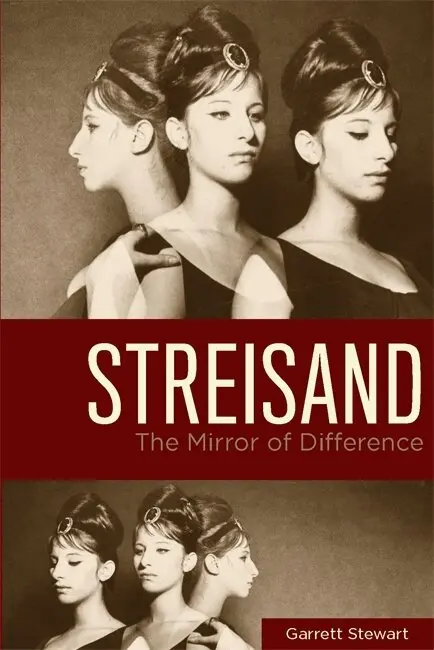
At every stage of her career, Barbra Streisand's genius finds its fullest measure in screen song, first in Emmy-winning TV specials, then in Hollywood blockbusters from Funny Girl to Funny Lady. She goes on, as emerging auteur, to direct her own "musical concepts" in A Star Is Born—before reconceiving the big-screen musical altogether in the writing as well as directing of her own starring role in Yentl ("A Film with Music"). In this intensive reading of the "actress-who-sings," Garrett Stewart notes the gender and ethnic stereotypes that Streisand shattered as the first openly Jewish superstar, while concentrating not just on the cultural difference she made but on the internal differentials of her unholy vocal gift—whose kinetic volatility shapes a kind of cinematic terrain all its own. Down through her filmed return to the concert stage, Stewart elicits the sinuous phonetic text of Streisand's on-screen musical delivery in a keenly attentive mode of audition that puts into fresh perspective the indelible aura of her stardom.
962 kr
Skickas inom 10-15 vardagar
At every stage of her career, Barbra Streisand's genius finds its fullest measure in screen song, first in Emmy-winning TV specials, then in Hollywood blockbusters from Funny Girl to Funny Lady. She goes on, as emerging auteur, to direct her own "musical concepts" in A Star Is Born—before reconceiving the big-screen musical altogether in the writing as well as directing of her own starring role in Yentl ("A Film with Music"). In this intensive reading of the "actress-who-sings," Garrett Stewart notes the gender and ethnic stereotypes that Streisand shattered as the first openly Jewish superstar, while concentrating not just on the cultural difference she made but on the internal differentials of her unholy vocal gift—whose kinetic volatility shapes a kind of cinematic terrain all its own. Down through her filmed return to the concert stage, Stewart elicits the sinuous phonetic text of Streisand's on-screen musical delivery in a keenly attentive mode of audition that puts into fresh perspective the indelible aura of her stardom.
1 028 kr
Skickas inom 10-15 vardagar
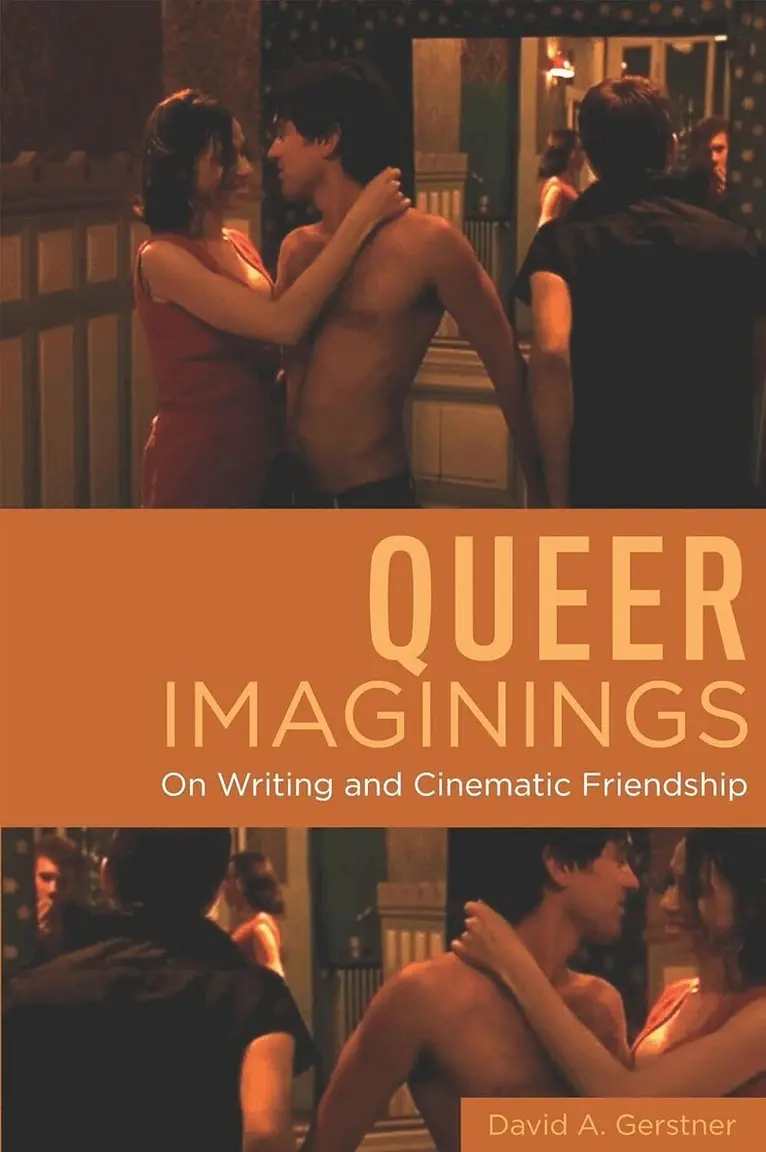
How do we identify the "queer auteur" and their queer imaginings? Is it possible to account for such a figure when the very terms "queer" and "auteur" invoke aesthetic surprises and disorientations, disconcerting ironies and paradoxes, and biographical deceits and ambiguities? In eighteen eloquent chapters, David A. Gerstner traces a history of ideas that spotlight an ever-shifting terrain associated with auteur theory and, in particular, queer-auteur theory. Engaging with the likes of Oscar Wilde, Walter Benjamin, James Baldwin, Jean Louis Baudry, Linda Nochlin, Jane Gallop, Cáel Keegan, Luce Irigaray, and other prominent critical thinkers, Gerstner contemplates how the queer auteur in film theory might open us to the work of desire.Queer Imaginings argues for a queer-auteur in which critical theory is reenabled to reconceptualize the auteur in relation to race, gender, sexuality, and desire. Gerstner succinctly defines the contours of a history and the ongoing discussions that situate queer and auteur theories in film studies. Ultimately, Queer Imaginings is a journey in shared pleasures in which writing for and about cinema makes way for unanticipated cinematic friendships.
450 kr
Skickas inom 10-15 vardagar
How do we identify the "queer auteur" and their queer imaginings? Is it possible to account for such a figure when the very terms "queer" and "auteur" invoke aesthetic surprises and disorientations, disconcerting ironies and paradoxes, and biographical deceits and ambiguities? In eighteen eloquent chapters, David A. Gerstner traces a history of ideas that spotlight an ever-shifting terrain associated with auteur theory and, in particular, queer-auteur theory. Engaging with the likes of Oscar Wilde, Walter Benjamin, James Baldwin, Jean Louis Baudry, Linda Nochlin, Jane Gallop, Cáel Keegan, Luce Irigaray, and other prominent critical thinkers, Gerstner contemplates how the queer auteur in film theory might open us to the work of desire. Queer Imaginings argues for a queer-auteur in which critical theory is reenabled to reconceptualize the auteur in relation to race, gender, sexuality, and desire. Gerstner succinctly defines the contours of a history and the ongoing discussions that situate queer and auteur theories in film studies. Ultimately, Queer Imaginings is a journey in shared pleasures in which writing for and about cinema makes way for unanticipated cinematic friendships.