RaceB4Race: Critical Race Studies of the Premodern – serie
Visar alla böcker i serien RaceB4Race: Critical Race Studies of the Premodern. Handla med fri frakt och snabb leverans.
8 produkter
8 produkter
Fictions of Consent
Slavery, Servitude, and Free Service in Early Modern England
Inbunden, Engelska, 2022
796 kr
Skickas inom 7-10 vardagar
In Fictions of Consent Urvashi Chakravarty excavates the ideologies of slavery that took root in early modern England in the period that preceded the development of an organized trade in enslaved persons.Despite the persistent fiction that England was innocent of racialized slavery, Chakravarty argues that we must hold early modern England-and its narratives of exceptional and essential freedom-to account for the frameworks of slavery that it paradoxically but strategically engendered. Slavery was not a foreign or faraway phenomenon, she demonstrates; rather, the ideologies of slavery were seeded in the quotidian spaces of English life and in the everyday contexts of England's service society, from the family to the household, in the theater and, especially, the grammar school classroom, where the legacies of classical slavery and race were inherited and negotiated. The English conscripted the Roman freedman's figurative "stain of slavery" to register an immutable sign of bondage and to secure slavery to epidermal difference, even as early modern frameworks of "volitional service" provided the strategies for later fictions of "happy slavery" in the Atlantic world. Early modern texts presage the heritability of slavery in early America, reveal the embeddedness of slavery within the family, and illuminate the ways in which bloodlines of descent underwrite the racialized futures of enslavement.Fictions of Consent intervenes in a number of areas including early modern literary and cultural studies, premodern critical race studies, the reception of classical antiquity, and the histories of law, education, and labor to uncover the conceptual genealogies of slavery and servitude and to reveal the everyday sites where the foundations of racialized slavery were laid. Although early modern England claimed to have "too pure an Air for Slaves to breathe in," Chakravarty reveals slavery was a quintessentially English phenomenon.
808 kr
Skickas inom 10-15 vardagar
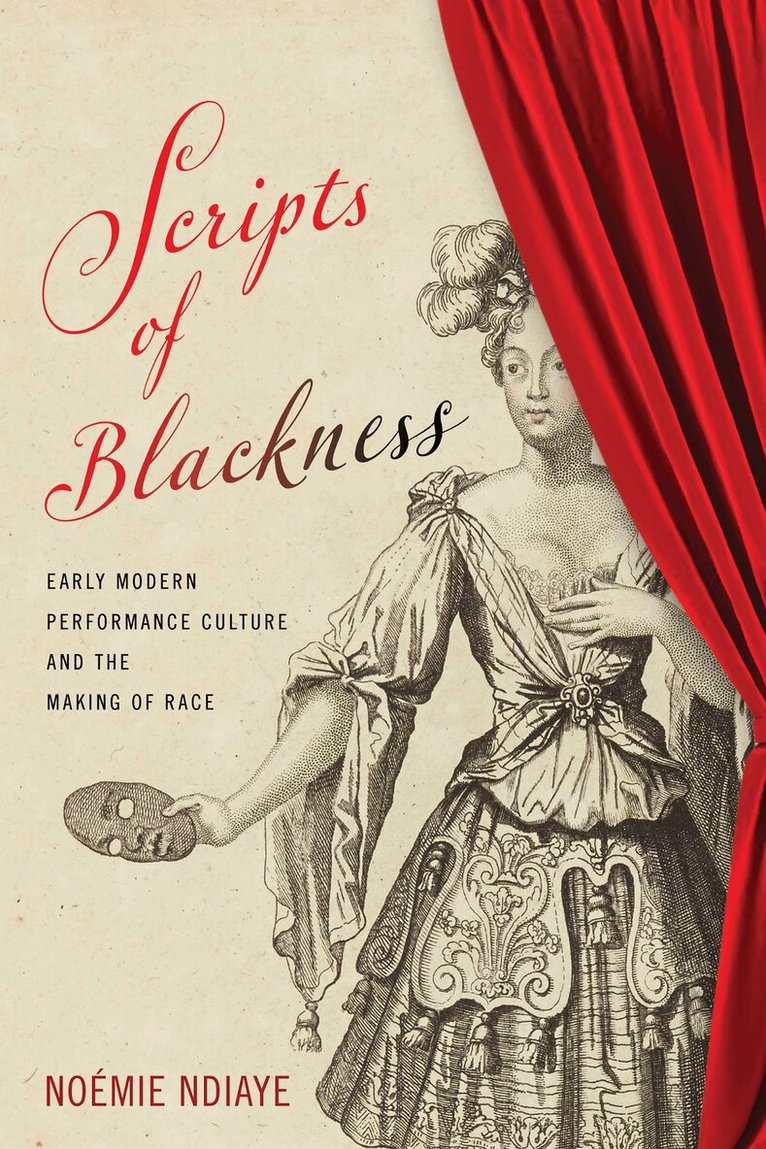
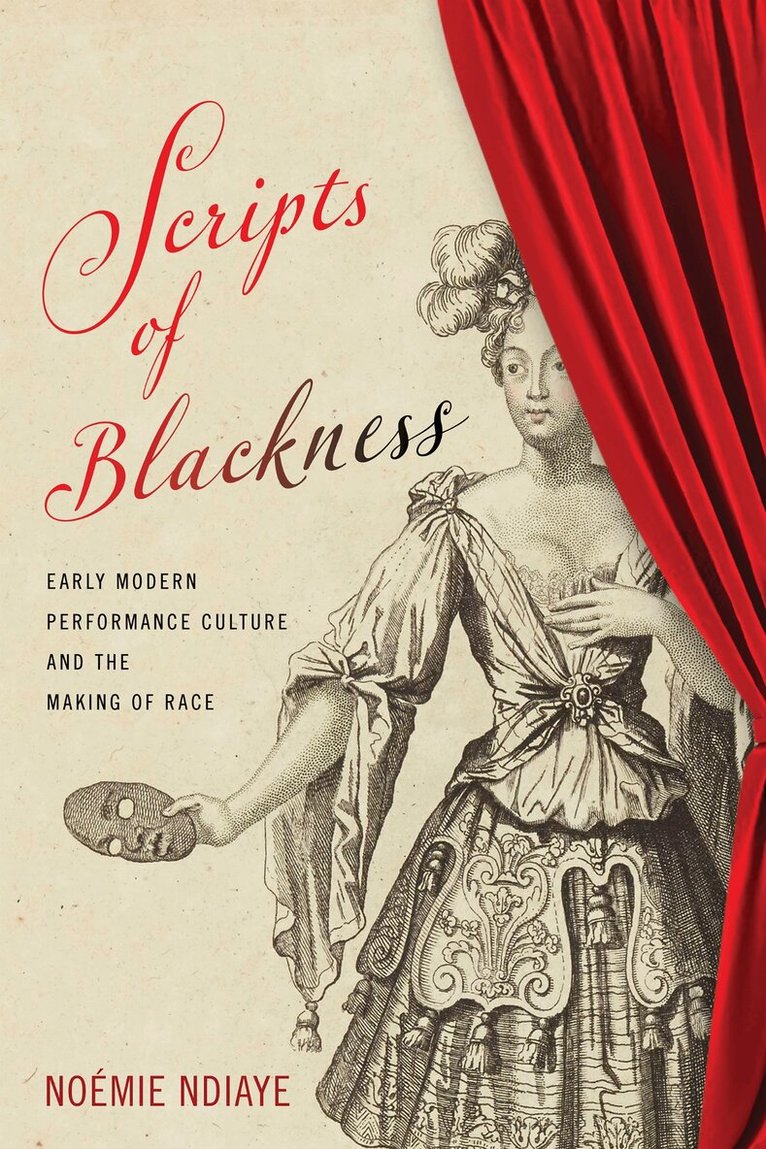
Scripts of Blackness shows how the early modern mass media of theatre and performance culture at-large helped turn blackness into a racial category, that is, into a type of difference justifying emerging social hierarchies and power relations in a new world order driven by colonialism and capitalism.In this book, Noémie Ndiaye explores the techniques of impersonation used by white performers to represent Afro-diasporic people in England, France, and Spain in the sixteenth and seventeenth centuries, using a comparative and transnational framework. She reconstructs three specific performance techniques—black-up (cosmetic blackness), blackspeak (acoustic blackness), and black dances (kinetic blackness)—in order to map out the poetics of those techniques, and track a number of metaphorical strains that early modern playtexts regularly associated with them. Those metaphorical strains, the titular scripts of blackness of this book, operated across national borders and constituted resources, as they provided spectators and participants with new ways of thinking about the Afro-diasporic people who lived or could/would ultimately live in their midst.Those scripts were often gendered and hinged on notions of demonization, exclusion, exploitation, animalization, commodification, sexualization, consensual enslavement, misogynoir, infantilization, and evocative association with other racialized minorities. Scripts of Blackness attempts to grasp the stories that Western Europeans told themselves through performative blackness, and the effects of those fictions on early modern Afro-diasporic subjects.
675 kr
Skickas inom 7-10 vardagar
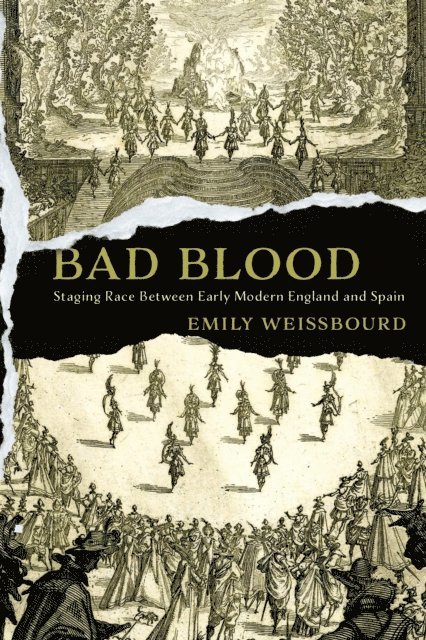
Bad Blood explores representations of race in early modern English and Spanish literature, especially drama. It addresses two different forms of racial ideology: one concerned with racialized religious difference—that is, the notion of having Jewish or Muslim "blood"—and one concerned with Blackness and whiteness. Shakespeare's Othello tells us that he was "sold to slavery" in his youth, a phrase that evokes the Atlantic triangle trade for readers today. For many years, however, scholars have asserted that racialized slavery was not yet widely understood in early modern England, and that the kind of enslavement that Othello describes is related to Christian-Muslim conflict in the Mediterranean rather than the rise of the racialized enslavement of Afro-diasporic subjects.Bad Blood offers a new account of early modern race by tracing the development of European racial vocabularies from Spain to England. Dispelling assumptions, stemming from Spain's historical exclusion of Jews and Muslims, that premodern racial ideology focused on religious difference and purity of blood more than color, Emily Weissbourd argues that the context of the Atlantic slave trade is indispensable to understanding race in early modern Spanish and English literature alike. Through readings of plays by Shakespeare, Lope de Vega, and their contemporaries, as well as Spanish picaresque fiction and its English translations, Weissbourd reveals how ideologies of racialized slavery as well as religious difference come to England via Spain, and how both notions of race operate in conjunction to shore up fantasies of Blackness, whiteness, and "pure blood." The enslavement of Black Africans, Weissbourd shows, is inextricable from the staging of race in early modern literature.
918 kr
Skickas inom 7-10 vardagar
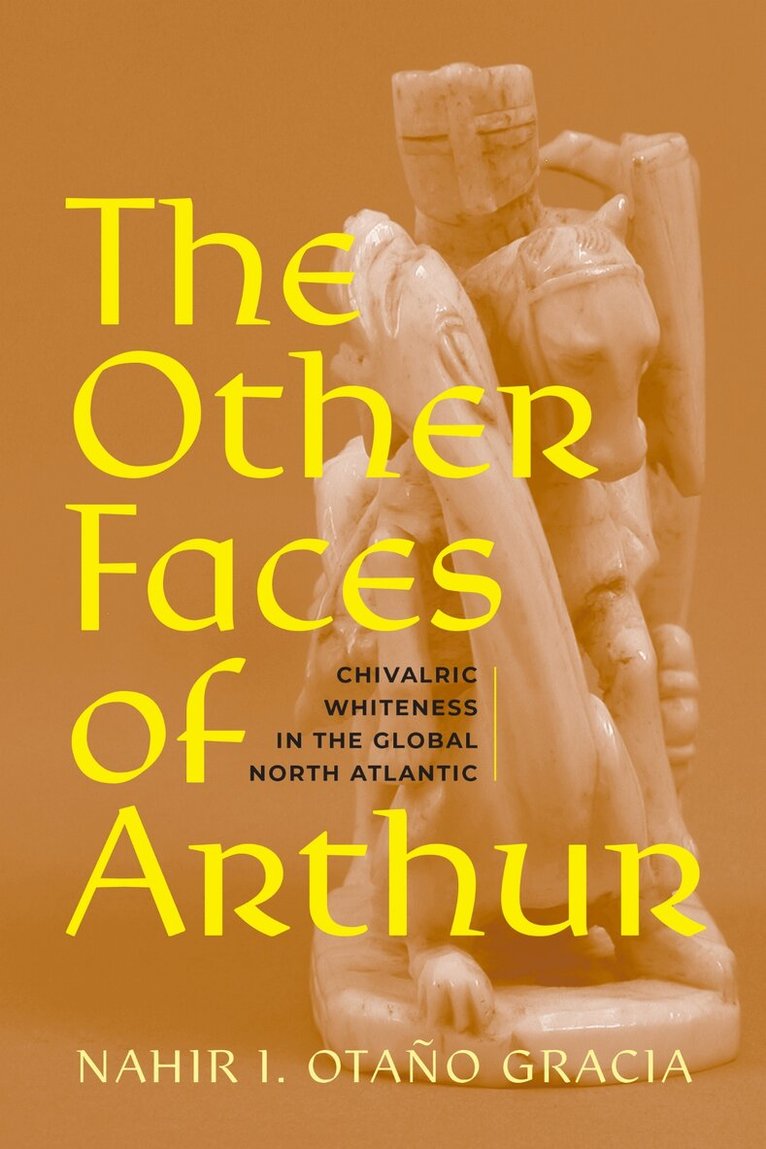
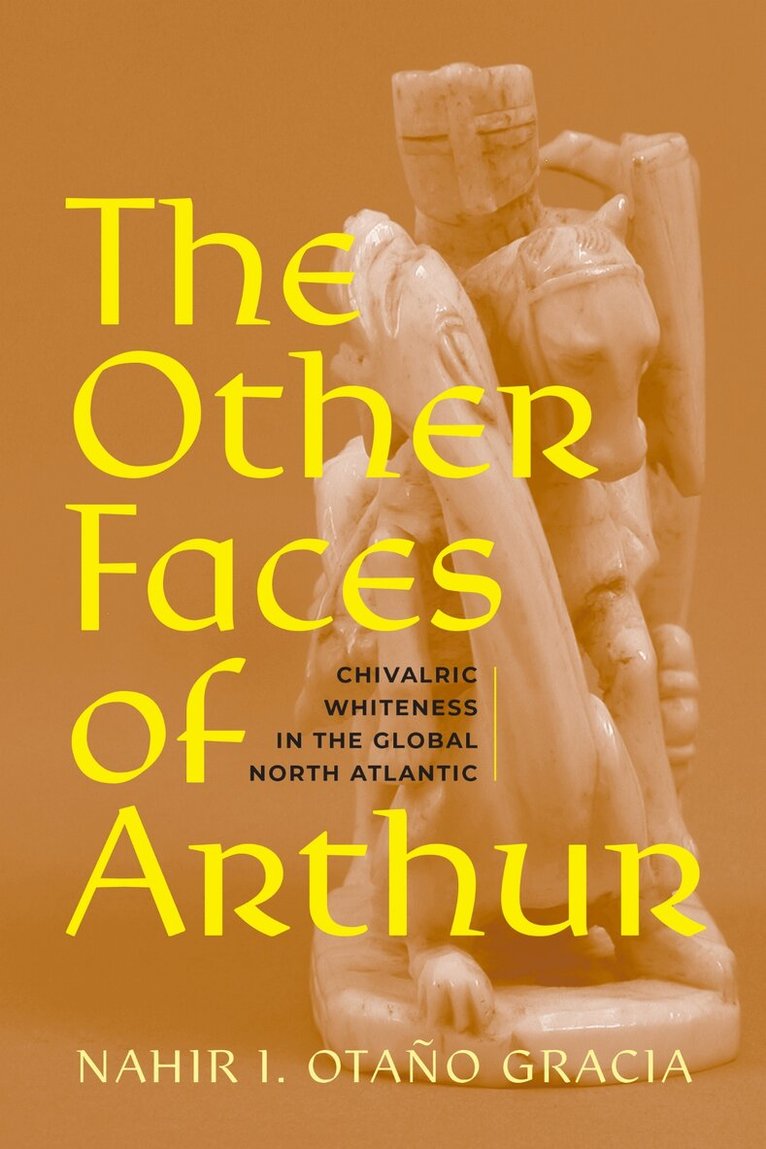
Reveals the role of Arthuriana in the racial logics of medieval Europe through an analysis of the construction of chivalric whitenessThe Other Faces of Arthur reveals the role of Arthuriana in the racial logics of medieval Europe through an analysis of the construction of whiteness in the global North Atlantic: Scandinavia, Britain, Iberia, and North Africa. Taking a comparative approach that draws on language traditions not commonly studied together and places lesser-known Arthurian texts in conversation with each other, Nahir I. Otaño Gracia explores the important role of translation in the dissemination and analysis of Arthuriana, showing how these texts functioned within the settings that produced them.Introducing the framework of the global North Atlantic within the field of global medieval studies, Otaño Gracia examines Arthurian texts written in Castilian, Catalan, Middle Welsh, and Old Norse, among other languages, in order to illustrate the various ways that the writers adapt the materials to serve their specific cultural and aesthetic purposes. Tracing how Arthuriana shifts and changes throughout the global North Atlantic, Otaño Gracia uncovers the hierarchies of power present in Arthurian texts and how they reflect, manipulate, and critique the power relations existing in the courts that circulated the texts. Arthuriana's obsession with chivalry, Otaño Gracia demonstrates, is fundamentally about whiteness; these texts deploy chivalric whiteness to naturalize relations of domination and normalize violence against racialized subjects.The Other Faces of Arthur establishes Arthuriana as a pan-European project of racialization that ultimately serves to rationalize geocultural conquest and expansion.
357 kr
Skickas inom 7-10 vardagar
Scripts of Blackness shows how the early modern mass media of theatre and performance culture at-large helped turn blackness into a racial category, that is, into a type of difference justifying emerging social hierarchies and power relations in a new world order driven by colonialism and capitalism.In this book, Noémie Ndiaye explores the techniques of impersonation used by white performers to represent Afro-diasporic people in England, France, and Spain in the sixteenth and seventeenth centuries, using a comparative and transnational framework. She reconstructs three specific performance techniques—black-up (cosmetic blackness), blackspeak (acoustic blackness), and black dances (kinetic blackness)—in order to map out the poetics of those techniques, and track a number of metaphorical strains that early modern playtexts regularly associated with them. Those metaphorical strains, the titular scripts of blackness of this book, operated across national borders and constituted resources, as they provided spectators and participants with new ways of thinking about the Afro-diasporic people who lived or could/would ultimately live in their midst.Those scripts were often gendered and hinged on notions of demonization, exclusion, exploitation, animalization, commodification, sexualization, consensual enslavement, misogynoir, infantilization, and evocative association with other racialized minorities. Scripts of Blackness attempts to grasp the stories that Western Europeans told themselves through performative blackness, and the effects of those fictions on early modern Afro-diasporic subjects.
Fictions of Consent
Slavery, Servitude, and Free Service in Early Modern England
Häftad, Engelska, 2024
357 kr
Skickas inom 7-10 vardagar
In Fictions of Consent Urvashi Chakravarty excavates the ideologies of slavery that took root in early modern England in the period that preceded the development of an organized trade in enslaved persons.Despite the persistent fiction that England was innocent of racialized slavery, Chakravarty argues that we must hold early modern England-and its narratives of exceptional and essential freedom-to account for the frameworks of slavery that it paradoxically but strategically engendered. Slavery was not a foreign or faraway phenomenon, she demonstrates; rather, the ideologies of slavery were seeded in the quotidian spaces of English life and in the everyday contexts of England's service society, from the family to the household, in the theater and, especially, the grammar school classroom, where the legacies of classical slavery and race were inherited and negotiated. The English conscripted the Roman freedman's figurative "stain of slavery" to register an immutable sign of bondage and to secure slavery to epidermal difference, even as early modern frameworks of "volitional service" provided the strategies for later fictions of "happy slavery" in the Atlantic world. Early modern texts presage the heritability of slavery in early America, reveal the embeddedness of slavery within the family, and illuminate the ways in which bloodlines of descent underwrite the racialized futures of enslavement.Fictions of Consent intervenes in a number of areas including early modern literary and cultural studies, premodern critical race studies, the reception of classical antiquity, and the histories of law, education, and labor to uncover the conceptual genealogies of slavery and servitude and to reveal the everyday sites where the foundations of racialized slavery were laid. Although early modern England claimed to have "too pure an Air for Slaves to breathe in," Chakravarty reveals slavery was a quintessentially English phenomenon.
Learning to Talk Shop
Mercantile Mischief and Popular Pedagogy in Premodern England
Inbunden, Engelska, 2025
796 kr
Skickas inom 7-10 vardagar
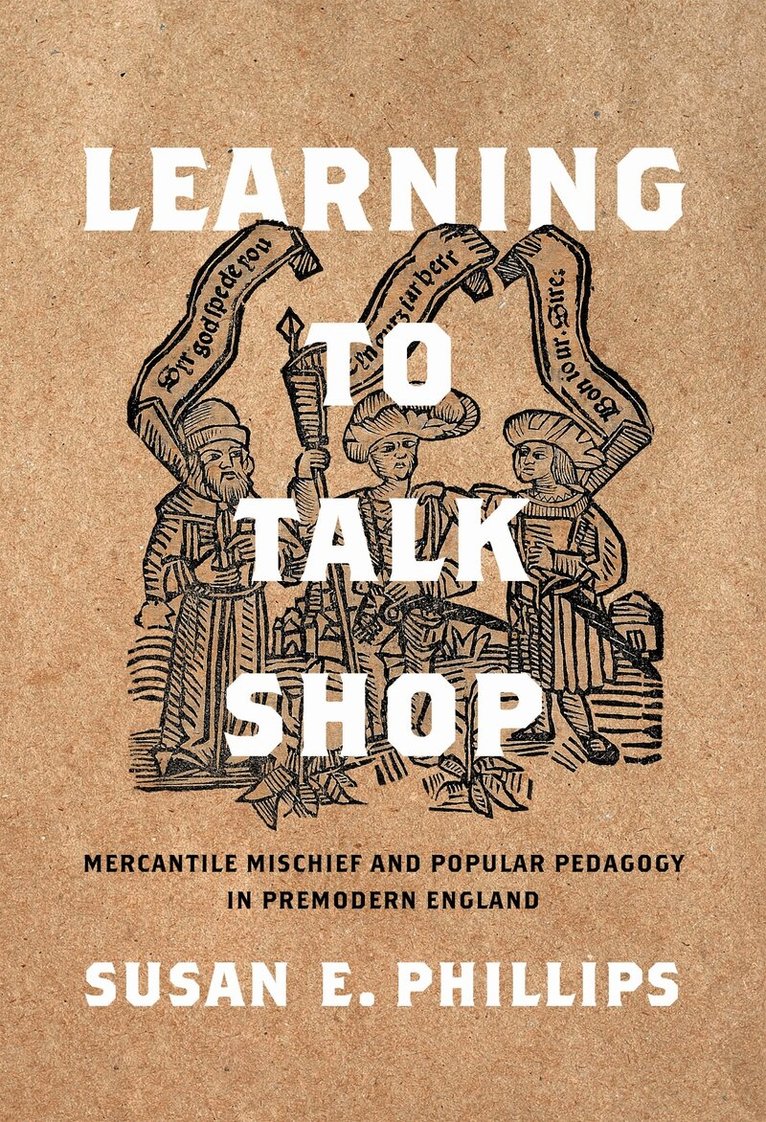
A new account of premodern education that offered non-elite readers lessons in navigating the premodern marketplaceLearning to Talk Shop explores the phrasebooks and guides to conversations that flooded the marketplace in the fifteenth and sixteenth centuries, making a virtual classroom available to an audience who could not afford or did not have access to formal education. Privileging market share and mercantile savvy over moral instruction and linguistic mastery, these mischievous little books offered readers lessons in the pragmatic, and murky, ethics of the premodern marketplace, teaching them bargaining tactics, insults, pick up lines, and strategies for welching on debts.Revealing what happens when language learning itself undergoes a translation out of the classroom, into the marketplace and further down the social ladder, Susan E. Phillips offers a new account of premodern education, not through erudite tombs and schoolmaster sovereigns, but through these practical books that enabled non-elite readers to thrive in an environment not particularly conducive to their success. Phillips asks what we learn and whom we can see when we look at premodern education from this humbler, more mischievous perspective, telling the tales of resourceful chambermaids, savvy black stableboys, and arithmetically adept barmaids as well as the story of a schoolgirl who compiled a textbook of her own and the narrative of a black schoolmaster teaching in Shakespeare's London.In these stories, Phillips finds the liberatory potential in a discourse that has previously been read as upholding traditional social hierarchies in the premodern period. If we expand our archive beyond the Latin textbooks of the grammar school classroom to include these bestselling bi- and multilingual vernacular textbooks, Phillips contends, we can see a radically different set of possibilities—a premodern pedagogy that is more expansive, more flexible, and more inclusive.
694 kr
Kommande