Reclaiming Liberation Theology - Böcker
Visar alla böcker i serien Reclaiming Liberation Theology. Handla med fri frakt och snabb leverans.
6 produkter
6 produkter
450 kr
Skickas inom 5-8 vardagar
Liberation theology - whether Latin American, U.S. Black, African, Feminist - realized that theology had traditionally been done from the standpoint of privilege. Western theology was the product of a minority of humankind living in a state of affluent exception; poverty was the norm for the majority of the world's population. By grounding itself in the perspective of the poor, liberation theology came as close as possible to being the first truly global theology. "Another Possible World" is the book resulting from the first World Forum on liberation theology that took place in 2005 in Brazil. This international gathering discussed themes of liberation, ecumenical differences, inter-religious commitments and historical and interdisciplinary methodologies from the perspective of the global poor. The resulting chapters come from an internationally acclaimed group of contributors. This collection brings the current debates within liberation theologies right up to date and allows readers to acquaint themselves with key thinkers on the most relevant topics within this discipline.
450 kr
Skickas inom 5-8 vardagar
Jung Mo Sung has pioneered a theological analysis of economics in his previous publications, developing a penetrating ethico-religious critique of the international capitalist systems, whose institutions he likens to altars. Where ancient idolatry had visible altars, the modern altar of the ‘global market god’, is invisible, but still demands human sacrifices in the name of ‘objective’ desires. Here Sung recovers theology’s relevance for a world where the most dangerous idols – those that sacrifice millions of people upon the altar of wealth – have for too long been ignored by theology. Desire, Market, Religion, Sung investigates themes such as the struggle against social exclusion, the relationship between economics and religion in the 21 century, where global brands and global economies reigns supreme, and theology’s role in the struggle against social exclusion and the giving of hope for plenty, when the reality is scarcity.
450 kr
Skickas inom 5-8 vardagar
Black Theology emerged in the 1960s as a response to black consciousness. In South Africa, it is a critique of power; in the UK it is a political theology of black culture. The dominant form of Black Theology has been in the USA, originally influenced by Black Power and the critique of white racism. Since then, it claims to have broadened its perspective to include oppression on the grounds of race, gender and class. In this book, Alistair Kee contests this claim, arguing that Black and Womanist Theologies present inadequate analysis of race and gender and no account at all of class or economic oppression.With a few notable exceptions, Black Theology in the USA repeats the mantras of the 1970s, the discourse of modernity. Content with American capitalism, it fails to address the source of the impoverishment of black Americans at home. Content with a romantic image of Africa, this 'African-American' movement fails to defend contemporary Africa against predatory American global ambitions. Blacks in the West, Kee claims here, are no longer the victims; they are the voters and consumers who should be able to influence western governments - the American government in particular - into changing policies towards Africa in particular and the third world in general. This book does not argue that Black theologians should give up, but that they should move on, for the sake of the black poor in America, the black poor in Africa and the third world. The failure of Black theologians to do so is a cause for concern beyond the circle of practitioners of Black theology.
450 kr
Skickas inom 5-8 vardagar
Marcella Althaus-Reid has drawn together a number of the most exciting Liberation Theologians currently working in Latin America and beyond whose work offers a wider and more complex critique of reality which is prepared to engage with issues of sexuality, race, gender, culture, globalization and new forms of popular piety. The contributors show that Christianity in Latin America cannot avoid taking into account and engaging with issues concerning sexuality and poverty when reflecting on the construction of Christian faith and identity. They represent Liberation Theology in motion: dynamic, unsettling, still struggling with orthodoxy while engaging in the broad struggle for justice that includes sexual justice. This is the paperback edition of a ground-breaking book by one of the UK's most interesting theologians of the current generation.
450 kr
Skickas inom 5-8 vardagar
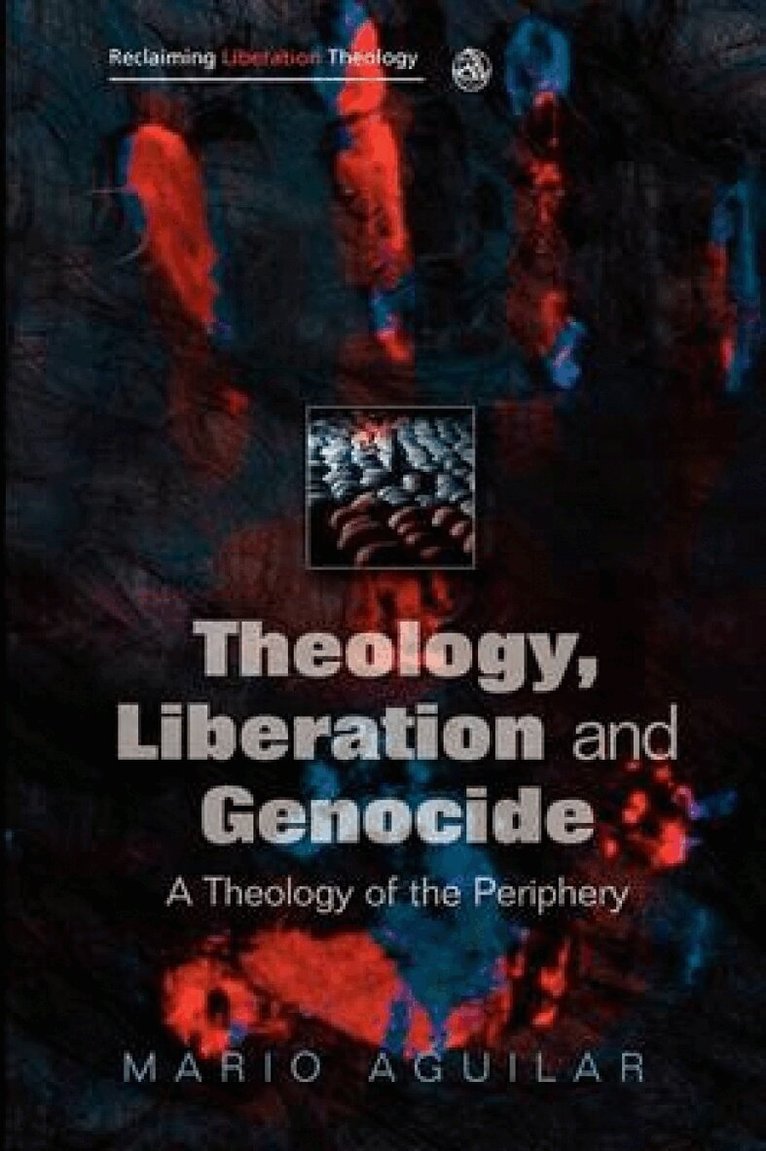
The Reclaiming Liberation Theology series claims that Liberation Theology is alive and well and continues to produce new and challenging material. In "Theology, Liberation and Genocide", Mario Aguilar, one of the leading liberation theologians of the current generation, asks how it can be possible to do theology in the face of atrocities such as the genocide in Rwanda. He argues that the traditional ways of doing theology ('high theology') no longer work and that theology now has to take place at the periphery rather than in the social, cultural and political centre. In this book, Aguilar seeks further to unfold the new agenda for liberation theology as set by Ivan Petrella and others. The series editors are Ivan Petrella (University of Miami) and Marcella Althaus-Reid (University of Edinburgh).
450 kr
Skickas inom 5-8 vardagar
In Beyond the Spirit of Empire, the authors analyze the global empire not only in its political and economic dimensions, but also in its symbolic constructions of power and in its general assumptions often taken for granted. How does empire mould human subjectivity, for instance, and how does it affect the understanding of humans within the whole of creation? What are the religious dimensions of empire, its claims to divine attributes like omniscience, omnipresence, omnipotence, eternity, and what about its alleged exclusiveness and pervasiveness that destroys human life and freedom, which turns politics into a banal matter? The authors propose to look beyond empire to the possibility of politics and freedom, to the recovery of the notion of people, to the importance of ongoing concern for the oppressed and excluded, and to a messianic faith that allows us to live in anticipation, though ambiguously, of the promise of new times to come.