Regional Perspectives on Early America - Böcker
Visar alla böcker i serien Regional Perspectives on Early America. Handla med fri frakt och snabb leverans.
11 produkter
11 produkter
248 kr
Tillfälligt slut
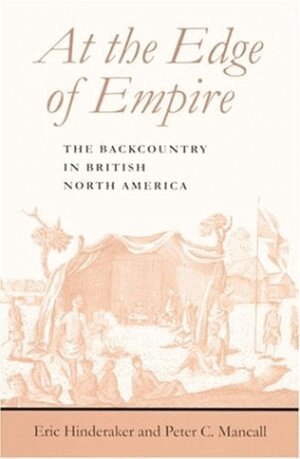
During the course of the seventeenth century, Europeans and Native Americans came together on the western edge of England's North American empire for a variety of purposes, from trading goods and information to making alliances and war. This blurred and constantly shifting frontier region, known as the backcountry, existed just beyond England's imperial reach on the North American mainland. It became an area of opportunity, intrigue, and conflict for the diverse peoples who lived there. In At the Edge of Empire, Eric Hinderaker and Peter C. Mancall describe the nature of the complex interactions among these interests, examining colorful and sometimes gripping instances of familiarity and uneasiness, acceptance and animosity, and cooperation and conflict, from individual encounters to such vast undertakings as the Seven Years' War. Over time, the European settlers who established farms and trading posts in the backcountry displaced the region's Native inhabitants. Warfare and disease each took a horrifying toll across Indian country, making it easier for immigrants to establish themselves on lands once peopled only by Native Americans.Eventually, these pioneers established economically, culturally, and politically self-sufficient communities that increasingly resented London's claims of sovereignty. As Hinderaker and Mancall show, these resentments helped to shape the ideals that guided the colonists during the American Revolution. The first book in a new Johns Hopkins series, Regional Perspectives on Early America, At the Edge of Empire explores one of British America's most intriguing regions, both widening and deepening our understanding of North America's colonial experience.
853 kr
Skickas inom 5-8 vardagar
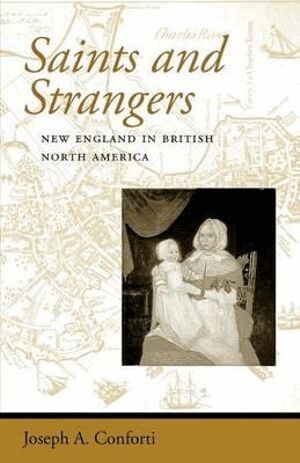
In the first general history of colonial New England to be published in over twenty-five years, Joseph A. Conforti synthesizes current and classic scholarship to explore how Puritan saints and "strangers" to Puritanism participated in the making of colonial New England. Massachusetts Governor John Winthrop's famous description of New England as a "city upon a hill" has tended to reduce the region's history to an exclusively Pilgrim-Puritan drama, a world of narrow-minded founders, the First Thanksgiving, steepled churches, and the Salem witchcraft trials. In a concise volume aimed at general readers and college students as well as historians, Conforti shows that New England was neither as Puritan nor as insular as most familiar stories imply. As the region evolved into British America's preeminent maritime region, the Atlantic Ocean served as a highway of commercial and cultural encounter, connecting white English settlers to different races and religious communities of the transatlantic world. The Puritan elect-but also Natives, African slaves, and non-Puritan white settlers-became active participants in the creation of colonial New England.Conforti discusses how these subcommunities of white, red, and black strangers to Protestant piety retained their own cultures, coexisted, and even thrived within and beyond the domains of Puritan settlement, creating tensions and pressure points in the later development of early America.
311 kr
Skickas inom 7-10 vardagar
In the first general history of colonial New England to be published in over twenty-five years, Joseph A. Conforti synthesizes current and classic scholarship to explore how Puritan saints and "strangers" to Puritanism participated in the making of colonial New England. Massachusetts Governor John Winthrop's famous description of New England as a "city upon a hill" has tended to reduce the region's history to an exclusively Pilgrim-Puritan drama, a world of narrow-minded founders, the First Thanksgiving, steepled churches, and the Salem witchcraft trials. In a concise volume aimed at general readers and college students as well as historians, Conforti shows that New England was neither as Puritan nor as insular as most familiar stories imply. As the region evolved into British America's preeminent maritime region, the Atlantic Ocean served as a highway of commercial and cultural encounter, connecting white English settlers to different races and religious communities of the transatlantic world. The Puritan elect-but also Natives, African slaves, and non-Puritan white settlers-became active participants in the creation of colonial New England.Conforti discusses how these subcommunities of white, red, and black strangers to Protestant piety retained their own cultures, coexisted, and even thrived within and beyond the domains of Puritan settlement, creating tensions and pressure points in the later development of early America.
457 kr
Tillfälligt slut
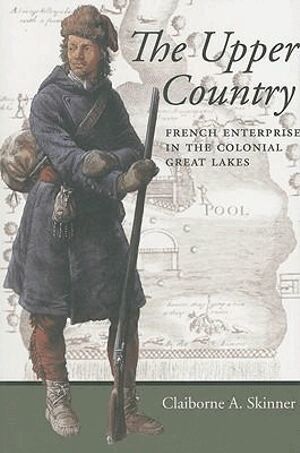
"The Upper Country" melds myth and conventional history to provide a memorable tale of French designs in the middle of what became the United States. Putting the reader on the battlefields, at the trading posts, and on the rivers with voyageurs and their allies from the Indian nations, Claiborne Skinner reveals the saintly missionaries and jolly fur traders of popular myth as agents of a hard-nosed, often ruthless, imperial endeavor.Skinner's engaging narrative takes the reader through daily life at posts like Forts Saint Louis and Michilimakinac, illuminates the complexities of interracial marriage with the courtship of Michel Aco at Peoria, and explains how France's New World adventurism played a role in the outbreak of the Seven Years War and the beginning of the modern era.In this story, many of the traditional heroes and villains of American history take on surprising roles. The last Stuart kings of England seem shrewd and even human; George Washington makes his debut appearance on the stage of history by assassinating a French officer and plunging Europe into the first truly global war.From unthinkable hardship to dreams of fur trade profits, this fascinating exploration sheds new light on France and its imperial venture into the Great Lakes.
365 kr
Skickas inom 7-10 vardagar
The Upper Country melds myth and conventional history to provide a memorable tale of French designs in the middle of what became the United States. Putting the reader on the battlefields, at the trading posts, and on the rivers with voyageurs and their allies from the Indian nations, Claiborne Skinner reveals the saintly missionaries and jolly fur traders of popular myth as agents of a hard-nosed, often ruthless, imperial endeavor. Skinner's engaging narrative takes the reader through daily life at posts like Forts Saint Louis and Michilimakinac, illuminates the complexities of interracial marriage with the courtship of Michel Aco at Peoria, and explains how France's New World adventurism played a role in the outbreak of the Seven Years War and the beginning of the modern era. In this story, many of the traditional heroes and villains of American history take on surprising roles. The last Stuart kings of England seem shrewd and even human; George Washington makes his debut appearance on the stage of history by assassinating a French officer and plunging Europe into the first truly global war.From unthinkable hardship to dreams of fur trade profits, this fascinating exploration sheds new light on France and its imperial venture into the Great Lakes.
544 kr
Tillfälligt slut
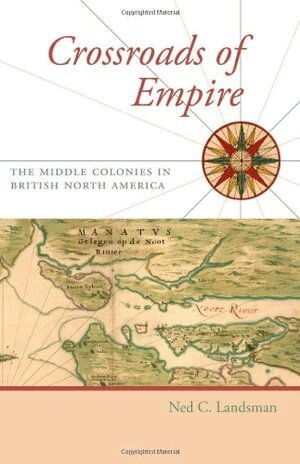
This work examines the Middle Colonies-New York, New Jersey, and Pennsylvania-as a region at the center of imperial contests among competing European powers and Native American nations and at the fulcrum of an emerging British-Atlantic world of culture and trade. Ned C. Landsman traces the history of the Middle Colonies to address questions essential to understanding their role in the colonial era. He probes the concept of regionality and argues that while each territory possessed varying social, religious, and political cultures, the collective lands of New York, New Jersey, and Pennsylvania came to function as a region because of their particular history and their distinct place in the imperial and Atlantic worlds. Landsman demonstrates that the societal cohesiveness of the three colonies originated in the commercial and military rivalries among Native nations and developed further with the competing involvement of the European powers, eventually emerging as the focal point in the contest for dominion over North America.In relating this progression, Landsman discusses various factors in the region's development, including the Enlightenment, evangelical religion, factional politics, religious and ethnic diversity, and distinct systems of Protestant pluralism. Ultimately, he argues, it was within the Middle Colonies that the question was first posed, What is the American? An insightful and valuable classroom synthesis of the scholarship of the Middle Colonies, Crossroads of Empire makes clear the vital role of New York, New Jersey, and Pennsylvania in establishing an American identity.
282 kr
Tillfälligt slut
This work examines the Middle Colonies-New York, New Jersey, and Pennsylvania-as a region at the center of imperial contests among competing European powers and Native American nations and at the fulcrum of an emerging British-Atlantic world of culture and trade. Ned C. Landsman traces the history of the Middle Colonies to address questions essential to understanding their role in the colonial era. He probes the concept of regionality and argues that while each territory possessed varying social, religious, and political cultures, the collective lands of New York, New Jersey, and Pennsylvania came to function as a region because of their particular history and their distinct place in the imperial and Atlantic worlds. Landsman demonstrates that the societal cohesiveness of the three colonies originated in the commercial and military rivalries among Native nations and developed further with the competing involvement of the European powers, eventually emerging as the focal point in the contest for dominion over North America.In relating this progression, Landsman discusses various factors in the region's development, including the Enlightenment, evangelical religion, factional politics, religious and ethnic diversity, and distinct systems of Protestant pluralism. Ultimately, he argues, it was within the Middle Colonies that the question was first posed, What is the American? An insightful and valuable classroom synthesis of the scholarship of the Middle Colonies, Crossroads of Empire makes clear the vital role of New York, New Jersey, and Pennsylvania in establishing an American identity.
537 kr
Tillfälligt slut
"Planting an Empire" explores the social and economic history of the Chesapeake region, revealing a story of two similar but distinct colonies in early America. Linked by the Chesapeake Bay, Virginia and Maryland formed a prosperous and politically important region in British North America before the American Revolution. Yet these "sister" colonies - alike in climate and soil, emphasis on tobacco farming, and use of enslaved labor - eventually followed divergent social and economic paths. Jean B. Russo and J. Elliott Russo review the shared history of these two colonies, examining not only their unsteady origins, the powerful role of tobacco, and the slow development of a settler society but also the economic disparities and political jealousies that divided them. Recounting the rich history of the Chesapeake Bay region over a 150-year period, the authors discuss in clear and accessible prose the key developments common to both colonies as well as important regional events, including Maryland's "plundering time", Bacon's Rebellion in Virginia, and the opening battles of the French and Indian War.They explain how the internal differences and regional discord of the seventeenth century gave way in the eighteenth century to a more coherent regional culture fostered by a shared commitment to slavery and increasing socio-economic maturity. Addressing an undergraduate audience, the Russos study not just wealthy plantation owners and government officials but all the people involved in planting an empire in the Chesapeake region - poor and middling planters, women, Native Americans, enslaved and free blacks, and non-English immigrants. No other book offers such a comprehensive brief history of the Maryland and Virginia colonies and their place within the emerging British Empire.
282 kr
Tillfälligt slut
"Planting an Empire" explores the social and economic history of the Chesapeake region, revealing a story of two similar but distinct colonies in early America. Linked by the Chesapeake Bay, Virginia and Maryland formed a prosperous and politically important region in British North America before the American Revolution. Yet these "sister" colonies-alike in climate and soil, emphasis on tobacco farming, and use of enslaved labor-eventually followed divergent social and economic paths. Jean B. Russo and J. Elliott Russo review the shared history of these two colonies, examining not only their unsteady origins, the powerful role of tobacco, and the slow development of a settler society but also the economic disparities and political jealousies that divided them. Recounting the rich history of the Chesapeake Bay region over a 150-year period, the authors discuss in clear and accessible prose the key developments common to both colonies as well as important regional events, including Maryland's "plundering time", Bacon's Rebellion in Virginia, and the opening battles of the French and Indian War.They explain how the internal differences and regional discord of the seventeenth century gave way in the eighteenth century to a more coherent regional culture fostered by a shared commitment to slavery and increasing socio-economic maturity. Addressing an undergraduate audience, the Russos study not just wealthy plantation owners and government officials but all the people involved in planting an empire in the Chesapeake region-poor and middling planters, women, Native Americans, enslaved and free blacks, and non-English immigrants. No other book offers such a comprehensive brief history of the Maryland and Virginia colonies and their place within the emerging British Empire.
504 kr
Tillfälligt slut
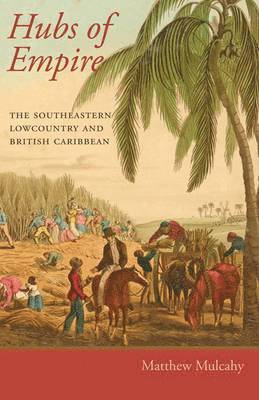
In Hubs of Empire, Matthew Mulcahy argues that it is useful to view Barbados, Jamaica, and the British Leeward Islands, along with the South Carolina and Georgia Lowcountry, as a single region. Separated by thousands of miles of ocean but united by shared history and economic interest, these territories formed the Greater Caribbean. Although the Greater Caribbean does not loom large in the historical imaginations of many Americans, it was the wealthy center of Britain's Atlantic economy. Large-scale plantation slavery first emerged in Barbados, then spread throughout the sugar islands and the southeastern mainland colonies, allowing planters to acquire fortunes and influence unmatched elsewhere - including the tobacco colonies of Maryland and Virginia. Hubs of Empire begins in the sixteenth century by providing readers with a broad overview of Native American life in the region and early pirate and privateer incursions. Mulcahy examines the development of settler colonies during the seventeenth and early eighteenth centuries, explores diverse groups of European colonists, and surveys political, economic, and military issues in the decades before the Seven Years War.The plantation system achieved its fullest and harshest manifestation in the Greater Caribbean. The number of slaves and the scale of the slave trade meant that enslaved Africans outnumbered Europeans in all of the affiliated colonies, often by enormous ratios. This enabled Africans to maintain more of their traditions, practices, and languages than in other parts of British America, resulting in distinct creole cultures. This volume is an ideal introduction to the complex and fascinating history of colonies too often neglected in standard textbook accounts.
255 kr
Tillfälligt slut
In Hubs of Empire, Matthew Mulcahy argues that it is useful to view Barbados, Jamaica, and the British Leeward Islands, along with the South Carolina and Georgia Lowcountry, as a single region. Separated by thousands of miles of ocean but united by shared history and economic interest, these territories formed the Greater Caribbean. Although the Greater Caribbean does not loom large in the historical imaginations of many Americans, it was the wealthy center of Britain's Atlantic economy. Large-scale plantation slavery first emerged in Barbados, then spread throughout the sugar islands and the southeastern mainland colonies, allowing planters to acquire fortunes and influence unmatched elsewhere - including the tobacco colonies of Maryland and Virginia. Hubs of Empire begins in the sixteenth century by providing readers with a broad overview of Native American life in the region and early pirate and privateer incursions. Mulcahy examines the development of settler colonies during the seventeenth and early eighteenth centuries, explores diverse groups of European colonists, and surveys political, economic, and military issues in the decades before the Seven Years War.The plantation system achieved its fullest and harshest manifestation in the Greater Caribbean. The number of slaves and the scale of the slave trade meant that enslaved Africans outnumbered Europeans in all of the affiliated colonies, often by enormous ratios. This enabled Africans to maintain more of their traditions, practices, and languages than in other parts of British America, resulting in distinct creole cultures. This volume is an ideal introduction to the complex and fascinating history of colonies too often neglected in standard textbook accounts.