Matthew Mulcahy - Böcker
Visar alla böcker från författaren Matthew Mulcahy. Handla med fri frakt och snabb leverans.
6 produkter
6 produkter
1 375 kr
Skickas inom 7-10 vardagar
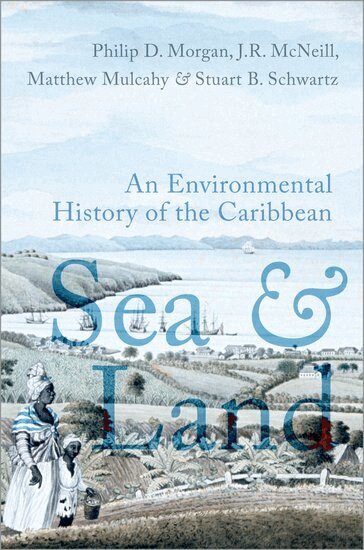
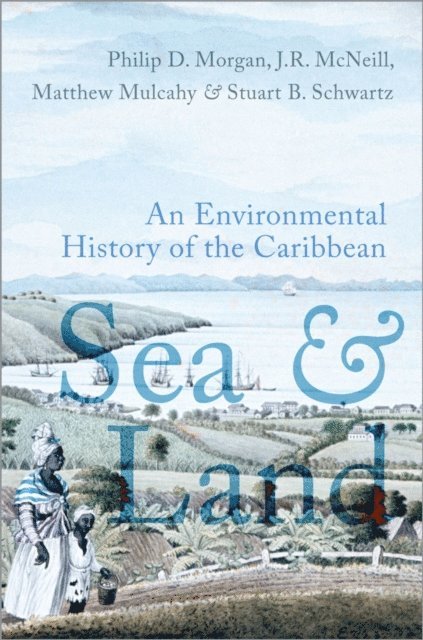
Sea and Land provides an in-depth environmental history of the Caribbean to ca 1850, with a coda that takes the story into the modern era. It explores the mixing, movement, and displacement of peoples and the parallel ecological mixing of animals, plants, microbes from Africa, Europe, elsewhere in the Americas, and as far away as Asia. It examines first the arrival of Native American to the region and the environmental transformations that followed. It then turns to the even more dramatic changes that accompanied the arrival of Europeans and Africans in the fifteenth century. Throughout it argues that the constant arrival, dispersal, and mingling of new plants and animals gave rise to a creole ecology. Particular attention is given to the emergence of Black slavery, sugarcane, and the plantation system, an unholy trinity that thoroughly transformed the region's demographic and physical landscapes and made the Caribbean a vital site in the creation of the modern western world. Increased attention to issues concerning natural resources, conservation, epidemiology, and climate have now made the environment and ecology of the Caribbean a central historical concern. Sea and Land is an effort to integrate that research in a new general environmental history of the region. Intended for scholars and students alike, it aims to foster both a fuller appreciation of the extent to which environmental factors shaped historical developments in the Caribbean, and the extent to which human actions have transformed the biophysical environment of the region over time.The combined work of eminent authors of environment and Latin American and Caribbean history, Sea and Land offers a unique approach to a region characterized by Edenic nature and paradisiacal qualities, as well as dangers, diseases, and disasters.
426 kr
Skickas
Sea and Land provides an in-depth environmental history of the Caribbean to ca 1850, with a coda that takes the story into the modern era. It explores the mixing, movement, and displacement of peoples and the parallel ecological mixing of animals, plants, microbes from Africa, Europe, elsewhere in the Americas, and as far away as Asia. It examines first the arrival of Native American to the region and the environmental transformations that followed. It then turns to the even more dramatic changes that accompanied the arrival of Europeans and Africans in the fifteenth century. Throughout it argues that the constant arrival, dispersal, and mingling of new plants and animals gave rise to a creole ecology. Particular attention is given to the emergence of Black slavery, sugarcane, and the plantation system, an unholy trinity that thoroughly transformed the region's demographic and physical landscapes and made the Caribbean a vital site in the creation of the modern western world. Increased attention to issues concerning natural resources, conservation, epidemiology, and climate have now made the environment and ecology of the Caribbean a central historical concern. Sea and Land is an effort to integrate that research in a new general environmental history of the region. Intended for scholars and students alike, it aims to foster both a fuller appreciation of the extent to which environmental factors shaped historical developments in the Caribbean, and the extent to which human actions have transformed the biophysical environment of the region over time.The combined work of eminent authors of environment and Latin American and Caribbean history, Sea and Land offers a unique approach to a region characterized by Edenic nature and paradisiacal qualities, as well as dangers, diseases, and disasters.
406 kr
Skickas inom 5-8 vardagar
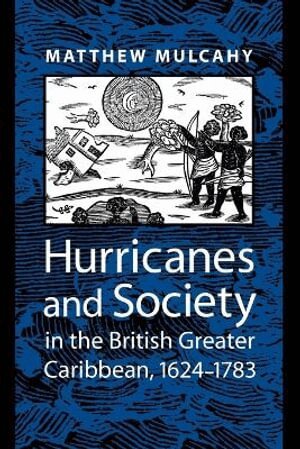
Hurricanes created unique challenges for the colonists in the British Greater Caribbean during the seventeenth and eighteenth centuries. These storms were entirely new to European settlers and quickly became the most feared part of their physical environment, destroying staple crops and provisions, leveling plantations and towns, disrupting shipping and trade, and resulting in major economic losses for planters and widespread privation for slaves. In this study, Matthew Mulcahy examines how colonists made sense of hurricanes, how they recovered from them, and the role of the storms in shaping the development of the region's colonial settlements. Hurricanes and Society in the British Greater Caribbean, 1624-1783 provides a useful new perspective on several topics including colonial science, the plantation economy, slavery, and public and private charity. By integrating the West Indies into the larger story of British Atlantic colonization, Mulcahy's work contributes to early American history, Atlantic history, environmental history, and the growing field of disaster studies.
373 kr
Skickas inom 7-10 vardagar
Rethinking American Disasters is a pathbreaking collection of essays on hurricanes, earthquakes, fires, and other calamities in the United States and British colonial America over four centuries. Proceeding from the premise that there is no such thing as a "natural" disaster, the collection invites readers to consider disasters and their aftermaths as artifacts of and vantage points onto their historical contexts.
504 kr
Tillfälligt slut
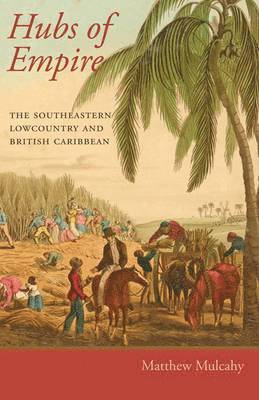
In Hubs of Empire, Matthew Mulcahy argues that it is useful to view Barbados, Jamaica, and the British Leeward Islands, along with the South Carolina and Georgia Lowcountry, as a single region. Separated by thousands of miles of ocean but united by shared history and economic interest, these territories formed the Greater Caribbean. Although the Greater Caribbean does not loom large in the historical imaginations of many Americans, it was the wealthy center of Britain's Atlantic economy. Large-scale plantation slavery first emerged in Barbados, then spread throughout the sugar islands and the southeastern mainland colonies, allowing planters to acquire fortunes and influence unmatched elsewhere - including the tobacco colonies of Maryland and Virginia. Hubs of Empire begins in the sixteenth century by providing readers with a broad overview of Native American life in the region and early pirate and privateer incursions. Mulcahy examines the development of settler colonies during the seventeenth and early eighteenth centuries, explores diverse groups of European colonists, and surveys political, economic, and military issues in the decades before the Seven Years War.The plantation system achieved its fullest and harshest manifestation in the Greater Caribbean. The number of slaves and the scale of the slave trade meant that enslaved Africans outnumbered Europeans in all of the affiliated colonies, often by enormous ratios. This enabled Africans to maintain more of their traditions, practices, and languages than in other parts of British America, resulting in distinct creole cultures. This volume is an ideal introduction to the complex and fascinating history of colonies too often neglected in standard textbook accounts.
462 kr
Skickas inom 3-6 vardagar
In Hubs of Empire, Matthew Mulcahy argues that it is useful to view Barbados, Jamaica, and the British Leeward Islands, along with the South Carolina and Georgia Lowcountry, as a single region. Separated by thousands of miles of ocean but united by shared history and economic interest, these territories formed the Greater Caribbean. Although the Greater Caribbean does not loom large in the historical imaginations of many Americans, it was the wealthy center of Britain's Atlantic economy. Large-scale plantation slavery first emerged in Barbados, then spread throughout the sugar islands and the southeastern mainland colonies, allowing planters to acquire fortunes and influence unmatched elsewhere - including the tobacco colonies of Maryland and Virginia. Hubs of Empire begins in the sixteenth century by providing readers with a broad overview of Native American life in the region and early pirate and privateer incursions. Mulcahy examines the development of settler colonies during the seventeenth and early eighteenth centuries, explores diverse groups of European colonists, and surveys political, economic, and military issues in the decades before the Seven Years War.The plantation system achieved its fullest and harshest manifestation in the Greater Caribbean. The number of slaves and the scale of the slave trade meant that enslaved Africans outnumbered Europeans in all of the affiliated colonies, often by enormous ratios. This enabled Africans to maintain more of their traditions, practices, and languages than in other parts of British America, resulting in distinct creole cultures. This volume is an ideal introduction to the complex and fascinating history of colonies too often neglected in standard textbook accounts.