Stuart B. Schwartz – författare
Visar alla böcker från författaren Stuart B. Schwartz. Handla med fri frakt och snabb leverans.
17 produkter
17 produkter
Inbunden, Engelska, 2022
1 417 kr
Skickas inom 7-10 vardagar
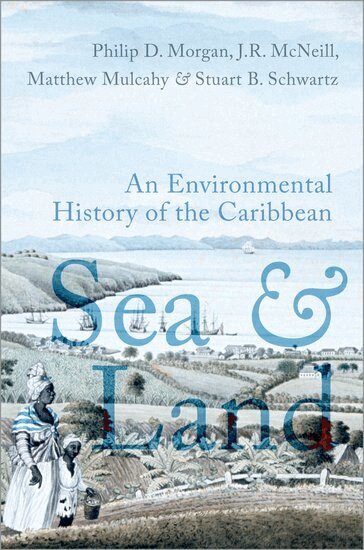
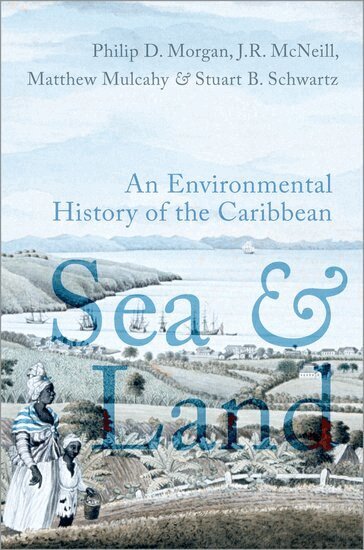
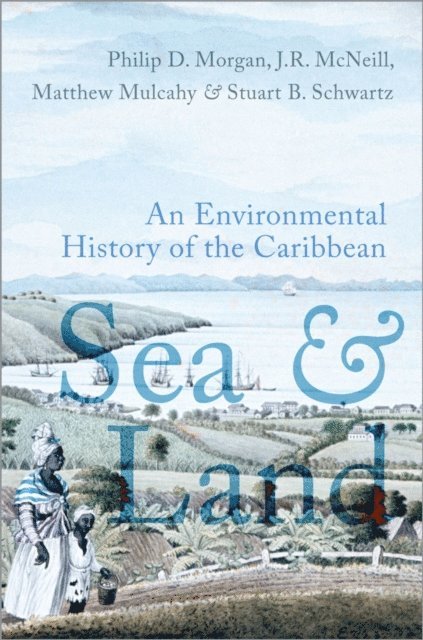
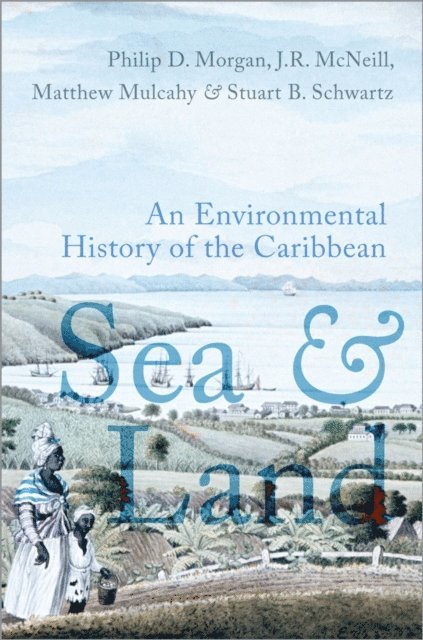
Sea and Land provides an in-depth environmental history of the Caribbean to ca 1850, with a coda that takes the story into the modern era. It explores the mixing, movement, and displacement of peoples and the parallel ecological mixing of animals, plants, microbes from Africa, Europe, elsewhere in the Americas, and as far away as Asia. It examines first the arrival of Native American to the region and the environmental transformations that followed. It then turns to the even more dramatic changes that accompanied the arrival of Europeans and Africans in the fifteenth century. Throughout it argues that the constant arrival, dispersal, and mingling of new plants and animals gave rise to a creole ecology. Particular attention is given to the emergence of Black slavery, sugarcane, and the plantation system, an unholy trinity that thoroughly transformed the region's demographic and physical landscapes and made the Caribbean a vital site in the creation of the modern western world. Increased attention to issues concerning natural resources, conservation, epidemiology, and climate have now made the environment and ecology of the Caribbean a central historical concern. Sea and Land is an effort to integrate that research in a new general environmental history of the region. Intended for scholars and students alike, it aims to foster both a fuller appreciation of the extent to which environmental factors shaped historical developments in the Caribbean, and the extent to which human actions have transformed the biophysical environment of the region over time.The combined work of eminent authors of environment and Latin American and Caribbean history, Sea and Land offers a unique approach to a region characterized by Edenic nature and paradisiacal qualities, as well as dangers, diseases, and disasters.
Häftad, Engelska, 2022
435 kr
Skickas
Sea and Land provides an in-depth environmental history of the Caribbean to ca 1850, with a coda that takes the story into the modern era. It explores the mixing, movement, and displacement of peoples and the parallel ecological mixing of animals, plants, microbes from Africa, Europe, elsewhere in the Americas, and as far away as Asia. It examines first the arrival of Native American to the region and the environmental transformations that followed. It then turns to the even more dramatic changes that accompanied the arrival of Europeans and Africans in the fifteenth century. Throughout it argues that the constant arrival, dispersal, and mingling of new plants and animals gave rise to a creole ecology. Particular attention is given to the emergence of Black slavery, sugarcane, and the plantation system, an unholy trinity that thoroughly transformed the region's demographic and physical landscapes and made the Caribbean a vital site in the creation of the modern western world. Increased attention to issues concerning natural resources, conservation, epidemiology, and climate have now made the environment and ecology of the Caribbean a central historical concern. Sea and Land is an effort to integrate that research in a new general environmental history of the region. Intended for scholars and students alike, it aims to foster both a fuller appreciation of the extent to which environmental factors shaped historical developments in the Caribbean, and the extent to which human actions have transformed the biophysical environment of the region over time.The combined work of eminent authors of environment and Latin American and Caribbean history, Sea and Land offers a unique approach to a region characterized by Edenic nature and paradisiacal qualities, as well as dangers, diseases, and disasters.
Häftad, Engelska, 1995
258 kr
Skickas inom 5-8 vardagar
Once preoccupied with Brazilian slavery as an economic system, historians shifted their attention to examine the nature of life and community among enslaved people. Stuart B. Schwartz looks at this change while explaining why historians must continue to place their ethnographic approach in the context of enslavement as an oppressive social and economic system. Schwartz demonstrates the complexity of the system by reconsidering work, resistance, kinship, and relations between enslaved persons and peasants. As he shows, enslaved people played a role in shaping not only their lives but Brazil’s institutionalized system of slavery by using their own actions and attitudes to place limits on slaveholders. A bold analysis of changing ideas in the field, Slaves, Peasants, and Rebels provides insights on how the shifting power relationship between enslaved people and slaveholders reshaped the contours of Brazilian society.
Häftad, Engelska, 2018
593 kr
Skickas inom 5-8 vardagar
While the Spanish enterprise in America is relatively well known to the English-reading public, the Portuguese tropical empire in Brazil has remained until recently an unknown world. In Sovereignty and Society, Stuart B. Schwartz contributes to our understanding of the Brazilian past by providing for the first time a detailed study of the judicial bureaucracy that formed the framework on the colonial regime. This volume describes the process by which royal administrators maintained control and the techniques used by the whole Brazilian elite to guard its interest. At the core of the book is the previously unstudied Relação or High Court of Bahia, the supreme tribunal in colonial Brazil and an institution with broad administrative and political powers. Presided over by the governor-general or viceroy, the High Court stood at the apex of the colonial administrative structure and symbolized royal sovereignty. The author examines the origins, functions, conflicts, and history of the Relação, relying on little-used manuscript sources in over twenty-five archives and libraries in Brazil, Portugal, Spain, and England as well as the whole range of secondary literature. Of particular interest is the departure from traditional administrative history by emphasis on the people rather than the office of the Portuguese imperial bureaucracy. The bureaucrat-judges of the High Court are at the center of the study, and by a careful analysis of the personal and professional careers of these magistrates, the author demonstrates the utility of a human relations approach to the study of historical polities. He shows how the goals of the crown, the aspirations of the magistrates, and the interests of the Brazilian sugar planter elite were expressed and reconciled and how royal officials and the planters became linked by kinship and interest in a union of wealth and power. Finally, he argues that the penetration of such primary relations in the formal structure of a bureaucratic empire helps to explain the resiliency and the longevity of Portuguese rule in Brazil. The approach and findings of this book will interest not only those seeking a deeper understanding of the Brazilian past, but also historians, sociologists, and political scientists concerned with colonial regimes and bureaucratic polities in general.This title is part of UC Press's Voices Revived program, which commemorates University of California Press’s mission to seek out and cultivate the brightest minds and give them voice, reach, and impact. Drawing on a backlist dating to 1893, Voices Revived makes high-quality, peer-reviewed scholarship accessible once again using print-on-demand technology. This title was originally published in 1973.
Inbunden, Engelska, 2024
811 kr
Skickas inom 5-8 vardagar
While the Spanish enterprise in America is relatively well known to the English-reading public, the Portuguese tropical empire in Brazil has remained until recently an unknown world. In Sovereignty and Society, Stuart B. Schwartz contributes to our understanding of the Brazilian past by providing for the first time a detailed study of the judicial bureaucracy that formed the framework on the colonial regime. This volume describes the process by which royal administrators maintained control and the techniques used by the whole Brazilian elite to guard its interest. At the core of the book is the previously unstudied Relação or High Court of Bahia, the supreme tribunal in colonial Brazil and an institution with broad administrative and political powers. Presided over by the governor-general or viceroy, the High Court stood at the apex of the colonial administrative structure and symbolized royal sovereignty. The author examines the origins, functions, conflicts, and history of the Relação, relying on little-used manuscript sources in over twenty-five archives and libraries in Brazil, Portugal, Spain, and England as well as the whole range of secondary literature. Of particular interest is the departure from traditional administrative history by emphasis on the people rather than the office of the Portuguese imperial bureaucracy. The bureaucrat-judges of the High Court are at the center of the study, and by a careful analysis of the personal and professional careers of these magistrates, the author demonstrates the utility of a human relations approach to the study of historical polities. He shows how the goals of the crown, the aspirations of the magistrates, and the interests of the Brazilian sugar planter elite were expressed and reconciled and how royal officials and the planters became linked by kinship and interest in a union of wealth and power. Finally, he argues that the penetration of such primary relations in the formal structure of a bureaucratic empire helps to explain the resiliency and the longevity of Portuguese rule in Brazil. The approach and findings of this book will interest not only those seeking a deeper understanding of the Brazilian past, but also historians, sociologists, and political scientists concerned with colonial regimes and bureaucratic polities in general.This title is part of UC Press's Voices Revived program, which commemorates University of California Press’s mission to seek out and cultivate the brightest minds and give them voice, reach, and impact. Drawing on a backlist dating to 1893, Voices Revived makes high-quality, peer-reviewed scholarship accessible once again using print-on-demand technology. This title was originally published in 1973.
Häftad, Engelska, 2009
352 kr
Skickas inom 7-10 vardagar
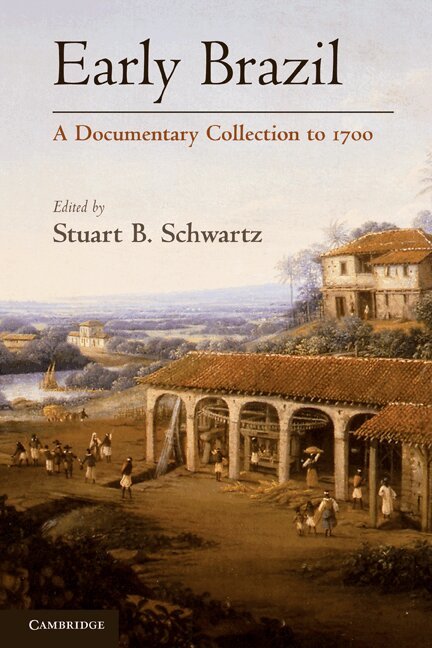
Early Brazil presents a collection of original sources, many published for the first time in English and some never before published in any language, that illustrates the process of conquest, colonization, and settlement in Brazil. The volume emphasizes the actions and interactions of the indigenous peoples, Portuguese, and Africans in the formation of the first extensive plantation colony based on slavery in the Americas, and it also includes documents that reveal the political, social, religious, and economic life of the colony. Original documents on early Brazilian history are difficult to find in English, and this collection will serve the interests of undergraduate students, as well as graduate students, who seek to make comparisons or to understand the history of Portuguese expansion.
Inbunden, Engelska, 2010
1 113 kr
Skickas inom 11-20 vardagar
Early Brazil presents a collection of original sources, many published for the first time in English and some never before published in any language, that illustrates the process of conquest, colonization, and settlement in Brazil. The volume emphasizes the actions and interactions of the indigenous peoples, Portuguese, and Africans in the formation of the first extensive plantation colony based on slavery in the Americas, and it also includes documents that reveal the political, social, religious, and economic life of the colony. Original documents on early Brazilian history are difficult to find in English, and this collection will serve the interests of undergraduate students, as well as graduate students, who seek to make comparisons or to understand the history of Portuguese expansion.
Del 46 - Cambridge Latin American Studies
Early Latin America
A History of Colonial Spanish America and Brazil
Inbunden, Engelska, 1983
1 087 kr
Skickas inom 7-10 vardagar
This book provides a general history of Latin America in the period between the European conquest and the gaining of independence by the Spanish American countries and Brazil (approximately 1492-1825). It is both an introduction for the student at the college level and a provisionally updated synthesis of the quickly changing field for the more experienced reader. The authors' aim is not only to treat colonial Brazil and colonial Spanish America in a single volume, something rarely done, but also to view early Latin America as one unit with a centre and peripheries, all parts of which were characterized by variants of the same kinds of change, regardless of national and imperial borders. The authors integrate both the older and the newer historical literature, seeing legal, institutional, and political phenomena within a social, economic, and cultural context. They incorporate insights from other disciplines and newer techniques of historical research, but eschew jargon or technical concepts. The approach of the book, with its emphasis on broad social and economic trends across large areas and long time periods, does much to throw light on Latin America in the nineteenth and twentieth centuries as well.
Del 46 - Cambridge Latin American Studies
Early Latin America
A History of Colonial Spanish America and Brazil
Häftad, Engelska, 1983
679 kr
Skickas inom 7-10 vardagar
This book provides a general history of Latin America in the period between the European conquest and the gaining of independence by the Spanish American countries and Brazil (approximately 1492-1825). It is both an introduction for the student at the college level and a provisionally updated synthesis of the quickly changing field for the more experienced reader. The authors' aim is not only to treat colonial Brazil and colonial Spanish America in a single volume, something rarely done, but also to view early Latin America as one unit with a centre and peripheries, all parts of which were characterized by variants of the same kinds of change, regardless of national and imperial borders. The authors integrate both the older and the newer historical literature, seeing legal, institutional, and political phenomena within a social, economic, and cultural context. They incorporate insights from other disciplines and newer techniques of historical research, but eschew jargon or technical concepts. The approach of the book, with its emphasis on broad social and economic trends across large areas and long time periods, does much to throw light on Latin America in the nineteenth and twentieth centuries as well.
Del 52 - Cambridge Latin American Studies
Sugar Plantations in the Formation of Brazilian Society
Bahia, 1550-1835
Häftad, Engelska, 1986
544 kr
Skickas inom 7-10 vardagar
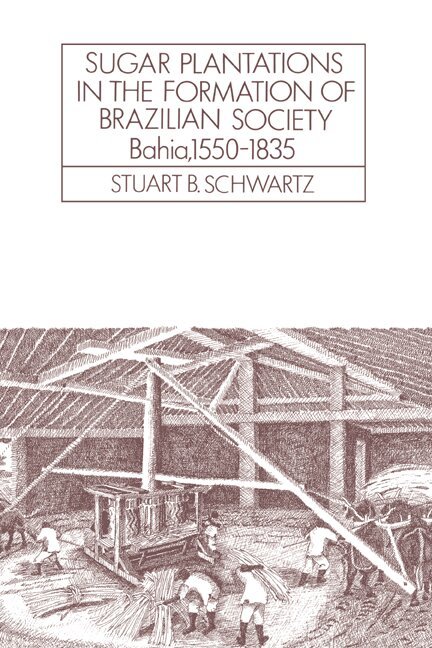
This study examines the history of the sugar economy and the peculiar development of plantation society over a three hundred year period in Bahia, a major sugar plantation zone and an important terminus of the Atlantic slave trade. Drawing on little-used archival sources, plantations accounts, and notarial records, Professor Schwartz has examined through both quantitative and qualitative methods the various groups that made up plantation society. While he devotes much attention to masters and slaves, he views slavery ultimately as part of a larger structure of social and economic relations. The peculiarities of sugar-making and the nature of plantation labour are used throughout the book as keys to an understanding of roles and relationships in plantation society. A comparative perspective is also employed, so that studies of slavery elsewhere in the Americas inform the analysis, while at many points direct comparisons of the Bahian case with other plantation societies are also made.
Häftad, Engelska, 1994
569 kr
Skickas inom 7-10 vardagar
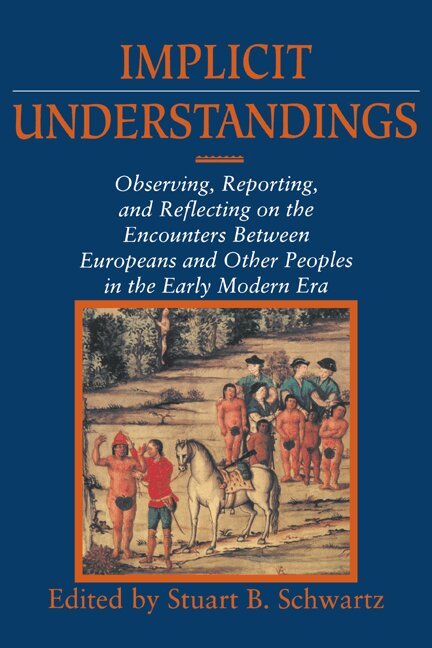
This volume brings together the work of twenty historians, anthropologists, and literary scholars who have tried to examine the nature of the encounter between Europeans and the other peoples of the world from roughly 1450 to 1800, the early modern era. The book is world-wide in scope - ranging from Hawaii, Australia, and China to the Americas and Africa - but is unified by the central underlying theme that implicit understandings influence every culture's ideas about itself and others. These understandings, however, are changed by experience in a constantly shifting process in which both sides participate. This makes such encounters complex historical events and moments of 'discovery'. The scholars gathered here grapple with the questions of how we observe, and how observation and representation can reveal as much about ourselves as about those we observe.
Inbunden, Engelska, 1999
2 635 kr
Skickas inom 7-10 vardagar
This volume, part of the Cambridge History of the Native Peoples of the Americas, is the first major survey of research on the indigenous peoples of South America from the earliest peopling of the continent to the present since Julian Steward's Handbook of South American Indians was published half a century ago. Although this volume concentrates on continental South America, peoples in the Caribbean and lower Central America who were linguistically or culturally connected are also discussed. This volume is an 'idea-oriented history', emphasizing the development of general themes instead of presenting every group and society. Indigenous peoples' own stories of the past are used as well as the standard accounts written by outsiders. Research is presented following regional and conceptual frameworks; some chapters overlap or present differing interpretations. The volume's emphasis is on self-perceptions of the indigenous peoples of South America at various times and under differing situations.
Del 3 - The Cambridge history of the Native Peoples of the Americas
The Cambridge History of the Native Peoples of the Americas
Inbunden, Engelska, 1999
2 539 kr
Skickas inom 7-10 vardagar
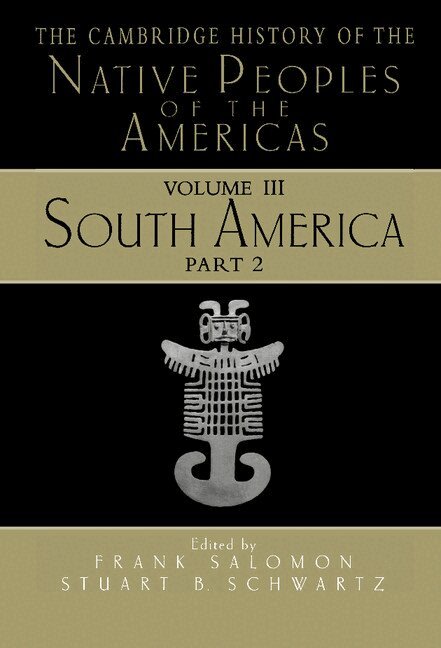
This volume, part of the Cambridge History of the Native Peoples of the Americas, is the first major survey of research on the indigenous peoples of South America from the earliest peopling of the continent to the present since Julian Steward's Handbook of South American Indians was published half a century ago. Although this volume concentrates on continental South America, peoples in the Caribbean and lower Central America who were linguistically or culturally connected are also discussed. This volume is an 'idea-oriented history,' emphasizing the development of general themes instead of presenting every group and society. Indigenous peoples' own stories of the past are used as well as the standard accounts written by outsiders. Research is presented following regional and conceptual frameworks; some chapters overlap or present differing interpretations. The volume's emphasis is on self-perceptions of the indigenous peoples of South America at various times and under differing situations.
Inbunden, Engelska, 2015
381 kr
Skickas inom 5-8 vardagar
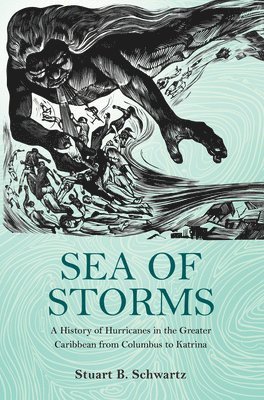
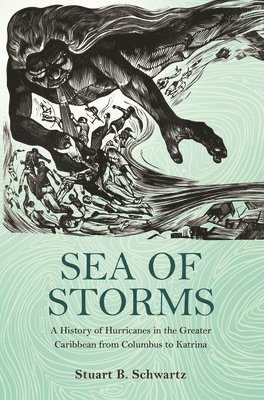
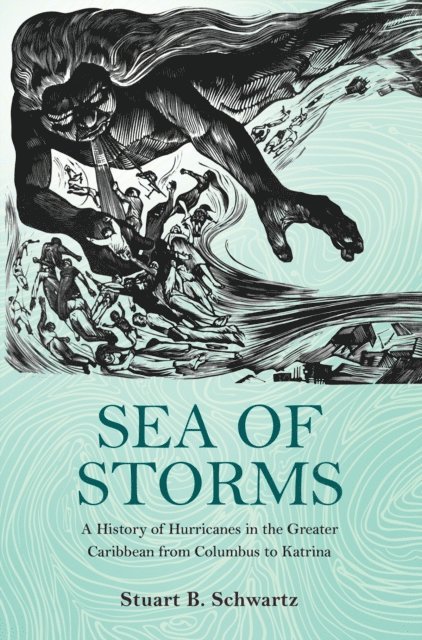
The diverse cultures of the Caribbean have been shaped as much by hurricanes as they have by diplomacy, commerce, or the legacy of colonial rule. In this panoramic work of social history, Stuart Schwartz examines how Caribbean societies have responded to the dangers of hurricanes, and how these destructive storms have influenced the region's history, from the rise of plantations, to slavery and its abolition, to migrations, racial conflict, and war. Taking readers from the voyages of Columbus to the devastation of Hurricane Katrina, Schwartz looks at the ethical, political, and economic challenges that hurricanes posed to the Caribbean's indigenous populations and the different European peoples who ventured to the New World to exploit its riches. He describes how the United States provided the model for responding to environmental threats when it emerged as a major power and began to exert its influence over the Caribbean in the nineteenth century, and how the region's governments came to assume greater responsibilities for prevention and relief, efforts that by the end of the twentieth century were being questioned by free-market neoliberals.Schwartz sheds light on catastrophes like Katrina by framing them within a long and contentious history of human interaction with the natural world. Spanning more than five centuries and drawing on extensive archival research in Europe and the Americas, Sea of Storms emphasizes the continuing role of race, social inequality, and economic ideology in the shaping of our responses to natural disaster.
Häftad, Engelska, 2016
289 kr
Skickas inom 5-8 vardagar
The diverse cultures of the Caribbean have been shaped as much by hurricanes as they have by diplomacy, commerce, or the legacy of colonial rule. In this panoramic work of social history, Stuart Schwartz examines how Caribbean societies have responded to the dangers of hurricanes, and how these destructive storms have influenced the region's history, from the rise of plantations, to slavery and its abolition, to migrations, racial conflict, and war. Taking readers from the voyages of Columbus to the devastation of Hurricane Katrina, Schwartz looks at the ethical, political, and economic challenges that hurricanes posed to the Caribbean's indigenous populations and the different European peoples who ventured to the New World to exploit its riches. He describes how the United States provided the model for responding to environmental threats when it emerged as a major power and began to exert its influence over the Caribbean in the nineteenth century, and how the region's governments came to assume greater responsibilities for prevention and relief, efforts that by the end of the twentieth century were being questioned by free-market neoliberals.Schwartz sheds light on catastrophes like Katrina by framing them within a long and contentious history of human interaction with the natural world. Spanning more than five centuries and drawing on extensive archival research in Europe and the Americas, Sea of Storms emphasizes the continuing role of race, social inequality, and economic ideology in the shaping of our responses to natural disaster.
Häftad, Engelska, 2004
526 kr
Skickas inom 10-15 vardagar
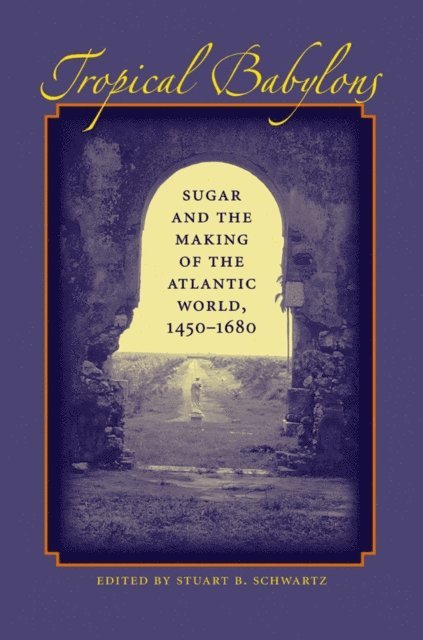
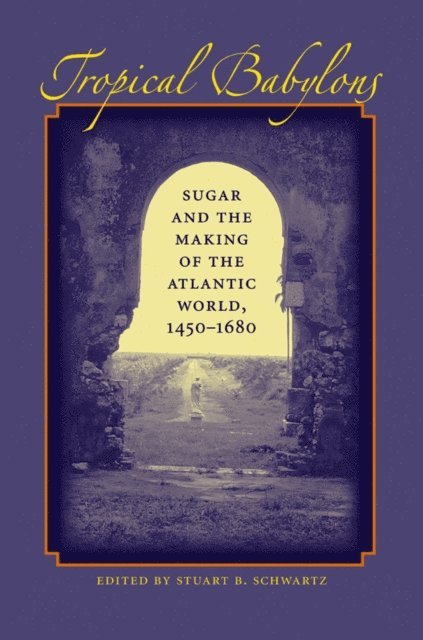
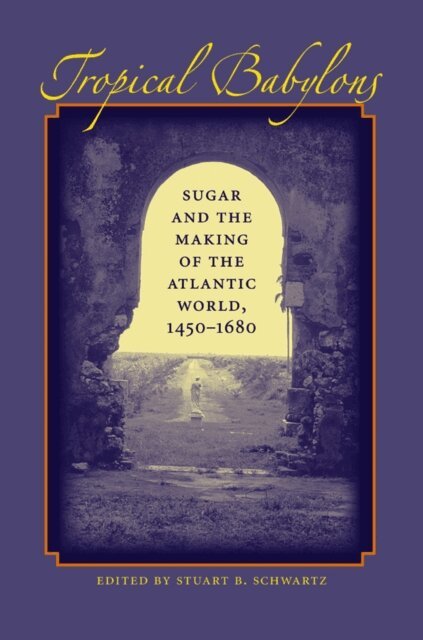
The idea that sugar, plantations, slavery, and capitalism were all present at the birth of the Atlantic world has long dominated scholarly thinking. In nine original essays by a multinational group of top scholars, Tropical Babylons re-evaluates this so-called ""sugar revolution,"" presenting a revisionist examination of the origins of society and economy in the Atlantic world. Focusing on areas colonized by Spain and Portugal, these essays show that despite reliance on common knowledge and technology, there were considerable variations in the way sugar was produced. With studies of Iberia, Madeira and the Canary Islands, Hispaniola, Cuba, Brazil, and Barbados, this volume demonstrates the similarities and differences between plantation colonies, questions the very idea of a sugar revolution, and shows how the specific conditions in each colony influenced the way sugar was produced and the impact of that crop on the formation of ""tropical Babylons"" - multiracial societies of great oppression.
Häftad, Engelska, 2020
295 kr
Skickas inom 5-8 vardagar
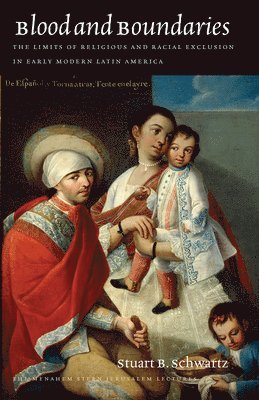
In Blood and Boundaries, Stuart B. Schwartz takes us to late medieval Latin America to show how Spain and Portugal’s policies of exclusion and discrimination based on religious origins and genealogy were transferred to their colonies in Latin America. Rather than concentrating on the three principal divisions of colonial society—Indians, Europeans, and people of African origins—as is common in studies of these colonial societies, Schwartz examines the three minority groups of moriscos, conversos, and mestizos. Muslim and Jewish converts and their descendants, he shows, posed a special problem for colonial society: they were feared and distrusted as peoples considered ethnically distinct, but at the same time their conversion to Christianity seemed to violate stable social categories and identities. This led to the creation of “cleanliness of blood” regulations that explicitly discriminated against converts. Eventually, Schwartz shows, those regulations were extended to control the subject indigenous and enslaved African populations, and over time, applied to the growing numbers of mestizos, peoples of mixed ethnic origins. Despite the efforts of civil and church and state institutions to regulate, denigrate, and exclude, members of these affected groups often found legal and practical means to ignore, circumvent, or challenge the efforts to categorize and exclude them, creating in the process the dynamic societies of Latin America that emerged in the nineteenth century.