Religion Matters – serie
Visar alla böcker i serien Religion Matters. Handla med fri frakt och snabb leverans.
18 produkter
18 produkter
292 kr
Skickas inom 10-15 vardagar
In this ground-breaking volume, the authors analyze the role of religion in conflict and conflict resolution. They do so from the perspectives of Judaism, Christianity, and Islam, while bringing different disciplines into play, including peace and conflict studies, religious studies, theology, and ethics. With much of current academic, political, and public attention focusing on the conflictive dimensions of religion, this book also explores the constructive resources of religion for conflict resolution and reconciliation. Analyzing the specific contributions of religious actors in this field, their potentials and possible problems connected with them, this book sheds light on the concrete contours of the oftentimes vague “religious factor” in processes of social change. Case studies in current and former settings of violent conflict such as Israel, post-genocide Rwanda, and Pakistan provide “real-life” contexts for discussion. Combining cutting-edge research with case studies and concrete implications for academics, policy makers, and practitioners, this concise and easily accessible volume helps to build bridges between these oftentimes separated spheres of engagement.The Open Access version of this book, available at:http://doi.org/10.4324/9781003002888, has been made available under a Creative Commons Attribution-Non Commercial-No Derivatives 4.0 license.
1 434 kr
Skickas inom 10-15 vardagar
In this ground-breaking volume, the authors analyze the role of religion in conflict and conflict resolution. They do so from the perspectives of Judaism, Christianity, and Islam, while bringing different disciplines into play, including peace and conflict studies, religious studies, theology, and ethics. With much of current academic, political, and public attention focusing on the conflictive dimensions of religion, this book also explores the constructive resources of religion for conflict resolution and reconciliation. Analyzing the specific contributions of religious actors in this field, their potentials and possible problems connected with them, this book sheds light on the concrete contours of the oftentimes vague “religious factor” in processes of social change. Case studies in current and former settings of violent conflict such as Israel, post-genocide Rwanda, and Pakistan provide “real-life” contexts for discussion. Combining cutting-edge research with case studies and concrete implications for academics, policy makers, and practitioners, this concise and easily accessible volume helps to build bridges between these oftentimes separated spheres of engagement.The Open Access version of this book, available at:http://doi.org/10.4324/9781003002888, has been made available under a Creative Commons Attribution-Non Commercial-No Derivatives 4.0 license.
1 434 kr
Skickas inom 10-15 vardagar
What could it mean, in terms of strengthening multilateral diplomacy, if the UN, the Organisation for Security and Cooperation in Europe (OSCE), the European Union, and other regional diplomatic frameworks engaged more creatively with a religious perspective? In this ground-breaking volume it is argued that international organisations, backed by governments, can and should use their convening power to initiate new, multi-layered frameworks of engagement, inclusive of the representatives of religion. This can make multilateralism more fit for purpose and have a major impact over time on our planetary future. The book is divided into an introduction and six chapters: Towards a culture of encounter inclusive of the world’s religious traditions Structural questions in 21st-century diplomacy Knowing what we ought to know: the issues that face 21st-century diplomacy Towards the global objective of a common peace for humanity Understanding how change happens The diplomacy of the two standards The development of new frameworks of engagementA brief outline is offered of what an all-European initiative – an agora for Europe – might look like if, in the 2020s, there were the political will to inaugurate a European regional process reflecting the orientation and methodology proposed in the book. Combining cutting-edge research and reflection, with concrete recommendations for academics, religious actors, policy makers, and practitioners, this concise and accessible volume helps to build bridges between these oftentimes separated spheres of engagement.The Open Access version of this book, available at https://doi.org/10.4324/9781003053842, has been made available under a Creative Commons Attribution-Non Commercial-No Derivatives 4.0 license.
292 kr
Skickas inom 10-15 vardagar
What could it mean, in terms of strengthening multilateral diplomacy, if the UN, the Organisation for Security and Cooperation in Europe (OSCE), the European Union, and other regional diplomatic frameworks engaged more creatively with a religious perspective? In this ground-breaking volume it is argued that international organisations, backed by governments, can and should use their convening power to initiate new, multi-layered frameworks of engagement, inclusive of the representatives of religion. This can make multilateralism more fit for purpose and have a major impact over time on our planetary future. The book is divided into an introduction and six chapters: Towards a culture of encounter inclusive of the world’s religious traditions Structural questions in 21st-century diplomacy Knowing what we ought to know: the issues that face 21st-century diplomacy Towards the global objective of a common peace for humanity Understanding how change happens The diplomacy of the two standards The development of new frameworks of engagementA brief outline is offered of what an all-European initiative – an agora for Europe – might look like if, in the 2020s, there were the political will to inaugurate a European regional process reflecting the orientation and methodology proposed in the book. Combining cutting-edge research and reflection, with concrete recommendations for academics, religious actors, policy makers, and practitioners, this concise and accessible volume helps to build bridges between these oftentimes separated spheres of engagement.The Open Access version of this book, available at https://doi.org/10.4324/9781003053842, has been made available under a Creative Commons Attribution-Non Commercial-No Derivatives 4.0 license.
292 kr
Skickas inom 10-15 vardagar
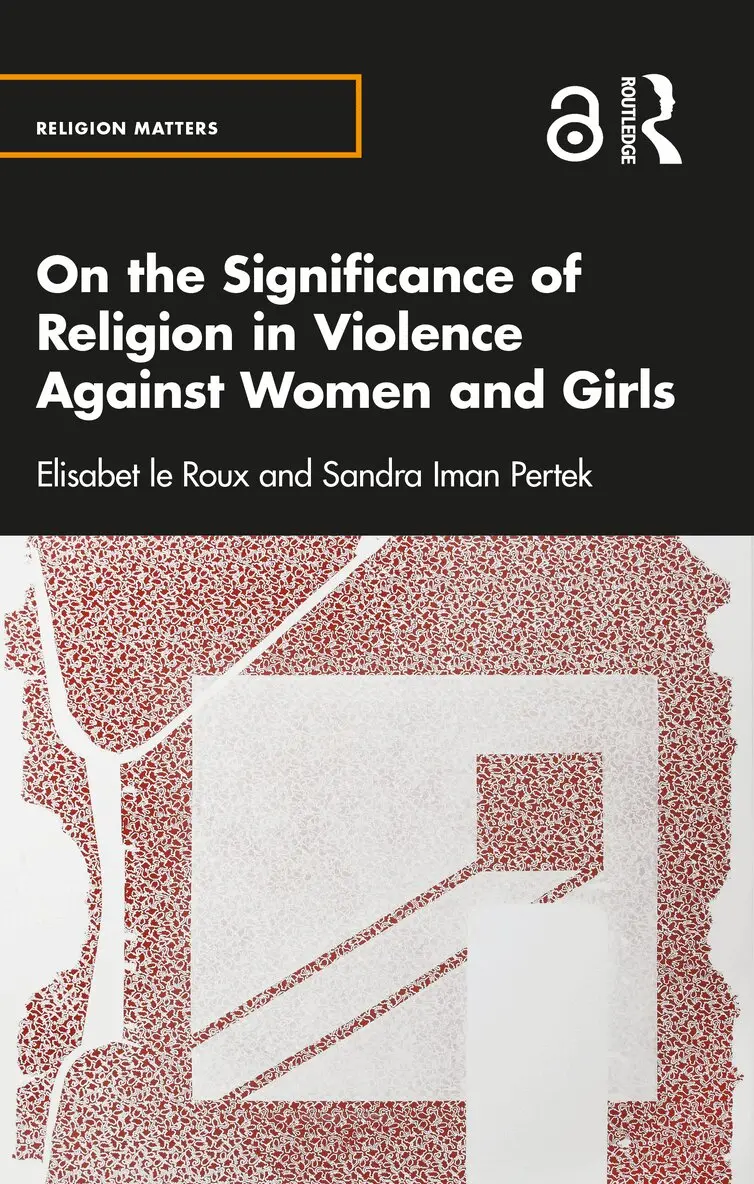
In this ground-breaking volume, the authors explore two sides of religion: the ways in which it contributes to violence against women and girls (VAWG) and the ways it counters it. Recognising the very real impact of religion on the lives of women and girls, it prioritises experiences and learnings from empirical research and of practitioners, and their activities at grassroots-level, to better understand the nature and root causes of VAWG. Drawing on research done in Christian and Muslim communities in various fragile settings with high religiosity, this book avoids simplistically assigning blame to any one religion, instead engaging with the commonalities of how religion and religious actors influence norms and behaviours that impact VAWG. If the sustainable development goal of ending all forms of VAWG is to be achieved, how should actors in the international development sector engage with religion and religious actors? This book unpacks the nature of religion and religious actors in relation to VAWG, with the aim of giving greater clarity on how to (and how not to) engage with this crucial issue.Combining cutting-edge research with case studies and pragmatic recommendations for academics, policymakers and practitioners, this concise and easily accessible volume helps instigate discussion and engagement with the incredibly important relationships between religion and VAWG.The Open Access version of this book, available at www.taylorfrancis.com, has been made available under a Creative Commons Attribution-Non Commercial-No Derivatives 4.0 license.
1 257 kr
Skickas inom 10-15 vardagar
In this ground-breaking volume, the authors explore two sides of religion: the ways in which it contributes to violence against women and girls (VAWG) and the ways it counters it. Recognising the very real impact of religion on the lives of women and girls, it prioritises experiences and learnings from empirical research and of practitioners, and their activities at grassroots-level, to better understand the nature and root causes of VAWG. Drawing on research done in Christian and Muslim communities in various fragile settings with high religiosity, this book avoids simplistically assigning blame to any one religion, instead engaging with the commonalities of how religion and religious actors influence norms and behaviours that impact VAWG. If the sustainable development goal of ending all forms of VAWG is to be achieved, how should actors in the international development sector engage with religion and religious actors? This book unpacks the nature of religion and religious actors in relation to VAWG, with the aim of giving greater clarity on how to (and how not to) engage with this crucial issue.Combining cutting-edge research with case studies and pragmatic recommendations for academics, policymakers and practitioners, this concise and easily accessible volume helps instigate discussion and engagement with the incredibly important relationships between religion and VAWG.The Open Access version of this book, available at www.taylorfrancis.com, has been made available under a Creative Commons Attribution-Non Commercial-No Derivatives 4.0 license.
1 257 kr
Skickas inom 10-15 vardagar
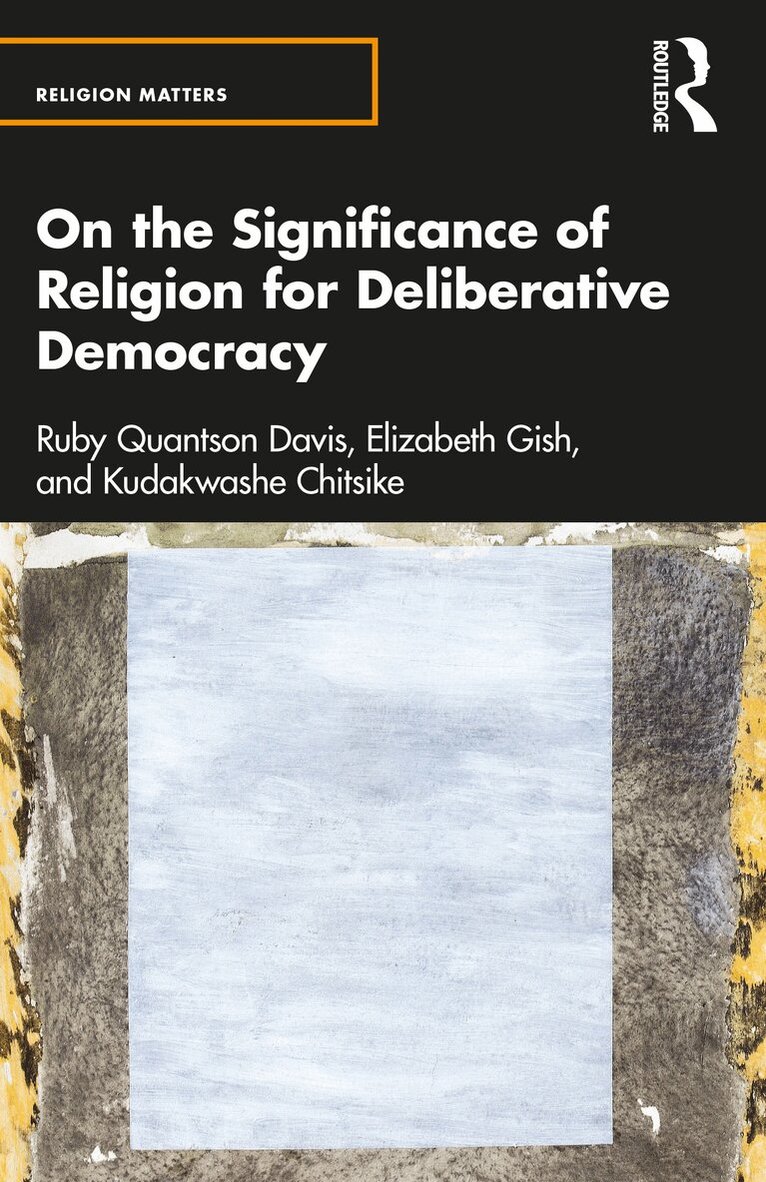
This exciting volume pioneers the study of the complex relationship between religion and deliberative democracy, a practice that places importance on the need for citizens to come together to identify shared concerns and issues, work through choices and options for action, weigh consequences and trade-offs, and possibly take collective action to influence decisions and policies. Chapters use case studies to demonstrate instances where deliberative democracy has advanced the positive role of religion and where religious practices have advanced the role of deliberative democracy. The authors look at the actions of various denominations of Christianity in Africa, the United States of America, and the South Pacific, as well as examining how such groups operate within the context of indigenous religions such as African Traditional Religion. This volume also explores instances where the absence of deliberative practices in religion has curtailed the ability of people to realise their full potential, and the ability of religious groups to act decisively for the common good to influence the politics of the times. Combining innovative research with case studies and practical implications and recommendations for religious leaders, academics, policy makers, and practitioners, this concise and easily accessible volume instructs on how religious and democratic institutions can symbiotically address community and national challenges.
265 kr
Skickas inom 10-15 vardagar
This exciting volume pioneers the study of the complex relationship between religion and deliberative democracy, a practice that places importance on the need for citizens to come together to identify shared concerns and issues, work through choices and options for action, weigh consequences and trade-offs, and possibly take collective action to influence decisions and policies. Chapters use case studies to demonstrate instances where deliberative democracy has advanced the positive role of religion and where religious practices have advanced the role of deliberative democracy. The authors look at the actions of various denominations of Christianity in Africa, the United States of America, and the South Pacific, as well as examining how such groups operate within the context of indigenous religions such as African Traditional Religion. This volume also explores instances where the absence of deliberative practices in religion has curtailed the ability of people to realise their full potential, and the ability of religious groups to act decisively for the common good to influence the politics of the times. Combining innovative research with case studies and practical implications and recommendations for religious leaders, academics, policy makers, and practitioners, this concise and easily accessible volume instructs on how religious and democratic institutions can symbiotically address community and national challenges.
2 113 kr
Skickas inom 10-15 vardagar
This book explores the role of religion in discussions about climate change and, particularly, the development of responses to climate change on global, state, institutional, and local levels. It considers examples of the ways that different religious traditions, including Indigenous, Muslim, Buddhist, and Christian communities, have responded to the different effects of climate change by using different methodological approaches, including political science and international relations (e.g. public opinion polls and constructivism); religious studies scholarship on climate change, including an overview of religion and ecology as a subdiscipline in religious studies; and environmental humanities approaches.This volume interrogates the diverse ways religion both acts and is acted upon by different actors, including institutions and nation states, in response to climate change. Within single traditions, different actors advocate for planetary care and concern, while their co-religionists may remain passive or deny climate change as a phenomenon.This book unravels the complexities of how different religions approach climate change and recommends that religions are taken seriously in the development of climate change mitigation strategies at different scales.The Open Access version of this book, available at http://www.taylorfrancis.com, has been made available under a Creative Commons Attribution-Non Commercial-No Derivatives (CC BY-NC-ND) 4.0 license
292 kr
Skickas inom 10-15 vardagar
This book explores the role of religion in discussions about climate change and, particularly, the development of responses to climate change on global, state, institutional, and local levels. It considers examples of the ways that different religious traditions, including Indigenous, Muslim, Buddhist, and Christian communities, have responded to the different effects of climate change by using different methodological approaches, including political science and international relations (e.g. public opinion polls and constructivism); religious studies scholarship on climate change, including an overview of religion and ecology as a subdiscipline in religious studies; and environmental humanities approaches.This volume interrogates the diverse ways religion both acts and is acted upon by different actors, including institutions and nation states, in response to climate change. Within single traditions, different actors advocate for planetary care and concern, while their co-religionists may remain passive or deny climate change as a phenomenon.This book unravels the complexities of how different religions approach climate change and recommends that religions are taken seriously in the development of climate change mitigation strategies at different scales.The Open Access version of this book, available at http://www.taylorfrancis.com, has been made available under a Creative Commons Attribution-Non Commercial-No Derivatives (CC BY-NC-ND) 4.0 license
727 kr
Skickas inom 10-15 vardagar
This timely volume addresses the rising interest in the role of religion in global issues worldwide. The ambitious Agenda 2030 and the 17 Sustainable Development Goals (SDGs) serve as the framework for this exploration, discussing questions such as:What role does religion play in poverty and poverty alleviation? How does religion inspire people in combatting gender inequality? What is religion’s role in fueling conflict and which resources can religion offer for peace and reconciliation? Based on the conviction that not one single faith tradition or discipline can adequately address the complexity of current global issues, this book brings in the perspectives of different faith traditions and different disciplines. Combining cutting-edge research with case studies and concrete implications for academics, policymakers, and practitioners, this concise and easily accessible volume helps to build bridges between these different actors and their engagement. It serves as the introductory volume to the series, Religion Matters: On the Significance of Religion in Global Issues.The Open Access version of this book, available at www.taylorfrancis.com, has been made available under a Creative Commons Attribution-Non Commercial-No Derivatives 4.0 license.
251 kr
Skickas
This timely volume addresses the rising interest in the role of religion in global issues worldwide. The ambitious Agenda 2030 and the 17 Sustainable Development Goals (SDGs) serve as the framework for this exploration, discussing questions such as:What role does religion play in poverty and poverty alleviation? How does religion inspire people in combatting gender inequality? What is religion’s role in fueling conflict and which resources can religion offer for peace and reconciliation? Based on the conviction that not one single faith tradition or discipline can adequately address the complexity of current global issues, this book brings in the perspectives of different faith traditions and different disciplines. Combining cutting-edge research with case studies and concrete implications for academics, policymakers, and practitioners, this concise and easily accessible volume helps to build bridges between these different actors and their engagement. It serves as the introductory volume to the series, Religion Matters: On the Significance of Religion in Global Issues.The Open Access version of this book, available at www.taylorfrancis.com, has been made available under a Creative Commons Attribution-Non Commercial-No Derivatives 4.0 license.
1 257 kr
Skickas inom 10-15 vardagar
This progressive volume furthers the inter-religious, international, and interdisciplinary understanding of the role of religion in the area of human rights.Building bridges between the often-separated spheres of academics, policymakers, and practitioners, it draws on the expertise of its authors alongside historical and contemporary examples of how religion's role in human rights manifests. At the core of the book are four case studies, dealing with Hinduism, Judaism, Christianity, and Islam. Authors from each religion show the positive potential that their faith and its respective traditions has for the promotion of human rights, while also addressing why and how it stands in the way of fulfilling this potential.Addressed to policymakers, academics, and practitioners worldwide, this engaging and accessible volume provides pragmatic studies on how religious and secular actors can cooperate and contribute to policies that improve global human rights.
265 kr
Skickas inom 10-15 vardagar
This progressive volume furthers the inter-religious, international, and interdisciplinary understanding of the role of religion in the area of human rights.Building bridges between the often-separated spheres of academics, policymakers, and practitioners, it draws on the expertise of its authors alongside historical and contemporary examples of how religion's role in human rights manifests. At the core of the book are four case studies, dealing with Hinduism, Judaism, Christianity, and Islam. Authors from each religion show the positive potential that their faith and its respective traditions has for the promotion of human rights, while also addressing why and how it stands in the way of fulfilling this potential.Addressed to policymakers, academics, and practitioners worldwide, this engaging and accessible volume provides pragmatic studies on how religious and secular actors can cooperate and contribute to policies that improve global human rights.
1 434 kr
Skickas inom 10-15 vardagar
The pervasive role religion plays in immigration policy is universally acknowledged but not well understood. On the Significance of Religion in Immigration Policy explores the ways in which religion affects immigration policy, focusing on two Abrahamic religions: Christianity and Judaism. This cutting-edge volume:Makes sense of the varied roles played by two Abrahamic religions in immigration policy and practiceShows how distinguishing between religion as belief/practice and religion as national identity can serve as a heuristic tool in understanding how religion affects immigration policyInvestigates scriptural passages relevant to immigration, their reception history, and how they have been used to justify diverse policies. Uses case studies to provide an overview of the complex and varied religious responses to immigrantsOffers policy implications for understanding the religious impact on immigration for policymakers, practitioners, and academicsApplying cutting-edge research to concrete situations, this volume provides an accessible and concise overview suitable for academics, policymakers, and practitioners alike, building a common platform for understanding how some of the major world religions treat the stranger in both theory and practice.
292 kr
Skickas inom 10-15 vardagar
The pervasive role religion plays in immigration policy is universally acknowledged but not well understood. On the Significance of Religion in Immigration Policy explores the ways in which religion affects immigration policy, focusing on two Abrahamic religions: Christianity and Judaism. This cutting-edge volume:Makes sense of the varied roles played by two Abrahamic religions in immigration policy and practiceShows how distinguishing between religion as belief/practice and religion as national identity can serve as a heuristic tool in understanding how religion affects immigration policyInvestigates scriptural passages relevant to immigration, their reception history, and how they have been used to justify diverse policies. Uses case studies to provide an overview of the complex and varied religious responses to immigrantsOffers policy implications for understanding the religious impact on immigration for policymakers, practitioners, and academicsApplying cutting-edge research to concrete situations, this volume provides an accessible and concise overview suitable for academics, policymakers, and practitioners alike, building a common platform for understanding how some of the major world religions treat the stranger in both theory and practice.
347 kr
Skickas inom 10-15 vardagar
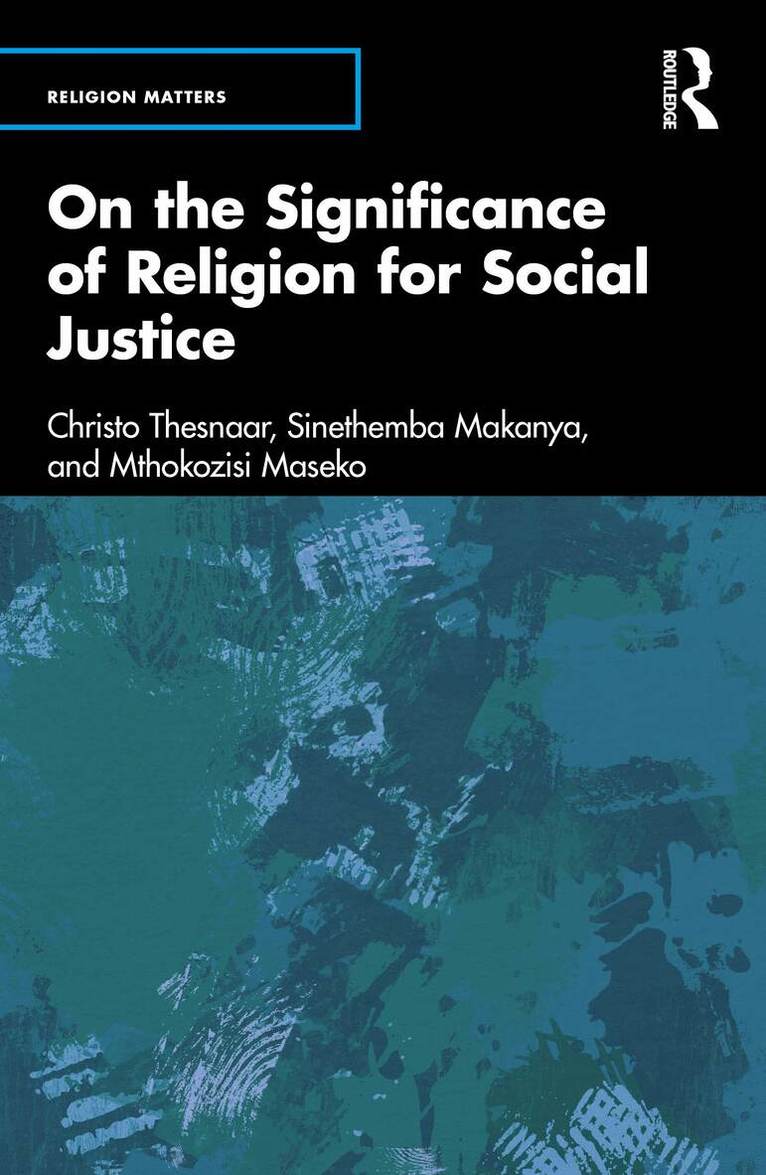
On the Significance of Religion in Social Justice analyses the role of religion in social justice from the perspectives of Traditional African Religion, Christianity, and Islam by bringing different disciplines into play, including medicine and health, humanities and Indigenous knowledge systems or African metaphysics, Islam and sociopolitical studies, practical theology, and pastoral care. With much of current academic, political, and public attention focusing on the problematic dimensions of religion, this book also explores the constructive resources of religion for social justice. Analysing the specific contributions of religious actors in this field, their potential, and possible problems connected with them, this book sheds light on the concrete contours of the often vague "religious factor" in processes of social change for social justice.References to current and former settings of social injustice within South Africa provide "real-life" contexts for their discussions. Combining cutting-edge research with current and former settings with concrete implications for academics, policymakers, and practitioners, this concise and easily accessible volume helps to build bridges between these often-separated spheres of engagement.
2 113 kr
Skickas inom 10-15 vardagar
On the Significance of Religion in Social Justice analyses the role of religion in social justice from the perspectives of Traditional African Religion, Christianity, and Islam by bringing different disciplines into play, including medicine and health, humanities and Indigenous knowledge systems or African metaphysics, Islam and sociopolitical studies, practical theology, and pastoral care. With much of current academic, political, and public attention focusing on the problematic dimensions of religion, this book also explores the constructive resources of religion for social justice. Analysing the specific contributions of religious actors in this field, their potential, and possible problems connected with them, this book sheds light on the concrete contours of the often vague "religious factor" in processes of social change for social justice.References to current and former settings of social injustice within South Africa provide "real-life" contexts for their discussions. Combining cutting-edge research with current and former settings with concrete implications for academics, policymakers, and practitioners, this concise and easily accessible volume helps to build bridges between these often-separated spheres of engagement.