Rhetoric and Society - Böcker
Visar alla böcker i serien Rhetoric and Society. Handla med fri frakt och snabb leverans.
5 produkter
5 produkter
1 551 kr
Skickas inom 10-15 vardagar
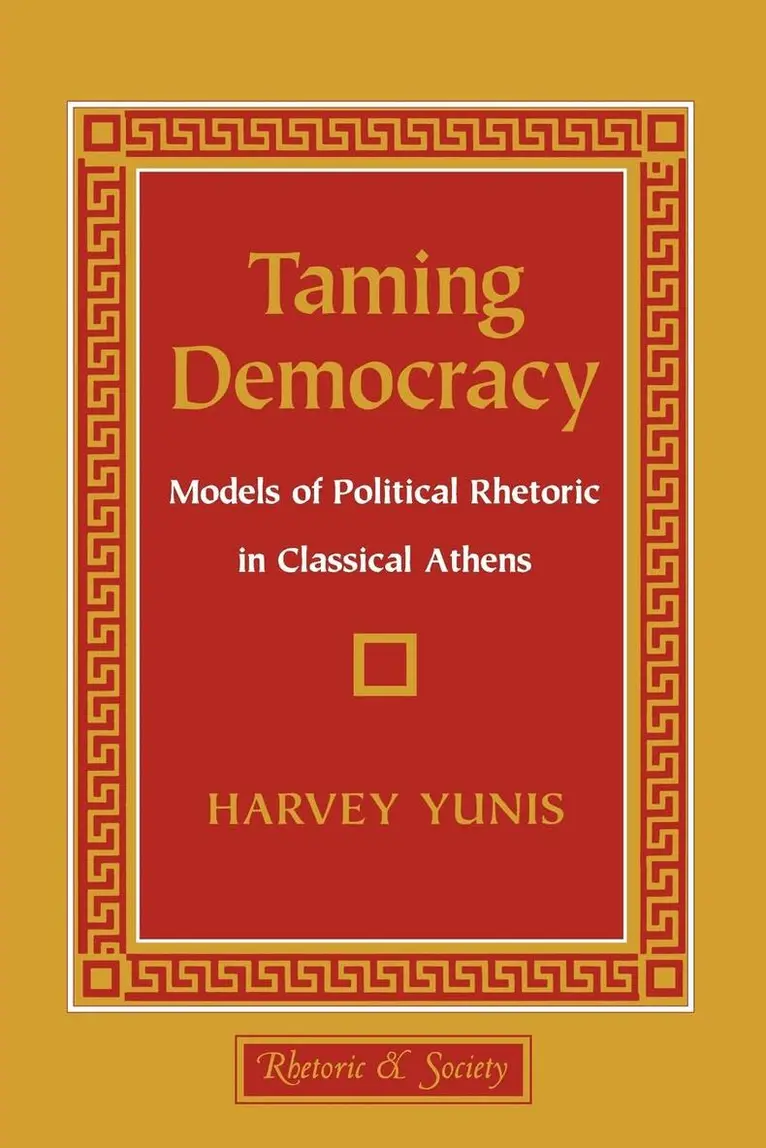
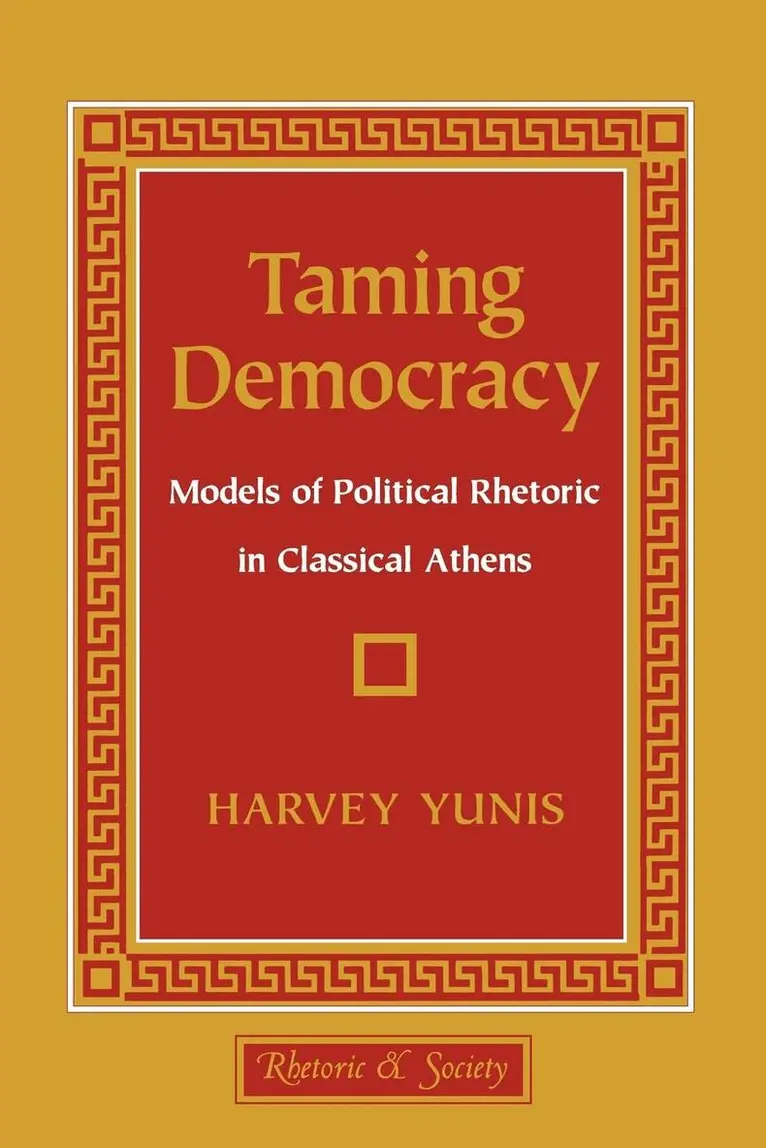
How does one speak to a large, diverse mass of ordinary, sovereign citizens and persuade them to render wise decisions? For Thucydides, Plato, and Demosthenes, who observed classical Athenian democracy in action, this was an urgent question. Harvey Yunis looks at how these three—historian, philosopher, politician respectively—explored the instructive potential of political rhetoric as a means of "taming democracy," Plato's metaphor for controlling the fractious demos through language. Yunis offers new insights into the ideas of the three thinkers: Thucydides' bipolar model of Periclean versus demagogic rhetoric; Plato's engagement with political rhetoric in the Gorgias, the Phaedrus, and the Laws; and Demosthenes' attempt both to instruct and to persuade his political audience. Yunis illuminates both the concrete historical problem of political deliberation in Athens and the intellectual and literary responses that the problem evoked. Few, if any, other books on classical Athens afford such a combination of perspectives from history, drama, philosophy, and politics. Writing with unusual clarity and cogency, Yunis translates all texts and explains the relevant issues. His book can profitably be read by anyone concerned with the issues at the heart of classical and contemporary democracy.
1 117 kr
Skickas inom 10-15 vardagar
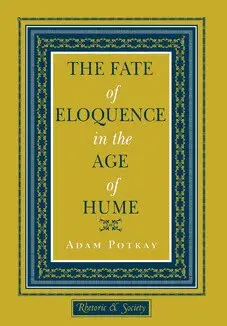
This engaging and insightful book explores the fate of eloquence in a period during which it both denoted a living oratorical art and served as a major factor in political thought. Seeing Hume's philosophy as a key to the literature of the mid-eighteenth century, Adam Potkay compares the staus of eloquence in Hume's Essays and Natural History of Religion to its status in novels by Sterne, poems by Pope and Gray, and Macpherson's Poems of Ossian.Potkay explains the sense of urgency that the concept of eloquence evoked among eighteenth-century British readers, for whom it recalled Demosthenes exhorting Athenian citizens to oppose tyranny. Revived by Hume and many other writers, the concept of eloquence resonated deeply for an audience who perceived its own political community as being in danger of disintegration. Potkay also shows how, beginning in the realm of literature, the fashion of polite style began to eclipse that of political eloquence. An ethos suitable both to the family circle and to a public sphere that included women, "politeness" entailed a sublimation of passions, a "feminine modesty as opposed to "masculine" display, and a style that sought rather to placate or stabilize than to influence the course of events. For Potkay, the tension between the ideals of ancient eloquence and of modern politeness defined literary and political discourses alike between 1726 and 1770: although politeness eventually gained ascendancy, eloquence was never silenced.
672 kr
Skickas inom 10-15 vardagar
Thoroughly embedded in postmodern theory, this book offers a critique of traditional conceptions of the liberal arts, exploring the challenges posed by cultural diversity to the aims and methods of a humanist education. Janet M. Atwill investigates a neglected tradition of rhetoric, exemplified by Protagoras and Isocorates, and preserved in Aristotle's Rhetoric. This tradition was rooted in the ancient sophistic and platonic conceptions of techné, or productive knowledge, that appears both in literary texts from the seventh century B.C.E. and in medical and technical treatises from the fifth century B.C.E. Atwill examines these traditions, together with sophistic and platonic conceptions, and considers the commentaries on Aristotle's Rhetoric by E. M. Cope and William S. J. Grimaldi, where the concepts of techné and productive knowledge disappear in the modern opposition between theory and practice. Since models of knowledge are closely tied to models of subjectivity, Atwill's examination of techné also explores the role of political, economic, and educational institutions in standardizing a specific model for subjectivity. She argues that the liberal arts traditions largely eclipsed the social and political functions of rhetoric, transforming it from an art of disrupting and reinventing lines of power to a discipline of producing a normative subject, defined by virtue but modeled on a specific gender and class type.
433 kr
Skickas inom 10-15 vardagar
Thoroughly embedded in postmodern theory, this book offers a critique of traditional conceptions of the liberal arts, exploring the challenges posed by cultural diversity to the aims and methods of a humanist education. Janet M. Atwill investigates a neglected tradition of rhetoric, exemplified by Protagoras and Isocorates, and preserved in Aristotle's Rhetoric. This tradition was rooted in the ancient sophistic and platonic conceptions of techné, or productive knowledge, that appears both in literary texts from the seventh century B.C.E. and in medical and technical treatises from the fifth century B.C.E. Atwill examines these traditions, together with sophistic and platonic conceptions, and considers the commentaries on Aristotle's Rhetoric by E. M. Cope and William S. J. Grimaldi, where the concepts of techné and productive knowledge disappear in the modern opposition between theory and practice. Since models of knowledge are closely tied to models of subjectivity, Atwill's examination of techné also explores the role of political, economic, and educational institutions in standardizing a specific model for subjectivity. She argues that the liberal arts traditions largely eclipsed the social and political functions of rhetoric, transforming it from an art of disrupting and reinventing lines of power to a discipline of producing a normative subject, defined by virtue but modeled on a specific gender and class type.
513 kr
Skickas inom 10-15 vardagar
How does one speak to a large, diverse mass of ordinary, sovereign citizens and persuade them to render wise decisions? For Thucydides, Plato, and Demosthenes, who observed classical Athenian democracy in action, this was an urgent question. Harvey Yunis looks at how these three—historian, philosopher, politician respectively—explored the instructive potential of political rhetoric as a means of "taming democracy," Plato's metaphor for controlling the fractious demos through language. Yunis offers new insights into the ideas of the three thinkers: Thucydides' bipolar model of Periclean versus demagogic rhetoric; Plato's engagement with political rhetoric in the Gorgias, the Phaedrus, and the Laws; and Demosthenes' attempt both to instruct and to persuade his political audience. Yunis illuminates both the concrete historical problem of political deliberation in Athens and the intellectual and literary responses that the problem evoked. Few, if any, other books on classical Athens afford such a combination of perspectives from history, drama, philosophy, and politics. Writing with unusual clarity and cogency, Yunis translates all texts and explains the relevant issues. His book can profitably be read by anyone concerned with the issues at the heart of classical and contemporary democracy.