• Fri frakt över 249 kr
  • •
  • Snabba leveranser
  • •
  • Billiga böcker
Kundservice

Du är på sajten för privatpersoner.

Företag, bibliotek eller offentlig verksamhet?

Du handlar på classic.bokus.com, där alla dina funktioner finns intakta.
Till classic.bokus.com
Bokus logotyp. Gå till startsidan.
  • Erbjudanden
  • Student
  • Topplistor
  • Barn & ungdom
  • Bokus Play
  • E-böcker
  • Ljudböcker
  • Pocketböcker
  • Spel & pussel

Upp till 25% på utvalda nyheter →

Sidfot

Mina sidor

    Hjälp

    • Kundservice
    • Vanliga frågor och svar
    • Frakt och leverans
    • Retur vid ångerrätt
    • Reklamera vara
    • Betalning
    • Köpvillkor
    • Allmänna villkor
    • Information om webbplatsens tillgänglighet

    Om Bokus

    • Om oss
    • Pressrum
    • För studenter
    • För företag
    • För bibliotek och offentlig verksamhet
    • För leverantörer
    • Hållbarhet

    Populärt

    • Aktuella erbjudanden
    • Presentkort
    • Studentlitteratur
    • Nya böcker
    • Topplistor
    • Signerade böcker
    • Engelska böcker

    Inspiration

    • Boktips
    • BookTok
    • Populära bokserier
    • Barnbokskaraktärer
    • Populära författare
    Logotyp för Bokus
    Följ oss på Facebook (extern länk)Följ oss på Instagram (extern länk)Följ oss på YouTube (extern länk)Följ oss på TikTok (extern länk)
    bokus @ CookiesAnpassa cookiesIntegritetspolicyKöpvillkor
    Till Citymail hemsida (extern länk)Till Budbee hemsida (extern länk)Till Postnord hemsida (extern länk)Till Schenker hemsida (extern länk)Till Early Bird hemsida (extern länk)Till Walleys hemsida (extern länk)
    1. Samhälle och politik
    2. Politik och statsskick
    3. Statsskick och politiska processer
    4. Statsskick: demokrati

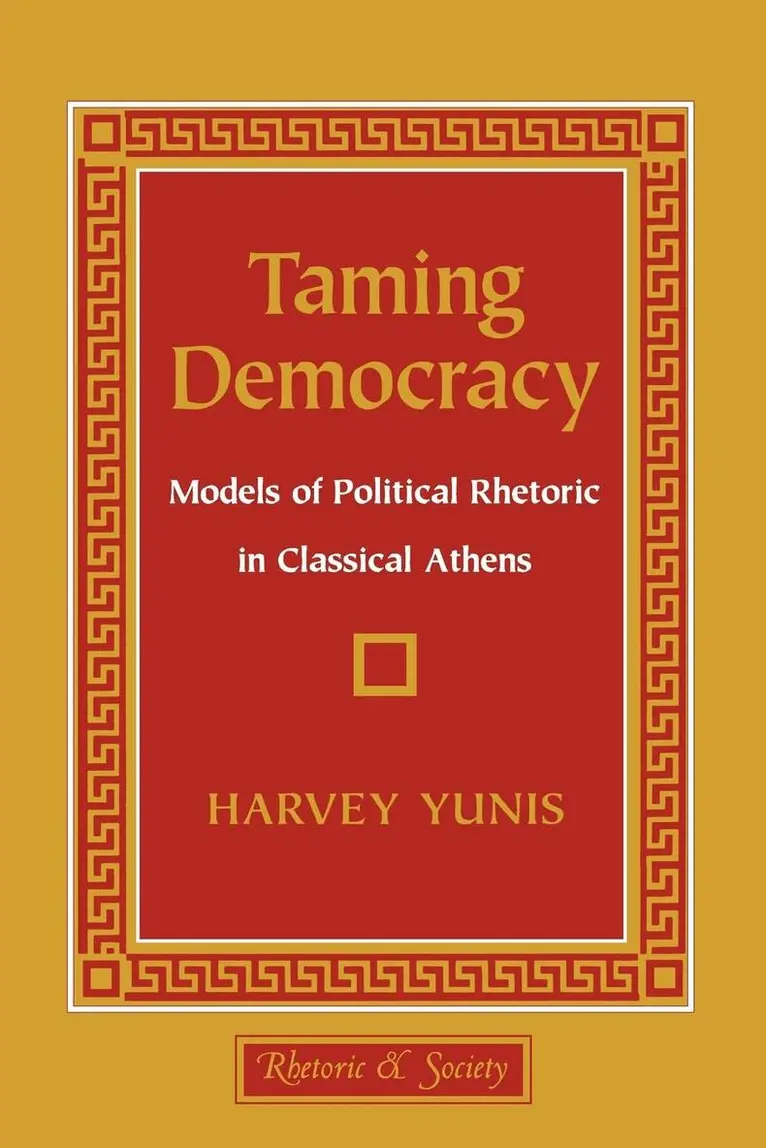
    Taming Democracy

    Models of Political Rhetoric in Classical Athens

    AvHarvey Yunis

    Häftad, Engelska, 1996

    Del i serien Rhetoric and Society

    535 kr

    Beställningsvara. Skickas inom 10-15 vardagar. Fri frakt över 249 kr.

    Fler format och utgåvor

    Inbunden

    1 617 kr

    Beskrivning

    How does one speak to a large, diverse mass of ordinary, sovereign citizens and persuade them to render wise decisions? For Thucydides, Plato, and Demosthenes, who observed classical Athenian democracy in action, this was an urgent question. Harvey Yunis looks at how these three—historian, philosopher, politician respectively—explored the instructive potential of political rhetoric as a means of "taming democracy," Plato's metaphor for controlling the fractious demos through language. Yunis offers new insights into the ideas of the three thinkers: Thucydides' bipolar model of Periclean versus demagogic rhetoric; Plato's engagement with political rhetoric in the Gorgias, the Phaedrus, and the Laws; and Demosthenes' attempt both to instruct and to persuade his political audience. Yunis illuminates both the concrete historical problem of political deliberation in Athens and the intellectual and literary responses that the problem evoked. Few, if any, other books on classical Athens afford such a combination of perspectives from history, drama, philosophy, and politics. Writing with unusual clarity and cogency, Yunis translates all texts and explains the relevant issues. His book can profitably be read by anyone concerned with the issues at the heart of classical and contemporary democracy.

    Produktinformation

    • Utgivningsdatum:1996-01-18
    • Mått:152 x 229 x 22 mm
    • Vikt:907 g
    • Format:Häftad
    • Språk:Engelska
    • Serie:Rhetoric and Society
    • Antal sidor:336
    • Förlag:Cornell University Press
    • ISBN:9780801483585

    Utforska kategorier

    • Statsskick: demokrati inom Samhälle och politik
    • Filosofiska discipliner inom Filosofi och religion

    Mer om författaren

    Harvey Yunis is Associate Professor of Classics at Rice University.

    Recensioner i media

    Yunis can be credited with an illuminating and detailed account of one of several important tropes which informed democratic rhetoric and politics in Athens.- John Hesk, University of St. Andrews (Journal of Hellenic Studies)