Roman and Late Antique Mediterranean Pottery – Serie
Visar alla böcker i serien Roman and Late Antique Mediterranean Pottery. Handla med fri frakt och snabb leverans.
16 produkter
16 produkter
Del 7 - Roman and Late Antique Mediterranean Pottery
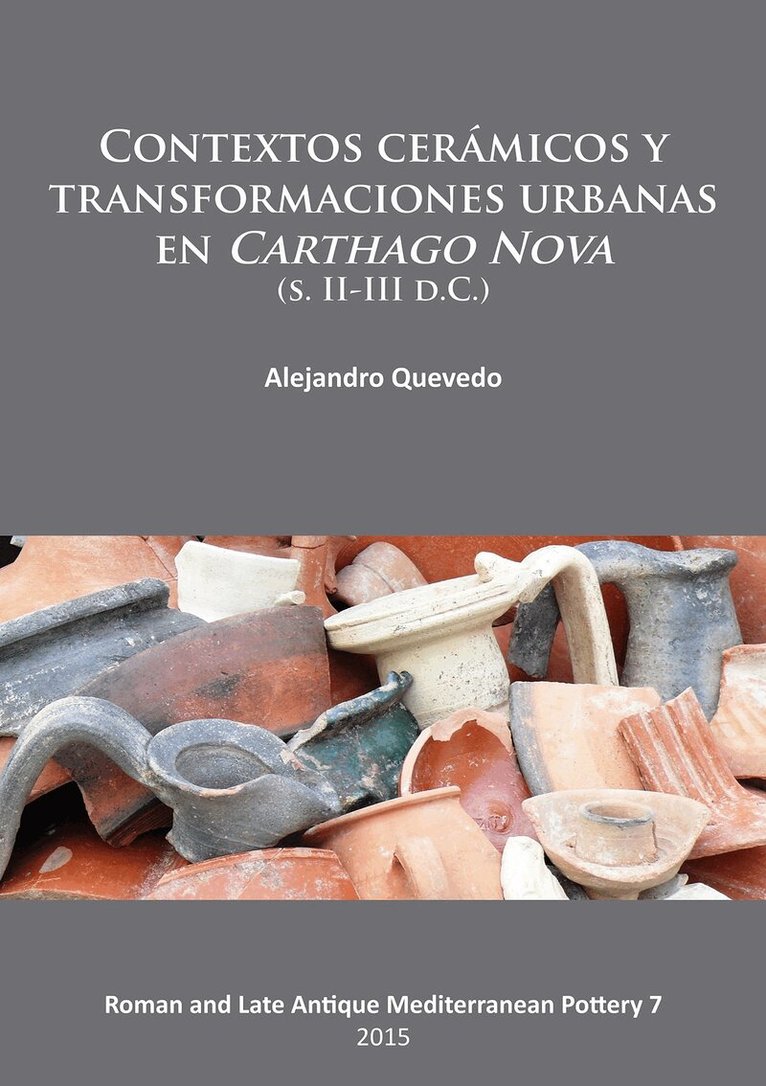
Contextos cerámicos y transformaciones urbanas en Carthago Nova (s. II-III d.C.)
Häftad, Spanska, 2015
1 084 kr
Skickas
The transition process of the Roman city between the Early Roman period and Late Antiquity is difficult to understand due to the absence of urban models and the decline in epigraphy. The transformations that accompany this period are detectable in the western provinces of the Empire from a very early time. Their interpretation –crisis, mutation, etc.– varies with each study case. Ancient Cartagena (Hispania Citerior) is a paradigm of these changes. Starting under Marcus Aurelius, the city began to show symptoms of exhaustion, at the same time as literary and epigraphic evidence began to decline, until it disappeared altogether. In these pages we aim to contribute –and at the same time vindicate– an approach to discovering more about the 2nd and 3rd centuries AD based on the archaeological record and taking into account the stratigraphic sequences and especially the pottery material culture. The compiled documentation begins with a triple vocation: to serve as an instrument for dating; to provide quantified data about Carthago Nova’s patterns of consumption, way of life and trading links; and to understand the evolution of the city in a period from which the urban model of the Late Period emerged. Spanish text with English summary.
Del 6 - Roman and Late Antique Mediterranean Pottery
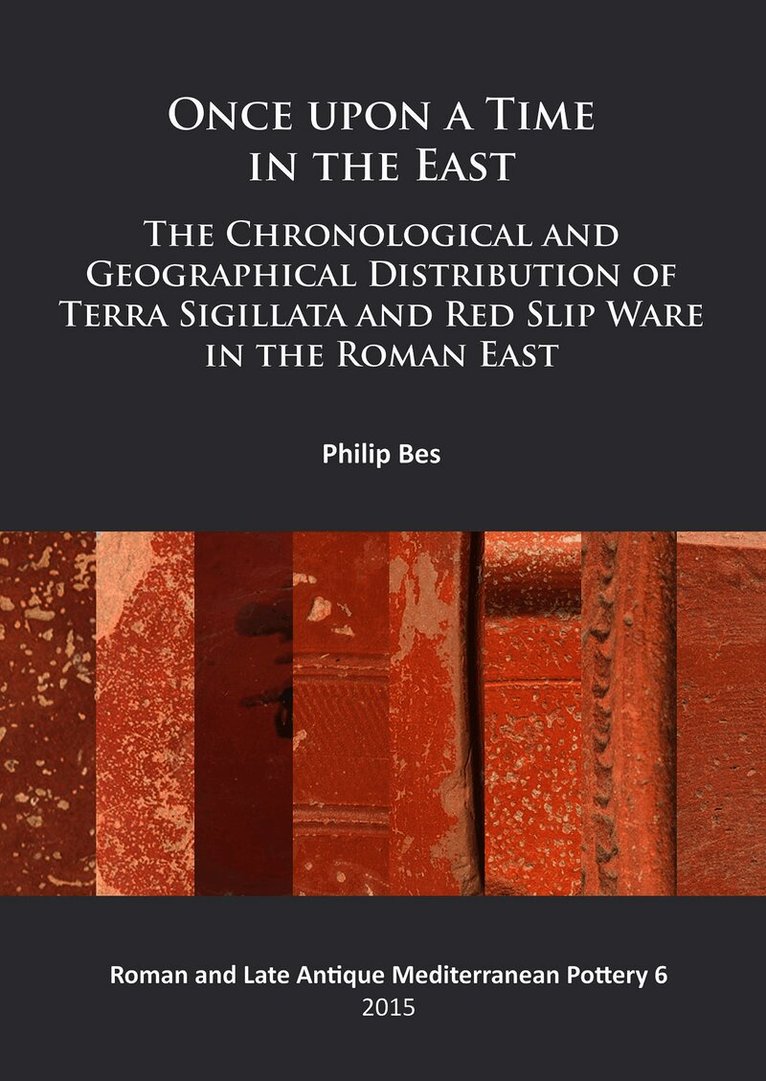
Once upon a Time in the East
The Chronological and Geographical Distribution of Terra Sigillata and Red Slip Ware in the Roman East
Häftad, Engelska, 2015
606 kr
Skickas
In this book Philip Bes summarises the results of his PhD thesis (Catholic University of Leuven) on the analysis of production trends and complex, quantified distribution patterns of the principal traded sigillatas and slipped table wares in the Roman East, from the early Empire to Late Antiquity (e.g. Italian Sigillata, Eastern Sigillata A, B and C, Çandarli ware, Phocean Red Slip Ware/LRC, Cypriot Red Slip Ware/LRD and African Red Slip Wares). He draws on his own work in Sagalassos and Boeotia, as well as an exhaustive review of archaeological publications of ceramic data. The analysis compares major regional blocks, documenting coastal as well as inland sites, and offers an interpretation of these complex data in terms of the economy and possible distribution mechanisms.
Del 8 - Roman and Late Antique Mediterranean Pottery
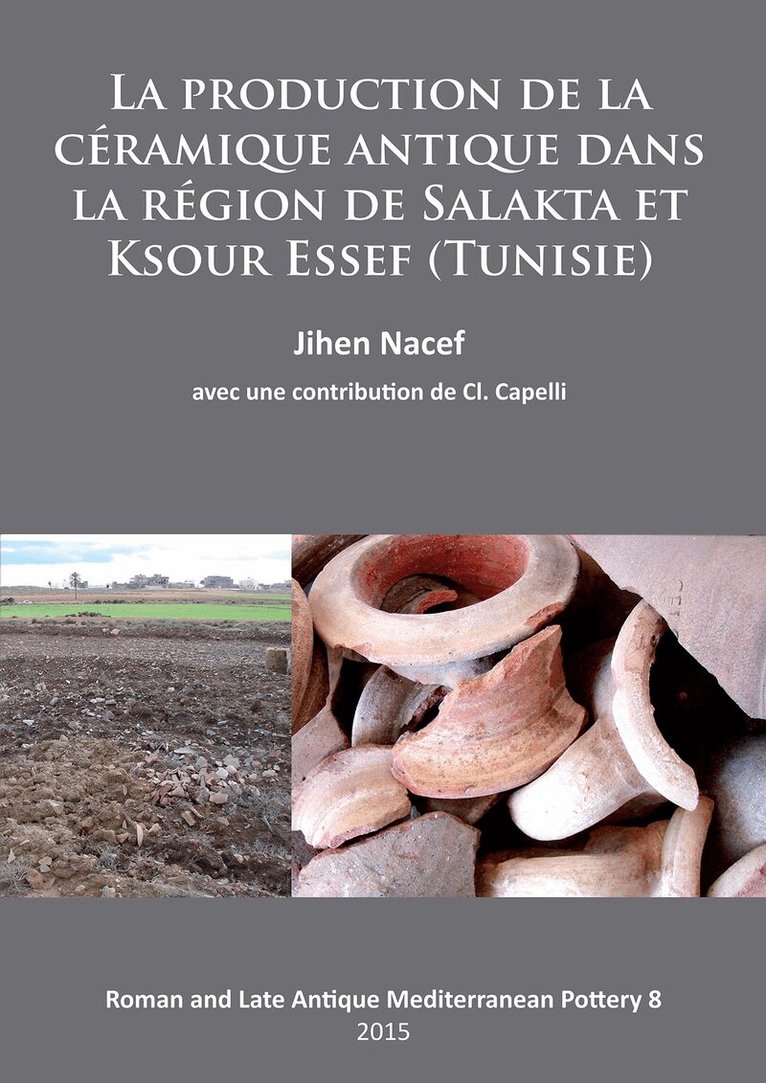
production de la céramique antique dans la région de Salakta et Ksour Essef (Tunisie)
Häftad, Franska, 2015
680 kr
Skickas
This publication provides the most updated information on the ceramic production (amphorae, cooking and coarse wares, ceramic building materials) of Salakta and the Ksour Essef district, in the Sahel region of Tunisia, from the 3rd century BC to the 7th century AD. This book deals with the history and the archaeology of Sullecthum/Salakta, the typology of the ceramic production (mainly amphorae), the chronology and the location of the workshops, the amphora stamps and contents, the distribution in the Mediterranean, and the organisation of production and trade. The author is Lecturer at the Institut Supérieur des Etudes Appliquées en Humanités de Mahdia (University of Monastir, Tunisia). French text with English abstract.
Del 9 - Roman and Late Antique Mediterranean Pottery
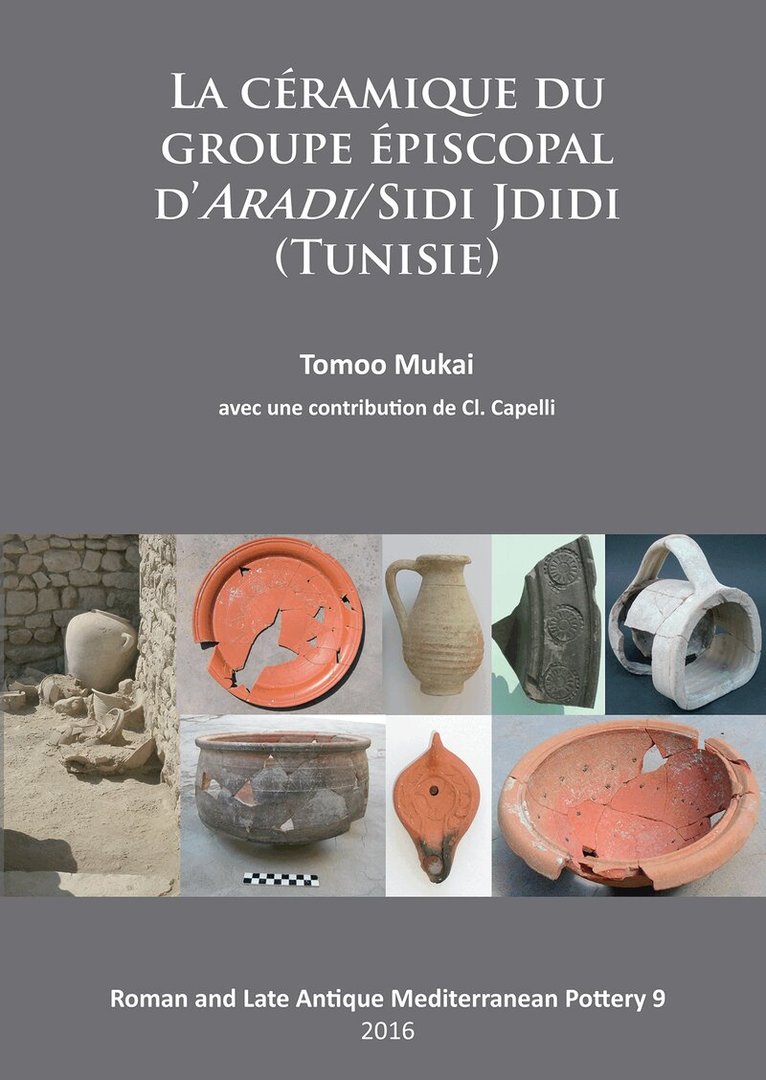
Céramique du groupe épiscopal d’ARADI/Sidi Jdidi (Tunisie)
Häftad, Franska, 2016
1 204 kr
Skickas
This study focuses on ceramic finds from the excavations (1996-2006) of the Episcopal Group of Sidi Jdidi, the ancient city of Aradi, in the hinterland of Hammamet in Tunisia, directed by Dr Aïcha Ben Abed-Ben Khader and Prof. Michel Fixot. The aim of these excavations was to understand the processes of the (evolution and) insertion of Christian monuments into the pre-existent town and the distribution of the liturgical and economic functions within various buildings of this ecclesiastic centre. The ceramological study contributed to attaining this aim by suggesting dates for each phase of the construction, occupation and abandonment of the Episcopal group, as well as evidence for the function of each space. Furthermore, this study has documented the (strong) rural and regional characteristics of the ceramic assemblages: these are very different from those of the large-scale excavations at Carthage and indicate a pattern of self-sufficient consumption supplied by purely intra-regional trade. The author is a Research Fellow of The National Museum of Western Art (Tokyo, Japan), and Research Associate of the Centre Camille Jullian (Aix Marseille Univ, CNRS, MCC, CCJ, F-13000, Aix-en-Provence, France).
Del 10 - Roman and Late Antique Mediterranean Pottery
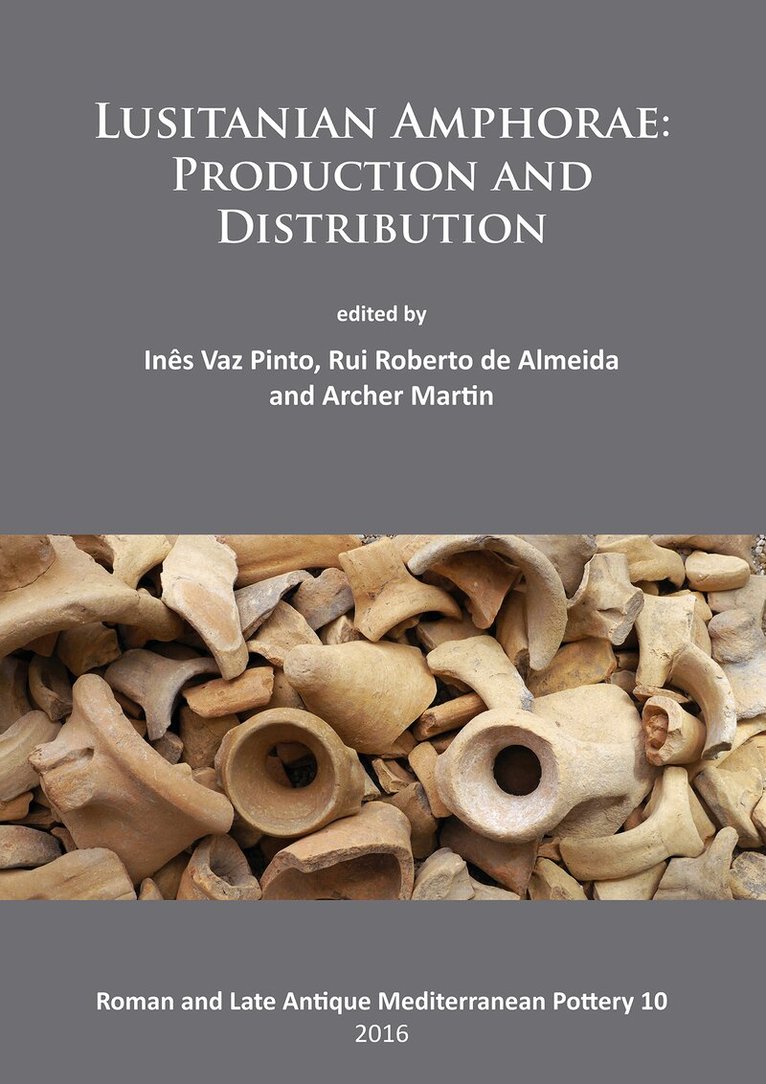
Lusitanian Amphorae: Production and Distribution
Häftad, Engelska, 2016
979 kr
Skickas
More than a century of archaeological investigation in Portugal has helped to discover, excavate and study many Lusitanian amphorae kiln sites, with their amphorae being widely distributed in Lusitania. These containers were identified in Ostia and Rome from the 1970s and thereafter in many sites around the Mediterranean, but their numbers have always seemed scarce. Were they not being recognized and therefore underestimated? Were they all fish-product amphorae? Did they ever reach a significant market share in the other provinces of Hispania? And what was their contribution to the supply of the city of Rome or to other cities in the centre of the Empire? This collective volume is a contribution to the discussion of these and other questions, and to a better understanding of the production and distribution of Lusitanian amphorae.
Del 11 - Roman and Late Antique Mediterranean Pottery
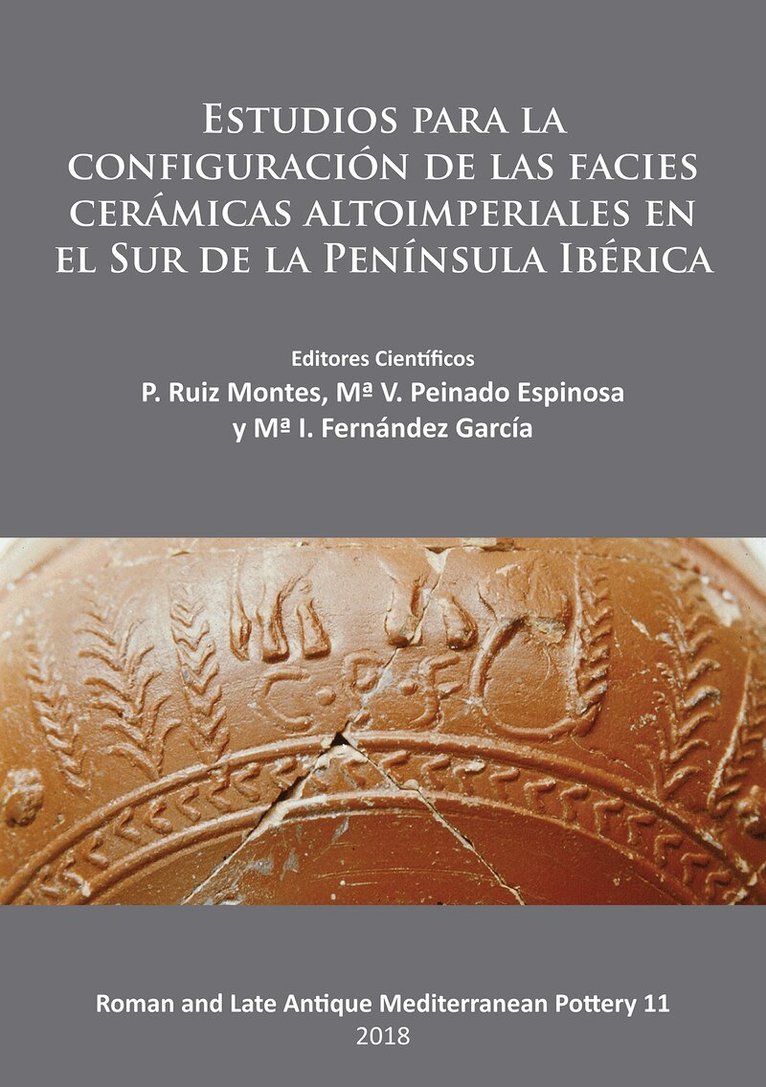
Estudios para la configuración de las facies cerámicas altoimperiales en el Sur de la Península Ibérica
Häftad, Spanska, 2018
591 kr
Skickas
Estudios para la configuración de las facies cerámicas altoimperiales en el Sur de la Península Ibérica explores economy and trade in the south of the Iberian peninsula during the High Roman Empire. Different methodologies, techniques and approaches to archaeological research are applied in the analysis and study of ceramic contexts in several marketplaces or consumption centres in the area. Special attention is given to ceramic facies predominantly characterised by the presence of fine pottery. In addition, the examination of local ceramics points towards a complexity whose interpretation has been biased until a few decades ago by the presence of wares imported from other Mediterranean regions as a result of the intensity of Roman trade. Furthermore, exploration beyond traditional analytical parameters highlights, for example, the relevance of the phenomenon of pottery vessel imitation.
Del 12 - Roman and Late Antique Mediterranean Pottery
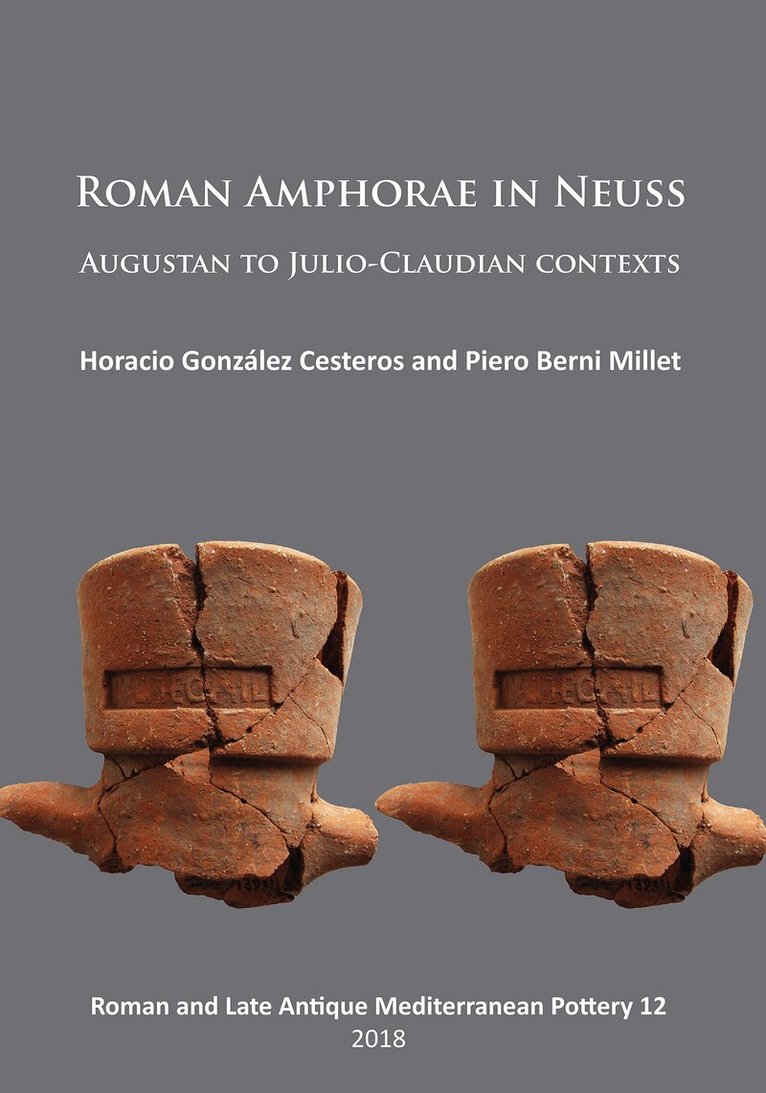
Roman Amphorae in Neuss: Augustan to Julio-Claudian Contexts
Häftad, Engelska, 2018
531 kr
Skickas
The occupation of the territories on both sides of the Rhine was an enormous logistical challenge for the Roman military administration. In the last two decades of the first century BC, several territories were conquered or partially occupied by the Roman legions, establishing a large number of military camps around the Rhine and its important eastern tributaries. Most of these camps were occupied for short periods, depending on the march of the legions and the course of military events. In a location with good natural defences and communications with the Belgian hinterland, Neuss was one of the earliest points on the Rhine where the Roman military was positioned. The area was occupied—with some intervals—from 16 BC onwards by different legions as well as smaller units. This book provides an in-depth study of one of the most important archaeological artefacts for understanding the military supply along the German frontier: the amphorae. Deliveries arrived at the different military camps established in the intersection between Erf and Rhine from 16 BC until the Claudian principate. The study of this material is essential not only for understanding Neuss, but for further understanding of the whole Rhine and the logistics of the Roman army and its supply from very distant areas.
Del 15 - Roman and Late Antique Mediterranean Pottery
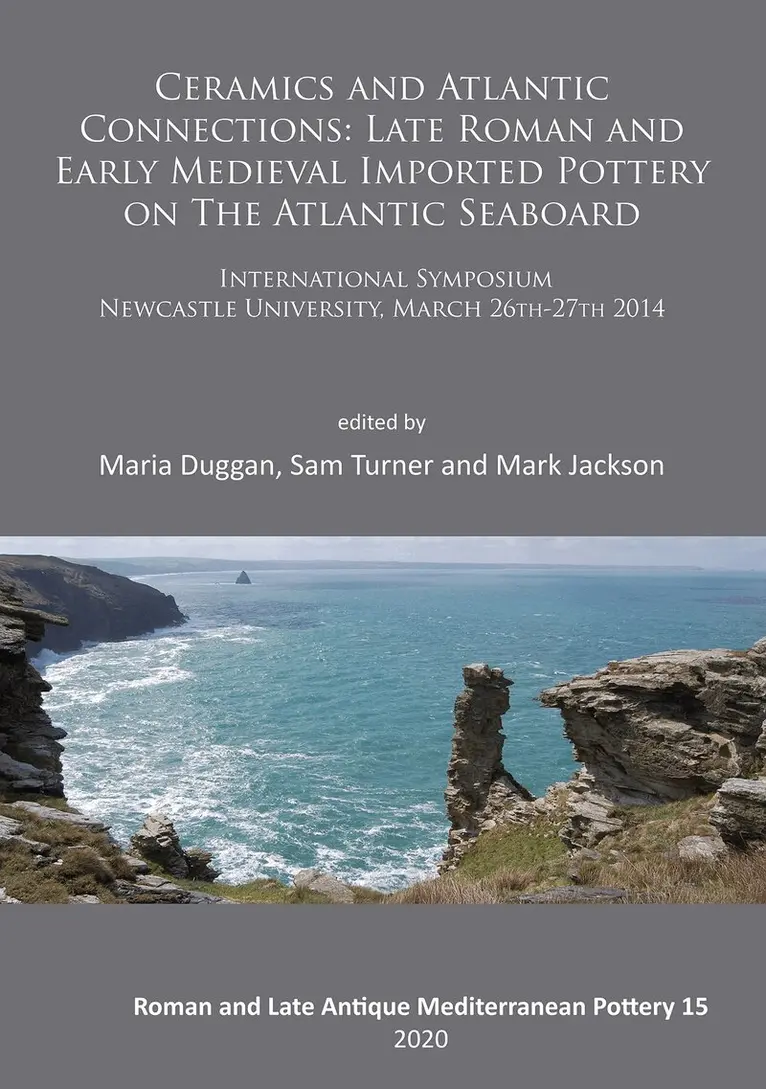
Ceramics and Atlantic Connections: Late Roman and Early Medieval Imported Pottery on the Atlantic Seaboard
Proceedings of an International Symposium at Newcastle University, March 2014
Häftad, Engelska, 2020
456 kr
Skickas
The Atlantic Seaboard has attracted increasing interest as a zone of economic complexity and social connection during Late Antiquity and the early medieval period. A surge in archaeological and, in particular, ceramic research emerging from this region over the last decade has demonstrated the need for new models of exchange between the Mediterranean and Atlantic, and for new understandings of links between sites along the Western littoral of Europe. Ceramics and Atlantic Connections: Late Roman and Early Medieval Imported Pottery on the Atlantic Seaboard stems from the Ceramics and Atlantic Connections symposium, hosted by the School of History, Classics and Archaeology, Newcastle University, in March 2014. This represents the first international workshop to consider late Roman to early medieval pottery from across the Atlantic Seaboard. Reflecting the wide geographical scope of the original presentations by the invited speakers, these nine articles from ceramic specialists and archaeologists working across the Atlantic region, cover western Britain, Ireland, western France, north-west Spain and Portugal.The principal focus is the pottery of Mediterranean origin which was imported into the Atlantic, particularly East Mediterranean and North African amphorae and red-slipped finewares (African Red Slip and Late Roman C and D), as well as ceramics of Atlantic production which had widespread distributions, including Gaulish Dérivées-de-Sigillées Paléochrétiennes Atlantique/DSPA, céramique à l’éponge’ and ‘E-ware’. Following the aims of the Newcastle symposium, the papers examine the chronologies and relative distributions of these wares and associated products, and consider the compositions of key Atlantic assemblages, revealing new insights into the networks of exchange linking these regions between c. 400-700 AD. This broad-scale exploration of ceramic patterns, together with an examination of associated artefactual, archaeological and textual evidence for maritime exchange, provides a window into the political, economic, cultural and ecclesiastical ties that linked the disparate regions of the Late Antique and early medieval Atlantic. In this way, this volume presents a benchmark for current understandings of ceramic exchange in the Atlantic Seaboard and provides a foundation for future research on connectivity in this zone.
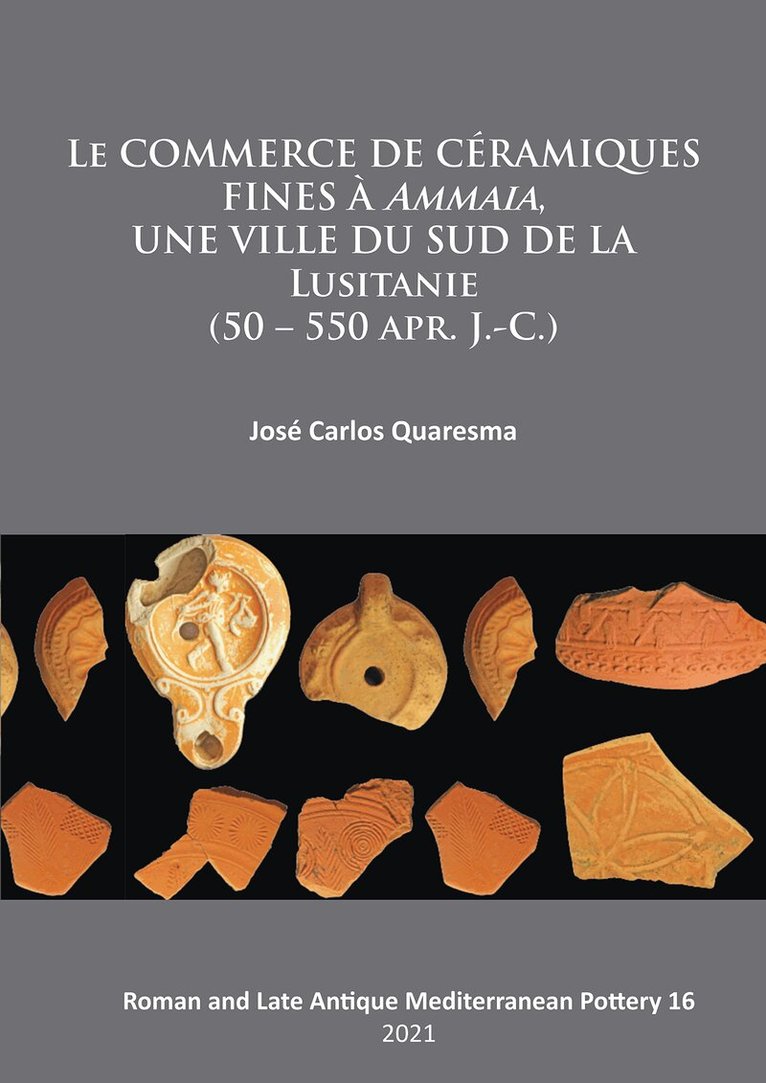
Del 16 - Roman and Late Antique Mediterranean Pottery
commerce de céramiques fines à ammaia, une ville du sud de la Lusitanie (50 – 550 apr. J.-c.)
Häftad, Franska, 2021
531 kr
Skickas
This volume presents the entire assemblage of fine wares (terra sigillata, lamps and thin-walled wares) from Ammaia, a Roman and Late Antique town located in the hinterland of southern Lusitania (presently in Portuguese territory).
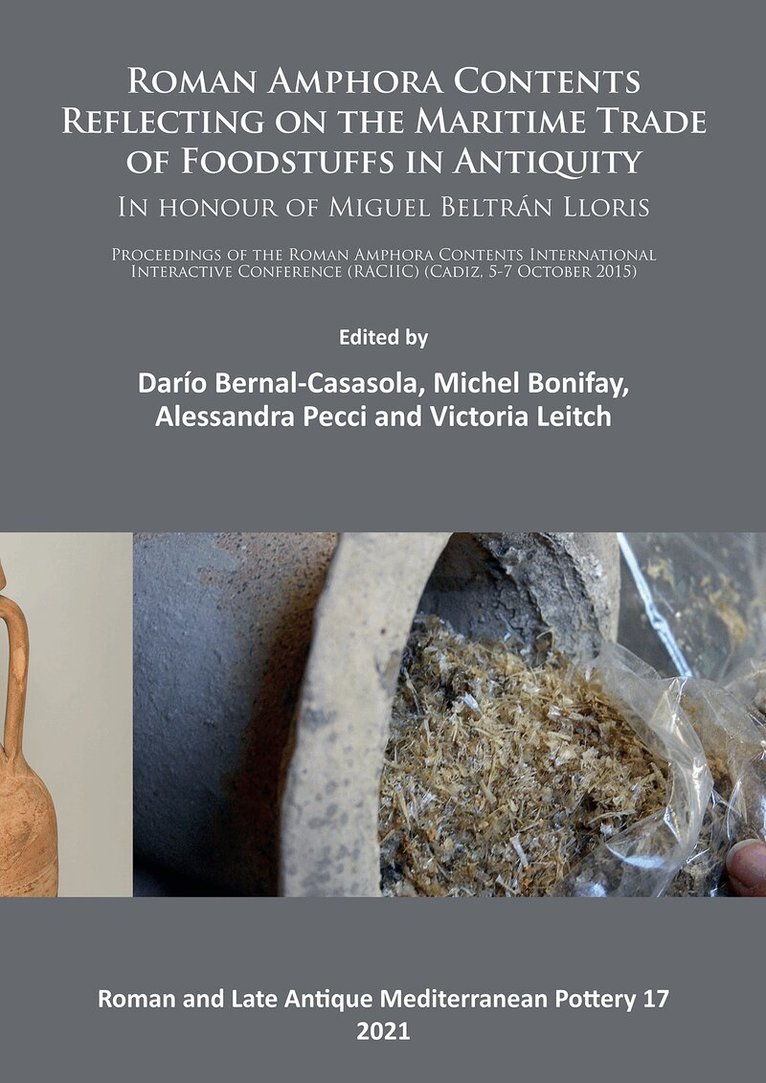
Del 17 - Roman and Late Antique Mediterranean Pottery
Roman Amphora Contents: Reflecting on the Maritime Trade of Foodstuffs in Antiquity (In honour of Miguel Beltrán Lloris)
Proceedings of the Roman Amphora Contents International Interactive Conference (RACIIC) (Cadiz, 5-7 October 2015)
Häftad, Engelska, 2021
1 024 kr
Skickas
Roman Amphora Contents: Reflecting on the Maritime Trade of Foodstuffs in Antiquity gathers together the results of the RACIIC International Congress (Roman Amphora Contents International Interactive Conference, Cádiz, 2015), dedicated to the distinguished Spanish amphorologist Miguel Beltrán Lloris. The aim is to reflect on the current state of knowledge about the palaeocontents of Roman amphorae. With over 30 specialists from different countries, the text examines four elements diachronically throughout the Roman period up to the 7th century, with some insights on pre-Roman times: 1) the intimate relationships between amphorae and their contents, from an interdisciplinary perspective (from tituli picti to the evidence from underwater sites, including the problems of reuse); 2) the contribution and current state of knowledge concerning archaeometric approaches (especially organic residue analysis); 3) the evidence at regional / provincial level (from Lusitania to Egypt); and 4) recent case studies, from Corinth, Pompeii and Arles to the Fretum Gaditanum, which allow us to illustrate the different and combined study methods, necessarily interdisciplinary (archaeological, archaeobotanical, archaeozoological, epigraphic, palynological or biomolecular), in order to advance in this transcendental theme and its significance for the economic history and maritime traffic of the Ancient World.
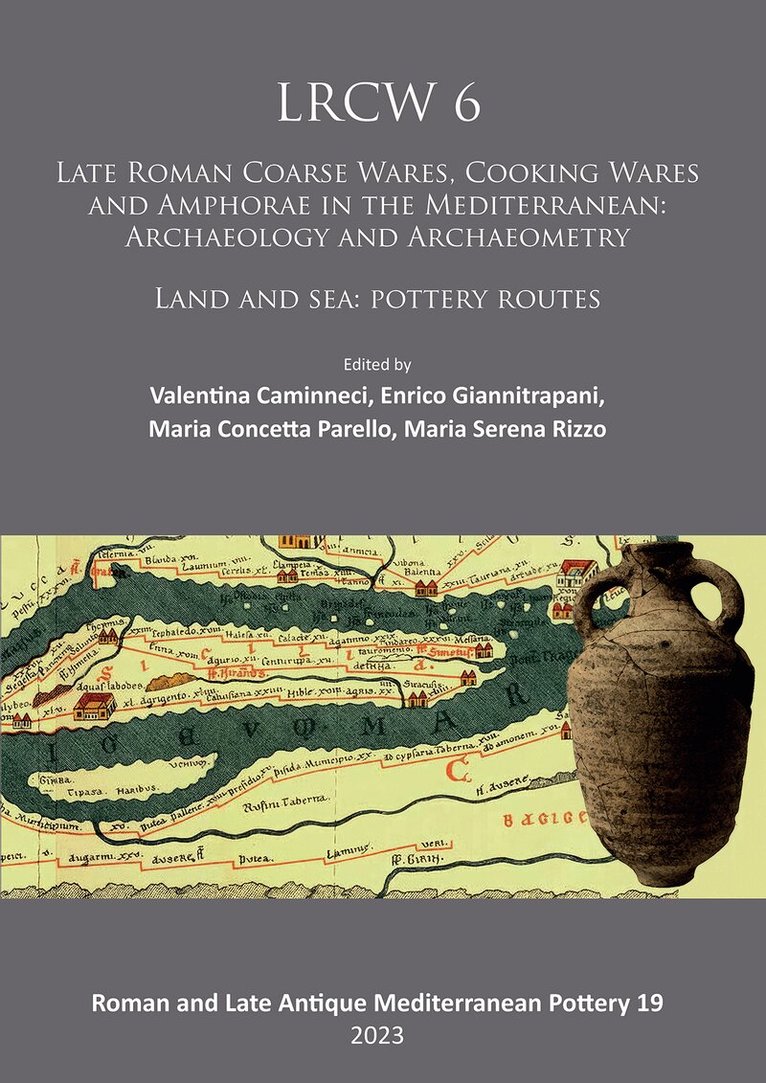
Del 19 - Roman and Late Antique Mediterranean Pottery
LRCW 6: Late Roman Coarse Wares, Cooking Wares and Amphorae in the Mediterranean: Archaeology and Archaeometry
Land and Sea: Pottery Routes
2023
2 125 kr
Skickas
LRCW 6 presents papers deriving from the 6th International Conference on Late Roman Coarse Wares, Cooking Wares and Amphorae in the Mediterranean held at the Parco Archeologico e Paesaggistico della Valle dei Templi, Agrigento, 24-28 May 2017. The volume includes almost 100 papers, subdivided according to the sessions of the conference, which had a particular focus on archaeological evidence from the Mediterranean. Themes comprise sea and land routes, workshops and production centres, and regional contexts (western Mediterranean, eastern Mediterranean, Sicily and the Mediterranean islands).
Del 20 - Roman and Late Antique Mediterranean Pottery
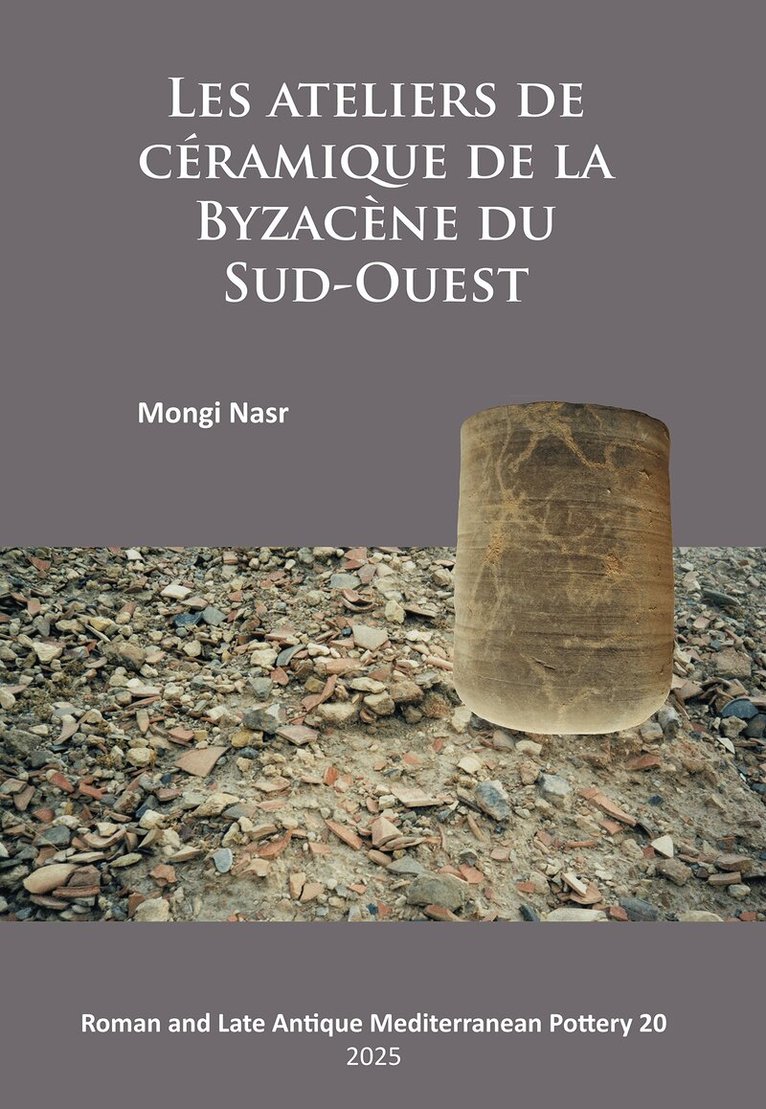
ateliers de céramique de la Byzacène du Sud-Ouest
Häftad, Franska, 2025
725 kr
Skickas
This work examines ceramic workshop dumps in southwest Byzacena (modern-day Tunisia), uncovering seven workshops over three decades. It distinguishes regional productions, analyzes products, and explores historical factors influencing these workshops' development and decline, revealing a spatial and chronological distribution of ceramic production.
Del 2 - Roman and Late Antique Mediterranean Pottery
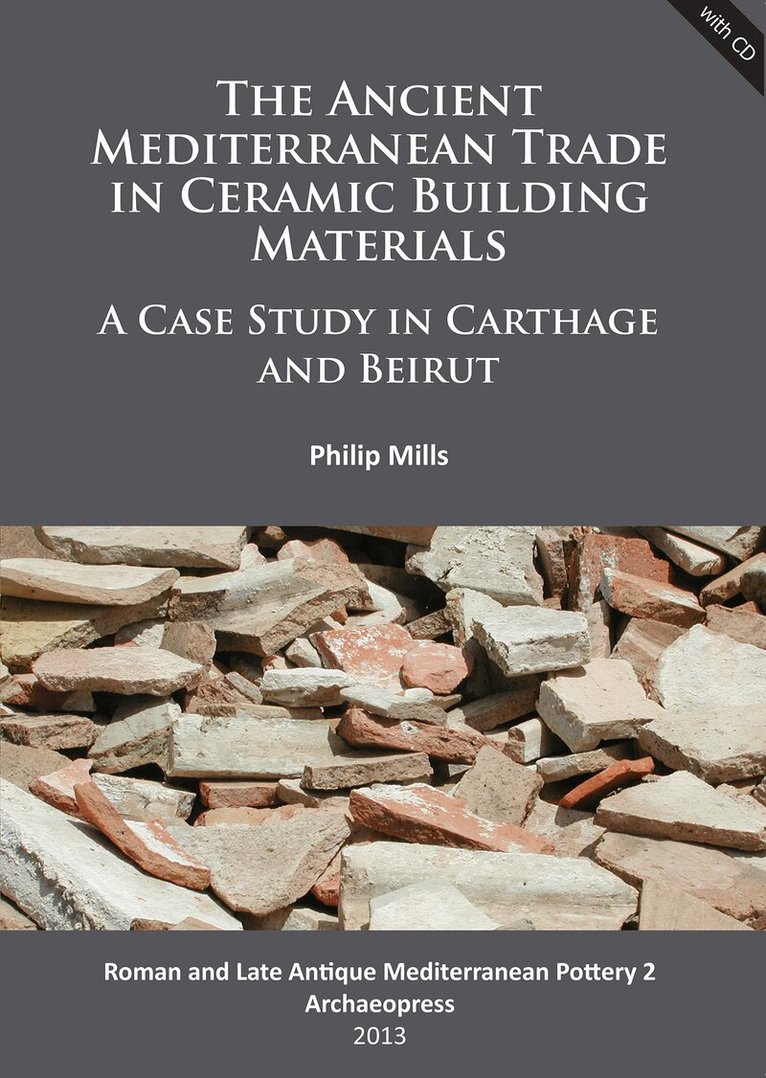
Ancient Mediterranean Trade in Ceramic Building Materials: A Case Study in Carthage and Beirut
Häftad, Engelska, 2013
456 kr
Skickas
This study (the second volume in the Archaeopress series devoted to the publication of ceramics in the Roman Mediterranean and outlying territories from the late Republic to late Antiquity) addresses the level of interregional trade of ceramic building material (CBM), traditionally seen as a high bulk low value commodity, within the ancient Mediterranean between the third century BC and the seventh century AD. It examines the impact of different modes of production, distribution and consumption of CBM and how archaeological assemblages differ from what is predicted by current models of the ancient economy. It also explores how CBM can be used to investigate cultural identity and urban form. CBM has great potential in investigating these topics. It survives in large quantities in the archaeological record; it is transported as a commodity in its own right, not as a container for other products like amphorae. The amount of CBM used in a building can be estimated, and this can be extrapolated to urban centres to model consumption in ways that are not possible for other goods. This allows the potential derivation of economic information to a higher level of precision than is the case for other materials. The material used in this study derives from stratified assemblages from two major ports of the ancient Mediterranean: Carthage and Beirut. CBM as a material is comparable to pottery, only it does not exhibit the same range of forms. This leaves fabric as a major means of analysing CBM samples. For this reason a programme of petrological thin sectioning has been carried out on these assemblages. These data have been combined with the taphonomic and dating evidence from the excavations. The results showed that the levels of imports of CBM into these two cities were much higher than would normally be expected from the orthodox model of the consumer city. They also suggest that CBM can be used as a tool to investigate cultural identity.
Del 3 - Roman and Late Antique Mediterranean Pottery
Roman Pottery in the Near East: Local Production and Regional Trade
Proceedings of the round table held in Berlin, 19-20 February 2010
Häftad, Engelska, 2014
531 kr
Skickas
Discussions and scientific exchange are crucial for the advancement of a young discipline such as the study of Roman pottery in the Near East. Therefore, in addition to large conferences such as the ‘Late Roman Coarse Ware Conference’ (LRCW) where the Near East plays only a marginal role, an international workshop with 20 participants dedicated solely to the study of Roman common ware pottery in the Near East was held in Berlin on 18th and 19th February 2010. The goal of this workshop was to provide researchers actively engaged in the study of Roman common wares the possibility to meet and discuss the current state of research as well as questions and problems they are facing with their material. Some of the participants were able to bring pottery samples, which provided the possibility to compare and discuss the identification and denomination of specific fabrics on a regional and supra-regional scale. This volume presents 17 papers from this stimulating event. The Archaeopress series, Roman and Late Antique Mediterranean Pottery (RLAMP) is devoted to research of the Roman and late Antique pottery in the Mediterranean. It is designed to serve as a reference point for all potential authors devoted to pottery studies on a pan-Mediterranean basis. The series seeks to gather innovative individual or collective research on the many dimensions of pottery studies ranging from pure typological and chronological essays, to diachronic approaches to particular classes, the complete publication of ceramic deposits, pottery deposit sequences, archaeometry of ancient ceramics, methodological proposals, studies of the economy based on pottery evidence or, among others, ethnoarchaeological ceramic research that may help to understand the production, distribution and consumption of pottery in the Mediterranean basin.
Del 4 - Roman and Late Antique Mediterranean Pottery
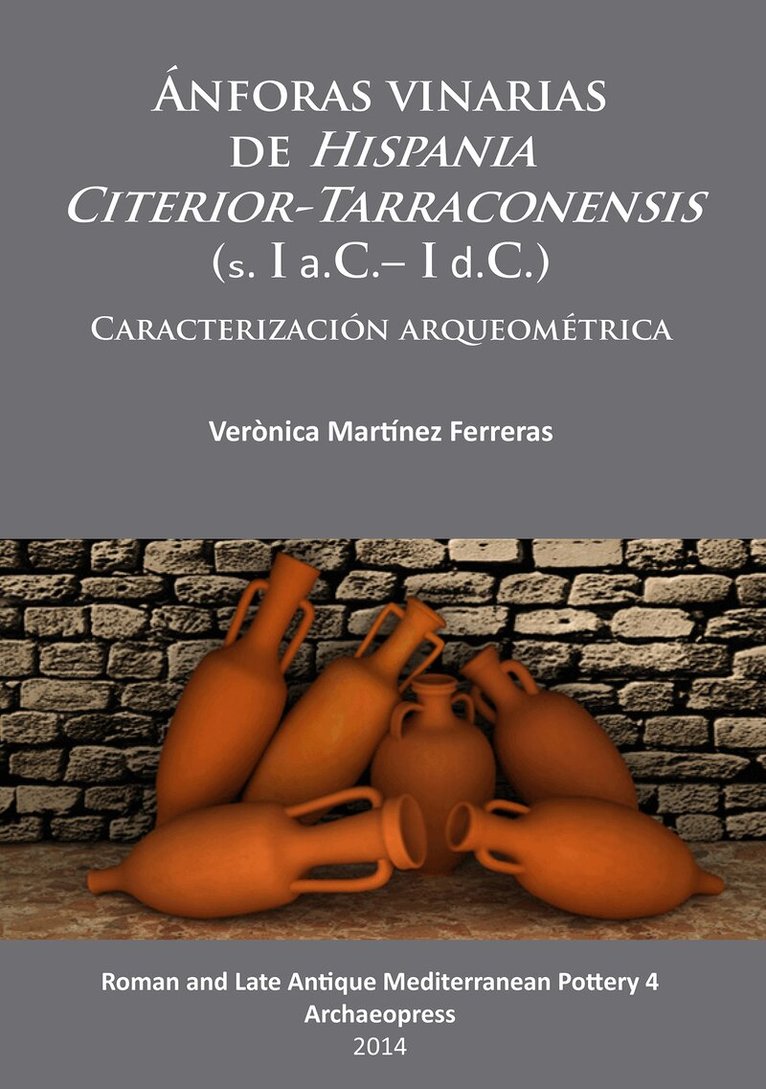
Ánforas vinarias de Hispania Citerior-Tarraconensis (s. I a.C.– I d.C.)
Caracterización arqueométrica
Häftad, Spanska, 2014
680 kr
Skickas
This volume presents the results of a multidisciplinary archaeological and archaeometric study of the wine amphorae produced in Hispania Citerior (Tarraconensis, in Augustus’ reorganisation) between the first century BC and the first century AD. Wine production expanded in this area at the beginning of the first century BC, as new Roman towns were founded and new farms or villae gradually emerged in rural areas. However, it was during Augustus’ reign that wine production and trade reached their peak. The study aims to shed new light on the composition of the wine amphorae produced in this area as well as on the technological processes involved in their manufacture along within the period considered. For that, the study includes the characterisation of several amphora types produced in various ceramic workshops located along the Catalan coast which initiated pottery activity at different times. All the available archaeological information for each case study is reviewed, considering data referring to the production centres and also to the geology and the environment in which the pottery workshops were located. Spanish text with English summary.
Del 5 - Roman and Late Antique Mediterranean Pottery
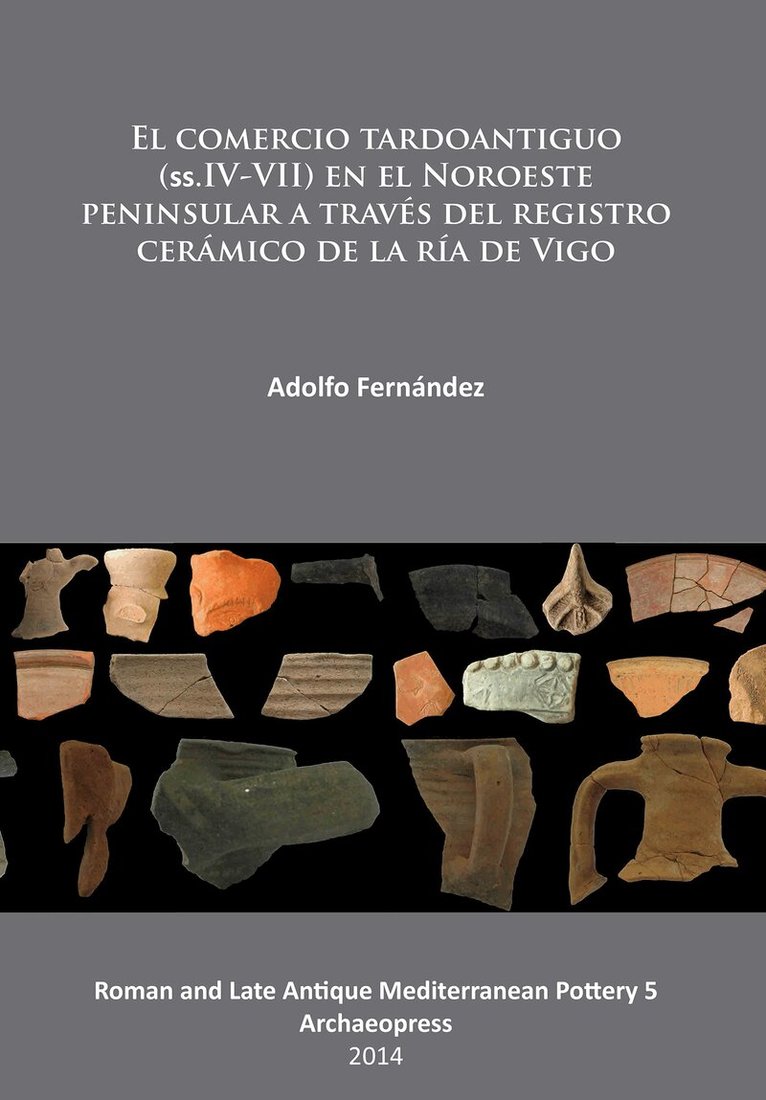
comercio tardoantiguo (ss.IV-VII) en el Noroeste peninsular a través del registro cerámico de la ría de Vigo
Häftad, Spanska, 2014
830 kr
Skickas
This work investigates a large assemblage of potentially late-dated Roman ceramics excavated in the early 1990s during rescue interventions in Vigo (N/E Spain) and its surroundings. It is well established that much of this material originated from the Mediterranean, especially the eastern provinces of the Empire. Based on the analyses of these investigations, this study goes on to assess the extent of the Atlantic distribution route and link the northwest of the Iberian Peninsula well within the trading dynamics of the Mediterranean world.