Routledge Studies in Cultures of the Global Cold War – serie
Visar alla böcker i serien Routledge Studies in Cultures of the Global Cold War. Handla med fri frakt och snabb leverans.
8 produkter
8 produkter
2 430 kr
Skickas inom 10-15 vardagar
This book bridges the gap between the simultaneously unfolding histories of postcoloniality and the forty-five-year ideological and geopolitical rivalry between the U.S. and the U.S.S.R. Not only did the superpowers rely upon the decolonizing world to further imperial agendas, but the postcolony itself was shaped, epistemologically and materially, by Cold War discourses, policies, narratives, and paradigms. Ruptures and appropriated trajectories in the postcolonial world can be attributed to the ways in which the Cold War became the afterlife of European colonialism. Through a speculative assemblage, this book connects the dots, deftly taking the reader from Frantz Fanon to Aaron Swartz, and from assassinations in the Third World to American multiculturalism. Whether the Cold War subverted the dream of decolonization or created a compromised cultural sphere, this book makes those rich palimpsests visible.
758 kr
Skickas inom 10-15 vardagar
This book bridges the gap between the simultaneously unfolding histories of postcoloniality and the forty-five-year ideological and geopolitical rivalry between the U.S. and the U.S.S.R. Not only did the superpowers rely upon the decolonizing world to further imperial agendas, but the postcolony itself was shaped, epistemologically and materially, by Cold War discourses, policies, narratives, and paradigms. Ruptures and appropriated trajectories in the postcolonial world can be attributed to the ways in which the Cold War became the afterlife of European colonialism. Through a speculative assemblage, this book connects the dots, deftly taking the reader from Frantz Fanon to Aaron Swartz, and from assassinations in the Third World to American multiculturalism. Whether the Cold War subverted the dream of decolonization or created a compromised cultural sphere, this book makes those rich palimpsests visible.
2 430 kr
Skickas inom 10-15 vardagar
This volume investigates the cultural sites where the global Cold War played out. It brings to view unpredictable encounters that arose as writers, artists, filmmakers, and intellectuals from or aligned with the Third World navigated the ideological and material constraints set by superpowers and emerging regional powers. Often these encounters generated communitas and solidarity, while at times they fed old and new conflicts. Pushing forward recent scholarship that tracks the Cold War in the Global South and draws on postcolonial approaches, our contributors use archival, secondary, and ethnographic sources to trace the afterlives and memories of key figures and to explore meetings that performed cultural diplomacy. Our focus on sites of encounter or exchange underscores the situated, interpersonal, and embodied dimensions through which much of the cultural Cold War was experienced. While the global conflict divided citizens along ideological fault lines, it also linked people through circulating media—novels, film, posters, journals, and theatre—and multinational conferences that brought artists, intellectuals, and political activists together. Such contacts introduced new axes of solidarity and hierarchies of exclusion. Examining these connections and disjunctures, this new and necessary mapping of the cultural Cold War highlights under-addressed locations in Asia, Africa, and Latin America.
595 kr
Skickas inom 10-15 vardagar
This volume investigates the cultural sites where the global Cold War played out. It brings to view unpredictable encounters that arose as writers, artists, filmmakers, and intellectuals from or aligned with the Third World navigated the ideological and material constraints set by superpowers and emerging regional powers. Often these encounters generated communitas and solidarity, while at times they fed old and new conflicts. Pushing forward recent scholarship that tracks the Cold War in the Global South and draws on postcolonial approaches, our contributors use archival, secondary, and ethnographic sources to trace the afterlives and memories of key figures and to explore meetings that performed cultural diplomacy. Our focus on sites of encounter or exchange underscores the situated, interpersonal, and embodied dimensions through which much of the cultural Cold War was experienced. While the global conflict divided citizens along ideological fault lines, it also linked people through circulating media—novels, film, posters, journals, and theatre—and multinational conferences that brought artists, intellectuals, and political activists together. Such contacts introduced new axes of solidarity and hierarchies of exclusion. Examining these connections and disjunctures, this new and necessary mapping of the cultural Cold War highlights under-addressed locations in Asia, Africa, and Latin America.
1 966 kr
Skickas inom 10-15 vardagar
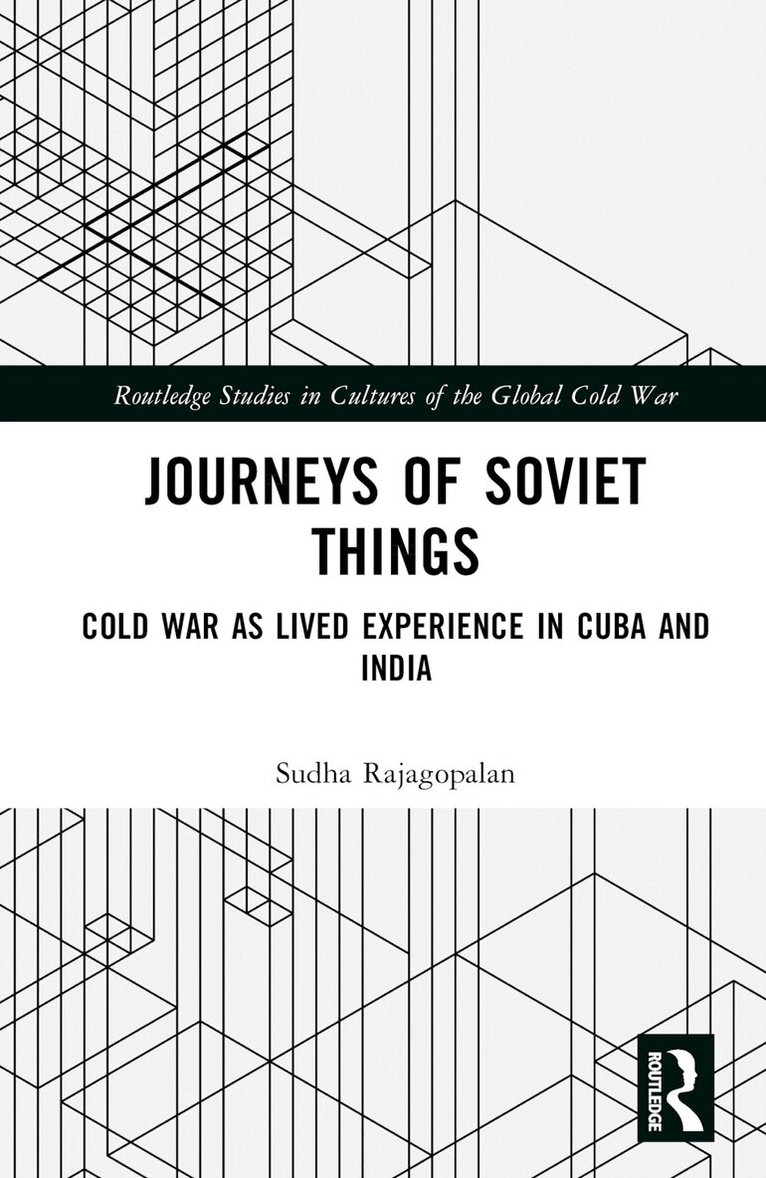
At the intersection of cultural history, material culture studies, memory studies and feminist geopolitics, Journeys of Soviet Things is an oral history of socialist globalisation constructed around the journeys of Cold War era Soviet objects in India and Cuba. During the Cold War, an important means to perpetuate Soviet ideals of modernisation and anti-imperialist solidarity across the world was the circulation of ‘banal’ objects, produced in the Soviet Union and purchased, awarded, and gifted for use in homes across the world. Based on oral accounts of Indian and Cuban interlocutors, this book examines the itineraries of Soviet objects such as cars, washing machines, cameras, books, nesting dolls, porcelain, and many other things. Explored this way, the Cold War is a matter of personal, affective, everyday experience. At the same time, by indicating the cohabitation of things in their home from around the world, interlocutors also go on to undercut simple geopolitical binaries that pit Soviet against American techno-politics. Accounts of Soviet objects in India and Cuba reveal a bricolage of preferences that crisscrossed ideological dualities of East vs West, communist vs capitalist, making for an alternative cosmopolitanism that was in equal measure shaped by personal, local, and national histories and experiences. This book will appeal to readers interested in Cold War history, the history of transnational solidarities, and Soviet material culture.
595 kr
Skickas inom 10-15 vardagar
At the intersection of cultural history, material culture studies, memory studies and feminist geopolitics, Journeys of Soviet Things is an oral history of socialist globalisation constructed around the journeys of Cold War era Soviet objects in India and Cuba. During the Cold War, an important means to perpetuate Soviet ideals of modernisation and anti-imperialist solidarity across the world was the circulation of ‘banal’ objects, produced in the Soviet Union and purchased, awarded, and gifted for use in homes across the world. Based on oral accounts of Indian and Cuban interlocutors, this book examines the itineraries of Soviet objects such as cars, washing machines, cameras, books, nesting dolls, porcelain, and many other things. Explored this way, the Cold War is a matter of personal, affective, everyday experience. At the same time, by indicating the cohabitation of things in their home from around the world, interlocutors also go on to undercut simple geopolitical binaries that pit Soviet against American techno-politics. Accounts of Soviet objects in India and Cuba reveal a bricolage of preferences that crisscrossed ideological dualities of East vs West, communist vs capitalist, making for an alternative cosmopolitanism that was in equal measure shaped by personal, local, and national histories and experiences. This book will appeal to readers interested in Cold War history, the history of transnational solidarities, and Soviet material culture.
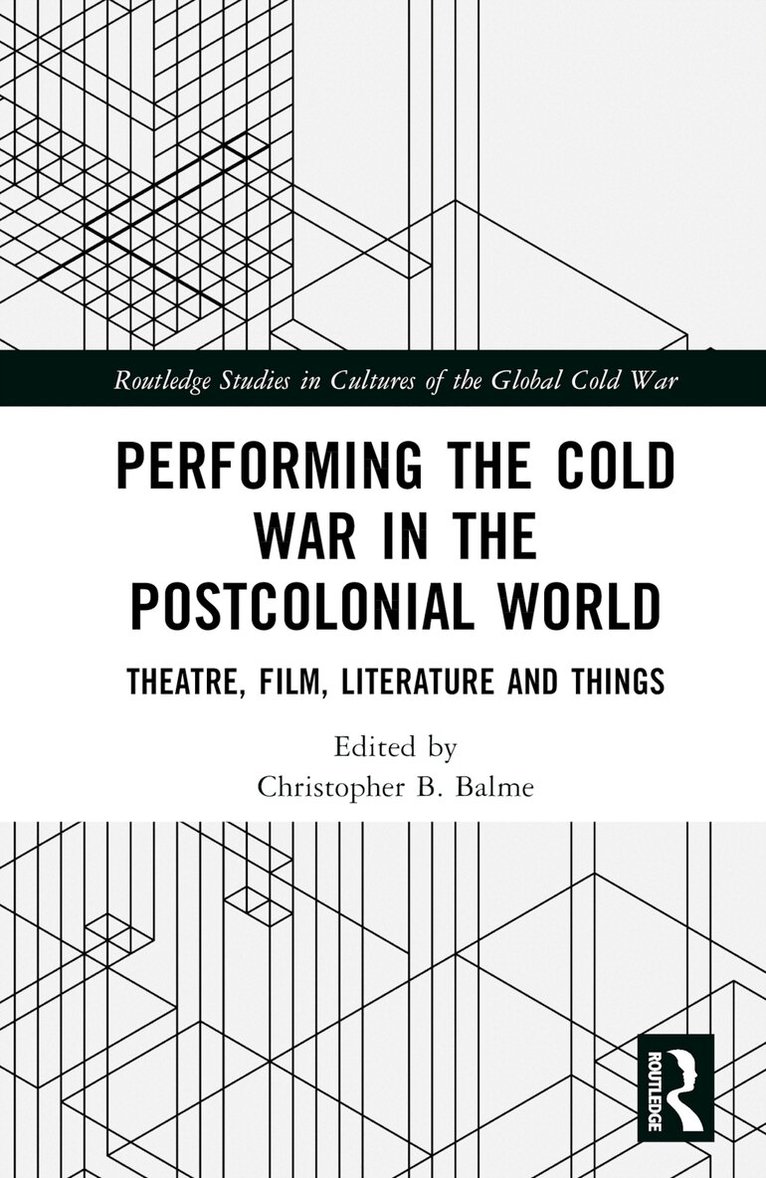
Performing the Cold War in the Postcolonial World
Theatre, Film, Literature and Things
Inbunden, Engelska, 2023
2 176 kr
Skickas inom 10-15 vardagar
This volume explores how the Cultural Cold War played out in Africa and Asia in the context of decolonization. Both the United States and the Soviet Union as well as East European states undertook significant efforts to influence cultural life in the newly independent, postcolonial world.The different forms of influence are the subject of this book. The contributions are grouped around four topic headings. "Networks and Institutions" looks at the various ways Western-style theatre became institutionalized in the decolonial world, especially Africa. "Cultural Diplomacy" focuses on the activities of the Soviet Union in India in the late 1950s and 1960s in the very different arenas of book publishing and the circus. "Artists and Agency" explores how West African filmmakers (Ousmane Sembène and Abderrahmane Sissako) and European authors (Brecht and Ibsen) were harnessed for different kinds of Cold War strategies. Finally, "Cultures of Things" investigates how everyday objects such as books and iconic theatre buildings became suffused with affect, nostalgia, and ideology.This book will be of interest for students of the Cold War, postcolonial studies, theatre, film, and literature.Chapters 1, 4, 8, and 11 of this book is freely available as a downloadable Open Access PDF at http://www.taylorfrancis.com under a Creative Commons [Attribution-Non Commercial-No Derivatives (CC-BY-NC-ND)] 4.0 license.Funded by the European Research Council Project "Developing Theatre".
Performing the Cold War in the Postcolonial World
Theatre, Film, Literature and Things
Häftad, Engelska, 2024
595 kr
Skickas inom 10-15 vardagar
This volume explores how the Cultural Cold War played out in Africa and Asia in the context of decolonization. Both the United States and the Soviet Union as well as East European states undertook significant efforts to influence cultural life in the newly independent, postcolonial world.The different forms of influence are the subject of this book. The contributions are grouped around four topic headings. "Networks and Institutions" looks at the various ways Western-style theatre became institutionalized in the decolonial world, especially Africa. "Cultural Diplomacy" focuses on the activities of the Soviet Union in India in the late 1950s and 1960s in the very different arenas of book publishing and the circus. "Artists and Agency" explores how West African filmmakers (Ousmane Sembène and Abderrahmane Sissako) and European authors (Brecht and Ibsen) were harnessed for different kinds of Cold War strategies. Finally, "Cultures of Things" investigates how everyday objects such as books and iconic theatre buildings became suffused with affect, nostalgia, and ideology.This book will be of interest for students of the Cold War, postcolonial studies, theatre, film, and literature.Chapters 1, 4, 8, and 11 of this book is freely available as a downloadable Open Access PDF at http://www.taylorfrancis.com under a Creative Commons [Attribution-Non Commercial-No Derivatives (CC-BY-NC-ND)] 4.0 license.Funded by the European Research Council Project "Developing Theatre".