Shire Living Histories - Böcker
Visar alla böcker i serien Shire Living Histories. Handla med fri frakt och snabb leverans.
14 produkter
14 produkter
108 kr
Skickas inom 10-15 vardagar
For nearly four centuries, Britain served as the western border of the Roman Empire. Invaded in AD 43, it was initially a wild place prone to Celtic uprisings such as those led by Boudicca. However, as the decades passed, the unrest settled and the Romans set to work building temples, roads, baths and villas,. Life in Britain became similar to life in any of the corners of the empire, with the order and culture of the Romans mixing freely with the native cultures. Covering all aspects of Roman British life from family, food, religion, and travel, this book allows the reader to discover what it was like to be a citizen of the greatest empire in the world, while at the same time living near the edge of the map.
108 kr
Skickas inom 10-15 vardagar
In the 1930s Britain experienced an economic crisis, with high unemployment, wage cuts, benefit cuts and a deterioration in living standards. It was a decade noted for its austerity. Yet out of the recession came many positives. Industrial output saw remarkable growth between 1935 and 1938 and a housing boom brought smart new houses to replace slums. Communities benefited improved social services and more diverse leisure activities thanks to new technology, transport improvements and paid holidays. "1930s Britain" will provide a realistic portrait of a very diverse, and always fascinating, decade in British social history.
108 kr
Skickas inom 10-15 vardagar
The Tudor period was a time of massive social change in England with growing cities, increasing trade, and growing stability after the chaos of the Wars of the Roses. Despite military preparations in every county, and the establishment of a new navy, the country was generally at peace, and England and Wales were becoming more closely integrated. Religious changes affected every person, with the Reformation bringing change to most corners of the country, and the dissolution of the monasteries allowing those with cash to build new estates, and removing the traditional schools and hospitals. Suzannah Lipscomb offers insight into the world of Tudor England - revealing what it was really like to live in a period of great growth, and the difference between living in the city and the country.
108 kr
Skickas inom 10-15 vardagar
In the late eighteenth and early nineteenth centuries a profound change swept across Britain. The rapid advance of technology increased industrial productivity to a level previously unimaginable. To support this new technology, people flocked from the countryside into the cities to take jobs in the factories. The movement caused a great deal of social unrest as technology replaced many of the old ways, and the populations of cities swelled far beyond the ability of the government to provide adequate housing and services. Discover more about the lives of those who lived in one of the greatest periods of social change in the history of Britain.
108 kr
Skickas inom 10-15 vardagar
How does a society recover from a devastating war? This was the question posed in the 1920s as people searched for normality in the aftermath of terrible trauma. Written from the perspective of those who lived, worked and played in the metropolis of greater London, "1920s Britain" uncovers the hardships and stresses of the age, strains which manifested in the general strike of 1926. However, the 1920s was also a time of recovery and hope for the future; London itself was a place of international significance and hope. Delve into the past in this intriguing insight into a difficult time for Britain and the people tasked with its recovery.
108 kr
Skickas inom 10-15 vardagar
In a period marked by a number of great diarists, England after the Civil War was a place of pleasure and drama. Indulgences such as coffee-houses and frost fairs were enjoyed by some, while the fashion for displaying finery lent itself to a new style of shopping. However, a renewed outbreak of plague and the Great Fire of London were twin tragedies that brought instability to the age. "Restoration England" joins other titles in the new "Living Histories Series", providing the book lover with an entertaining read and a vivid insight into the real, daily lives of those living in the period: work that was done, food that was eaten and leisure activities that were pursued.
108 kr
Skickas inom 10-15 vardagar
Mid-Georgian Britain was a period of both elegance and desperation. As the middle and upper classes enjoyed their wealth with an increasing range of consumer goods, the poor endured debtor's prison and an increasing number of crimes with the death penalty. This, the latest addition to the growing "Living Histories Series", charts the growth of the empire and looks at the growing importance of London as a capital city where the rich and poor rubbed shoulders. Jacqueline Riding creates a vivid portrait of the daily reality of life for a middle-class family in this age of growing affluence.
108 kr
Skickas inom 10-15 vardagar
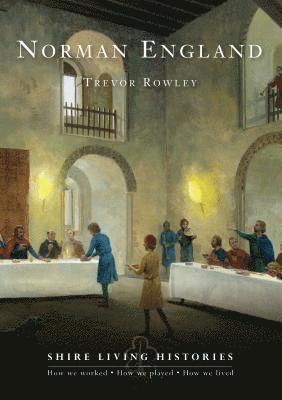
1066 is perhaps the most important date in English history. The Norman invasion, headed by William the Conqueror, meant revolutionary change throughout English life. Soon there was a new ruling class, new language, new styles of dress, behaviour and architecture, as well as a new capital and new forms of landholding. The elite Normans themselves brought England much closer to Continental Europe, lived in their new castles and brought in novel styles of military training, founded monasteries and set up schools. This volume explores their lifestyle and the ways in which they interacted with the Anglo-Saxon English as they changed the face of the country forever.
108 kr
Skickas inom 10-15 vardagar
The Second World War affected every aspect of life on the home front. From food rationing to air raid shelters, war work to the Squander Bug, those left at home had to take huge changes in their stride as Britain mobilised, economised, and saved in the name of Victory. Wartime Britain takes a look at what these changes actually meant for families: how families coped when parents went to fight and children were evacuated; how pets were fed during rationing; the rise in road accidents during the blackout; and 'shelter cough'.
108 kr
Skickas inom 10-15 vardagar
The middle years of Queen Victoria's reign saw huge social changes with the rise of the middle classes, the introduction of compulsory education and the growth of the labour movement. The Great Exhibition brought a taste of the exotic to the masses, and the London Underground was opened. Life for the poorest was affected by the work of the Board of Health, while the middle classes developed elaborate etiquette and the art of housekeeping with the help of Mrs Beeton. Mid-Victorian Britain explains how these changes affected family life in Britain, from matchgirls, prostitutes and workhouses to tea parties, jet mourning jewellery and the leisure revolution.
108 kr
Skickas inom 10-15 vardagar
The Anglo-Saxon period has often been dismissed as 'lost centuries' or the Dark Ages, but archaeological evidence and later written sources reveal a complex and sophisticated culture that was beginning to move towards urbanisation, establishing market-places to facilitate the trade of local and exotic goods, and developing an organised educational system. In Early Anglo Saxon Britain, Sally Crawford paints a vivid portrait of daily life in the period that saw the Anglo-Saxon invasion and the end of Roman Britain: from the status and demands of occupations to the structures of families, and from the intricacies of feasting to the period's elaborate and creative entertainments.
108 kr
Skickas inom 10-15 vardagar
The early eighteenth century saw British society move towards greater stability and sustainability following the centuries of turmoil that had climaxed in bloody civil-war and the drama and decadence of the Restoration. The inexorable rise of the middle-classes brushed aside outdated customs, etiquette and prejudices and powered the 'Reformation of Manners', a new system of social mores and rules for a fast-developing nation, and cities were planned to benefit from careful lighting and green spaces. This period, accessibly described here by Lorna Coventry, was a tremendous step towards a recognizably modern Britain, giving us our first novels and, following the Great Fire, London districts through which we walk to this day.
108 kr
Skickas inom 10-15 vardagar
The 1970s is remembered as a decade of punk rock, the 'Winter of Discontent', 'Bloody Sunday' and 'The Female Eunuch'. The iconic images of the '70s, from the break-up of the Beatles to the striking Merseyside graveyard diggers and mountains of municipal rubbish in Leicester Square, provide a glimpse into the extraordinary contrasts of the decade. Britain in the 1970s has been painted as a country in crisis, but the country also experienced huge positive social and cultural shifts, with the blossoming of modern feminism, the Gay Liberation Front, and the establishment of the Commission for Racial Equality. The high street enjoyed the impact of new technology and new brands, and global travel was brought within the reach of many. Here the authors reassess a decade rich in continuities and contrasts from different national and local perspectives.
119 kr
Skickas inom 10-15 vardagar
This illustrated account of Britain in the Swinging Sixties will appeal to nostalgia-seekers and social historians alike.The 1960s was a defining decade for Great Britain. With the uncertainty and hardships of the Second World War finally put to rest, a new spirit of optimism swept the nation, and Labour’s promise of ‘the ending of economic privilege, the abolition of poverty in the midst of plenty and the creation of real equality of opportunity’ heralded unprecedented social and cultural changes. With these changes came a new sense of permissiveness and cultural liberation among the ‘baby boomer’ generation, counterculture and fashion icons such as The Beatles, Mary Quant and Biba, and new design and technology that transformed virtually every sphere of everyday life. Punctuated with personal recollections, Susan Cohen’s fully illustrated account of life in the 1960s explores the impact of these political and cultural trends on the ordinary people of Britain.