Silk Roads – serie
Visar alla böcker i serien Silk Roads. Handla med fri frakt och snabb leverans.
20 produkter
20 produkter
Häftad, Engelska, 2021
315 kr
Skickas inom 5-8 vardagar
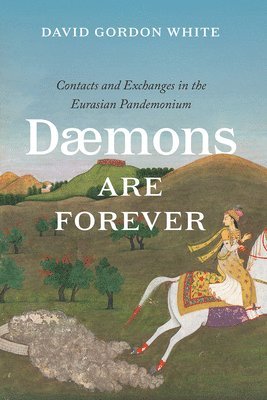
A richly illustrated tapestry of interwoven studies spanning some six thousand years of history, Daemons Are Forever is at once a record of archaic contacts and transactions between humans and protean spirit beings--daemons--and an account of exchanges, among human populations, of the science of spirit beings: daemon-ology. Since the time of the Indo-European migrations, and especially following the opening of the Silk Road, a common daemonological vernacular has been shared among populations ranging from East and South Asia to Northern Europe. In this virtuoso work of historical sleuthing, David Gordon White recovers the trajectories of both the "inner demons" cohabiting the bodies of their human hosts and the "outer daemons" that those same humans recognized each time they encountered them in their enchanted haunts: sylvan pools, sites of geothermal eruptions, and dark forest groves. Along the way, he invites his readers to reconsider the potential and promise of the historical method in religious studies, suggesting that a "connected histories" approach to Eurasian daemonology may serve as a model for restoring history to its proper place, at the heart of the history of religions discipline.
Häftad, Engelska, 2018
324 kr
Skickas inom 5-8 vardagar
Contemporary discussions of international relations in Asia tend to be tethered in the present, unmoored from the historical contexts that give them meaning. Sacred Mandates, edited by Timothy Brook, Michael van Walt van Praag, and Miek Boltjes, redresses this oversight by examining the complex history of inter-polity relations in Inner and East Asia from the thirteenth century to the twentieth, in order to help us understand and develop policies to address challenges in the region today. This book argues that understanding the diversity of past legal orders helps explain the forms of contemporary conflict, as well as the conflicting historical narratives that animate tensions. Rather than proceed sequentially by way of dynasties, the editors identify three “worlds”—Chingssid Mongol, Tibetan Buddhist, and Confucian Sinic—that represent different forms of civilization authority and legal order. This novel framework enables us to escape the modern tendency to view the international system solely as the interaction of independent states, and instead detect the effects of the complicated history at play between and within regions. Contributors from a wide range of disciplines cover a host of topics: the development of international law, sovereignty, state formation, ruler legitimacy, and imperial expansion, as well as the role of spiritual authority on state behavior, the impact of modernization, and the challenges for peace processes. The culmination of five years of collaborative research, Sacred Mandates will be the definitive historical guide to international and intrastate relations in Asia, of interest to policymakers and scholars alike, for years to come.
Häftad, Engelska, 2018
250 kr
Skickas inom 5-8 vardagar
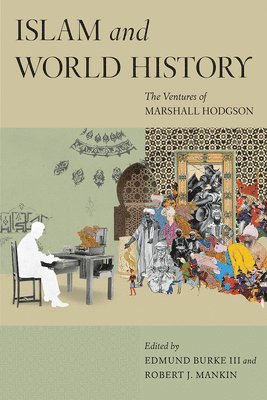
Published in 1974, Marshall Hodgson’s The Venture of Islam was a watershed moment in the study of Islam. By locating the history of Islamic societies in a global perspective, Hodgson challenged the orientalist paradigms that had stunted the development of Islamic studies and provided an alternative approach to world history. Edited by Edmund Burke III and Robert Mankin, Islam and World History explores the complexity of Hodgson’s thought, the daring of his ideas, and the global context of his world historical insights into, among other themes, Islam and world history, gender in Islam, and the problem of Muslim universality. In our post-9/11 world, Hodgson’s historical vision and moral engagement have never been more relevant. A towering achievement, Islam and World History will prove to be the definitive statement on Hodgson’s relevance in the twenty-first century and will introduce his influential work to a new generation of readers.
Inbunden, Engelska, 2019
767 kr
Skickas inom 5-8 vardagar
Launched in 2013, China's Belt and Road Initiative is forging connections in infrastructure, trade, energy, finance, tourism, and culture across Eurasia and Africa. This extraordinarily ambitious strategy places China at the center of a geography of overland and maritime connectivity stretching across more than sixty countries and incorporating almost two-thirds of the world's population. But what does it mean to revive the Silk Roads for the twenty-first century? Geocultural Power explores this question by considering how China is couching its strategy for building trade, foreign relations, and energy and political security in an evocative topography of history. Until now Belt and Road has been discussed as a geopolitical and geoeconomic project. This book introduces geocultural power to the analysis of international affairs. Tim Winter highlights how many countries--including Iran, Sri Lanka, Kenya, Malaysia, Indonesia, Pakistan, and others--are revisiting their histories to find points of diplomatic and cultural connection. Through the revived Silk Roads, China becomes the new author of Eurasian history and the architect of the bridge between East and West. In a diplomatic dance of forgetting, episodes of violence, invasion, and bloodshed are left behind for a language of history and heritage that crosses borders in ways that further the trade ambitions of an increasingly networked China-driven economy.
Häftad, Engelska, 2019
258 kr
Skickas inom 5-8 vardagar
Launched in 2013, China's Belt and Road Initiative is forging connections in infrastructure, trade, energy, finance, tourism, and culture across Eurasia and Africa. This extraordinarily ambitious strategy places China at the center of a geography of overland and maritime connectivity stretching across more than sixty countries and incorporating almost two-thirds of the world's population. But what does it mean to revive the Silk Roads for the twenty-first century? Geocultural Power explores this question by considering how China is couching its strategy for building trade, foreign relations, and energy and political security in an evocative topography of history. Until now Belt and Road has been discussed as a geopolitical and geoeconomic project. This book introduces geocultural power to the analysis of international affairs. Tim Winter highlights how many countries--including Iran, Sri Lanka, Kenya, Malaysia, Indonesia, Pakistan, and others--are revisiting their histories to find points of diplomatic and cultural connection. Through the revived Silk Roads, China becomes the new author of Eurasian history and the architect of the bridge between East and West. In a diplomatic dance of forgetting, episodes of violence, invasion, and bloodshed are left behind for a language of history and heritage that crosses borders in ways that further the trade ambitions of an increasingly networked China-driven economy.
Inbunden, Engelska, 2020
750 kr
Skickas inom 5-8 vardagar
From the 1790s until World War I, Western museums filled their shelves with art and antiquities from around the world. These objects are now widely seen as "stolen" or "plundered" from their countries of origin, and demands for their return grow louder by the day. In this pathbreaking study, Justin M. Jacobs challenges the longstanding assumption that coercion, corruption, and deceit were chiefly responsible for the exodus of cultural treasures from northwestern China. Based upon a close analysis of previously neglected archival sources in English, French, and Chinese, Jacobs finds that many local elites in China acquiesced to the removal of art and antiquities abroad, understanding their trade as currency for a cosmopolitan elite. In the decades after the 1911 Revolution, however, these antiquities went from being "diplomatic capital" to disputed icons of the emerging nation-state. A new generation of Chinese scholars began to criminalize the prior activities of archaeologists, erasing all memory of the pragmatic barter relationship that once existed in China. Recovering the voices of those local officials, scholars, and laborers who shaped the global trade in antiquities, The Compensations of Plunder brings historical grounding to a highly contentious topic in modern Chinese history and informs heated debates over cultural restitution throughout the world.
Häftad, Engelska, 2020
258 kr
Skickas inom 5-8 vardagar
From the 1790s until World War I, Western museums filled their shelves with art and antiquities from around the world. These objects are now widely seen as "stolen" or "plundered" from their countries of origin, and demands for their return grow louder by the day. In this pathbreaking study, Justin M. Jacobs challenges the longstanding assumption that coercion, corruption, and deceit were chiefly responsible for the exodus of cultural treasures from northwestern China. Based upon a close analysis of previously neglected archival sources in English, French, and Chinese, Jacobs finds that many local elites in China acquiesced to the removal of art and antiquities abroad, understanding their trade as currency for a cosmopolitan elite. In the decades after the 1911 Revolution, however, these antiquities went from being "diplomatic capital" to disputed icons of the emerging nation-state. A new generation of Chinese scholars began to criminalize the prior activities of archaeologists, erasing all memory of the pragmatic barter relationship that once existed in China. Recovering the voices of those local officials, scholars, and laborers who shaped the global trade in antiquities, The Compensations of Plunder brings historical grounding to a highly contentious topic in modern Chinese history and informs heated debates over cultural restitution throughout the world.
Inbunden, Engelska, 2023
466 kr
Skickas inom 5-8 vardagar
Explores the Safavid and Ottoman empires through the lens of gifts.When the Safavid dynasty, founded in 1501, built a state that championed Iranian identity and Twelver Shi'ism, it prompted the more established Ottoman Empire to align itself definitively with Sunni legalism. The political, religious, and military conflicts that arose have since been widely studied, but little attention has been paid to their diplomatic relationship. Sinem Arcak Casale here sets out to explore these two major Muslim empires through a surprising lens: gifts. Countless treasures—such as intricate carpets, gilded silver cups, and ivory-tusk knives—flowed from the Safavid to the Ottoman Empire throughout the sixteenth century. While only a handful now survive, records of these gifts exist in court chronicles, treasury records, poems, epistolary documents, ambassadorial reports, and travel narratives. Tracing this elaborate archive, Casale treats gifts as representative of the complicated Ottoman-Safavid coexistence, demonstrating how their rivalry was shaped as much by culture and aesthetics as it was by religious or military conflict. Gifts in the Age of Empire explores how gifts were no mere accessories to diplomacy but functioned as a mechanism of competitive interaction between these early modern Muslim courts.
Inbunden, Engelska, 2023
833 kr
Skickas inom 5-8 vardagar
A striking first-person account of the Cultural Revolution in Inner Mongolia, embedded in a close examination of the historical evidence on China’s minority nationality policies to the present. During the Great Leap Forward, as hundreds of thousands of Chinese famine refugees headed to Inner Mongolia, Cheng Tiejun arrived in 1959 as a middle school student. In 1966, when the PRC plunged into the Cultural Revolution, he joined the Red Guards just as Inner Mongolia’s longtime leader, Ulanhu, was purged. With the military in control, and with deepening conflict with the Soviet Union and its ally Mongolia on the border, Mongols were accused of being nationalists and traitors. A pogrom followed, taking more than 16,000 Mongol lives, the heaviest toll anywhere in China.At the heart of this book are Cheng’s first-person recollections of his experiences as a rebel. These are complemented by a close examination of the documentary record of the era from the three coauthors. The final chapter offers a theoretical framework for Inner Mongolia’s repression. The repression’s goal, the authors show, was not to destroy the Mongols as a people or as a culture—it was not a genocide. It was, however, a “politicide,” an attempt to break the will of a nationality to exercise leadership of their autonomous region. This unusual narrative provides urgently needed primary source material to understand the events of the Cultural Revolution, while also offering a novel explanation of contemporary Chinese minority politics involving the Uyghurs, Tibetans, and Mongols.
Häftad, Engelska, 2023
237 kr
Skickas inom 5-8 vardagar
A striking first-person account of the Cultural Revolution in Inner Mongolia, embedded in a close examination of the historical evidence on China’s minority nationality policies to the present. During the Great Leap Forward, as hundreds of thousands of Chinese famine refugees headed to Inner Mongolia, Cheng Tiejun arrived in 1959 as a middle school student. In 1966, when the PRC plunged into the Cultural Revolution, he joined the Red Guards just as Inner Mongolia’s longtime leader, Ulanhu, was purged. With the military in control, and with deepening conflict with the Soviet Union and its ally Mongolia on the border, Mongols were accused of being nationalists and traitors. A pogrom followed, taking more than 16,000 Mongol lives, the heaviest toll anywhere in China.At the heart of this book are Cheng’s first-person recollections of his experiences as a rebel. These are complemented by a close examination of the documentary record of the era from the three coauthors. The final chapter offers a theoretical framework for Inner Mongolia’s repression. The repression’s goal, the authors show, was not to destroy the Mongols as a people or as a culture—it was not a genocide. It was, however, a “politicide,” an attempt to break the will of a nationality to exercise leadership of their autonomous region. This unusual narrative provides urgently needed primary source material to understand the events of the Cultural Revolution, while also offering a novel explanation of contemporary Chinese minority politics involving the Uyghurs, Tibetans, and Mongols.
Inbunden, Engelska, 2025
967 kr
Skickas inom 5-8 vardagar
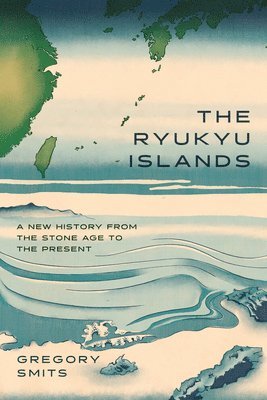
The first comprehensive history of the Ryukyu Islands region in English.The Ryukyu Islands between Japan and Taiwan consist of around 160 islands and are home to about 1.5 million inhabitants. Across the islands’ history, sea-lanes and trade patterns have connected them to the East China Sea region, giving them a unique vantage point on the region’s changes and making them a useful lens through which to view and understand those transformations. In this book, Gregory Smits marshals his expertise to canvass the environmental, political, and social history of this fascinating area, emphasizing the diversity of influences from China, Japan, and Korea that have shaped it. Smits begins by tracing the islands’ early history from the time of the oldest extant human remains, through massive inflows of settlers from Japan, until the emergence of a centralized state in the sixteenth century. He then traces the development of the Ryukyu Kingdom from the fifteenth to the nineteenth century, examining its major cultural formations and the interplay of local and external influences driving its evolution. Finally, Smits ushers readers to the modern era, from the end of the Ryukyu Kingdom in 1879 through World War II, the era of American military control, and on to the present. He concludes with their present-day status as a tourist destination affected by ongoing geopolitical, economic, and environmental challenges. Synthesizing decades of research, this book is an indispensable, comprehensive guide to the islands’ history for scholars and nonspecialists alike.
Häftad, Engelska, 2025
354 kr
Skickas inom 5-8 vardagar
The first comprehensive history of the Ryukyu Islands region in English.The Ryukyu Islands between Japan and Taiwan consist of around 160 islands and are home to about 1.5 million inhabitants. Across the islands’ history, sea-lanes and trade patterns have connected them to the East China Sea region, giving them a unique vantage point on the region’s changes and making them a useful lens through which to view and understand those transformations. In this book, Gregory Smits marshals his expertise to canvass the environmental, political, and social history of this fascinating area, emphasizing the diversity of influences from China, Japan, and Korea that have shaped it. Smits begins by tracing the islands’ early history from the time of the oldest extant human remains, through massive inflows of settlers from Japan, until the emergence of a centralized state in the sixteenth century. He then traces the development of the Ryukyu Kingdom from the fifteenth to the nineteenth century, examining its major cultural formations and the interplay of local and external influences driving its evolution. Finally, Smits ushers readers to the modern era, from the end of the Ryukyu Kingdom in 1879 through World War II, the era of American military control, and on to the present. He concludes with their present-day status as a tourist destination affected by ongoing geopolitical, economic, and environmental challenges. Synthesizing decades of research, this book is an indispensable, comprehensive guide to the islands’ history for scholars and nonspecialists alike.
Inbunden, Engelska, 2025
967 kr
Skickas inom 5-8 vardagar
This masterful blend of history and urban storytelling brings to life the people and politics that shaped a single neighborhood in a Manchurian city across several centuries. What can one neighborhood reveal about the making of a modern nation? The Neighborhood deciphers the unexpected significance of Xita, a half-square-mile quarter in Shenyang, in Northeast China. As the historian Nianshen Song shows, over nearly four centuries, Xita has been shaped and reshaped by empire, war, migration, and urban transformation. Remarkably, the history of this small area mirrors large-scale changes, including and especially China’s metamorphosis from a multiethnic Eurasian empire to a postindustrial society. Song begins with Xita’s origins as a Qing-era Tibetan Buddhist center, following the lives of Mongol lamas and their imperial patrons. He tracks the neighborhood through the tumultuous twentieth century, when competing Russian and Japanese railway empires fueled its industrial growth, and Japanese colonizers turned it into a showcase for their imperial ambitions. Later, Xita became a vital enclave for Korea’s diaspora before emerging in the post-Mao era as a neon-lit hub of commerce and entertainment. A thoroughly researched microhistory, The Neighborhood reveals how global forces play out in everyday spaces. By studying the emperors, warlords, merchants, laborers, and migrants who shaped Xita, Song presents a captivating and original perspective for understanding China’s past—not from the top down, but through the streets and people who lived it.
Häftad, Engelska, 2025
258 kr
Skickas inom 5-8 vardagar
This masterful blend of history and urban storytelling brings to life the people and politics that shaped a single neighborhood in a Manchurian city across several centuries. What can one neighborhood reveal about the making of a modern nation? The Neighborhood deciphers the unexpected significance of Xita, a half-square-mile quarter in Shenyang, in Northeast China. As the historian Nianshen Song shows, over nearly four centuries, Xita has been shaped and reshaped by empire, war, migration, and urban transformation. Remarkably, the history of this small area mirrors large-scale changes, including and especially China’s metamorphosis from a multiethnic Eurasian empire to a postindustrial society. Song begins with Xita’s origins as a Qing-era Tibetan Buddhist center, following the lives of Mongol lamas and their imperial patrons. He tracks the neighborhood through the tumultuous twentieth century, when competing Russian and Japanese railway empires fueled its industrial growth, and Japanese colonizers turned it into a showcase for their imperial ambitions. Later, Xita became a vital enclave for Korea’s diaspora before emerging in the post-Mao era as a neon-lit hub of commerce and entertainment. A thoroughly researched microhistory, The Neighborhood reveals how global forces play out in everyday spaces. By studying the emperors, warlords, merchants, laborers, and migrants who shaped Xita, Song presents a captivating and original perspective for understanding China’s past—not from the top down, but through the streets and people who lived it.
Inbunden, Engelska, 2026
1 273 kr
Kommande
A critical account of the Japanese occupation in Inner Mongolia. Early in the twentieth century, the steppe borderlands between China and Mongolia erupted in violence. As imperial Japan expanded into this area, this crisis between nomadic and settler communities posed fundamental problems in governance. In response, Japanese and Mongol leaders together proposed a radical solution: Demarcating an autonomous region in Manchukuo for minority peoples, a new kind of political space that would later define the territorial structure of Communist China. In Territorial Natures, Sakura Christmas explores how the fraught partition of this autonomous region warped the ethnic and environmental boundaries of Manchukuo. She challenges its origin story as a socialist invention by the Chinese state, instead seeing it as also a fascist extension from the Japanese occupation. By reading Chinese and Mongolian sources against Japanese archives, Christmas reveals how this contested history seeded the volatile landscape of autonomous regions in the People’s Republic of China today.
Häftad, Engelska, 2026
310 kr
Kommande
A critical account of the Japanese occupation in Inner Mongolia. Early in the twentieth century, the steppe borderlands between China and Mongolia erupted in violence. As imperial Japan expanded into this area, this crisis between nomadic and settler communities posed fundamental problems in governance. In response, Japanese and Mongol leaders together proposed a radical solution: Demarcating an autonomous region in Manchukuo for minority peoples, a new kind of political space that would later define the territorial structure of Communist China. In Territorial Natures, Sakura Christmas explores how the fraught partition of this autonomous region warped the ethnic and environmental boundaries of Manchukuo. She challenges its origin story as a socialist invention by the Chinese state, instead seeing it as also a fascist extension from the Japanese occupation. By reading Chinese and Mongolian sources against Japanese archives, Christmas reveals how this contested history seeded the volatile landscape of autonomous regions in the People’s Republic of China today.
Inbunden, Engelska, 2026
1 273 kr
Kommande
Traces the rise and fall of a set of modern disciplinary fields devoted to premodern historical contact that drew on intellectual currents across and beyond China and Europe.In The Silk Road Idea, Tamara T. Chin examines the rise of interest in “the connected past” and its impact on key disciplines, focusing on the period from 1870 to 1970. Against the predominance of national studies, Chin argues that historical contact gradually came to be regarded as an object of inquiry over a century spanning imperialism, decolonization, and the Cold War. Interest in connected histories emerged from all corners: the colonialist and the anticolonial; the capitalist and the communist; the antiquarian and the activist.During the ascent of academic specialization, Chin contends, geography, history, philology, and linguistics domesticated contact through distinct frameworks and units of analysis, making it into something geographers mapped, historians narrated, philologists read, and linguists heard. But this also brought disruption. To historically connect Afro-Eurasia, disciplinary paradigms were questioned, and, in some cases, transformed. Intellectual debates in East Asia and Europe became entangled with those in South Asia and East Africa. Chin uses the concept of the “Silk Road” to capture the epistemological challenge of including China in a globally connected past, from the pursuit of civilizational origins to that of entangled empires. The Silk Road Idea revisits the stakes of premodern contact for the histories of colonialism, capitalism, and knowledge, showing how the connecting and reconfiguring of the modern world enabled and was enabled by a reimagination of antiquity.
Häftad, Engelska, 2026
393 kr
Kommande
Traces the rise and fall of a set of modern disciplinary fields devoted to premodern historical contact that drew on intellectual currents across and beyond China and Europe.In The Silk Road Idea, Tamara T. Chin examines the rise of interest in “the connected past” and its impact on key disciplines, focusing on the period from 1870 to 1970. Against the predominance of national studies, Chin argues that historical contact gradually came to be regarded as an object of inquiry over a century spanning imperialism, decolonization, and the Cold War. Interest in connected histories emerged from all corners: the colonialist and the anticolonial; the capitalist and the communist; the antiquarian and the activist.During the ascent of academic specialization, Chin contends, geography, history, philology, and linguistics domesticated contact through distinct frameworks and units of analysis, making it into something geographers mapped, historians narrated, philologists read, and linguists heard. But this also brought disruption. To historically connect Afro-Eurasia, disciplinary paradigms were questioned, and, in some cases, transformed. Intellectual debates in East Asia and Europe became entangled with those in South Asia and East Africa. Chin uses the concept of the “Silk Road” to capture the epistemological challenge of including China in a globally connected past, from the pursuit of civilizational origins to that of entangled empires. The Silk Road Idea revisits the stakes of premodern contact for the histories of colonialism, capitalism, and knowledge, showing how the connecting and reconfiguring of the modern world enabled and was enabled by a reimagination of antiquity.
Inbunden, Engelska, 2024
635 kr
Skickas inom 3-6 vardagar
Explores how the movement of people, objects, and ideas from 500 to 1000 CE shaped cultures and historiesIn the ninth century CE, an Arabian ship sank off the coast of Indonesia. The objects found in the wreckage, which include Chinese ceramics and precious metals, have provided extraordinary evidence of the nature, scale, and diversity of trade between Tang China and the Islamic Abbasid dynasty. This is just one example of the sprawling and extensive networks of contacts and exchanges spanning Afro-Eurasia. This richly illustrated book challenges the concept of the "Silk Roads" as a simple history of trade between East and West. Focusing on a series of overlapping geographic zones and interspersed with case studies of particular peoples who were active along these networks—seafarers in the Indian Ocean, Sogdians, Vikings, Aksumites, and the peoples of al-Andalus—it reveals remarkable human stories, innovations, and the transfer of knowledge that emerged from these connections. The volume explores notable examples of contacts, connections, and integrations, while emphasizing the environmental and historical conditions that shaped them, featuring the latest scientific research. The dazzling range of objects includes a wooden panel with the story of the "silk princess" who smuggled the eggs of the silk moth from China; a lion sculpture from Jordan; a miniature wooden pagoda from Japan; wall paintings from the Hall of Ambassadors in Uzbekistan; a kaftan from the Caucasus region; an ivory cross from Spain; and a gold and garnet scabbard slide from the Sutton Hoo burial in Britain.
Inbunden, Engelska, 2018
753 kr
Tillfälligt slut
Published in 1974, Marshall Hodgson’s The Venture of Islam was a watershed moment in the study of Islam. By locating the history of Islamic societies in a global perspective, Hodgson challenged the orientalist paradigms that had stunted the development of Islamic studies and provided an alternative approach to world history. Edited by Edmund Burke III and Robert Mankin, Islam and World History explores the complexity of Hodgson’s thought, the daring of his ideas, and the global context of his world historical insights into, among other themes, Islam and world history, gender in Islam, and the problem of Muslim universality. In our post-9/11 world, Hodgson’s historical vision and moral engagement have never been more relevant. A towering achievement, Islam and World History will prove to be the definitive statement on Hodgson’s relevance in the twenty-first century and will introduce his influential work to a new generation of readers.