Tim Winter – författare
1 332 kr
Skickas inom 5-8 vardagar
354 kr
Skickas inom 5-8 vardagar
275 kr
Läs direkt efter köp
285 kr
Läs direkt efter köp
782 kr
Skickas inom 5-8 vardagar
263 kr
Skickas inom 5-8 vardagar
490 kr
Läs direkt efter köp
2 320 kr
Skickas inom 10-15 vardagar
2 253 kr
Skickas inom 10-15 vardagar
2 320 kr
Skickas inom 10-15 vardagar
802 kr
Skickas inom 10-15 vardagar
2 253 kr
Skickas inom 10-15 vardagar
3 446 kr
Skickas inom 10-15 vardagar
779 kr
Skickas inom 10-15 vardagar
835 kr
Skickas inom 10-15 vardagar
1 486 kr
Skickas inom 7-10 vardagar
444 kr
Skickas inom 7-10 vardagar
538 kr
Läs direkt efter köp
520 kr
Läs direkt efter köp
912 kr
Läs direkt efter köp
912 kr
Läs direkt efter köp
978 kr
Läs direkt efter köp
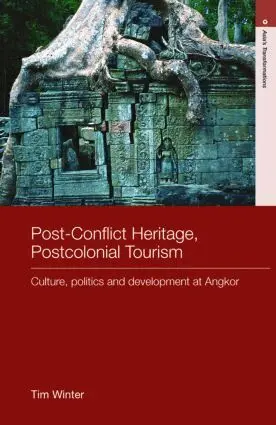
Angkor, Cambodia’s only World Heritage Site, is enduring one of the most crucial, turbulent periods in its twelve hundred year history. Given Cambodia’s need to restore its shattered social and physical infrastructures after decades of violent conflict, and with tourism to Angkor increasing by a staggering 10,000 per cent in just over a decade, the site has become an intense focal point of competing agendas. Angkor’s immense historical importance, along with its global prestige, has led to an unprecedented influx of aid, with over twenty countries together donating millions of dollars for conservation and research. For the Royal Government however, Angkor has become a ‘cash-cow’ of development.
Post-conflict Heritage, Postcolonial Tourism critically examines this situation and locates Angkor within the broader contexts of post-conflict reconstruction, nation building, and socio-economic rehabilitation. Based on two years of fieldwork, the book explores culture, development, the politics of space, and the relationship between consumption, memory and identity to reveal the aspirations and tensions, anxieties and paradoxical agendas, which form around a heritage tourism landscape in a post-conflict, postcolonial society.
With the situation in Cambodia examined as a stark example of a phenomenon common to many countries attempting to recover after periods of war or political turmoil, Post-conflict Heritage, Postcolonial Tourism will be of particular interest to students and scholars working in the fields of Asian studies, tourism, heritage, development, and cultural and postcolonial studies.
978 kr
Läs direkt efter köp
Angkor, Cambodia’s only World Heritage Site, is enduring one of the most crucial, turbulent periods in its twelve hundred year history. Given Cambodia’s need to restore its shattered social and physical infrastructures after decades of violent conflict, and with tourism to Angkor increasing by a staggering 10,000 per cent in just over a decade, the site has become an intense focal point of competing agendas. Angkor’s immense historical importance, along with its global prestige, has led to an unprecedented influx of aid, with over twenty countries together donating millions of dollars for conservation and research. For the Royal Government however, Angkor has become a ‘cash-cow’ of development.
Post-conflict Heritage, Postcolonial Tourism critically examines this situation and locates Angkor within the broader contexts of post-conflict reconstruction, nation building, and socio-economic rehabilitation. Based on two years of fieldwork, the book explores culture, development, the politics of space, and the relationship between consumption, memory and identity to reveal the aspirations and tensions, anxieties and paradoxical agendas, which form around a heritage tourism landscape in a post-conflict, postcolonial society.
With the situation in Cambodia examined as a stark example of a phenomenon common to many countries attempting to recover after periods of war or political turmoil, Post-conflict Heritage, Postcolonial Tourism will be of particular interest to students and scholars working in the fields of Asian studies, tourism, heritage, development, and cultural and postcolonial studies.
925 kr
Läs direkt efter köp
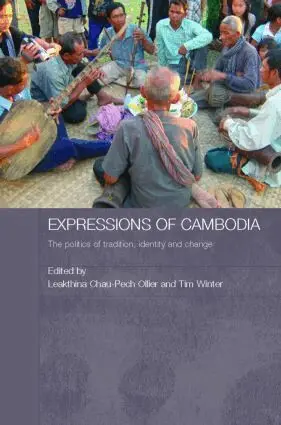
Taking a theoretical and multidisciplinary perspective, the essays in this collection provide compelling insight into contemporary Cambodian culture at home and abroad. The book represents the first sustained exploration of the relationship between cultural productions and practices, the changing urban landscape and the construction of identity and nation building twenty-five years after the fall of the Khmer Rouge regime. As such, the team of international contributors address the politics of development and conservation, tradition and modernity within the global economy, and transmigratory movements of the twenty-first century.
Expressions of Cambodia presents a new dimension to the Cambodian studies by engaging the country in current debates about globalization and the commodification of culture, post-colonial politics and identity constructions. Timely and much-needed, this volume brings Cambodia back into dialogue with its neighbours, and in so doing, valuably contributes to the growing field of Southeast Asian cultural studies.
925 kr
Läs direkt efter köp
Taking a theoretical and multidisciplinary perspective, the essays in this collection provide compelling insight into contemporary Cambodian culture at home and abroad. The book represents the first sustained exploration of the relationship between cultural productions and practices, the changing urban landscape and the construction of identity and nation building twenty-five years after the fall of the Khmer Rouge regime. As such, the team of international contributors address the politics of development and conservation, tradition and modernity within the global economy, and transmigratory movements of the twenty-first century.
Expressions of Cambodia presents a new dimension to the Cambodian studies by engaging the country in current debates about globalization and the commodification of culture, post-colonial politics and identity constructions. Timely and much-needed, this volume brings Cambodia back into dialogue with its neighbours, and in so doing, valuably contributes to the growing field of Southeast Asian cultural studies.
992 kr
Läs direkt efter köp
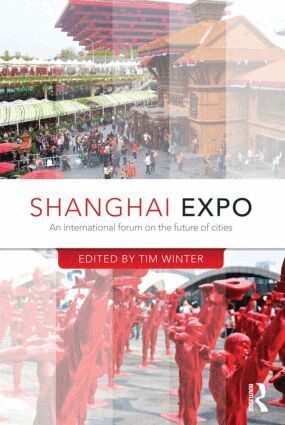
In 2010 Shanghai hosted the largest, most spectacular and most expensive expo ever. Attracting a staggering 73 million visitors, and costing around US$45 billion dollars, Shanghai Expo broke the records in the history of world''s fairs and universal expositions. With more than half of the world’s population now living in cities, many of which face uncertain futures, this mega event confronted some of the key challenges facing humanity in the 21st Century, with its theme Better City, Better Life. Just two years after the Beijing Olympics, Shanghai Expo encapsulated a moment in history defined by China’s rise as a global superpower, and by the multiple challenges associated with developing more sustainable cities.
The thirteen essays here, written by a team of interdisciplinary researchers, offer a uniquely detailed analysis of this globally significant event. Chapters examine displays of futurity and utopia, the limitations of inter-cultural dialogue, and the ways in which this mega-event reflected its geo-political and cultural moment. Shanghai Expo also concentrates on the interplay between declarations towards urban sustainability, and the recent economic, demographic and socio-political trajectories of Shanghai and China more broadly.
It will appeal to students and scholars of sociology, history, politics, international relations, economics, Asian studies, China studies, sustainability, and urban studies.
992 kr
Läs direkt efter köp
In 2010 Shanghai hosted the largest, most spectacular and most expensive expo ever. Attracting a staggering 73 million visitors, and costing around US$45 billion dollars, Shanghai Expo broke the records in the history of world''s fairs and universal expositions. With more than half of the world’s population now living in cities, many of which face uncertain futures, this mega event confronted some of the key challenges facing humanity in the 21st Century, with its theme Better City, Better Life. Just two years after the Beijing Olympics, Shanghai Expo encapsulated a moment in history defined by China’s rise as a global superpower, and by the multiple challenges associated with developing more sustainable cities.
The thirteen essays here, written by a team of interdisciplinary researchers, offer a uniquely detailed analysis of this globally significant event. Chapters examine displays of futurity and utopia, the limitations of inter-cultural dialogue, and the ways in which this mega-event reflected its geo-political and cultural moment. Shanghai Expo also concentrates on the interplay between declarations towards urban sustainability, and the recent economic, demographic and socio-political trajectories of Shanghai and China more broadly.
It will appeal to students and scholars of sociology, history, politics, international relations, economics, Asian studies, China studies, sustainability, and urban studies.
874 kr
Läs direkt efter köp
874 kr
Läs direkt efter köp
835 kr
Skickas inom 10-15 vardagar