Peggy Teo – författare
2 405 kr
Skickas inom 10-15 vardagar
2 405 kr
Skickas inom 10-15 vardagar
2 477 kr
Skickas inom 10-15 vardagar
840 kr
Skickas inom 10-15 vardagar
2 405 kr
Skickas inom 10-15 vardagar
816 kr
Skickas inom 10-15 vardagar
718 kr
Skickas inom 10-15 vardagar
621 kr
Skickas inom 10-15 vardagar
961 kr
Läs direkt efter köp
961 kr
Läs direkt efter köp
975 kr
Läs direkt efter köp
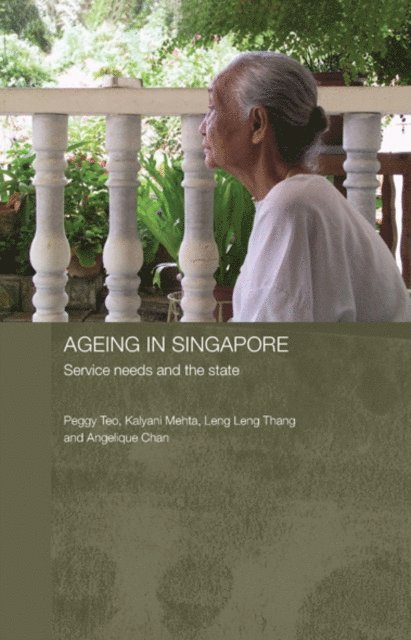
Older persons are often portrayed as social and financial burdens because pensions, health and social care have to withstand increasing old age dependency ratios. Due to a lack of access to representation or a lack of social and economic power, older people have found few opportunities to have their voices heard, making age an immensely political issue.
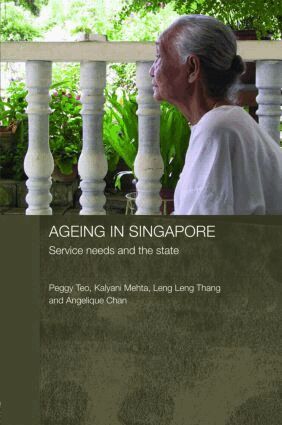
Written by an impressive team of authors, this book provides an in-depth analysis of the experience of ageing in Singapore examining key issues such as health, work, housing, family ties and care giving. It looks at how social categorization enters into everyday life to elucidate the multiple meanings of age and identity encountered in a rapidly changing economy and society.
Providing original critical discourse from Asian writers recording Asian voices, Ageing in Singapore will appeal to a wide readership and is an invaluable resource for policy makers, service practitioners and scholars working on Asian gerontology.
975 kr
Läs direkt efter köp
Older persons are often portrayed as social and financial burdens because pensions, health and social care have to withstand increasing old age dependency ratios. Due to a lack of access to representation or a lack of social and economic power, older people have found few opportunities to have their voices heard, making age an immensely political issue.
Written by an impressive team of authors, this book provides an in-depth analysis of the experience of ageing in Singapore examining key issues such as health, work, housing, family ties and care giving. It looks at how social categorization enters into everyday life to elucidate the multiple meanings of age and identity encountered in a rapidly changing economy and society.
Providing original critical discourse from Asian writers recording Asian voices, Ageing in Singapore will appeal to a wide readership and is an invaluable resource for policy makers, service practitioners and scholars working on Asian gerontology.
740 kr
Läs direkt efter köp
740 kr
Läs direkt efter köp
858 kr
Läs direkt efter köp
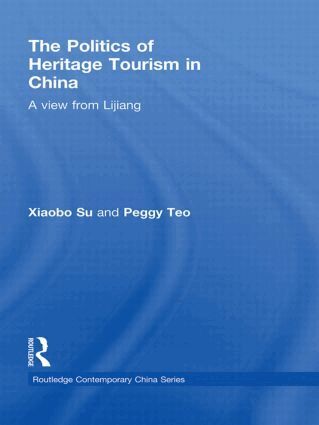
This volume unravels the politics surrounding behind China’s hegemonic project of heritage tourism development in Lijiang. It provides a compelling study of the dialectical relationships between global and domestic capital, the state, tourists and locals as they collude, collaborate and contest one another to ready Lijiang for tourist consumption.
Using rich material from insightful interviews and quantitative data, the authors show how complex tourism development can be even as it strives to do good for the community. Su and Teo investigate the practices of contestation and negotiation of identity within Lijiang; analyze the negotiations that transform material and vernacular landscapes; and suggests strategies that will enable sustained tourism interest in this location. Linking Gramsci’s theory on hegemony to the cultural politics of space, this book has two major strengths: it establishes a theoretical framework to conceptualize power relations in tourism space and provides critical insights into the rapidly shifting socio-political landscape of contemporary China. Comparisons with other Chinese heritage sites are also provided.
By addressing the power struggles inevitable in the process of tourism development, The Politics of Heritage Tourism in China provides an innovative understanding of China’s dynamic politics in a period of transition. As such, it will address the needs of students and academic scholars working in the fields of China studies, tourism, cultural studies, urban studies, sociology, geography, political science and heritage studies.
858 kr
Läs direkt efter köp
This volume unravels the politics surrounding behind China’s hegemonic project of heritage tourism development in Lijiang. It provides a compelling study of the dialectical relationships between global and domestic capital, the state, tourists and locals as they collude, collaborate and contest one another to ready Lijiang for tourist consumption.
Using rich material from insightful interviews and quantitative data, the authors show how complex tourism development can be even as it strives to do good for the community. Su and Teo investigate the practices of contestation and negotiation of identity within Lijiang; analyze the negotiations that transform material and vernacular landscapes; and suggests strategies that will enable sustained tourism interest in this location. Linking Gramsci’s theory on hegemony to the cultural politics of space, this book has two major strengths: it establishes a theoretical framework to conceptualize power relations in tourism space and provides critical insights into the rapidly shifting socio-political landscape of contemporary China. Comparisons with other Chinese heritage sites are also provided.
By addressing the power struggles inevitable in the process of tourism development, The Politics of Heritage Tourism in China provides an innovative understanding of China’s dynamic politics in a period of transition. As such, it will address the needs of students and academic scholars working in the fields of China studies, tourism, cultural studies, urban studies, sociology, geography, political science and heritage studies.