Special Issues of the Journal of Cognitive Psychology – serie
Visar alla böcker i serien Special Issues of the Journal of Cognitive Psychology. Handla med fri frakt och snabb leverans.
20 produkter
20 produkter
Häftad, Engelska, 2019
461 kr
Skickas inom 10-15 vardagar
Computational modeling has tremendously advanced our understanding of the processes involved in normal and impaired reading. While previous research has mainly focused on simulating reading aloud of monosyllabic words in English, the present special issue highlights some new directions in the field of word recognition and reading aloud. These new lines of research include the learning orthographic and phonological representations in both supervised and unsupervised networks, and the extension of existing models to multi-syllabic word processing both in English and in other languages, such as Italian, French and German. The special issue also covers hotly debated issues concerning the front-end of the reading process, the neural plausibility of current models of word recognition and naming, the viability of Bayesian approaches to understanding reading, as well as the long-standing opposition between rule-based and statistical learning. Finally, this special issue includes simulation work on novel benchmark phenomena, such as the effects of fast phonology, masked onset priming and syllabic neighbourhood. Altogether, the present special issue provides a critical analysis and synthesis of current computational models of reading and cutting edge research concerning the next generation of computational models of word recognition and reading aloud.
Inbunden, Engelska, 2020
1 743 kr
Skickas inom 10-15 vardagar
This special issue is a tribute to Michael W. Eysenck, a distinguished pioneer in the field of cognition and emotion, and the founding editor of the Journal of Cognitive Psychology. It consists of a collection of theoretical as well as empirical papers by eminent scholars who have led the field of cognition and emotion in their own right. In keeping with Mike Eysenck‘s original ideas, information-processing and attentional control are dominant themes across a diversity of interesting studies and theoretical models that provide a state-of-the-art update on biological influences on cognition, cognitive influences on emotion, and personality traits influencing cognition and emotion.
Häftad, Engelska, 2019
327 kr
Skickas inom 10-15 vardagar
What is intelligence? How can we examine individual differences in intelligence? What does it mean to be very intelligent or dumb? Such questions have always pervaded human thinking, and have been raised during the development of scientific psychology. However, for many years, the practical needs of having reliable measures of intelligence have prevailed and the field has suffered the limitations of the psychometric approach. Recently, cognitive neuroscience, and in particular cognitive psychology, have proposed new models and data which have revived thinking in this area. This Special Issue offers examples of how the field of cognitive psychology can contribute not only to the refinement of theoretical thinking but also to the development of new tools for the study of human intelligence. The contributors to the issue are prominent researchers in working memory, speed of processing, executive functions, language, and intellectual development/decline and show how their lines of research may contribute key concepts and methods to the field. Different ideas and lines of research within cognitive psychology are presented, but, working memory, despite some contra-indications discussed throughout the issue, emerges from many chapters as the most important contender for the study of central aspects of intelligence.
Häftad, Engelska, 2019
421 kr
Skickas inom 10-15 vardagar
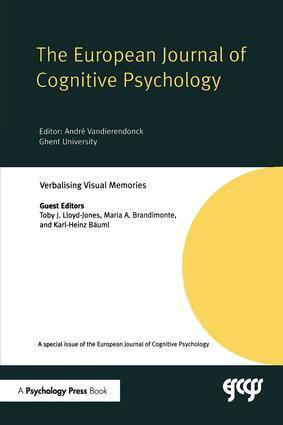
This special issue, Verbalising Visual Memories, comprises research on: (a) verbal interference and facilitation in face and person processing; (b) similarities and differences between effects of verbalisation and processing in the Navon task (Navon, 1977); and (c) effects of verbalisation in visual imagery and object memory. It is clear that verbal processes influence the encoding, storage and retrieval of visual information. Moreover, different forms of verbal interference and facilitation are likely to be due to different mechanisms in different contexts. The state-of-the-art is that we are just beginning to understand the rich complexity of the problem.
Häftad, Engelska, 2015
741 kr
Skickas inom 10-15 vardagar
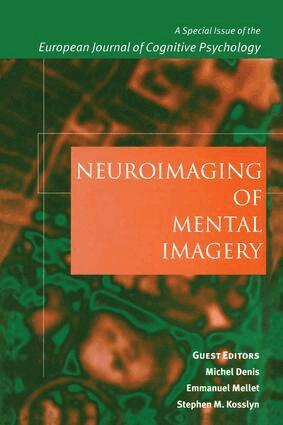
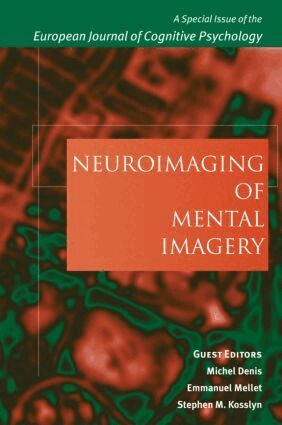
Many topics have inspired significant amounts of neuroimaging research in recent years, and the study of mental imagery was one of the earliest to receive a thorough empirical investigation. Twenty years later, the goal of understanding this pervasive but elusive phenomenon continues to motivate a number of sustained research programs on the part of cognitive psychologists and neuroscientists. The issues at stake are easy to formulate, even if the answers sometimes may be difficult to obtain: Which parts of the human brain are active when a person generates a memory image of an absent object? To what extent does mental imagery activate cortical structures known to subserve perceptual visual experience? If imagery and like-modality perception produce similar patterns of brain activation, what sorts of theories should cognitive scientists develop about the underlying mechanisms? How can we best understand why people differ in their imagery abilities? These are questions to which the contributors to the special issue "Neuroimaging of Mental Imagery" offer answers, through seven original studies based on the use of modern neuroimaging techniques, primarily positron emission tomography (PET) and functional magnetic resonance imaging (fMRI). These techniques are used in the context of a variety of cognitive tasks involving memory, problem solving, and other processes. Unlike most research in psychology, much of the work reported here explicitly addresses individual differences, which must be considered carefully in order to provide comprehensive accounts of the results of imagery experiments. Although these investigations were planned and carried out independently, we find a remarkable convergence among them. And this may be the surest sign that a field is indeed moving forward.
Häftad, Engelska, 2015
487 kr
Skickas inom 10-15 vardagar
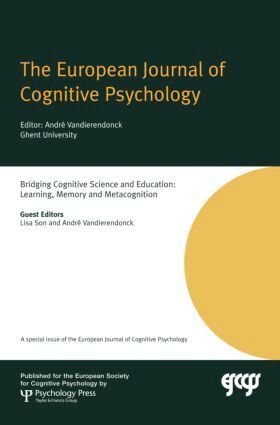
The fields of cognitive science and education have worked hard to discover effective principles of learning with the goal of improving educational achievement. And although each has made significant advances, there has been, until today, a gap between the two disciplines. This special issue brings together researchers aiming to bridge laboratory data with real world learning practices, each providing recent and crucial information concerning the improvement of learning. The readings will allow both researchers and educators to understand strategies that would most benefit students by improving learning as well as the ability of learning to learn - or what has been defined as metacognition.
Häftad, Engelska, 2019
421 kr
Skickas inom 10-15 vardagar
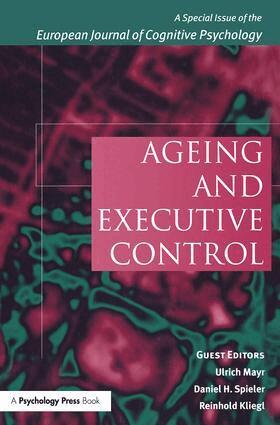
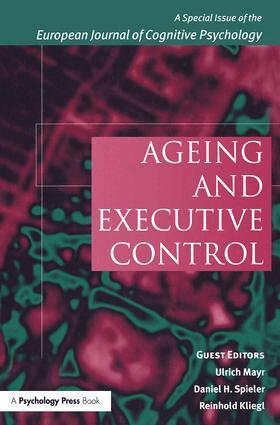
The empirical and theoretical analysis of executive control processes, dormant for many years, has grown to become one of the most fertile areas of research in cognitive psychology and cognitive neuroscience. Because executive functions are thought to have a pervasive role in maintaining optimal information processing across many processing situations, issues related to executive control cut across many traditional research divides. Unique among many other areas of research in cognition, questions about the influence of ageing have figured prominently in executive control research. There is accumulating evidence of age-related changes in frontal/executive functions. The union of research on executive functioning with research on the cognitive effects of ageing could provide the theoretical framework for understanding the widespread influence of ageing on cognition.This special issue brings together well-known researchers in cognitive psychology and cognitive neuroscience who approach the question of executive control using a wide range of methods from traditional behavioural studies, quantitative and computational modelling, and functional neuroimaging. The emphasis of these contributions is on a concise overview and integration of relevant theoretical ideas and empirical findings. By bringing together a diverse group of contributors, this special issue can serve researchers and students both as a summary of current research and as a starting point toward further explorations on the relations between executive control and the cognitive influences of ageing.
Inbunden, Engelska, 2006
2 067 kr
Skickas inom 5-8 vardagar
What is intelligence? How can we examine individual differences in intelligence? What does it mean to be very intelligent or dumb? Such questions have always pervaded human thinking, and have been raised during the development of scientific psychology. However, for many years, the practical needs of having reliable measures of intelligence have prevailed and the field has suffered the limitations of the psychometric approach. Recently, cognitive neuroscience, and in particular cognitive psychology, have proposed new models and data which have revived thinking in this area. This Special Issue offers examples of how the field of cognitive psychology can contribute not only to the refinement of theoretical thinking but also to the development of new tools for the study of human intelligence. The contributors to the issue are prominent researchers in working memory, speed of processing, executive functions, language, and intellectual development/decline and show how their lines of research may contribute key concepts and methods to the field. Different ideas and lines of research within cognitive psychology are presented, but, working memory, despite some contra-indications discussed throughout the issue, emerges from many chapters as the most important contender for the study of central aspects of intelligence.
Inbunden, Engelska, 2007
1 275 kr
Skickas inom 10-15 vardagar
The fields of cognitive science and education have worked hard to discover effective principles of learning with the goal of improving educational achievement. And although each has made significant advances, there has been, until today, a gap between the two disciplines. This special issue brings together researchers aiming to bridge laboratory data with real world learning practices, each providing recent and crucial information concerning the improvement of learning. The readings will allow both researchers and educators to understand strategies that would most benefit students by improving learning as well as the ability of learning to learn - or what has been defined as metacognition.
Inbunden, Engelska, 2008
1 275 kr
Skickas inom 10-15 vardagar
This special issue, Verbalising Visual Memories, comprises research on: (a) verbal interference and facilitation in face and person processing; (b) similarities and differences between effects of verbalisation and processing in the Navon task (Navon, 1977); and (c) effects of verbalisation in visual imagery and object memory. It is clear that verbal processes influence the encoding, storage and retrieval of visual information. Moreover, different forms of verbal interference and facilitation are likely to be due to different mechanisms in different contexts. The state-of-the-art is that we are just beginning to understand the rich complexity of the problem.
Inbunden, Engelska, 2001
1 306 kr
Skickas inom 5-8 vardagar
The empirical and theoretical analysis of executive control processes, dormant for many years, has grown to become one of the most fertile areas of research in cognitive psychology and cognitive neuroscience. Because executive functions are thought to have a pervasive role in maintaining optimal information processing across many processing situations, issues related to executive control cut across many traditional research divides. Unique among many other areas of research in cognition, questions about the influence of ageing have figured prominently in executive control research. There is accumulating evidence of age-related changes in frontal/executive functions. The union of research on executive functioning with research on the cognitive effects of ageing could provide the theoretical framework for understanding the widespread influence of ageing on cognition.This special issue brings together well-known researchers in cognitive psychology and cognitive neuroscience who approach the question of executive control using a wide range of methods from traditional behavioural studies, quantitative and computational modelling, and functional neuroimaging. The emphasis of these contributions is on a concise overview and integration of relevant theoretical ideas and empirical findings. By bringing together a diverse group of contributors, this special issue can serve researchers and students both as a summary of current research and as a starting point toward further explorations on the relations between executive control and the cognitive influences of ageing.
Inbunden, Engelska, 2004
2 201 kr
Skickas inom 10-15 vardagar
Many topics have inspired significant amounts of neuroimaging research in recent years, and the study of mental imagery was one of the earliest to receive a thorough empirical investigation. Twenty years later, the goal of understanding this pervasive but elusive phenomenon continues to motivate a number of sustained research programs on the part of cognitive psychologists and neuroscientists. The issues at stake are easy to formulate, even if the answers sometimes may be difficult to obtain: Which parts of the human brain are active when a person generates a memory image of an absent object? To what extent does mental imagery activate cortical structures known to subserve perceptual visual experience? If imagery and like-modality perception produce similar patterns of brain activation, what sorts of theories should cognitive scientists develop about the underlying mechanisms? How can we best understand why people differ in their imagery abilities? These are questions to which the contributors to the special issue "Neuroimaging of Mental Imagery" offer answers, through seven original studies based on the use of modern neuroimaging techniques, primarily positron emission tomography (PET) and functional magnetic resonance imaging (fMRI). These techniques are used in the context of a variety of cognitive tasks involving memory, problem solving, and other processes. Unlike most research in psychology, much of the work reported here explicitly addresses individual differences, which must be considered carefully in order to provide comprehensive accounts of the results of imagery experiments. Although these investigations were planned and carried out independently, we find a remarkable convergence among them. And this may be the surest sign that a field is indeed moving forward.
Inbunden, Engelska, 2009
2 067 kr
Skickas inom 5-8 vardagar
Developed nations are experiencing enormous increases in the number of elderly people in the population. Ageing is a universal complex multifaceted process that profoundly affects mind and brain of all individuals. Important discoveries are being made at different levels of research on cognitive aging: from the molecular/genetic level, to the cell, the network, and the processing of information at the cognitive level. The aim of this special issue is to examine new breakthroughs of the aging mind and brain and how to use this knowledge to promote interdisciplinary research in normal and pathological aging.
Inbunden, Engelska, 2010
1 275 kr
Skickas inom 10-15 vardagar
Computational modeling has tremendously advanced our understanding of the processes involved in normal and impaired reading. While previous research has mainly focused on simulating reading aloud of monosyllabic words in English, the present special issue highlights some new directions in the field of word recognition and reading aloud. These new lines of research include the learning orthographic and phonological representations in both supervised and unsupervised networks, and the extension of existing models to multi-syllabic word processing both in English and in other languages, such as Italian, French and German. The special issue also covers hotly debated issues concerning the front-end of the reading process, the neural plausibility of current models of word recognition and naming, the viability of Bayesian approaches to understanding reading, as well as the long-standing opposition between rule-based and statistical learning. Finally, this special issue includes simulation work on novel benchmark phenomena, such as the effects of fast phonology, masked onset priming and syllabic neighbourhood. Altogether, the present special issue provides a critical analysis and synthesis of current computational models of reading and cutting edge research concerning the next generation of computational models of word recognition and reading aloud.
Häftad, Engelska, 2011
658 kr
Skickas inom 5-8 vardagar
Emotions can have profound effects on a wide range of cognitive processes (from attention and memory to decision-making). In the reverse direction, there is clear evidence that cognitive processes can modulate emotional responses. This special issue provides a broad sampling of recent, cutting-edge research on cognition and emotion. The overarching goal is to provide a deeper and more complete theoretical framework relating cognition and emotion, covering both behavioral and neuroscientific views.
Häftad, Engelska, 2012
644 kr
Skickas inom 10-15 vardagar
This special issue is a tribute to Michael W. Eysenck, a distinguished pioneer in the field of cognition and emotion, and the founding editor of the Journal of Cognitive Psychology. It consists of a collection of theoretical as well as empirical papers by eminent scholars who have led the field of cognition and emotion in their own right. In keeping with Mike Eysenck’s original ideas, information-processing and attentional control are dominant themes across a diversity of interesting studies and theoretical models that provide a state-of-the-art update on biological influences on cognition, cognitive influences on emotion, and personality traits influencing cognition and emotion.
Häftad, Engelska, 1990
455 kr
Tillfälligt slut
This Special Issue includes reviews of crucial issues in current Cognitive Gerontology, and accounts of recent empirical work. Susan Kemper, Shannon Rash, Donna Kynette and Suzanne Norman describe the structure of Adult Narratives, Jerker Rönnberg describes research on Cognitive and Communicative Function: The Effect of Chronological Age and "Handicap Age". Gillian Cohen describes investigations of Age Differences in Recognition and Retrieval of Proper Names in terms of Anderson's "Fan Effect" and Elizabeth Stine and Arthur Wingfield discuss how much Working Memory deficits contribute to Age Differences in Discourse Memory. There are reviews of Age Differences in Attentional Selectivity and Capacity by David Madden, and a critique of Age Associated Memory Impairment by T John Rohsen.
Inbunden, Engelska, 1999
648 kr
Tillfälligt slut
The topic of mental imagery has reached a stage of considerable maturity with a large published literature and a wide range of experimental paradigms now available. In recent years there has been a growing interest in uses for imagery in mental discovery and in the link between imagery and visuo-spatial working memory. Mental discovery offers insights into creative thinking, while the study of mental imagery in working memory offers a scientific understanding of important aspects of on-line cognition both in the laboratory and in everyday life. These cognate topics have been the subject of numerous scientific meetings, and there is now a well established network of imagery researchers across Europe. The idea for this special issue arose from a meeting of European imagery researchers that took place in Oslo, Norway in the summer of 1997. The topics for the special issue were chosen to reflect predominant themes represented at the meeting, but submission of papers was open to all readers of the European Journal of Cognitive Psychology whether or not they attended the conference. All the papers were subject to the normal strict reviewing process for the journal. The result is a sample of the exciting developments that are benefiting from significant growth in European based cognitive psychology.
Häftad, Engelska, 2006
648 kr
Tillfälligt slut
It is well known that the capacity for both simultaneous and rapid sequential information processing is limited. In the past two decades, at least four different approaches for the investigation and explanation of dual-task interference have developed. Surprisingly, these developments have taken place largely independent of each other. For example, working memory theories explain the inability to memorize combinations of data with the existence of modality-specific memory storage. Task switching models attribute switch costs to a combination of task reconfiguration costs and interference between competing task sets. Research with the refractory period paradigm suggests that a second of two responses is slowed because demanding processes such as response decisions defy parallel processing. Finally, attentional blink research shows that limited awareness of the second of two masked visual targets is caused by storage difficulties during the identification of the first target. The rare attempts at finding bridges between dual-task models attribute the costs to a mixture of shared and unique mechanisms. The ten papers gathered in this issue address questions such as: What is the relationship between working memory storage, retrieval, and cognitive operations? Can control processes account for the attentional blink and the refractory period effect? Are capacity limitations modality specific, and are they triggered by bottom-up or top-down processes? The authors argue that goal adjustments and episodic encoding of events qualify as shared mechanisms underlying dual-task limitations across multiple paradigms.
Inbunden, Engelska, 2004
1 353 kr
Tillfälligt slut
Measurement and analysis of eye movements are two of the most powerful ways to study the workings of the human mind. This Special Issue on eye movements and information processing in reading presents an overview of experimental research based on this methodology. Eye movements provide a unique opportunity to examine principles of human information processing in a well-structured visual environment while people engage in a natural cognitive task. At the same time, oculomotor measures can be used as a tool to develop and test psycholinguistic hypotheses about the processing of written language. The papers in this issue contribute to both aspects, addressing issues that dominate current debates in the field. Seen from the angle of visual information processing, a major theme is the role played by parafoveal information for different types and levels of processing and for oculomotor control in reading. This includes effects of visual and linguistic word properties on the selection of words for fixation and the specification of saccade amplitudes. Clearly the most controversial question in this context concerns the allocation of attention, with positions ranging from a sequentially moving spotlight to a gradient of spatially distributed processing. Related to this is the issue of serial vs. parallel word processing and the fundamental question as to what extent the duration of fixations in reading is related to lexical processing. Taking a psycholinguistic perspective, the topics addressed include several levels of language processing from orthography to pragmatic information in sentence reading. New approaches to the study of morphologically complex words are reported, together with novel work revealing the complex nature of the apparently accessible, but elusive, concept of word frequency. Other papers reflect current theoretical discussions centered on the development of computational models of the reading process and contribute to the empirical base of these discussions.Taken together, this collection of papers, supplemented by an introduction to the field and a commentary on major issues, presents a comprehensive and up-to-date perspective on a research area currently characterised by numerous theoretical and empirical disputes. The papers will be of particular appeal to readers interested in basic and applied psycholinguistics, attention and visual perception, motor control and the modelling of complex cognitive processes.