Springer Series in Perception Engineering - Böcker
Visar alla böcker i serien Springer Series in Perception Engineering. Handla med fri frakt och snabb leverans.
15 produkter
15 produkter
1 061 kr
Skickas inom 10-15 vardagar
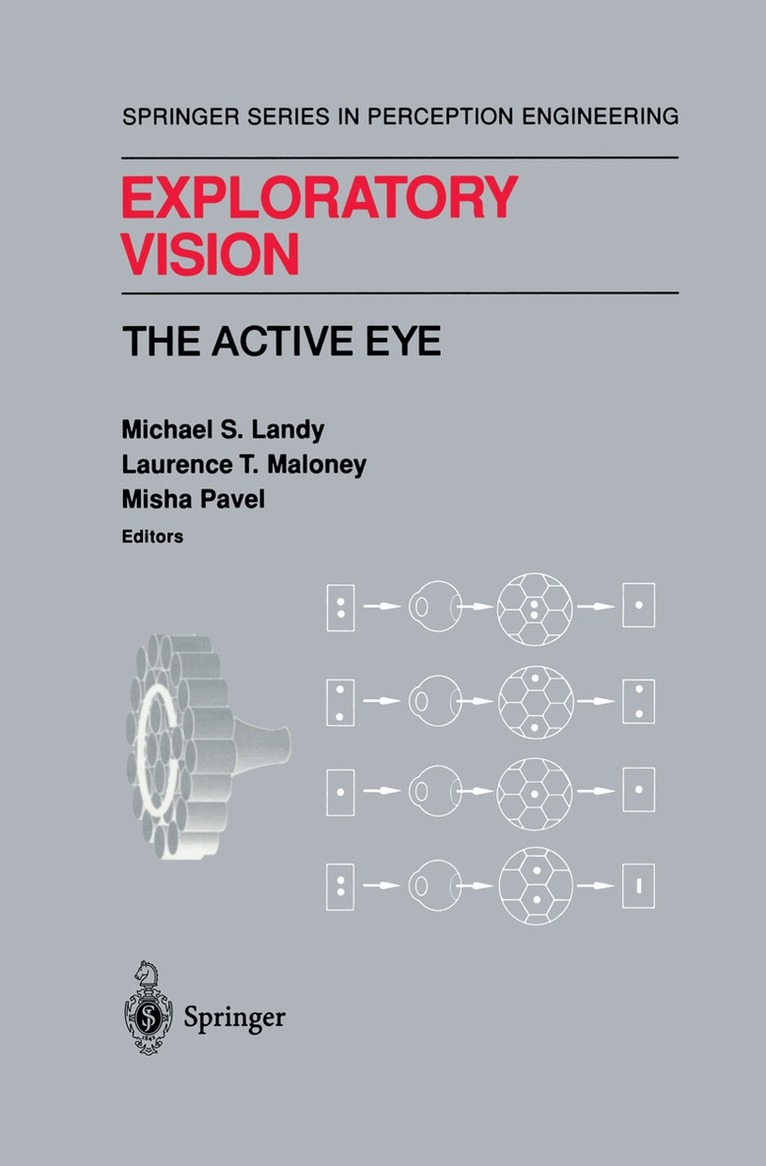
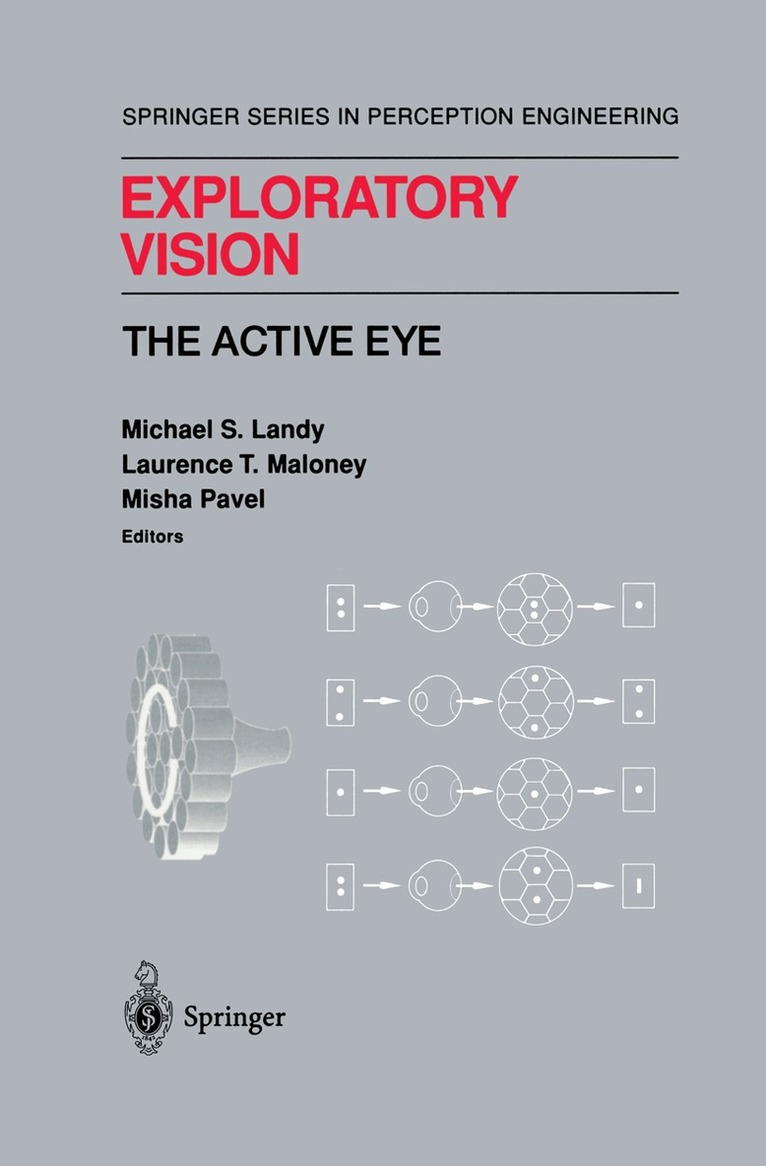
This book is a dialogue between researchers who study biological visual and computer scientists and engineers who seek to build computer vision systems that actively explore the environment. By describing new and important ways to design robots analogous to biological visual systems, it provides deep insights into the problems and solutions of computer vision. The book is divided into four parts, each addressing a different aspect of exploratory or active vision in biological and machine vision systems. The chapters are written by a cross-disciplinary selection of leading researchers who study computer and biological vision. As a result, many researchers and students concerned with vision will find this an invaluable survey to this fast-moving field.
1 092 kr
Skickas inom 10-15 vardagar
Machine Vision technology is becoming an indispensible part of the manufacturing industry. Biomedical and scientific applications of machine vision and imaging are becoming more and more sophisticated, and new applications continue to emerge. This book gives an overview of ongoing research in machine vision and presents the key issues of scientific and practical interest. A selected board of experts from the US, Japan and Europe provides an insight into some of the latest work done on machine vision systems and appliccations.
1 092 kr
Skickas inom 10-15 vardagar
Surface properties play a very important role in many perception tasks. Object recognition, navigation, and inspection use surface properties ex tensively. Characterizing surfaces at different scales in given data is often the first and possibly the most important step. Most early research in ma chine perception relied on only very coarse characterization of surfaces. In the last few years, surface characterization has been receiving due attention. Dr. T. J. Fan is one of the very few researchers who designed and im plemented a complete system for object recognition. He studied issues re lated to characterization of surfaces in the context of object recognition, and then uses the features thus developed for recognizing objects. He uses a multi-view representation of 3-D objects for recognition, and he devel ops techniques for the segmentation of range images to obtain features for recognition. His matching approach also allows him to recognize objects from their partial views in the presence of other occluding objects. The efficacy of his approach is demonstrated in many examples.
534 kr
Skickas inom 10-15 vardagar
There is a growing social interest in developing vision-based vehicle guidance systems for improving traffic safety and efficiency and the environment. Ex amples of vision-based vehicle guidance systems include collision warning systems, steering control systems for tracking painted lane marks, and speed control systems for preventing rear-end collisions. Like other guidance systems for aircraft and trains, these systems are ex pected to increase traffic safety significantly. For example, safety improve ments of aircraft landing processes after the introduction of automatic guidance systems have been reported to be 100 times better than prior to installment. Although the safety of human lives is beyond price, the cost for automatic guidance could be compensated by decreased insurance costs. It is becoming more important to increase traffic safety by decreasing the human driver's load in our society, especially with an increasing population of senior people who continue to drive. The second potential social benefit is the improvement of traffic efficiency by decreasing the spacing between vehicles without sacrificing safety. It is reported, for example, that four times the efficiency is expected if the spacing between cars is controlled automatically at 90 cm with a speed of 100 kmjh compared to today's typical manual driving. Although there are a lot of tech nical, psychological, and social issues to be solved before realizing the high density jhigh-speed traffic systems described here, highly efficient highways are becoming more important because of increasing traffic congestion.
550 kr
Skickas inom 10-15 vardagar
Much of our understanding of the relationships among geometric struc tures in images is based on the shape of these structures and their relative orientations, positions and sizes. Thus, developing quantitative methods for capturing shape information from digital images is an important area for computer vision research. This book describes the theory, implemen tation, and application of two multi resolution image shape description methods. The author begins by motivating the need for quantitative methods for describing both the spatial and intensity variations of struc tures in grey-scale images. Two new methods which capture this informa tion are then developed. The first, the intensity axis of symmetry, is a collection of branching and bending surfaces which correspond to the skeleton of the image. The second method, multiresolution vertex curves, focuses on surface curvature properties as the image is blurred by a sequence of Gaussian filters. Implementation techniques for these image shape descriptions are described in detail. Surface functionals are mini mized subject to symmetry constraints to obtain the intensity axis of symmetry. Robust numerical methods are developed for calculating and following vertex curves through scale space. Finally, the author demon strates how grey-scale images can be segmented into geometrically coher ent regions using these shape description techniques. Building quantita tive analysis applications in terms of these visually sensible image regions promises to be an exciting area of biomedical computer vision research. v Acknowledgments This book is a corrected and revised version of the author's Ph. D.
550 kr
Skickas inom 10-15 vardagar
Natural Object Recognition presents a totally new approach to the automation of scene understanding. Rather than attempting to construct highly specialized algorithms for recognizing physical objects, as is customary in modern computer vision research, the application and subsequent evaluation of large numbers of relatively straightforward image processing routines is used to recognize natural features such as trees, bushes, and rocks. The use of contextual information is the key to simplifying the problem to the extent that well understood algorithms give reliable results in ground-level, outdoor scenes.
534 kr
Skickas inom 10-15 vardagar
A fast and reasonably accurate perception of the environment is essential for successful navigation of an autonomous agent. Although many modes of sensing are applicable to this task and have been used, vision remains the most appealing due to its passive nature, good range, and resolution. Most vision techniques to recover depth for navigation use stereo. In the last few years, researchers have started studying techniques to combine stereo with the motion of the camera. Skifstad's dissertation proposes a new approach to recover depth information using known camera motion. This approach results in a robust technique for fast estimation of distances to objects in an image using only one translating camera. A very interesting aspect of the approach pursued by Skifstad is the method used to bypass the most difficult and computationally expensive step in using stereo or similar approaches for the vision-based depth esti mation. The correspondence problem has been the focus of research in most stereo approaches. Skifstad trades the correspondence problem for the known translational motion by using the fact that it is easier to detect single pixel disparities in a sequence of images rather than arbitrary disparities after two frames. A very attractive feature of this approach is that the computations required to detect single pixel disparities are local and hence can be easily parallelized. Another useful feature of the approach, particularly in naviga tion applications, is that the closer objects are detected earlier.
1 092 kr
Skickas inom 10-15 vardagar
Computer vision researchers have been frustrated in their attempts to automatically derive depth information from conventional two-dimensional intensity images. Research on "shape from texture", "shape from shading", and "shape from focus" is still in a laboratory stage and had not seen much use in commercial machine vision systems. A range image or a depth map contains explicit information about the distance from the sensor to the object surfaces within the field of view in the scene. Information about "surface geometry" which is important for, say, three-dimensional object recognition is more easily extracted from "2 1/2 D" range images than from "2D" intensity images. As a result, both active sensors such as laser range finders and passive techniques such as multi-camera stereo vision are being increasingly utilized by vision researchers to solve a variety of problems. This book contains chapters written by distinguished computer vision researchers covering the following areas: Overview of 3D Vision Range Sensing Geometric Processing Object Recognition Navigation Inspection Multisensor Fusion A workshop report, written by the editors, also appears in the book. It summarizes the state of the art and proposes future research directions in range image sensing, processing, interpretation, and applications. The book also contains an extensive, up-to-date bibliography on the above topics. This book provides a unique perspective on the problem of three-dimensional sensing and processing; it is the only comprehensive collection of papers devoted to range images. Both academic researchers interested in research issues in 3D vision and industrial engineers in search of solutions to particular problems will find this a useful reference book.
550 kr
Skickas inom 10-15 vardagar
Machine perception requires the digitization of physically-sensed signals. During the last ten years, digital range images have become available from a variety of sensors. This book is devoted to the problem of range image understanding with computers. Its aims are to develop a theoretical framework, devise appropriate algorithms, and demonstrate a software implementation of those algorithms that will confirm the usefulness of surfaces in range image understanding. It will be of interest to the researcher studying the theoretical concepts of image understanding, as well as the engineer who wants to implement these concepts in practical applications.
1 061 kr
Skickas inom 10-15 vardagar
Advances in sensing, signal processing, and computer technology during the past half century have stimulated numerous attempts to design general-purpose ma chines that see. These attempts have met with at best modest success and more typically outright failure. The difficulties encountered in building working com puter vision systems based on state-of-the-art techniques came as a surprise. Perhaps the most frustrating aspect of the problem is that machine vision sys tems cannot deal with numerous visual tasks that humans perform rapidly and effortlessly. In reaction to this perceived discrepancy in performance, various researchers (notably Marr, 1982) suggested that the design of machine-vision systems should be based on principles drawn from the study of biological systems. This "neuro morphic" or "anthropomorphic" approach has proven fruitful: the use of pyramid (multiresolution) image representation methods in image compression is one ex ample of a successful application based on principles primarily derived from the study of biological vision systems. It is still the case, however, that the perfor of computer vision systems falls far short of that of the natural systems mance they are intended to mimic, suggesting that it is time to look even more closely at the remaining differences between artificial and biological vision systems.
1 092 kr
Skickas inom 10-15 vardagar
Surface properties play a very important role in many perception tasks. Object recognition, navigation, and inspection use surface properties ex tensively. Characterizing surfaces at different scales in given data is often the first and possibly the most important step. Most early research in ma chine perception relied on only very coarse characterization of surfaces. In the last few years, surface characterization has been receiving due attention. Dr. T. J. Fan is one of the very few researchers who designed and im plemented a complete system for object recognition. He studied issues re lated to characterization of surfaces in the context of object recognition, and then uses the features thus developed for recognizing objects. He uses a multi-view representation of 3-D objects for recognition, and he devel ops techniques for the segmentation of range images to obtain features for recognition. His matching approach also allows him to recognize objects from their partial views in the presence of other occluding objects. The efficacy of his approach is demonstrated in many examples.
1 092 kr
Skickas inom 10-15 vardagar
Machine Vision technology is becoming an indispensible part of the manufacturing industry. Biomedical and scientific applications of machine vision and imaging are becoming more and more sophisticated, and new applications continue to emerge. This book gives an overview of ongoing research in machine vision and presents the key issues of scientific and practical interest. A selected board of experts from the US, Japan and Europe provides an insight into some of the latest work done on machine vision systems and appliccations.
1 061 kr
Skickas inom 10-15 vardagar
Since the early days of computers, machine learning and automatic programming have attracted researchers in computer science and related fields, particularly pattern recognition and automatic control theory. Most of the learning concepts in machine perception have been inspired by pattern recognition approaches that rely on statistical techniques. These statistical techniques have applicability in limited recognition tasks. Automatic programming in perception systems has generally been limited to interfaces that allow easy specification of the task using natural language. Clearly, machine learning and automatic programming can make percep tion systems powerful and easy to use. Vogt's book addresses both these tasks in the context of machine vision. He uses morphological operations to implement his approach which was developed for solving the figure-ground problem in images. His system selects the correct se quence of operators to accept or reject pixels for fmding objects in an image. The sequence of operators is selected after a user specifies what the correct objects are. On the surface it may appear that the problem solved by the system is not very interesting, however, the contribution ofVogt' s work should not be judged by the images that the system can segment. Its real contribution is in demonstrat ing, possibly for'the frrst time, that automatic programming is possible in computer vision systems. The selection of morphological operators demonstrates that to implement an automatic programming-based approach, operators whose behavior is clearly defined in the image space are required.
1 061 kr
Skickas inom 10-15 vardagar
This book addresses an area of perception engineering which deals with constructive processes. A model of the environment is analyzed using the information acquired from mUltiple viewpoints of multiple disparate sensors at multiple time instants. Although the role of successive model building and active exploration of the environment, as is discussed in this book, is of great importance, only a few researchers of machine perception have thus far addressed the problem in these directions. Krotkov's book, which is a modification and continuation of his highly successful dissertation, focuses on active exploratory sensing in the context of spatial layout perception. He uses stereo and focus to obtain distance By information, and to eventually develop cooperative combining techniques. means of a stereo system with verging cameras, it is demonstrated that the distance measurements can be significantly improved by combining two sources. In addition, the problem of merging information from the multiple views is discussed in detail. As the field of perception engineering seems to be of growing scientific and applied importance, both practitioners and researchers in machine perception will find this book a valuable addition to their libraries. RameshJain Series Editor Acknowledgements I would like to thank Professor Ruzena Bajcsy for her constant encouragement and guidance during the five years of research leading to the dissertation upon which this book is based. Without her help in all matters, this work would never have been possible.
550 kr
Skickas inom 10-15 vardagar
A central issue in computer vision is the problem of signal to symbol transformation. In the case of texture, which is an important visual cue, this problem has hitherto received very little attention. This book presents a solution to the signal to symbol transformation problem for texture. The symbolic de- scription scheme consists of a novel taxonomy for textures, and is based on appropriate mathematical models for different kinds of texture. The taxonomy classifies textures into the broad classes of disordered, strongly ordered, weakly ordered and compositional. Disordered textures are described by statistical mea- sures, strongly ordered textures by the placement of primitives, and weakly ordered textures by an orientation field. Compositional textures are created from these three classes of texture by using certain rules of composition. The unifying theme of this book is to provide standardized symbolic descriptions that serve as a descriptive vocabulary for textures. The algorithms developed in the book have been applied to a wide variety of textured images arising in semiconductor wafer inspection, flow visualization and lumber processing. The taxonomy for texture can serve as a scheme for the identification and description of surface flaws and defects occurring in a wide range of practical applications.