• Fri frakt över 249 kr
  • •
  • Snabba leveranser
  • •
  • Billiga böcker
Kundservice

Du är på sajten för privatpersoner.

Företag, bibliotek eller offentlig verksamhet?

Du handlar på classic.bokus.com, där alla dina funktioner finns intakta.
Till classic.bokus.com
Bokus logotyp. Gå till startsidan.
  • Erbjudanden
  • Student
  • Topplistor
  • Barn & ungdom
  • Bokus Play
  • E-böcker
  • Ljudböcker
  • Pocketböcker
  • Spel & pussel

Upp till 25% på utvalda nyheter →

Sidfot

Mina sidor

    Hjälp

    • Kundservice
    • Vanliga frågor och svar
    • Frakt och leverans
    • Retur vid ångerrätt
    • Reklamera vara
    • Betalning
    • Köpvillkor
    • Allmänna villkor
    • Information om webbplatsens tillgänglighet

    Om Bokus

    • Om oss
    • Pressrum
    • För studenter
    • För företag
    • För bibliotek och offentlig verksamhet
    • För leverantörer
    • Hållbarhet

    Populärt

    • Aktuella erbjudanden
    • Presentkort
    • Studentlitteratur
    • Nya böcker
    • Topplistor
    • Signerade böcker
    • Engelska böcker

    Inspiration

    • Boktips
    • BookTok
    • Populära bokserier
    • Barnbokskaraktärer
    • Populära författare
    Logotyp för Bokus
    Följ oss på Facebook (extern länk)Följ oss på Instagram (extern länk)Följ oss på YouTube (extern länk)Följ oss på TikTok (extern länk)
    bokus @ CookiesAnpassa cookiesIntegritetspolicyKöpvillkor
    Till Citymail hemsida (extern länk)Till Budbee hemsida (extern länk)Till Postnord hemsida (extern länk)Till Schenker hemsida (extern länk)Till Early Bird hemsida (extern länk)Till Walleys hemsida (extern länk)
    1. Data och IT
    2. Systemvetenskap och AI

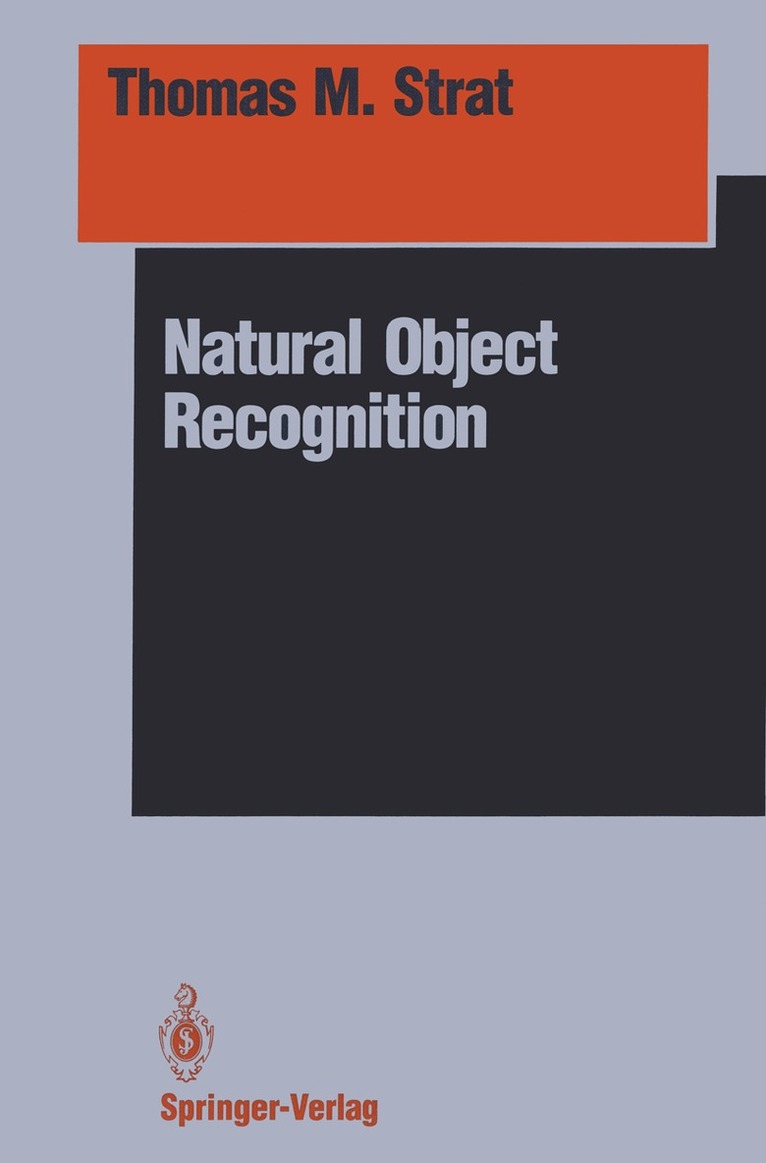
    Natural Object Recognition

    AvThomas M. Strat

    Häftad, Engelska, 2013

    Del i serien Springer Series in Perception Engineering

    563 kr

    Beställningsvara. Skickas inom 10-15 vardagar. Fri frakt över 249 kr.

    Fler format och utgåvor

    E-bok

    732 kr

    Beskrivning

    Natural Object Recognition presents a totally new approach to the automation of scene understanding. Rather than attempting to construct highly specialized algorithms for recognizing physical objects, as is customary in modern computer vision research, the application and subsequent evaluation of large numbers of relatively straightforward image processing routines is used to recognize natural features such as trees, bushes, and rocks. The use of contextual information is the key to simplifying the problem to the extent that well understood algorithms give reliable results in ground-level, outdoor scenes.

    Produktinformation

    • Utgivningsdatum:2013-10-20
    • Mått:155 x 235 x 11 mm
    • Vikt:306 g
    • Format:Häftad
    • Språk:Engelska
    • Serie:Springer Series in Perception Engineering
    • Antal sidor:173
    • Upplaga:1992
    • Förlag:Springer-Verlag New York Inc.
    • ISBN:9781461277255

    Utforska kategorier

    • Systemvetenskap och AI inom Data och IT
    • Artificiell intelligens inom Data och IT

    Innehållsförteckning

    • 1 Introduction.- 1.1 Motivation.- 1.2 Issues.- 1.3 Contribution.- 1.4 Example of results.- 2 Natural Object Recognition.- 2.1 Visual capabilities for autonomous robots.- 2.2 Related research.- 2.3 Limitations of current machine-vision technology.- 2.4 Key ideas.- 2.5 Experimental results.- 2.6 Conclusions.- 3 A Vision System for off-Road Navigation.- 3.1 Task scenario.- 3.2 Prior knowledge.- 3.3 The role of geometry.- 3.4 A vocabulary for recognition.- 3.5 Contextual information.- 4 Context-Based Vision.- 4.1 Conceptual Architecture.- 4.2 Implementation of Condor.- 4.3 Example of natural-object recognition.- 4.4 Automated knowledge acquisition.- 4.5 Complexity analysis.- 4.6 Discussion.- 4 Context-Based Vision.- 5.1 Evaluation scenario.- 5.2 Experimentation.- 5.3 Analysis of results.- 6 Conclusion.- 6.1 Contribution.- 6.2 Evaluation.- 6.3 Summary.- A The Core Knowledge Structure.- A.1 Introduction.- A.2 Core Knowledge Structure.- A.3 Logical Interpretation of the CKS Database.- A.3.1 Semantics.- A.3.2 Insertions.- A.3.3 Queries.- A.3.4 User-Defined Relations.- A.3.5 Discussion.- A.4 Slot Access.- A.5 Summary.- References.