• Fri frakt över 249 kr
  • •
  • Snabba leveranser
  • •
  • Billiga böcker
Kundservice

Du är på sajten för privatpersoner.

Företag, bibliotek eller offentlig verksamhet?

Du handlar på classic.bokus.com, där alla dina funktioner finns intakta.
Till classic.bokus.com
Bokus logotyp. Gå till startsidan.
  • Erbjudanden
  • Student
  • Topplistor
  • Barn & ungdom
  • Bokus Play
  • E-böcker
  • Ljudböcker
  • Pocketböcker
  • Spel & pussel

Upp till 25% på utvalda nyheter →

Sidfot

Mina sidor

    Hjälp

    • Kundservice
    • Vanliga frågor och svar
    • Frakt och leverans
    • Retur vid ångerrätt
    • Reklamera vara
    • Betalning
    • Köpvillkor
    • Allmänna villkor
    • Information om webbplatsens tillgänglighet

    Om Bokus

    • Om oss
    • Pressrum
    • För studenter
    • För företag
    • För bibliotek och offentlig verksamhet
    • För leverantörer
    • Hållbarhet

    Populärt

    • Aktuella erbjudanden
    • Presentkort
    • Studentlitteratur
    • Nya böcker
    • Topplistor
    • Signerade böcker
    • Engelska böcker

    Inspiration

    • Boktips
    • BookTok
    • Populära bokserier
    • Barnbokskaraktärer
    • Populära författare
    Logotyp för Bokus
    Följ oss på Facebook (extern länk)Följ oss på Instagram (extern länk)Följ oss på YouTube (extern länk)Följ oss på TikTok (extern länk)
    bokus @ CookiesAnpassa cookiesIntegritetspolicyKöpvillkor
    Till Citymail hemsida (extern länk)Till Budbee hemsida (extern länk)Till Postnord hemsida (extern länk)Till Schenker hemsida (extern länk)Till Early Bird hemsida (extern länk)Till Walleys hemsida (extern länk)
    1. Naturvetenskap och teknik
    2. Teknik och industri
    3. Elektronik och kommunikationer

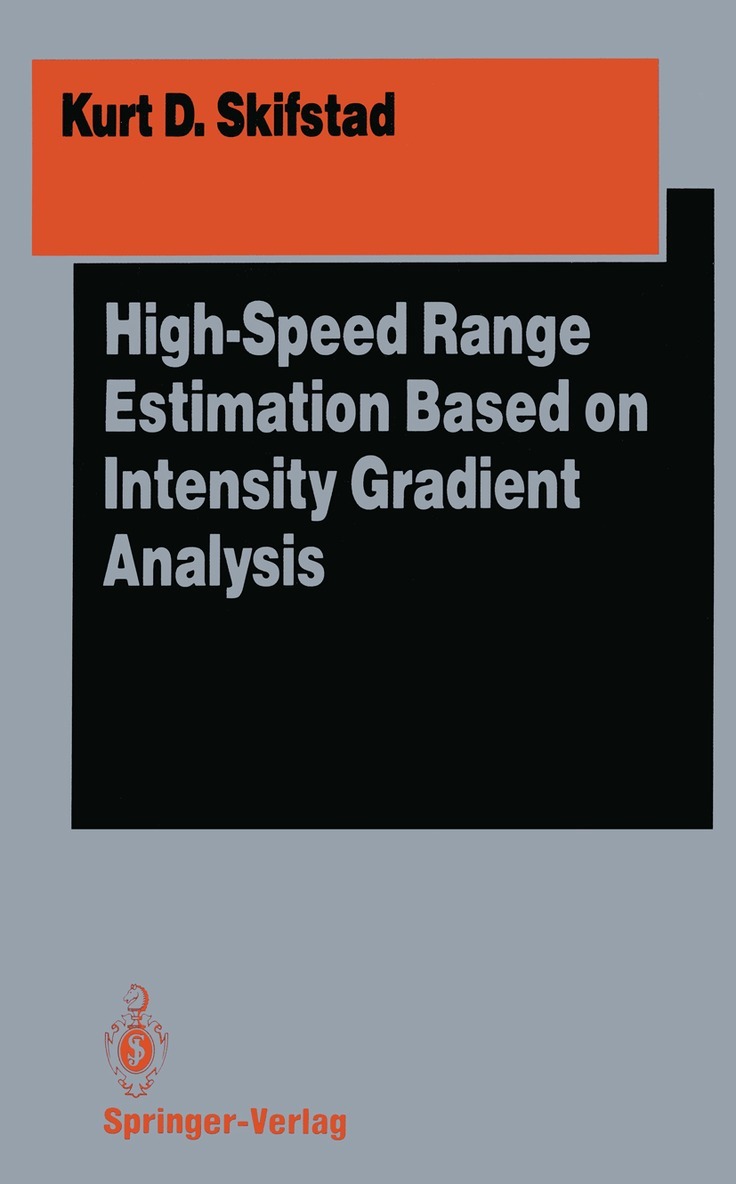
    High-Speed Range Estimation Based on Intensity Gradient Analysis

    AvKurt D. Skifstad

    Häftad, Engelska, 2011

    Del i serien Springer Series in Perception Engineering

    547 kr

    Beställningsvara. Skickas inom 10-15 vardagar. Fri frakt över 249 kr.

    Fler format och utgåvor

    E-bok

    710 kr

    Beskrivning

    A fast and reasonably accurate perception of the environment is essential for successful navigation of an autonomous agent. Although many modes of sensing are applicable to this task and have been used, vision remains the most appealing due to its passive nature, good range, and resolution. Most vision techniques to recover depth for navigation use stereo. In the last few years, researchers have started studying techniques to combine stereo with the motion of the camera. Skifstad's dissertation proposes a new approach to recover depth information using known camera motion. This approach results in a robust technique for fast estimation of distances to objects in an image using only one translating camera. A very interesting aspect of the approach pursued by Skifstad is the method used to bypass the most difficult and computationally expensive step in using stereo or similar approaches for the vision-based depth esti­ mation. The correspondence problem has been the focus of research in most stereo approaches. Skifstad trades the correspondence problem for the known translational motion by using the fact that it is easier to detect single pixel disparities in a sequence of images rather than arbitrary disparities after two frames. A very attractive feature of this approach is that the computations required to detect single pixel disparities are local and hence can be easily parallelized. Another useful feature of the approach, particularly in naviga­ tion applications, is that the closer objects are detected earlier.

    Produktinformation

    • Utgivningsdatum:2011-09-26
    • Mått:155 x 235 x 11 mm
    • Vikt:306 g
    • Format:Häftad
    • Språk:Engelska
    • Serie:Springer Series in Perception Engineering
    • Antal sidor:182
    • Förlag:Springer-Verlag New York Inc.
    • ISBN:9781461278016

    Utforska kategorier

    • Elektronik och kommunikationer inom Naturvetenskap och teknik
    • Systemvetenskap och AI inom Data och IT
    • Programmeringsböcker inom Data och IT

    Innehållsförteckning

    • 1 Introduction.- 1.1 Purpose.- 1.2 Philosophy.- 1.3 The Structure of This Thesis.- 2 Approaches to the Depth Recovery Problem.- 2.1 Sensing Modalities.- 2.2 Vision as a Primary Mode of Sensing.- 2.3 Literature Survey.- 2.4 Summary.- 3 Depth Recovery.- 3.1 Depth Recovery Using Translational Sensor Motion.- 3.2 Special Case: Axial Camera Motion.- 3.3 Special Case: Lateral Camera Motion.- 3.4 The Parameters Needed for Depth Recovery.- 4 Theoretical Basis for IGA.- 4.1 Acquiring a Sequence of Images.- 4.2 Two Ideas and Their Implications.- 5 Intensity Gradient Analysis.- 5.1 Isolating Fixed Image Displacements Using Intensity Gradients.- 5.2 Why Do More Work?.- 5.3 Extending to Two Dimensions.- 5.4 The IGA Algorithm.- 6 Implementation Issues.- 6.1 Problems with Real-World Sensors.- 6.2 Uncertainty in the Camera Motion Parameters.- 6.3 Moving Objects.- 6.4 Summary.- 7 Fixed Disparity Surfaces.- 7.1 Examples of FDS’s.- 7.2 Interpreting FDS’s.- 7.3 Fixed Disparity Surfaces and Conventional Stereo.- 8 Experiments.- 8.1 Experimental Setup.- 8.2 Calibration Procedures.- 8.4 Outdoor Scenes.- 8.5 Conclusions.- 9 An Application: Vision-Guided Navigation Using IGA.- 9.1 Navigation.- 9.2 Experimental Setup.- 9.3 Experiments.- 10 Conclusion.- 10.1 Future Research.- 10.2 Contribution.