Studies in Feminist Philosophy Series - Böcker
Visar alla böcker i serien Studies in Feminist Philosophy Series. Handla med fri frakt och snabb leverans.
13 produkter
13 produkter
379 kr
Skickas inom 5-8 vardagar
Anita Superson challenges the traditional picture of the skeptic who asks, "Why be moral?" While holding that the skeptic's position is important, she builds an argument against it by understanding it more deeply, and then shows what it would take to successfully defeat it. Superson argues that we must defeat not only the action skeptic, but the disposition skeptic, who denies that being morally disposed is rationally required, and the motive skeptic, who believes that merely going through the motions in acting morally is rationally permissible. We also have to address the amoralist, who is not moved by moral reasons he recognizes. Superson argues for expanding the skeptic's position from self-interest to privilege to include morally unjustified behavior targeting disenfranchised social groups, as well as revising the traditional expected utility model to exclude desires deformed by patriarchy as irrational. Lastly she argues that the challenge can be answered if it can be shown that it is, in an important way, inconsistent and therefore irrational to privilege oneself over others. The Moral Skeptic makes an important contribution to both metaethics/moral theory and feminist philosophy, and brings feminist thinking into the larger discussion of the skeptical challenge.
799 kr
Skickas inom 5-8 vardagar
Anita Superson challenges the traditional picture of the skeptic who asks, "Why be moral?" While holding that the skeptic's position is important, she builds an argument against it by understanding it more deeply, and then shows what it would take to successfully defeat it. Superson argues that we must defeat not only the action skeptic, but the disposition skeptic, who denies that being morally disposed is rationally required, and the motive skeptic, who believes that merely going through the motions in acting morally is rationally permissible. We also have to address the amoralist, who is not moved by moral reasons he recognizes. Superson argues for expanding the skeptic's position from self-interest to privilege to include morally unjustified behavior targeting disenfranchised social groups, as well as revising the traditional expected utility model to exclude desires deformed by patriarchy as irrational. Lastly she argues that the challenge can be answered if it can be shown that it is, in an important way, inconsistent and therefore irrational to privilege oneself over others. The Moral Skeptic makes an important contribution to both metaethics/moral theory and feminist philosophy, and brings feminist thinking into the larger discussion of the skeptical challenge.
498 kr
Skickas inom 5-8 vardagar
Iris Marion Young was a world-renowned feminist moral and political philosopher whose many books and articles spanned more than three decades. She explored issues of social justice and oppression theory, the phenomenology of women's bodies, deliberative democracy and questions of terrorism, violence, international law and the role of the national security state. Her works have been of great interest to those both in the analytic and Continental philosophical tradition, and her roots range from critical theory (Habermas and Marcuse), and phenomenology (Beauvoir and Merleau Ponty) to poststructural psychoanalytic feminism (Kristeva and Ingaray). This anthology of writings aims to carry on the fruitful lines of thought she created and contains works by both well-known and younger authors who explore and engage critically with aspects of her work. The essays include personal remembrances as well as a last interview with Young about her work. The essays are organized into topic areas that are of interest to students in advanced undergraduate and graduate courses in ethics, feminist theory, and political philosophy.
1 770 kr
Skickas inom 3-6 vardagar
Iris Marion Young was a world-renowned feminist moral and political philosopher whose many books and articles spanned more than three decades. She explored issues of social justice and oppression theory, the phenomenology of women's bodies, deliberative democracy and questions of terrorism, violence, international law and the role of the national security state. Her works have been of great interest to those both in the analytic and Continental philosophical tradition, and her roots range from critical theory (Habermas and Marcuse), and phenomenology (Beauvoir and Merleau Ponty) to poststructural psychoanalytic feminism (Kristeva and Ingaray). This anthology of writings aims to carry on the fruitful lines of thought she created and contains works by both well-known and younger authors who explore and engage critically with aspects of her work. The essays include personal remembrances as well as a last interview with Young about her work. The essays are organized into topic areas that are of interest to students in advanced undergraduate and graduate courses in ethics, feminist theory, and political philosophy.
1 024 kr
Skickas inom 7-10 vardagar
Someone fails to shake your outstretched hand, puts you down in front of others, or makes a joke in poor taste. Should we take offence? Wouldn't it be better if we didn't? In the face of popular criticism of people taking offence too easily, and the social problems that creates, Emily McTernan defends taking offence as often morally appropriate and socially valuable. Within societies marred by inequality, taking offence can resist the day-to-day patterning of social hierarchies. This book defends the significance of details of our social interactions. Cumulatively, small acts, and the social norms underlying these, can express and reinforce social hierarchies. But by taking offence, we mark an act as an affront to our social standing. We also often communicate our rejection of that affront to others. At times, taking offence can be a way to renegotiate the shared social norms around what counts as respectful treatment. Rather than a mere expression of hurt feelings then, to take offence can be to stand up for one's standing. When taken by those deemed to have less social standing, to take offence can be a direct act of insubordination against a social hierarchy. Taking offence can resist everyday inequalities. In unequal societies, the inclination to take offence at the right things, and to the right degree, may even be a civic virtue. These right things at which to take offence include many of the very instances that the opponents of a culture of taking offence find most objectionable: apparently trivial and small-scale details of our social interactions.
339 kr
Skickas inom 5-8 vardagar
Someone fails to shake your outstretched hand, puts you down in front of others, or makes a joke in poor taste. Should we take offence? Wouldn't it be better if we didn't? In the face of popular criticism of people taking offence too easily, and the social problems that creates, Emily McTernan defends taking offence as often morally appropriate and socially valuable. Within societies marred by inequality, taking offence can resist the day-to-day patterning of social hierarchies. This book defends the significance of details of our social interactions. Cumulatively, small acts, and the social norms underlying these, can express and reinforce social hierarchies. But by taking offence, we mark an act as an affront to our social standing. We also often communicate our rejection of that affront to others. At times, taking offence can be a way to renegotiate the shared social norms around what counts as respectful treatment. Rather than a mere expression of hurt feelings then, to take offence can be to stand up for one's standing. When taken by those deemed to have less social standing, to take offence can be a direct act of insubordination against a social hierarchy. Taking offence can resist everyday inequalities. In unequal societies, the inclination to take offence at the right things, and to the right degree, may even be a civic virtue. These right things at which to take offence include many of the very instances that the opponents of a culture of taking offence find most objectionable: apparently trivial and small-scale details of our social interactions.
1 268 kr
Skickas inom 5-8 vardagar
While the heavy social impacts of raging wildfires, punishing storms, and climbing temperatures worldwide have made many increasingly aware of the need for climate justice, the intersection of race and climate change has too often been neglected in the literature and in practice.In Racial Climates, Ecological Indifference, author Nancy Tuana urges that engagement with histories and lineages of ecological indifference and systemic racisms leads to a more robust understanding of the nature of climate injustices. Applying her “ecointersectional” framework, Tuana reveals how racist institutions and practices often fuel environmental destruction and contribute to climate change. Building on the work of Black feminist theorists, she demonstrates that the basic social structures that generate environmental destruction are the same as those that generate systemic oppression, making clear that the more traditional focus on the differential distribution of harms and benefits of climate change, while important, constitutes only one dimension of climate injustice due to systemic racisms. This book provides a more adequate account of racial climates by disclosing the additional dimensions of climate injustice. Ultimately, Tuana underscores that any effort to protect the environment must also be a fight against systemic racisms and other forms of systemic inequity.
347 kr
Skickas inom 5-8 vardagar
While the heavy social impacts of raging wildfires, punishing storms, and climbing temperatures worldwide have made many increasingly aware of the need for climate justice, the intersection of race and climate change has too often been neglected in the literature and in practice.In Racial Climates, Ecological Indifference, author Nancy Tuana urges that engagement with histories and lineages of ecological indifference and systemic racisms leads to a more robust understanding of the nature of climate injustices. Applying her “ecointersectional” framework, Tuana reveals how racist institutions and practices often fuel environmental destruction and contribute to climate change. Building on the work of Black feminist theorists, she demonstrates that the basic social structures that generate environmental destruction are the same as those that generate systemic oppression, making clear that the more traditional focus on the differential distribution of harms and benefits of climate change, while important, constitutes only one dimension of climate injustice due to systemic racisms. This book provides a more adequate account of racial climates by disclosing the additional dimensions of climate injustice. Ultimately, Tuana underscores that any effort to protect the environment must also be a fight against systemic racisms and other forms of systemic inequity.
The Epistemology of Protest
Silencing, Epistemic Activism, and the Communicative Life of Resistance
Inbunden, Engelska, 2023
1 146 kr
Skickas inom 7-10 vardagar
The Epistemology of Protest offers a polyphonic theory of protest as a mechanism for political communication, group constitution, and epistemic empowerment. The book analyzes the communicative power of protest to break social silences and disrupt insensitivity and complicity with injustice. Philosopher José Medina also elucidates the power of protest movements to transform social sensibilities and change the political imagination. Medina's theory of protest examines the obligations that citizens and institutions have to give proper uptake to protests and to communicatively engage with protesting publics in all their diversity, without excluding or marginalizing radical voices and perspectives. Throughout the book, Medina gives communicative and epistemic arguments for the value of imagining with protest movements and for taking seriously the radical political imagination exercised in social movements of liberation. Medina's theory sheds light on the different ways in which protest can be silenced and the different communicative and epistemic injustices that protest movements can face, arguing for forms of epistemic activism that resist silencing and communicative/epistemic injustices while empowering protesting voices. While arguing for democratic obligations to give proper uptake to protest, the book underscores how demanding listening to protesting voices can be under conditions of oppression and epistemic injustice. A central claim of the book is that responsible citizens have an obligation to echo (or express communicative solidarity with) the protests of oppressed groups that have been silenced and epistemically marginalized. Studying social uprisings, the book further argues that citizens have a duty to join protesting publics when grave injustices are in the public eye.
The Epistemology of Protest
Silencing, Epistemic Activism, and the Communicative Life of Resistance
Häftad, Engelska, 2023
366 kr
Skickas inom 5-8 vardagar
The Epistemology of Protest offers a polyphonic theory of protest as a mechanism for political communication, group constitution, and epistemic empowerment. The book analyzes the communicative power of protest to break social silences and disrupt insensitivity and complicity with injustice. Philosopher José Medina also elucidates the power of protest movements to transform social sensibilities and change the political imagination. Medina's theory of protest examines the obligations that citizens and institutions have to give proper uptake to protests and to communicatively engage with protesting publics in all their diversity, without excluding or marginalizing radical voices and perspectives. Throughout the book, Medina gives communicative and epistemic arguments for the value of imagining with protest movements and for taking seriously the radical political imagination exercised in social movements of liberation. Medina's theory sheds light on the different ways in which protest can be silenced and the different communicative and epistemic injustices that protest movements can face, arguing for forms of epistemic activism that resist silencing and communicative/epistemic injustices while empowering protesting voices. While arguing for democratic obligations to give proper uptake to protest, the book underscores how demanding listening to protesting voices can be under conditions of oppression and epistemic injustice. A central claim of the book is that responsible citizens have an obligation to echo (or express communicative solidarity with) the protests of oppressed groups that have been silenced and epistemically marginalized. Studying social uprisings, the book further argues that citizens have a duty to join protesting publics when grave injustices are in the public eye.
780 kr
Skickas inom 7-10 vardagar
The way society is organized means that we all get made into members of various types of people, such as judges, wives, or women. These 'human social kinds' may be brought into being by oppressive social arrangements, and people may suffer oppression in virtue of being made into a member of a certain human social kind; this much is obvious. In Ontology and Oppression, Katharine Jenkins goes further, arguing that we should pay attention to the ways in which the very fact of being made into a member of a certain human social kind can be oppressive. She supplies three conceptual tools needed to understand this phenomenon. The first tool is an analysis of this general form of wrong, termed 'ontic injustice'. The second tool is an account of 'ontic oppression', a kind of ontic injustice in which the wrong amounts to a form of oppression, in the sense of being structural and pervasive. The third tool is a pluralist account of race and gender kinds, according to which there is no single social kind that corresponds to a gender category such as 'woman', but rather, various social kinds, each of which is explanatory for different purposes.Jenkins argues that it would be a mistake to make the claim that race and gender kinds as such are ontically oppressive: some are, but others are not, and some are even conducive to emancipation. This analysis has benefits for anti-oppressive social movements, including efforts towards trans liberation. It enables us to understand the wrong that can be involved in the construction of race and gender kinds whilst also recognizing how people can reasonably value being members of these kinds and highlights the importance of working to change race and gender kinds for the better.
292 kr
Skickas inom 5-8 vardagar
The way society is organized means that we all get made into members of various types of people, such as judges, wives, or women. These 'human social kinds' may be brought into being by oppressive social arrangements, and people may suffer oppression in virtue of being made into a member of a certain human social kind; this much is obvious. In Ontology and Oppression, Katharine Jenkins goes further, arguing that we should pay attention to the ways in which the very fact of being made into a member of a certain human social kind can be oppressive. She supplies three conceptual tools needed to understand this phenomenon. The first tool is an analysis of this general form of wrong, termed 'ontic injustice'. The second tool is an account of 'ontic oppression', a kind of ontic injustice in which the wrong amounts to a form of oppression, in the sense of being structural and pervasive. The third tool is a pluralist account of race and gender kinds, according to which there is no single social kind that corresponds to a gender category such as 'woman', but rather, various social kinds, each of which is explanatory for different purposes.Jenkins argues that it would be a mistake to make the claim that race and gender kinds as such are ontically oppressive: some are, but others are not, and some are even conducive to emancipation. This analysis has benefits for anti-oppressive social movements, including efforts towards trans liberation. It enables us to understand the wrong that can be involved in the construction of race and gender kinds whilst also recognizing how people can reasonably value being members of these kinds and highlights the importance of working to change race and gender kinds for the better.
703 kr
Skickas inom 5-8 vardagar
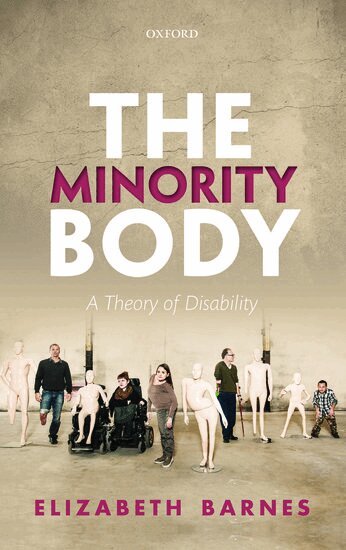
Elizabeth Barnes argues compellingly that disability is primarily a social phenomenon--a way of being a minority, a way of facing social oppression, but not a way of being inherently or intrinsically worse off. This is how disability is understood in the Disability Rights and Disability Pride movements; but there is a massive disconnect with the way disability is typically viewed within analytic philosophy. The idea that disability is not inherently bad or sub-optimal is one that many philosophers treat with open skepticism, and sometimes even with scorn. The goal of this book is to articulate and defend a version of the view of disability that is common in the Disability Rights movement. Elizabeth Barnes argues that to be physically disabled is not to have a defective body, but simply to have a minority body.