• Fri frakt över 249 kr
  • •
  • Snabba leveranser
  • •
  • Billiga böcker
Kundservice

Du är på sajten för privatpersoner.

Företag, bibliotek eller offentlig verksamhet?

Du handlar på classic.bokus.com, där alla dina funktioner finns intakta.
Till classic.bokus.com
Bokus logotyp. Gå till startsidan.
  • Erbjudanden
  • Nyheter
  • Student
  • Topplistor
  • Barn & ungdom
  • Bokus Play
  • E-böcker
  • Pocketböcker
  • Spel & pussel

10% rabatt på allt med kod: NYSTART10 →

Sidfot

Mina sidor

    Hjälp

    • Kundservice
    • Vanliga frågor och svar
    • Frakt och leverans
    • Retur vid ångerrätt
    • Reklamera vara
    • Betalning
    • Köpvillkor
    • Allmänna villkor
    • Information om webbplatsens tillgänglighet

    Om Bokus

    • Om oss
    • Pressrum
    • För studenter
    • För företag
    • För bibliotek och offentlig verksamhet
    • För leverantörer
    • Hållbarhet

    Populärt

    • Aktuella erbjudanden
    • Presentkort
    • Studentlitteratur
    • Nya böcker
    • Topplistor
    • Signerade böcker
    • Engelska böcker

    Inspiration

    • Boktips
    • BookTok
    • Populära bokserier
    • Barnbokskaraktärer
    • Populära författare
    Logotyp för Bokus
    Följ oss på Facebook (extern länk)Följ oss på Instagram (extern länk)Följ oss på YouTube (extern länk)Följ oss på TikTok (extern länk)
    bokus @ CookiesAnpassa cookiesIntegritetspolicyKöpvillkor
    Till Citymail hemsida (extern länk)Till Budbee hemsida (extern länk)Till Postnord hemsida (extern länk)Till Schenker hemsida (extern länk)Till Early Bird hemsida (extern länk)Till Walleys hemsida (extern länk)
    1. Filosofi och religion
    2. Filosofi
    3. Filosofiska discipliner

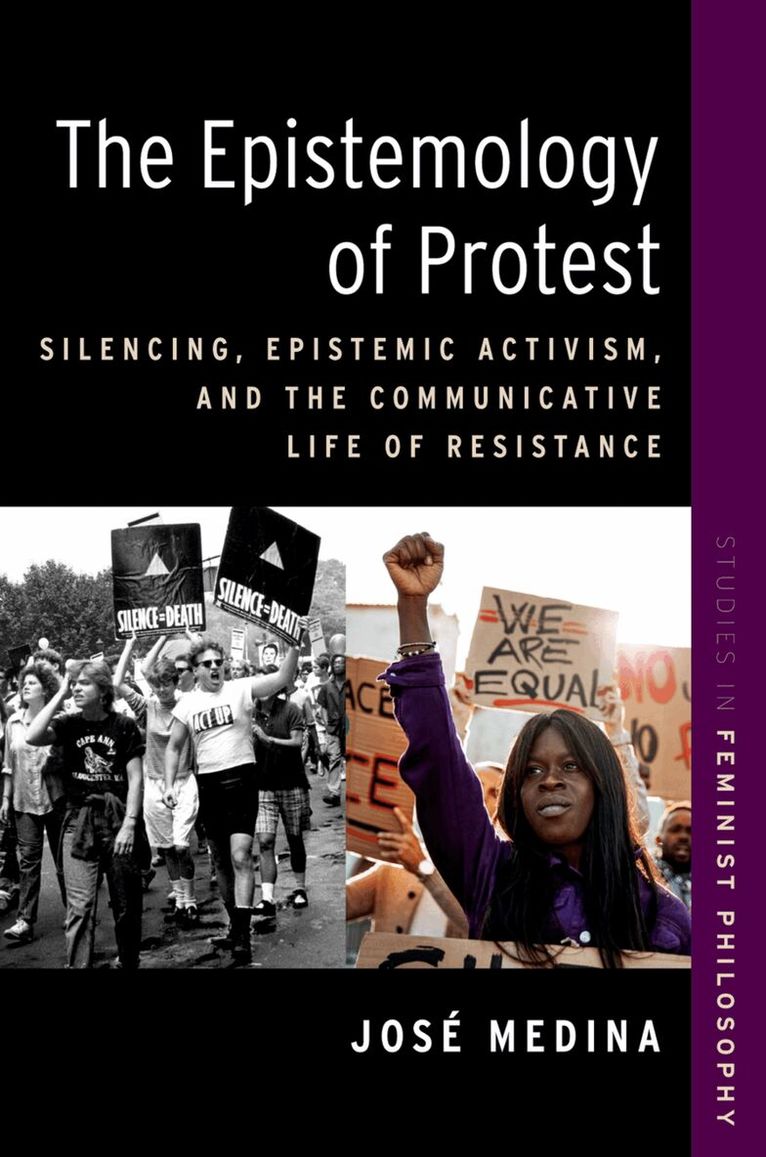
    The Epistemology of Protest

    Silencing, Epistemic Activism, and the Communicative Life of Resistance

    AvJosé Medina

    Häftad, Engelska, 2023

    Del i serien STUDIES IN FEMINIST PHILOSOPHY SERIES

    394 kr

    Beställningsvara. Skickas inom 5-8 vardagar. Fri frakt över 249 kr.

    Beskrivning

    The Epistemology of Protest offers a polyphonic theory of protest as a mechanism for political communication, group constitution, and epistemic empowerment. The book analyzes the communicative power of protest to break social silences and disrupt insensitivity and complicity with injustice. Philosopher José Medina also elucidates the power of protest movements to transform social sensibilities and change the political imagination. Medina's theory of protest examines the obligations that citizens and institutions have to give proper uptake to protests and to communicatively engage with protesting publics in all their diversity, without excluding or marginalizing radical voices and perspectives. Throughout the book, Medina gives communicative and epistemic arguments for the value of imagining with protest movements and for taking seriously the radical political imagination exercised in social movements of liberation. Medina's theory sheds light on the different ways in which protest can be silenced and the different communicative and epistemic injustices that protest movements can face, arguing for forms of epistemic activism that resist silencing and communicative/epistemic injustices while empowering protesting voices. While arguing for democratic obligations to give proper uptake to protest, the book underscores how demanding listening to protesting voices can be under conditions of oppression and epistemic injustice. A central claim of the book is that responsible citizens have an obligation to echo (or express communicative solidarity with) the protests of oppressed groups that have been silenced and epistemically marginalized. Studying social uprisings, the book further argues that citizens have a duty to join protesting publics when grave injustices are in the public eye.

    Produktinformation

    • Utgivningsdatum:2023-05-12
    • Mått:160 x 226 x 41 mm
    • Vikt:636 g
    • Format:Häftad
    • Språk:Engelska
    • Serie:STUDIES IN FEMINIST PHILOSOPHY SERIES
    • Antal sidor:456
    • Förlag:OUP USA
    • ISBN:9780197660911

    Utforska kategorier

    • Filosofiska discipliner inom Filosofi och religion

    Mer om författaren

    José Medina is Walter Dill Scott Professor of Philosophy at Northwestern University. He previously taught at Vanderbilt University and has held visiting appointments at Carlos III University, Princeton University, and University of Johannesburg. His first three books were on Wittgenstein and theories of meaning, identity, and agency. His fourth book, The Epistemology of Resistance is winner of the North American Society for Social Philosophy Book Award.

    Recensioner i media

    This is an immensely important book for our times. Medina provides new critical analyses of how dissent can be silenced and subtly disarmed in ways that escape the charge of censorship. He explores how protests challenge standard ideas about both knowledge and communication. And he also demonstrates, more hopefully, how social movements transform public spheres in a productive manner that outlives the current moment.

    Innehållsförteckning

    • Acknowledgements Introduction Part I: Protest as a Matrix of Communicative Resistance Chapter 1. Toward a Radical Epistemology of Protest1.1. Protest as Democratic Communicative Resistance1.2. Our Duties to Protest and to Listen to Protest: Expressive Harms and Communicative Resistance1.3. Managing the Duty to Protest and to Give Proper Uptake to Protest1.4. Uncivil Protest, Civil Death, and Liberation Movements Chapter 2. No Justice, No Peace: Uncivil Protest and the Politics of Confrontation2.1. Social Spaces without Political Resistance? Stifling Dissent and the Difficulties of Protests in Sports2.2. Arguments for Protesting Injustice: <"Injustice anywhere is a threat to justice everywhere.> "2.3. Toward a Politics of Confrontation: Uncivil Direct Actions and Counter-protests Chapter 3. Silencing and Protest3.1. Protest as Complex Communication that Demands Uptake3.1.a. Expressive and Speech Acts within the Matrix of Communicative Resistance3.1.b. Felicity Conditions and Proper Recognition of the Complex Illocution of Protest3.2. Defective Uptake and Different Kinds of Silencing3.3. Proper Uptake and Echoing3.4. The Road Ahead: Radical Agency and the Four Communicative Dimensions of Protest Part II: Forging Communicative Solidarity and Re-Making the Polis: Changing Ourselves and Changing the World through Protest Chapter 4. Whose Streets? Our Streets! The Making of a Protesting Public4.1. Standing Together and (Re-)Shaping the Polis: The Group-Constituting Power of Protest 4.2. Protest as a Complex Matrix of Interpellation: The Performative Power of Protest4.3. Group Silencing, Epistemic Activism and the Constitutive Polyphony of ProtestCoda: You are so vain so think that this protest is about you, don't you? Chapter 5. Radical Testimony: Resisting Communicative and Epistemic Injustice through Protest5.1. Silencing and Downgrading of testimonial protest acts5.1.a. Communicative Injustice: Kinds of Silencing of Testimonial Protest Acts5.1.b. Epistemic Injustice: Kinds of Epistemic Downgrading of Testimonial Protest ActsA. Group Testimonial InjusticeB. Group Hermeneutical InjusticeC. Agential Epistemic Injustice5.2. Radical Testimony5.2.a. My Body as a WitnessHands Up, Don't ShootThe Die-Ins of ACT UP and BLM5.2.b. Our Suffering has No Name: Look at This!Documentary and Testimonial Images in the Anti-Lynching MovementCounter-Images and Image-Based Online Activism5.2.c. Our Suffering has No Name, and yet We Won't be Silent: I Can't Breathe!(On How Protesting Voices Echo the Silenced and Smothered Voices of their Brothers and Sisters with New and Old Language) Chapter 6. Protest as Critique: Emotional Expressivity and Critical Discourses6.1. Emotions and Social Criticism6.2. Conventional Emotions and Meliorative Critique in Protest Movements6.3. Outlaw Emotions and Radical Critique in Protest MovementsCoda: White Rage (or <"Wonderland is not for everyone!> ") Chapter 7. Protest as a Source of Demands: Polyphony and the Radical Imagination of Liberation Movements7.1. Different Kinds of Demands and the Communicative Injustices They Face7.2. The Radical Imagination: Radical Demands and Communicative Obligations to Listen to Them ReferencesIndex