JosA(c) Medina – författare
Visar alla böcker från författaren JosA(c) Medina. Handla med fri frakt och snabb leverans.
4 produkter
4 produkter
E-bok
Engelska, 2020447 kr
Läs direkt efter köp
"A theory in the flesh means one where the physical realities of our lives all fuse to create a politic born of necessity," writes activist Cherríe L. Moraga. This volume of new essays stages an intergenerational dialogue among philosophers to introduce and deepen engagement with U.S Latinx and Latin American feminist philosophy, and to explore their "theories in the flesh." It explores specific intellectual contributions in various topics in U.S. Latinx and Latin American feminisms that stand alone and are unique and valuable; analyzes critical contributions that U.S. Latinx and Latin American interventions have made in feminist thought more generally over the last several decades; and shows the intellectual and transformative value of reading U.S Latinx and Latin American feminist theorizing.The collection features a series of essays analyzing decolonial approaches within U. S. Latinx and Latin American feminist philosophy, including studies of the functions of gender within feminist theory, everyday modes of resistance, and methodological questions regarding the scope and breadth of decolonization as a critical praxis. Additionally, essays examine theoretical contributions to feminist discussions of selfhood, narrativity, and genealogy, as well as novel epistemic and hermeneutical approaches within the field. A number of contributors in the book address themes of aesthetics and embodiment, including issues of visual representation, queer desire, and disability within U. S. Latinx and Latin American feminisms.Together, the essays in this volume are groundbreaking and powerful contributions in the fields of U.S Latinx and Latin American feminist philosophy.
Inbunden, Engelska, 2023
1 196 kr
Skickas inom 7-10 vardagar
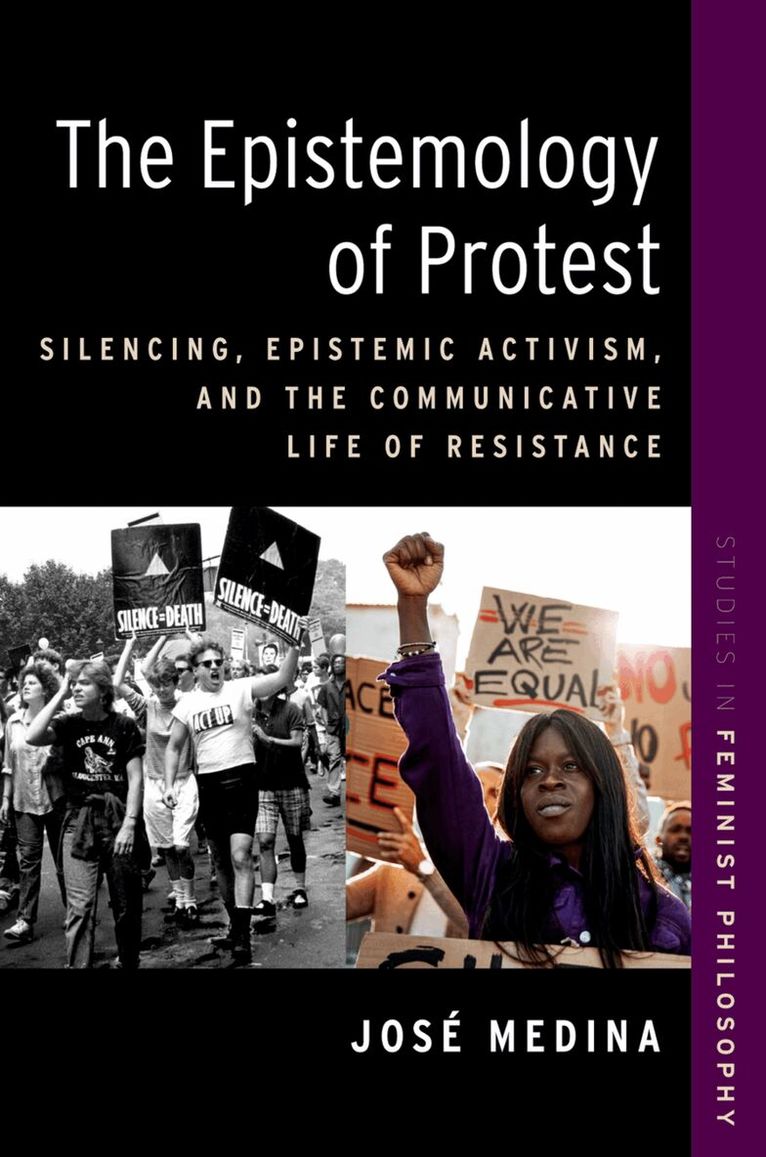
The Epistemology of Protest offers a polyphonic theory of protest as a mechanism for political communication, group constitution, and epistemic empowerment. The book analyzes the communicative power of protest to break social silences and disrupt insensitivity and complicity with injustice. Philosopher José Medina also elucidates the power of protest movements to transform social sensibilities and change the political imagination. Medina's theory of protest examines the obligations that citizens and institutions have to give proper uptake to protests and to communicatively engage with protesting publics in all their diversity, without excluding or marginalizing radical voices and perspectives. Throughout the book, Medina gives communicative and epistemic arguments for the value of imagining with protest movements and for taking seriously the radical political imagination exercised in social movements of liberation. Medina's theory sheds light on the different ways in which protest can be silenced and the different communicative and epistemic injustices that protest movements can face, arguing for forms of epistemic activism that resist silencing and communicative/epistemic injustices while empowering protesting voices. While arguing for democratic obligations to give proper uptake to protest, the book underscores how demanding listening to protesting voices can be under conditions of oppression and epistemic injustice. A central claim of the book is that responsible citizens have an obligation to echo (or express communicative solidarity with) the protests of oppressed groups that have been silenced and epistemically marginalized. Studying social uprisings, the book further argues that citizens have a duty to join protesting publics when grave injustices are in the public eye.
Häftad, Engelska, 2023
381 kr
Skickas inom 5-8 vardagar
The Epistemology of Protest offers a polyphonic theory of protest as a mechanism for political communication, group constitution, and epistemic empowerment. The book analyzes the communicative power of protest to break social silences and disrupt insensitivity and complicity with injustice. Philosopher José Medina also elucidates the power of protest movements to transform social sensibilities and change the political imagination. Medina's theory of protest examines the obligations that citizens and institutions have to give proper uptake to protests and to communicatively engage with protesting publics in all their diversity, without excluding or marginalizing radical voices and perspectives. Throughout the book, Medina gives communicative and epistemic arguments for the value of imagining with protest movements and for taking seriously the radical political imagination exercised in social movements of liberation. Medina's theory sheds light on the different ways in which protest can be silenced and the different communicative and epistemic injustices that protest movements can face, arguing for forms of epistemic activism that resist silencing and communicative/epistemic injustices while empowering protesting voices. While arguing for democratic obligations to give proper uptake to protest, the book underscores how demanding listening to protesting voices can be under conditions of oppression and epistemic injustice. A central claim of the book is that responsible citizens have an obligation to echo (or express communicative solidarity with) the protests of oppressed groups that have been silenced and epistemically marginalized. Studying social uprisings, the book further argues that citizens have a duty to join protesting publics when grave injustices are in the public eye.
E-bok
PDF, Engelska, 2012596 kr
Läs direkt efter köp
This book explores the epistemic side of oppression, focusing on racial and sexual oppression and their interconnections. It elucidates how social insensitivities and imposed silences prevent members of different groups from interacting epistemically in fruitful ways--from listening to each other, learning from each other, and mutually enriching each other''s perspectives. Medina''s epistemology of resistance offers a contextualist theory of our complicity with epistemic injustices and a social connection model of shared responsibility for improving epistemic conditions of participation in social practices. Through the articulation of a new interactionism and polyphonic contextualism, the book develops a sustained argument about the role of the imagination in mediating social perceptions and interactions. It concludes that only through the cultivation of practices of resistance can we develop a social imagination that can help us become sensitive to the suffering of excluded and stigmatized subjects. Drawing on Feminist Standpoint Theory and Critical Race Theory, this book makes contributions to social epistemology and to recent discussions of testimonial and hermeneutical injustice, epistemic responsibility, counter-performativity, and solidarity in the fight against racism and sexism.