Studies in Maritime History - Böcker
Visar alla böcker i serien Studies in Maritime History. Handla med fri frakt och snabb leverans.
11 produkter
11 produkter
281 kr
Skickas inom 10-15 vardagar
This work covers the real grounds for the Confederacy's failure to build a successful navy. The South's major problems with shipbuilding concerned facilities, materials, and labour. Each of these subjects is discussed, and the text concludes by joining these problems to the issues of the Civil War.
335 kr
Skickas inom 10-15 vardagar
During the American Revolutionary War, Great Britain's Royal Navy faced foes that included, in addition to American forces, the navies of France, Spain and the Netherlands. In this operational history of a period that proved to be a turning point for one of the world's great naval powers, David Syrett presents a saga of battles, blockades, great fleet cruises and, above all, failures and lost opportunities. He explains that the British government severely underestimated the Americans' maritime strength and how that error led to devastating consequences. The seemingly invincible navy failed to muster even one decisive victory during the extensive naval conflict. Noting the complex reasons for British failure in European waters, Syrett lays primary blame at the feet of Britain's political leadership. He describes how Lord North, the first lord of the Treasury and head of government, abdicated control of Britain's military to individual members of the cabinet. Syrett suggests that constant vacillations in policy and strategy, which resulted from power shifts among the cabinet ministers, prevented North's government from formulating a comprehensive wartime strategy or providing the Royal navy with the strategic guidance to launch a successful campaign. Syrett concludes that Britain's inability to gain naval superiority in European waters had a profound effect on the outcome of the American Revolutionary War. He demonstrates how the Royal Navy's failure to hunt down and destroy American blockade runners allowed Yankee rebels easy access to European arms and munitions. He also shows that the inability of the British to defeat French and Spanish naval power off the Continent gave Bourbon monarchies the means to aid American naval forces and to conduct naval operations against the British in such areas as the West Indies and the Indian Ocean.
Ironclads and Big Guns of the Confederacy
The Journal and Letters of John M.Brooke
Inbunden, Engelska, 2002
514 kr
Skickas inom 10-15 vardagar
Loaded with previously unavailable information about the Confederate Navy's effort to supply its fledgling forces, the wartime diaries and letters of John M. Brooke (1826-1906) tell the neglected story of the Confederate naval ordnance office, its innovations, and its strategic vision. As Confederate commander of ordnance and hydrography in Richmond, Virginia, during the Civil War, Brooke numbered among the military officers who resigned their U.S. commissions and ""went South"" to join the Confederate forces at the onset of conflict. A twenty-year veteran of the United States Navy who had been appointed a midshipman at the age of fourteen, Brooke was a largely self-taught military scientist whose inventions included the Brooke Deep-Sea Sounding Lead. In addition to his achievements as an inventor, Brooke was a draftsman, diarist, and inveterate letter-writer. His copious correspondence about military and personal matters from the war yields detailed and often unexpected insights into the Confederacy's naval operations. Charged with developing a vessel that could break the Union blockade, Brooke raised the Merrimack, a wooden vessel scuttled by the Union Navy, and outfitted it with armor plates as the CSS Virginia. Brooke's papers trace his conception of the plan to create the first Confederate ironclad warship and offer insight into other innovations, revealing a massive amount of factual information about the Confederacy's production of munitions.
376 kr
Skickas inom 10-15 vardagar
THE ABANDONED OCEAN offers an in-depth appraisal of United States maritime policy from the establishment of a merchant marine immediately after the Revolutionary War through radical industry transformations of the late twentieth century. In this sweeping analysis of federal policies that promote, regulate, protect, and subsidize American shipping in coastal and foreign trade, Andrew Gibson and Arthur Donovan also examine the closely related fortunes of the ship-building industry and the intertwined activities of the merchant and military navies. The authors consider why, since the middle of the nineteenth century, United States maritime policy has been so strikingly unsuccessful in achieving its stated goal of promoting a commercially viable merchant marine engaged in foreign trade.
349 kr
Skickas inom 10-15 vardagar
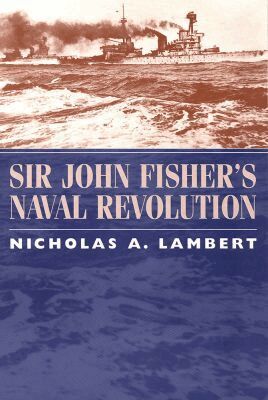
For most of the 20th century, historians have thought that British naval policy was driven by the Anglo-German arms race. After examining a quantity of primary sources, Lambert concludes that Admiralty decision-making was in fact driven by factors unrelated to the German building programme. This volume explores the intrigue and negotiations between the Admiralty and leading domestic politicians and social reformers of the day, such as Herbert H. Asquith, David Lloyd George and Winston Churchill. Lambert also explains how Britain's naval leaders responded to these non-military, cultural challenges under the direction of Adimiral Sir John Fisher, the service head of the Admiralty from 1904 to 1910, who believed in a radically new approach to navel defence. For mainly political reasons, however, Fisher concealed his ""military technological revolution"" and worked surreptitiously to create a new model fleet capable of protecting all of Britain's imperial interests across the globe.
Dead Men Tell No Tales
James Jeffers, Privateering, and Piracy in the Americas, 1816-1830
Inbunden, Engelska, 2007
359 kr
Skickas inom 10-15 vardagar
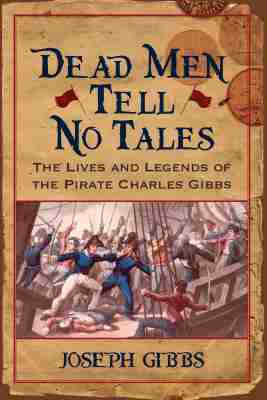
Dead men tell no tales, or so the pirate maxim goes. But when facing execution in 1831 for mutiny and murder, the previously enigmatic pirate Charles Gibbs recounted the infamous crimes of his harrowing life at sea in a self-aggrandizing series of ""confessions."" Wildly popular reading among nineteenth-century audiences, such criminal confessions were peppered with the romanticized mythology that informs pirate lore to this day. Joseph Gibbs takes up the task of separating fact from fiction to explicate the true story of Charles Gibbs - an alias for James Jeffers (1798-1831) of Newport, Rhode Island - in an investigation that reveals a life as riveting as the legend it replaces. Jeffers was the child of a Revolutionary War privateer captain with his own history in the ""rough work."" After a heroic career in the U.S. Navy during the War of 1812, Jeffers eschewed military life and took to the privateer trade himself. As Charles Gibbs, pirate, he sailed from the ports of Charleston and New Orleans to wreak havoc in the Caribbean and Gulf of Mexico. Stripping away 170 years of embellishment, Joseph Gibbs maps the still-shockingly violent career of Charles Gibbs across the seas and, in the process, challenges and discredits much of his self-made mythology. Gibbs recounts Jeffers' well-documented role in the infamous mutiny and murders in 1830 aboard the brig Vineyard while the vessel was carrying a load of Mexican silver. The pirate was captured the following year and brought to New York. The case against Jeffers and accomplice Thomas Wansley culminated in a sensational trial, which led to their subsequent executions by hanging on Ellis Island. In addition to recounting the exploits of a ruthless cutthroat, ""The Confessions of ""Charles Gibbs"""" tells the larger story of American piracy and privateering in the early nineteenth century and illustrates the role of American and European adventurers in the Latin American wars of liberation. Carefully researched, engagingly written, and enhanced by twenty illustrations, this is pirate history at its most credible and readable.
612 kr
Skickas inom 11-20 vardagar
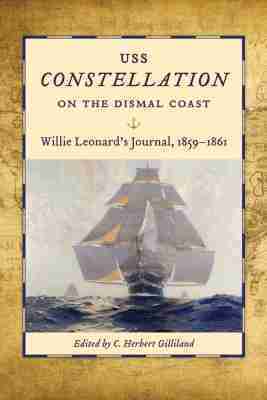
Today the twenty-gun sloop USS Constellation is a floating museum in Baltimore Harbor; in 1859 it was an emblem of the global power of the American sailing navy. When young William E. Leonard boarded the Constellation as a seaman for what proved to be a twenty-month voyage to the African coast, he began to compose a remarkable journal. Sailing from Boston, the Constellation, flagship of the U.S. African Squadron, was charged with the interception and capture of slave-trading vessels illegally en route from Africa to the Americas. During the Constellation's deployment, the squadron captured a record number of these ships, liberating their human cargo and holding the captains and crews for criminal prosecution. At the same time, tensions at home and in the squadron increased as the American Civil War approached and erupted in April 1861. Leonard recorded not only historic events but also fascinating details about his daily life as one of the nearly 400-member crew. He saw himself as not just a diarist, but a reporter, making special efforts to seek out and record information about individual crewmen, shipboard practices, recreation and daily routine--from deck swabbing and standing watch to courts martial and dramatic performances by the Constellation Dramatic Society. This good-humoured gaze into the lives and fortunes of so many men stationed aboard a distinguished American warship makes Gilliland's edition of Willie Leonard's journal a significant work of maritime history.
482 kr
Skickas inom 11-20 vardagar
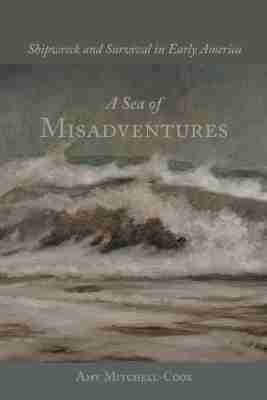
A Sea of Misadventures examines more than one hundred documented shipwreck narratives from the seventeenth to the nineteenth century as a means to understanding gender, status, and religion in the history of early America. Though it includes all the drama and intrigue afforded by maritime disasters, the book's significance lies in its investigation of how the trauma of shipwreck affected American values and behaviour. Through stories of death and devastation, Amy Mitchell-Cook examines issues of hierarchy, race, and gender when the sphere of social action is shrunken to the dimensions of a lifeboat or deserted shore. Rather than debate the veracity of shipwreck tales, Mitchell-Cook provides a cultural and social analysis that places maritime disasters within the broader context of North American society. She answers questions that include who survived and why, how did gender or status affect survival rates, and how did survivors relate their stories to interested but unaffected audiences? Mitchell-Cook observes that, in creating a sense of order out of chaotic events, the narratives reassured audiences that anarchy did not rule the waves, even when desperate survivors resorted to cannibalism. Some of the accounts she studies are legal documents required by insurance companies, while others have been a form of prescriptive literature--guides that taught survivors how to act and be remembered with honour. In essence, shipwreck revealed some of the traits that defined what it meant to be Anglo-American. In an elaboration of some of the themes, Mitchell-Cook compares American narratives with Portuguese narratives to reveal the power of divergent cultural norms to shape so basic an event as a shipwreck.
412 kr
Skickas inom 11-20 vardagar
Patroons and Periaguas explores the intricately interwoven and colorful creole maritime legacy of Native Americans, Africans, enslaved and free African Americans, and Europeans who settled along the rivers and coastline near the bourgeoning colonial port city of Charleston, South Carolina.Colonial South Carolina, from a European perspective, was a water-filled world where boatmen of diverse ethnicities adopted and adapted maritime skills learned from local experiences or imported from Africa and the Old World to create a New World society and culture. Lynn B. Harris describes how they crewed together in galleys as an ad hoc colonial navy guarding settlements on the Edisto, Kiawah, and Savannah Rivers, rowed and raced plantation log boats called periaguas, fished for profits, and worked side by side as laborers in commercial shipyards building sailing ships for the Atlantic coastal trade, the Caribbean islands, and Europe. Watercraft were of paramount importance for commercial transportation and travel, and the skilled people who built and operated them were a distinctive class in South Carolina.Enslaved patroons (boat captains) and their crews provided an invaluable service to planters, who had to bring their staple products - rice, indigo, deerskins, and cotton - to market, but they were also purveyors of information for networks of rebellious communications and illicit trade. Harris employs historical records, visual images, and a wealth of archaeological evidence embedded in marshes, underwater on riverbeds, or exhibited in local museums to illuminate clues and stories surrounding these interactions and activities. A pioneering underwater archaeologist, she brings sources and personal experience to bear as she weaves vignettes of the ongoing process of different peoples adapting to each other and their new world that is central to our understanding of the South Carolina maritime landscape.
339 kr
Skickas
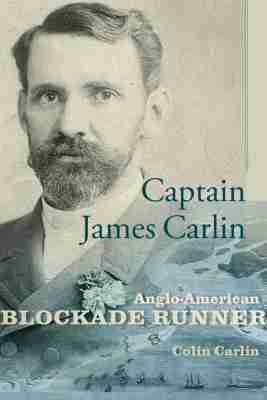
Captain James Carlin is a biography of a shadowy nineteenth-century British Confederate, James Carlin (1833–1921), who was among the most successful captains running the U.S. Navy’s blockade of Southern ports during the Civil War. Written by his descendent Colin Carlin, Captain James Carlin ventures behind the scenes of this perilous trade that transported vital supplies to the Confederate forces.An Englishman trained in the British merchant marine, Carlin was recruited into the U.S. Coastal and Geodetic Survey Department in 1856, spending four years charting the U.S. Atlantic seaboard. Married and settled in Charleston, South Carolina, he resigned from the survey in 1860 to resume his maritime career. His blockade-running started with early runs into Charleston under sail. These came to a lively conclusion under gunfire off the Stono River mouth. More blockade-running followed until his capture on the SS Memphis. Documents in London reveal the politics of securing Carlin’s release from Fort Lafayette.On his return to Charleston, General P. G. T. Beauregard gave him command of the spar torpedo launch Torch for an attack on the USS New Ironsides. After more successful trips though the blockade, he was appointed superintending captain of the South Carolina Importing and Exporting Company and moved to Scotland to commission six new steam runners.After the war Carlin returned to the southern states to secure his assets before embarking on a gun-running expedition to the northern coast of Cuba for the Cuban Liberation Junta fighting to free the island from Spanish control and plantation slavery.In researching his forebear, the author gathered a wealth of private and public records from England, Scotland, Ireland, Greenland, the Bahamas, and the United States. The use of fresh sources from British Foreign Office and U.S. Prize Court documents and surviving business papers make this volume distinctive.
344 kr
Skickas inom 7-10 vardagar
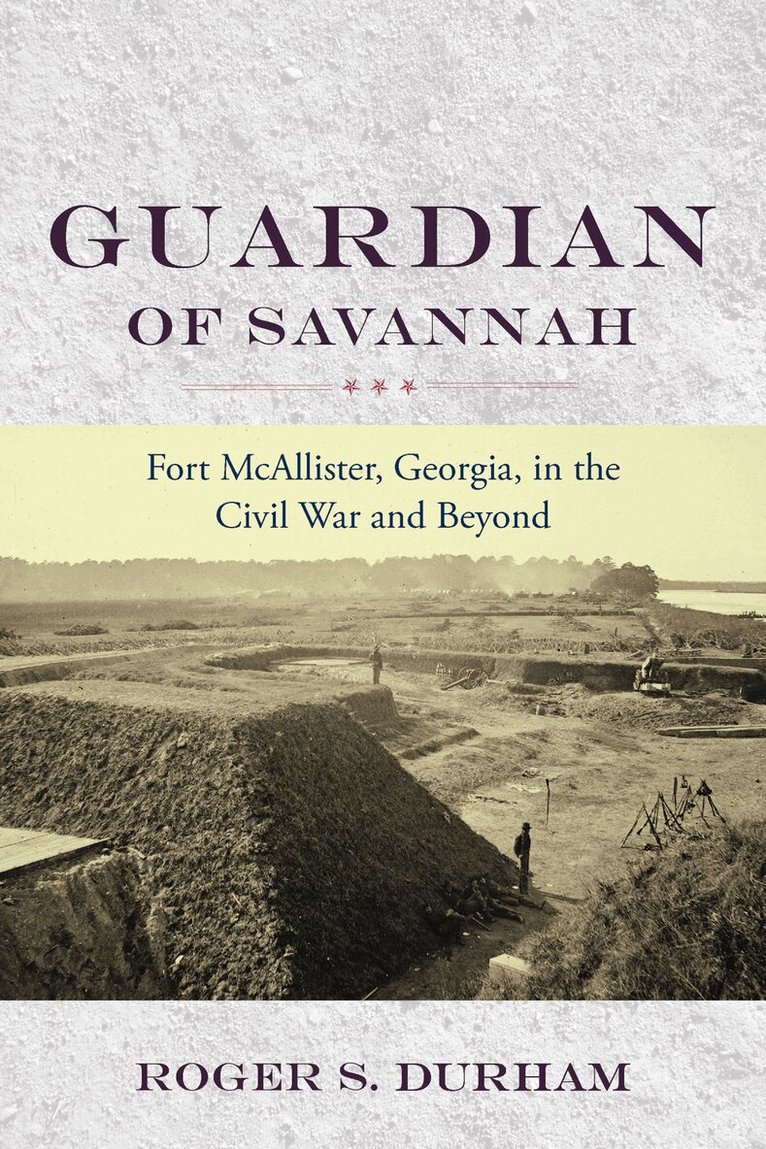
The remarkable story of how an earthen fort defense shielded a Southern city from the ironclad monitors of the U.S. NavyBuilt out of sand and mud, Fort McAllister was designed to serve as the southern anchor of the coastal defenses of Savannah, Georgia. Hastily constructed near the beginning of the Civil War, the fort was situated on the Great Ogeechee River, twelve miles south of the Savannah River. During the war, Fort McAllister withstood devasting naval assaults and served well the aims of Confederate strategists. When the city fell to Union troops, it was General William T. Sherman's overland attack and not an assault from the sea that subdued Savannah.Roger S. Durham offers a comprehensive history of the Fort McAllister's construction and its use during the Civil War, as well as its post-war restoration. Durham intertwines historical narrative with first-person accounts and personal stories through the judicious use of primary sources. By letting the fort's Confederate defenders and Union attackers speak for themselves, Durham offers a compelling account of one of the most hotly contested sites in the naval struggle between Union and Confederate forces.