Studies in Security and International Affairs Series – serie
363 kr
Läs direkt efter köp
From Superpower to Besieged Global Power
Restoring World Order after the Failure of the Bush Doctrine
363 kr
Läs direkt efter köp
The essays in this volume argue that the Bush Doctrine, as outlined in the September 2002 National Security Strategy of the United States, squandered enormous military and economic resources, diminished American power, and undermined America’s moral reputation as a defender of democratic values and human rights. The Bush Doctrine misguidedly assumed that the United States was a superpower, a unique unipolar power that could compel others to accede to its preferences for world order. In reality the United States is a formidable but besieged global power, one of a handful of nations that could influence but certainly not dictate world events. The flawed doctrine has led to failed policies that extend America’s reach beyond its grasp, most painfully evident in the wars in Iraq and Afghanistan.Leading scholars and policy analysts from nine countries assess the impact of the Bush Doctrine on world order, explain how the United States reached its current low standing internationally, and propose ways that the country can repair the untold damage wrought by ill-conceived and incompetently executed security and foreign policies. Contributors focus on the principal regions of the world where they have expertise: Asia, Europe, Africa, the Middle East, Latin America, and Russia.The contributors agree that future security and foreign policies must be informed by the limitations of U.S. economic, cultural, and military power to shape world order to reflect American interests and values. American power and influence will increase only when the United States binds itself to moral norms, legal strictures, and political accords in cooperation with other like-minded states and peoples.
545 kr
Läs direkt efter köp
In recent decades the debate on nuclear weapons has focused overwhelmingly on proliferation and nonproliferation dynamics. In a series of Wall Street Journal articles, however, George Shultz, William Perry, Henry Kissinger, and Sam Nunn called on governments to rid the world of nuclear weapons, helping to put disarmament back into international security discussions. More recently, U.S. president Barack Obama, prominent U.S. congressional members of both political parties, and a number of influential foreign leaders have espoused the idea of a world free of nuclear weapons.Turning this vision into reality requires an understanding of the forces driving disarmament forward and those holding it back. Slaying the Nuclear Dragon provides in-depth, objective analysis of current nuclear disarmament dynamics. Examining the political, state-level factors that drive and stall progress, contributors highlight the challenges and opportunities faced by proponents of disarmament. These essays show that although conditions are favorable for significant reductions, numerous hurdles still exist. Contributors look at three categories of states: those that generate momentum for disarmament; those with policies that are problematic for disarmament; and those that actively hinder progress—whether openly, secretly, deliberately, or inadvertently.Nuclear deterrence was long credited with preventing war between the two major Cold War powers, but with the spread of nuclear technology, threats have shifted to other state powers and to nonstate groups. Slaying the Nuclear Dragon addresses an urgent need to examine nuclear disarmament in a realistic, nonideological manner.
575 kr
Läs direkt efter köp
486 kr
Läs direkt efter köp
973 kr
Läs direkt efter köp
This is the first book-length study of why states sometimes ignore, oppose, or undermine elements of the nuclear nonproliferation regime—even as they formally support it. Anchored by the Treaty on the Non-Proliferation of Nuclear Weapons, the nuclear nonproliferation regime is the constellation of agreements, initiatives, and norms that work in concert to regulate nuclear material and technology. The essays gathered here show that attitudes on nonproliferation depend on a “complex, contingent decision calculus,” as states continually gauge how their actions within the regime will affect trade, regional standing, and other interests vital to any nation.The first four essays take theoretical approaches to such topics as a framework for understanding challenges to collective action; clandestine proliferation under the Bush and Obama administrations and its impact on regime legitimacy; threat construction as a lens through which to view resistance to nonproliferation measures; and the debate over the relationship between nuclear disarmament and nonproliferation. Essays comprising the second part of the book use regional and state-specific case studies to look at how U.S. security guarantees affect the willingness of states to support the regime; question the perceived spoiler role of a “vocal minority” within the Non-Aligned Movement; challenge notions that Russia is using the regime to build a coalition hostile to the United States; contrast nonproliferation strategies among Latin American countries; and explain the lag in adoption of an Additional Protocol by some Middle East and North African countries.Getting countries to cooperate on nonproliferation efforts is an ongoing challenge. These essays show that success must be measured not only by how many states join the effort but also by how they participate once they join.
575 kr
Läs direkt efter köp
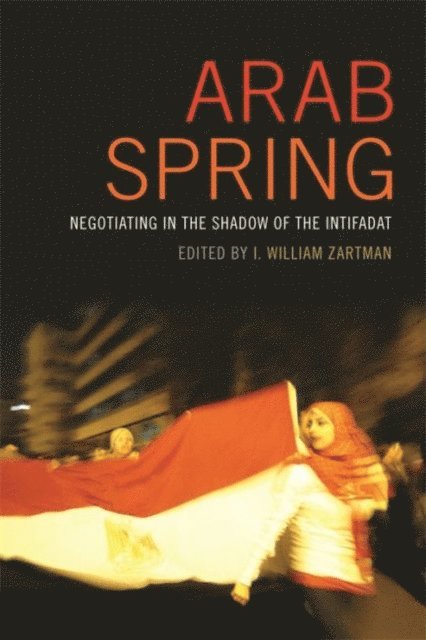
Beginning in January 2011, the Arab world exploded in a vibrant demand for dignity, liberty, and achievable purpose in life, rising up against an image and tradition of arrogant, corrupt, unresponsive authoritarian rule. These previously unpublished, country-specific case studies of the uprisings and their still unfolding political aftermaths identify patterns and courses of negotiation and explain why and how they occur.The contributors argue that in uprisings like the Arab Spring negotiation is “not just a ‘nice’ practice or a diplomatic exercise.” Rather, it is a “dynamically multilevel” process involving individuals, groups, and states with continually shifting priorities—and with the prospect of violence always near. From that perspective, the essayists analyze a range of issues and events—including civil disobedience and strikes, mass demonstrations and nonviolent protest, and peaceful negotiation and armed rebellion—and contextualize their findings within previous struggles, both within and outside the Middle East. The Arab countries discussed include Algeria, Bahrain, Egypt, Libya, Morocco, Syria, Tunisia, and Yemen. The Arab Spring uprisings are discussed in the context of rebellions in countries like South Africa and Serbia, while the Libyan uprising is also viewed in terms of the negotiations it provoked within NATO.Collectively, the essays analyze the challenges of uprisers and emerging governments in building a new state on the ruins of a liberated state; the negotiations that lead either to sustainable democracy or sectarian violence; and coalition building between former political and military adversaries.Contributors: Samir Aita (Monde Diplomatique), Alice Alunni (Durham University), Marc Anstey* (Nelson Mandela University), Abdelwahab ben Hafaiedh (MERC), Maarten Danckaert (European-Bahraini Organization for Human Rights), Heba Ezzat (Cairo University), Amy Hamblin (SAIS), Abdullah Hamidaddin (King’s College), Fen Hampson* (Carleton University), Roel Meijer (Clingendael), Karim Mezran (Atlantic Council), Bessma Momani (Waterloo University), Samiraital Pres (Cercle des Economistes Arabes), Aly el Raggal (Cairo University), Hugh Roberts (ICG/Tufts University), Johannes Theiss (Collège d’Europe), Siniša Vukovic (Leiden University), I. William Zartman* (SAIS-JHU). [* Indicates group members of the Processes of International, Negotiation (PIN) Program at Clingendael, Netherland]
973 kr
Läs direkt efter köp
Although adopting global norms often improves domestic systems of governance, domestic obstacles to norm diffusion are frequent. States that decide to reinvent their political authority simultaneously evaluate which current global norms are desirable and to what extent. In this study, Vlad Kravtsov argues that recent debates about the nature of authority in Putin’s Russia and Mbeki’s South Africa have resulted in a set of unique ideas on the cardinal goals of the state. This is the first book to explore how these consensual ideas have shaped health governance and impinged on norm diffusion processes.Detailed comparisons of HIV/AIDS governance systems in Russia and South Africa illustrate the argument. The Kremlin’s dislike of international recommendations stemmed from the rapidly maturing statism and great power syndrome. Pretoria’s responses to global AIDS norms were consistent with the ideas of the African Renaissance, which highlighted indigenousness, market-based empowerment, and moral leadership in global affairs. This book explains how and why the governments under investigation framed the nature of the epidemic, provided evidence-based prevention services, increased universal access to proven lifesaving medicines, and interacted with other participants in social practice.
1 046 kr
Läs direkt efter köp
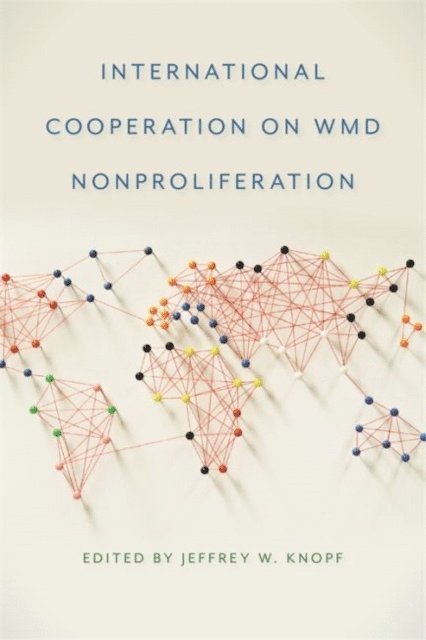
International efforts to prevent the spread of weapons of mass destruction (WMD)—including nuclear, biological, and chemical weapons—rest upon foundations provided by global treaties such as the Nuclear Non-Proliferation Treaty (NPT) and the Chemical Weapons Convention (CWC). Over time, however, states have created a number of other mechanisms for organizing international cooperation to promote nonproliferation. Examples range from regional efforts to various worldwide export-control regimes and nuclear security summit meetings initiated by U.S. president Barack Obama. Many of these additional nonproliferation arrangements are less formal and have fewer members than the global treaties.International Cooperation on WMD Nonproliferation calls attention to the emergence of international cooperation beyond the core global nonproliferation treaties. The contributors examine why these other cooperative nonproliferation mechanisms have emerged, assess their effectiveness, and ask how well the different pieces of the global nonproliferation regime complex fit together. Collectively, the essayists show that states have added new forms of international cooperation to combat WMD proliferation for multiple reasons, including the need to address new problems and the entrepreneurial activities of key state leaders. Despite the complications created by the existence of so many different cooperative arrangements, this collection shows the world is witnessing a process of building cooperation that is leading to greater levels of activity in support of norms against WMD and terrorism.
558 kr
Läs direkt efter köp
This book addresses a range of issues surrounding the search for scientific truths in the study of international conflict and international political economy. Unlike empirical studies in other disciplines, says Seung-Whan Choi, many political studies seem more competent at presenting theoretical conjecture and hypotheses than they are at performing rigorous empirical analyses. When we study global issues like democratic institutions, flows of foreign direct investment, international terrorism, civil wars, and international conflict, we often uncritically adopt established theoretical frameworks and research designs. The natural assumption is that well-known and widely cited studies, once ingrained within the tradition of the discipline, should not be challenged or refuted.However, do such noted research areas reflect scientific truth? Choi looks closely at ten widely cited empirical studies that represent well-known research programs in international relations. His discussions address such statistical and theoretical issues as endogeneity bias, model specification error, fixed effects, theoretical predictability, outliers, normality of regression residuals, and choice of estimation techniques. In addition, scientific progress made by remarkable discoveries usually results from finding a new way of thinking about long-held scientific truths, therefore Choi also demonstrates how one may search for novel ideas at minimal cost by developing new research designs with original data.Here is a valuable resource for students, scholars, and policy makers who want to quickly grasp the evolutionary pattern of scientific research on democracy, foreign investment, terrorism, and conflict; build their research designs and choose appropriate statistical techniques; and identify their own agendas for the production of cutting-edge research.
844 kr
Läs direkt efter köp
The debate over cyber technology has resulted in new considerations for national security operations. States find themselves in an increasingly interconnected world with a diverse threat spectrum and little understanding of how decisions are made within this amorphous domain.With The Decision to Attack, Aaron Franklin Brantly investigates how states decide to employ cyber in military and intelligence operations against other states and how rational those decisions are. In his examination, Brantly contextualizes broader cyber decision-making processes into a systematic expected utility–rational choice approach to provide a mathematical understanding of the use of cyber weapons at the state level.Discussed: The Key Concepts of Cyber The Motivation and Utility for Covert Action Digital Power Anonymity and Attribution in Cyberspace Cyber and Conventional Operations: The Dynamics of Conflict Defining the Role of Intelligence in Cyberspace How Actors Decide to Use Cyber—a Rational Choice Approach Cognitive Processes and Decision-Making in Cyberspace Finding Meaning in the Expected Utility of International Cyber Conflict
Conflict Dynamics
Civil Wars, Armed Actors, and Their Tactics
973 kr
Läs direkt efter köp
Conflict Dynamics presents case studies of six nation-states: Sierra Leone, the Republic of Congo, Sri Lanka, Myanmar, Indonesia, and Peru. In the book, Alethia H. Cook and Marie Olson Lounsbery examine the evolving nature of violence in intrastate conflicts, as well as the governments and groups involved, by focusing on the context of the relationships involved, the capacities of the conflict’s participants, and the actors’ goals. The authors first present a theoretical framework through which the changeable mix of relative group capacities and the resulting tactical decisions can be examined systematically and as conflicts evolve over time. They then apply that framework to the six case studies to show its usefulness in better understanding conflicts individually and in comparison.While previous research on civil wars has tended to focus on causes and outcomes, Conflict Dynamics takes a more comprehensive approach to understanding conflict behavior. The shifting nature of relative group capacity (measured in many different ways), coupled with dynamic group goals, determines the tactical decisions of civil war actors and the paths a rebellion will take. The case studies illustrate the relevance of third parties to this process and how their interventions can influence tactics.The progression of violence in conflicts is inextricably linked to the decisions made in their midst. These influence future iterations of the conflictual relationship. Complex groups on both sides both drive and are driven by the decisions made. Understanding conflicts requires that these reciprocal impacts be considered. The comparative framework demonstrated in this book allows one to flesh out this complexity.
1 259 kr
Läs direkt efter köp
Although international cooperation on migration is often promoted, scholars have been unable to arrive at a consensus about the extent of cooperation in the current system. Under what conditions does international cooperation on migration arise, and what shape does it take? These questions are important because migrants are often vulnerable to human rights abuses during their journeys as well as in the country of destination, and international cooperation represents one mechanism for reducing this vulnerability.Jeannette Money and Sarah P. Lockhart ask these questions as they examine the patterns of migration flows during the post– World War II period, with particular attention to crises or shocks to the international system, as in the case of migration following the recent conflicts in Afghanistan and Syria. Their analysis makes several important contributions to this debate. First, they explain how the broad pattern of migration in the contemporary era—generally from poorer, less stable countries to wealthier, more stable countries—fosters cooperation that is predominantly bilateral, when cooperation does in fact occur. Second, they argue that cooperation is unlikely under most circumstances, because countries of destination prefer the current system, which privileges their sovereignty over migration flows. Finally, they posit that cooperation may arise under three conditions: when the costs of maintaining the status quo increase, when countries of origin locate a venue where their numbers allow them to control the bargaining agenda, or when migrant flows tend toward reciprocity.
899 kr
Läs direkt efter köp
Recent discoveries in psychology and neuroscience have improved our understanding of why our decision making processes fail to match standard social science assumptions about rationality. As researchers such as Daniel Kahneman, Amos Tversky, and Richard Thaler have shown, people often depart in systematic ways from the predictions of the rational actor model of classic economic thought because of the influence of emotions, cognitive biases, an aversion to loss, and other strong motivations and values. These findings about the limits of rationality have formed the basis of behavioral economics, an approach that has attracted enormous attention in recent years.This collection of essays applies the insights of behavioral economics to the study of nuclear weapons policy. Behavioral economics gives us a more accurate picture of how people think and, as a consequence, of how they make decisions about whether to acquire or use nuclear arms. Such decisions are made in real-world circumstances in which rational calculations about cost and benefit are intertwined with complicated emotions and subject to human limitations. Strategies for pursuing nuclear deterrence and nonproliferation should therefore, argue the contributors, account for these dynamics in a systematic way. The contributors to this collection examine how a behavioral approach might inform our understanding of topics such as deterrence, economic sanctions, the nuclear nonproliferation regime, and U.S. domestic debates about ballistic missile defense. The essays also take note of the limitations of a behavioral approach for dealing with situations in which even a single deviation from the predictions of any model can have dire consequences.
1 574 kr
Läs direkt efter köp
However unthinkable child-soldiers may be within a generalized conception of childhood, they are not imaginary figures; rather, they are a constant in almost every armed conflict around the world. The participation of children in wars may question the idea of childhood as a "once-upon-a-time story with a happy and predictable ending," disrupting the (natural) idea of a protected and innocent childhood and also eliciting fear, uncertainty, revulsion, horror, and sorrow.Using the perspectives of both childhood studies and critical approaches to international relations, Jana Tabak explores the constructions of child-soldiers as "children at risk" and, at the same time, risky children. More specifically, The Child and the World aims both to problematize the boundaries that articulate child-soldiers as necessarily deviant and pathological in relation to "normal" children and to show how these specific limits participate in the (re)production and promotion of a particular version of the international political order. In this sense, the focus of this work is not on investigating child-soldiers’ lives and experiences per se but on their presumed threatening feature as they depart from the protected territory of childhood, disquieting everyday international life.