Studies in the Archaeology of Medieval Europe – serie
Visar alla böcker i serien Studies in the Archaeology of Medieval Europe. Handla med fri frakt och snabb leverans.
9 produkter
9 produkter
574 kr
Skickas inom 5-8 vardagar
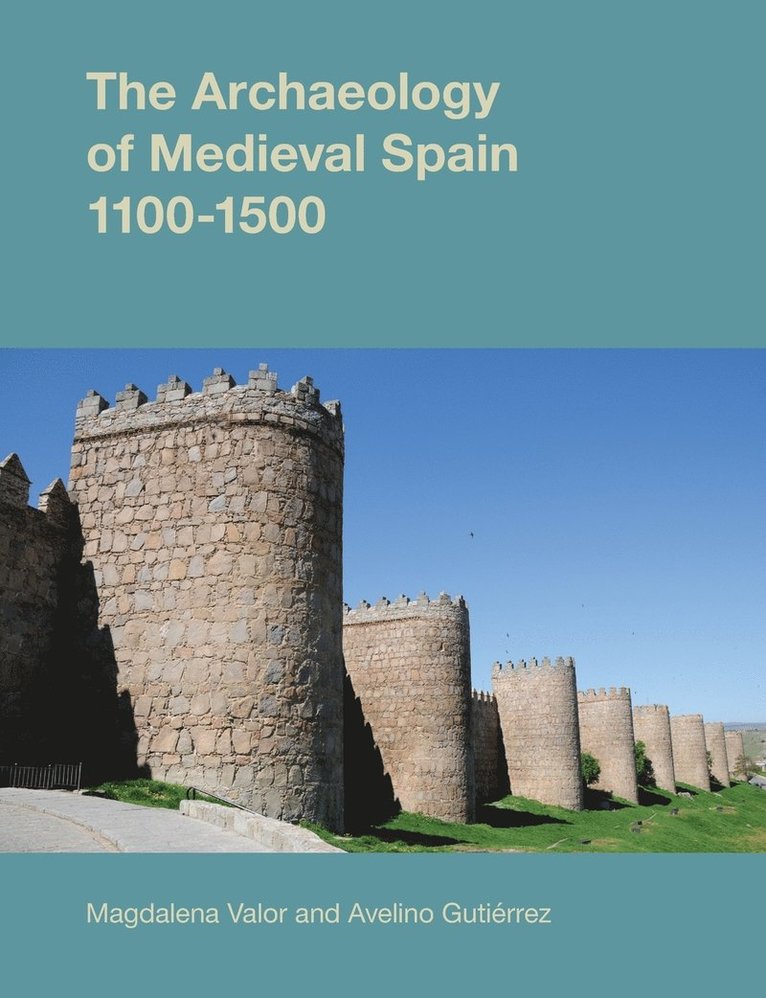
Since 1985, Spanish archaeology has radically improved its organisation and effectiveness, supported by law and the transfer of powers to deal with archaeology from central to regional governments. There have been many excavations on development sites in towns and the countryside, but also new studies of rural landscapes and monuments. As in other European countries, this has produced a mountain of as yet undigested information about the history and archaeology of this fascinating country over four centuries.Now two Spanish archaeologists, aided by a large number of colleagues in Spain, France, Germany and Britain, have produced the first survey in either English or Spanish of the last 30 years of investigations, new discoveries and new theories. Chapters deal with the rural and urban habitat, daily life, trade and technology, castles and fortifications, the display of secular power and all three religions of medieval Spain: Islam, Christianity and Judaism. This is a major contribution to the archaeology of medieval Europe and a handbook for archaeologists and travellers.
574 kr
Skickas inom 5-8 vardagar
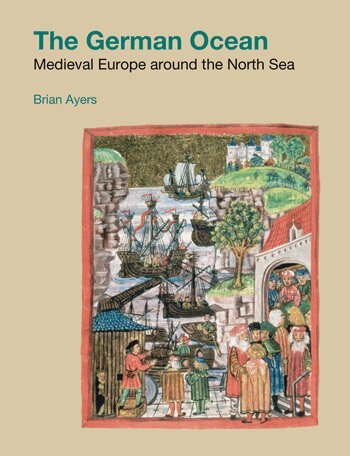
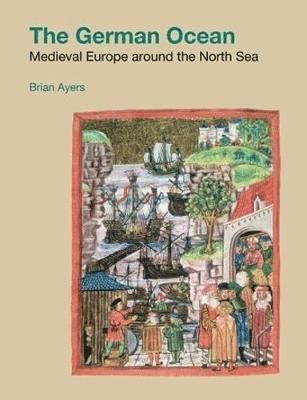
The German Ocean examines archaeological and historical evidence for the development of economies and societies around the North Sea from the beginning of the twelfth century until the mid sixteenth century. It draws in material from Scandinavia to Normandy and from Scotland to the Thames estuary. While largely concerned with the North Sea littoral, when necessary it takes account of adjacent areas such as the Baltic or inland hinterlands.The North Sea is often perceived as a great divide, divorcing the British Isles from continental Europe. In cultural terms, however, it has always acted more as a lake, supporting communities around its fringes which have frequently had much in common. This is especially true of the medieval period when trade links, fostered in the two centuries prior to 1100, expanded in the 12th and 13th centuries to ensure the development of maritime societies whose material culture was often more remarkable for its similarity across distance than for its diversity.Geography, access to raw materials and political expediency could nevertheless combine to provide distinctive regional variations. Economies developed more rapidly in some areas than others; local solutions to problems produced urban and rural environments of different aspect; the growth, and sometimes decline, of towns and ports was often dictated by local as much as wider factors.This book explores evidence for this `diverse commonality’ through the historic environment of the North Sea region with the intention that it will be of interest not only to historians and archaeologists but to those who live and work within the historic environment. This environment is a common European resource with much to contribute to a sustainable future – the book provides an archaeological contribution to the understanding of that resource.
1 331 kr
Skickas inom 5-8 vardagar
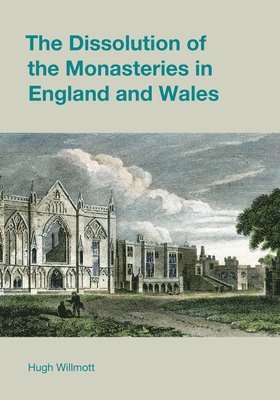
This book provides a timely and original overview of the Dissolution of the Monasteries and its longer term affects on the social and physical landscape of England and Wales during the decades that followed. Combining for the first time the full wealth of archaeological evidence gathered over the last century with the established documentary sources, it takes a more nuanced approach to the understanding of an event that has polarised debates ever since the 16th century. The book examines the most immediate and destructive outcomes of the Dissolution, such the ruination and asset stripping of religious property and the dispersal of monastic lands. However, it also presents its longer term, albeit often unexpected, outcomes such as the creation of economic opportunities for individual entrepreneurs and civic authorities, the stimulation of new forms of polite architecture, and the development of previously unimagined leisure landscapes. It concludes that whilst the Dissolution had devastating impact upon those in religious orders, its lasting legacy was the remarkable preservation of the country's medieval Christian heritage through the monuments and archaeological sites that remain to this day in every area of the country. Whilst primarily focusing on archaeological material, the book also encompasses a range of diverse historical sources. It is aimed at students and scholars seeking an introduction to the main debates surrounding the Dissolution, as well as providing original in-depth case studies to illustrate these.
402 kr
Skickas inom 5-8 vardagar
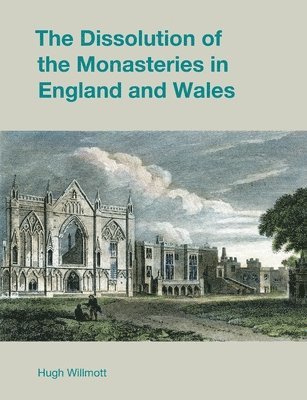
This book provides a timely and original overview of the Dissolution of the Monasteries and its longer term affects on the social and physical landscape of England and Wales during the decades that followed. Combining for the first time the full wealth of archaeological evidence gathered over the last century with the established documentary sources, it takes a more nuanced approach to the understanding of an event that has polarized debates ever since the 16th century. The book examines the most immediate and destructive outcomes of the Dissolution, such as the ruination and asset stripping of religious property and the dispersal of monastic lands. However, it also presents its longer term, albeit often unexpected outcomes, such as the creation of economic opportunities for individual entrepreneurs and civic authorities, the stimulation of new forms of polite architecture and the development of previously unimagined leisure landscapes. It concludes that whilst the Dissolution had devastating impact upon those in religious orders, its lasting legacy was the remarkable preservation of the country’s medieval Christian heritage through the monuments and archaeological sites that remain to this day in every area of the country.While primarily focusing on archaeological material, the book also encompasses a range of diverse historical sources. It is aimed at students and scholars seeking an introduction to the main debates surrounding the Dissolution, as well as providing original in-depth case studies to illustrate these.
494 kr
Skickas inom 5-8 vardagar
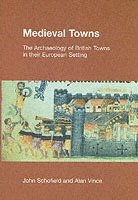
Archaeologists have shown that towns can claim to be more representative of the nature of society of which they formed part than any other type of site. In towns we are most likely to find archaeological evidence of both long-distance and local trade, of exploitation of natural resources, of specialization and of technological evidence in manufacturing, of social differentiation, of the means of political control, and of the religious aspirations of the population. Medieval Towns is the second and enlarged edition of the book Medieval Towns which was published in 1994 by Continuum. It surveys recent work on the archaeological study of medieval towns in Britain. Its emphasis is on the discoveries by archaeological teams, nearly always on sites to be developed or already under construction. From the vast haul of information now at our disposal, after thirty years of data gathering, we can begin to ask questions of many kinds. What went on in medieval towns? How did the rich and poor live, what nourished them, what did they die of? What was the weather like, the quality of life, the restrictions or special pleasures of living in towns?
1 264 kr
Tillfälligt slut
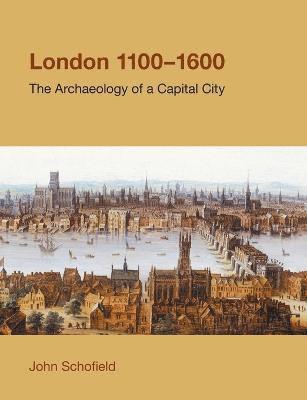
Since the early 1970s the increasingly effective conduct of archaeological work in the City of London and surrounding parts of the conurbation have revolutionised our view of the development and European importance of London between 1100 and 1600. There have been hundreds of archaeological excavations of every type of site, from the cathedral to chapels, palaces to outhouses, bridges, wharves, streams, fields, kilns, roads and lanes. The study of the material culture of Londoners over these five centuries has begun in earnest, based on thousands of accurately dated artefacts, especially found along the waterfront. Work by documentary historians has complemented and filled out the new picture. This book, written by an archaeologist who has been at the centre of this study since 1974, will summarise the main findings and new suggestions about the development of the City, its ups and downs through the Black Death and the Dissolution of the Monasteries; its place in Europe as a capital city with great architecture and relations with many other parts of Europe, from the Baltic to the Mediterranean.London has been the most intensively studied medieval city in Europe by archaeologists, due to the pace of development especially since the 1970s. Thus although this will be a study of a single medieval city, it will be a major contribution to the Archaeology of Europe, 1100-1600.
1 371 kr
Skickas
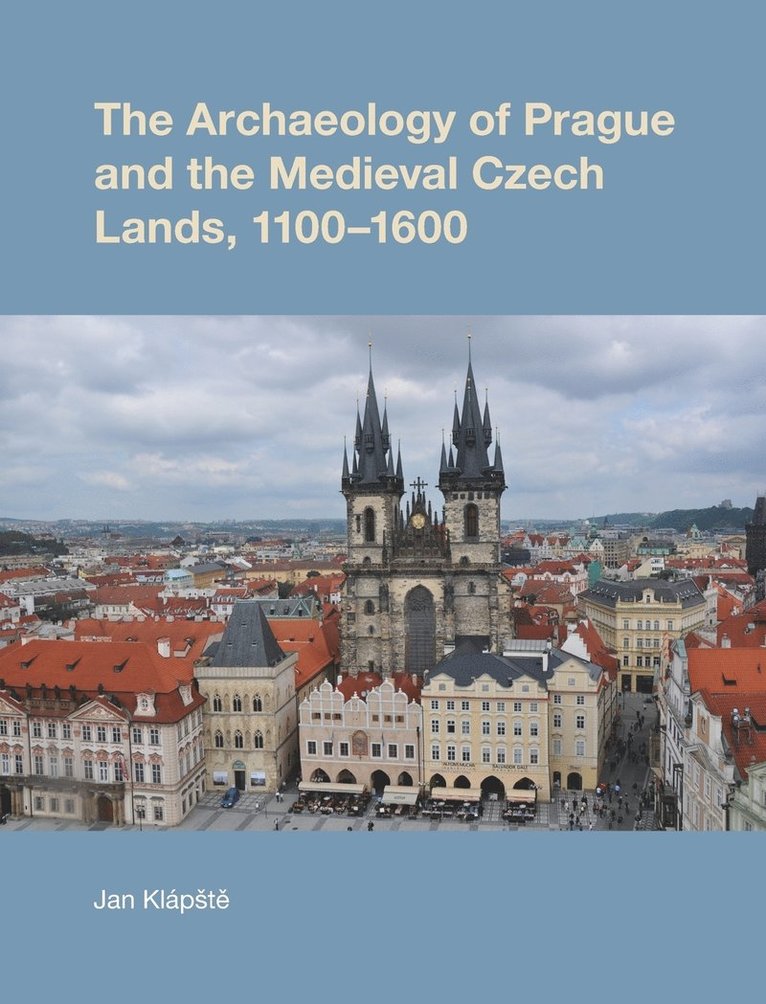
This book offers the first comprehensive picture of the medieval archaeology of the Czech Lands available in English. Alongside assembling the main topics of current archaeological research, it establishes the key issues in its methodology. Topics covered explore both rural and urban contexts, secular power structures, and monastic houses and parish churches. Besides flagship urban archaeology surveys in Prague and Brno (the Moravian metropolis), unique in Europe is the excavation of the suburb of the town of Sezimovo Usti which ceased to exist in 1420, and the complex castle excavations at Lelekovice and Rokstejn. In the landscape, important data come from the surveys of deserted villages and manorial farms. Special attention is given to technology, crafts, industry (including mining and glass production), housing culture and daily life across the various social strata. One of the fascinating features is the artefactual presentation of two competing religions - Catholicism and Utraquism; and new insights are made of Jewish everyday life, and the story of the Anabaptists and their Central European crafts heritage.Key sites, structures and finds are illustrated as the author ventures on an archaeological journey through the medieval Czech Kingdom.A particular focus of this book is the position of the Czech Lands between the gradual process of medieval transformation (13th century) and early modern transition (16th century). Throughout, the book is illustrated with images rarely seen in the wider European context.
1 325 kr
Skickas inom 5-8 vardagar
The German Ocean examines archaeological and historical evidence for the development of economies and societies around the North Sea from the beginning of the twelfth century until the mid sixteenth century. It draws in material from Scandinavia to Normandy and from Scotland to the Thames estuary. While largely concerned with the North Sea littoral, when necessary it takes account of adjacent areas such as the Baltic or inland hinterlands. The North Sea is often perceived as a great divide, divorcing the British Isles from continental Europe. In cultural terms, however, it has always acted more as a lake, supporting communities around its fringes which have frequently had much in common. This is especially true of the medieval period when trade links, fostered in the two centuries prior to 1100, expanded in the 12th and 13th centuries to ensure the development of maritime societies whose material culture was often more remarkable for its similarity across distance than for its diversity. Geography, access to raw materials and political expediency could nevertheless combine to provide distinctive regional variations.Economies developed more rapidly in some areas than others; local solutions to problems produced urban and rural environments of different aspect; the growth, and sometimes decline, of towns and ports was often dictated by local as much as wider factors.This book explores evidence for this 'diverse commonality' through the historic environment of the North Sea region with the intention that it will be of interest not only to historians and archaeologists but to those who live and work within the historic environment. This environment is a common European resource with much to contribute to a sustainable future - the book provides an archaeological contribution to the understanding of that resource.
574 kr
Skickas inom 5-8 vardagar
Since the early 1970s the increasingly effective conduct of archaeological work in the City of London and surrounding parts of the conurbation have revolutionised our view of the development and European importance of London between 1100 and 1600. There have been hundreds of archaeological excavations of every type of site, from the cathedral to chapels, palaces to outhouses, bridges, wharves, streams, fields, kilns, roads and lanes. The study of the material culture of Londoners over these five centuries has begun in earnest, based on thousands of accurately dated artefacts, especially found along the waterfront. Work by documentary historians has complemented and filled out the new picture. This book, written by an archaeologist who has been at the centre of this study since 1974, will summarise the main findings and new suggestions about the development of the City, its ups and downs through the Black Death and the Dissolution of the Monasteries; its place in Europe as a capital city with great architecture and relations with many other parts of Europe, from the Baltic to the Mediterranean.London has been the most intensively studied medieval city in Europe by archaeologists, due to the pace of development especially since the 1970s. Thus although this will be a study of a single medieval city, it will be a major contribution to the Archaeology of Europe, 1100-1600. The book is endorsed by the Museum of London, the City of London Archaeological Trust and the City of London Corporation whose logos will appear on the back cover.